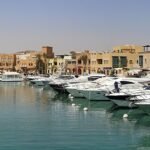
Sharm el Sheikh: things to do, diving and Mount Sinai
Clear water, a reef wall meters from the shore, and the Sinai mountains standing behind it.
Sharm el Sheikh is a resort town on the southern tip of the Sinai Peninsula, built along a chain of bays facing the Red Sea. It exists for the water: Ras Mohammed National Park and the Straits of Tiran are both a short boat ride away. Add the night climb of Mount Sinai and the week becomes reef, desert and mountain rather than a week beside a pool.
What Sharm el Sheikh actually is
Sharm el Sheikh sits on the Gulf of Aqaba near the southern tip of Sinai, a short way north of Ras Mohammed, where the Gulf of Suez and the Gulf of Aqaba meet. It is not an old town that turned into a resort. It is a coastline of bays built for people who came to get into the water.
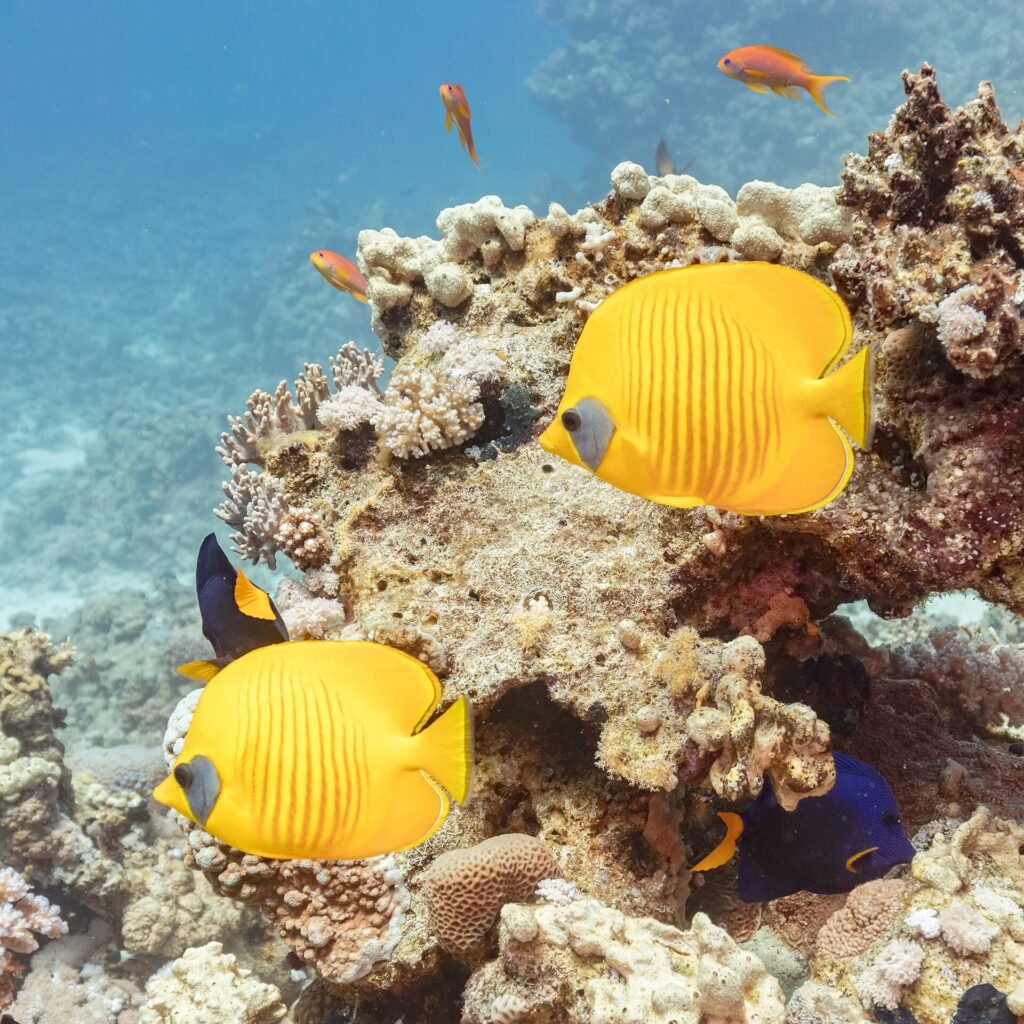
There are no pharaonic temples on this stretch of coast. Behind the hotels is granite mountain desert that is Bedouin tribal country. What Sharm has instead of monuments is the reef. Its corals belong to the northern Red Sea, which researchers have found unusually tolerant of warming water. The wall drops almost immediately into deep blue. For the region beyond the resort strip, see our guide to traveling in the Sinai Peninsula.
The town lies in South Sinai Governorate and runs along roughly fifteen kilometers of coast, from the Nabq lagoons to Sharm el Maya. It is not walkable, so you move between bays by taxi or hotel shuttle.
How the resort strip is laid out
Sharm is a line, not a center. Peace Road runs behind the coast and links the bays, and their order tells you what a stay will feel like.
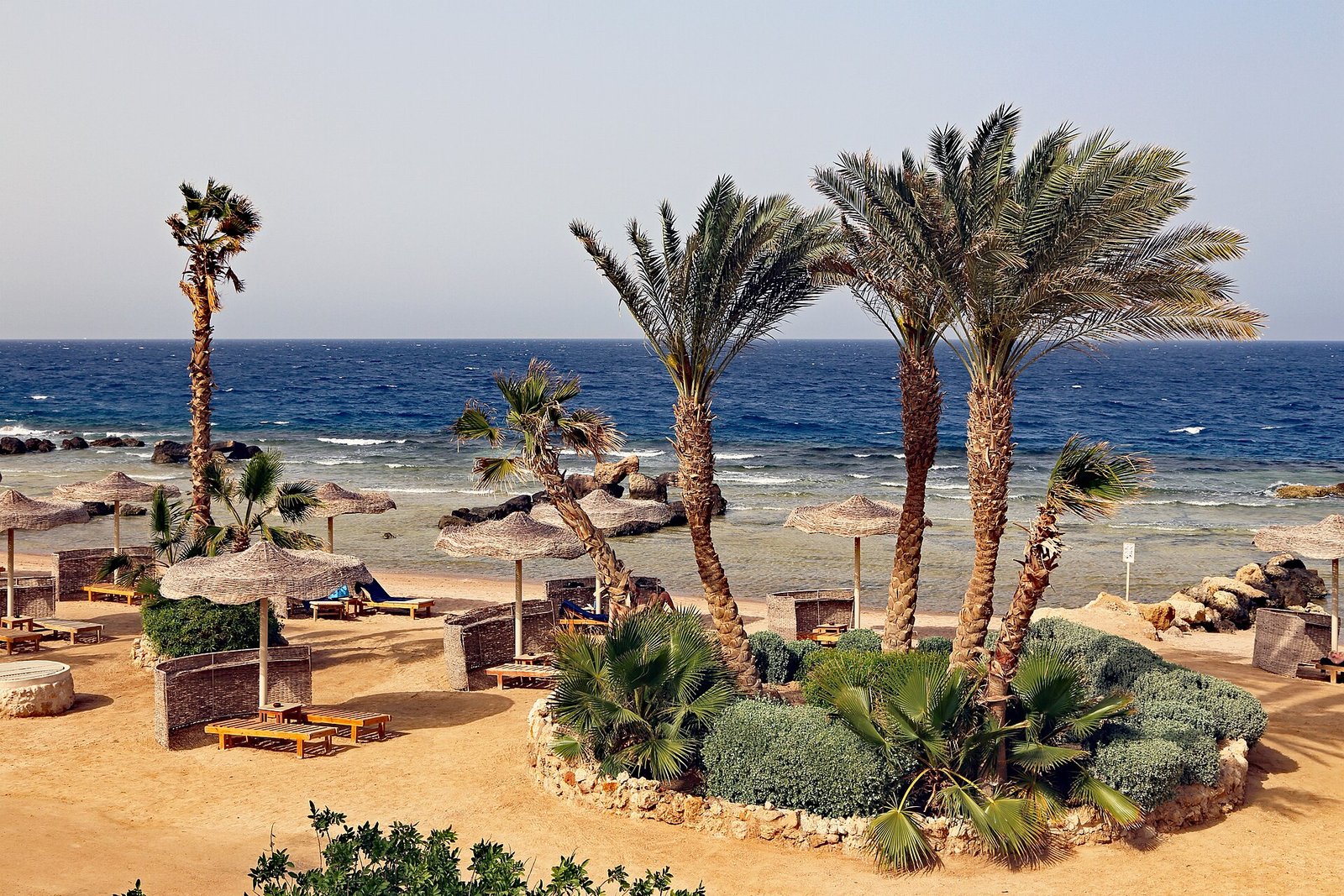
Nabq is the northern end, past the airport: quiet, with large hotels along shallow lagoons and mangroves beyond. The water is sandy and shallow, which suits families, though it catches more wind than the bays south of it. Sharks Bay is small and steep sided with a good house reef. Naama Bay is the original tourist heart. Hadaba, also called Umm Sid, stands on the cliffs south of it. The reef below at Ras Um Sid drops straight from the jetty into a wall, which is why it carries so many shore dives. At the southern end, Sharm el Maya holds the Old Market and the marina where the Ras Mohammed and Thistlegorm boats leave before dawn.
Where you sleep decides how you swim. Hotels in Sharks Bay and on the Hadaba cliffs sit above a reef wall and reach it by jetty. Hotels along the Nabq lagoons sit on sand with no coral at all.
Sharm el Sheikh International Airport stands inland behind the middle of the strip, just off Peace Road. Nabq and Sharks Bay are the closest bays, usually ten to fifteen minutes by road. Naama Bay is fifteen to twenty minutes. Hadaba and Sharm el Maya sit at the far end and take closer to half an hour. We meet arrivals inside the terminal and drive you to your bay.
Naama Bay is the part of Sharm most people picture: a crescent of sand, a line of hotels, and a promenade of cafes, dive shops, shisha terraces and bazaars. In the evening it becomes a walking street.
Resort life here is mostly the all-inclusive model: large hotels, buffet dining, and pools that fill the day. It is a waste of the location. A week with two or three excursions in it is a different trip from a week spent inside the grounds. Cliff-top hotels in Hadaba reach their beaches by long stairs or a lift, which matters if anyone has limited mobility.
The diving that made Sharm famous
Sharm built its reputation on two dive areas on opposite sides of the town, and they are not the same experience. Ras Mohammed is a headland and a wall. Tiran is four reefs standing in a current.
Ras Mohammed National Park
Ras Mohammed became Egypt's first national park in 1983 and covers the tip of the peninsula and the water around it. The signature dive is Shark and Yolanda Reef, where two coral pinnacles rise from deep water near the meeting of the two gulfs. Anemone City lies beside it, and Jackfish Alley sits round on the Gulf of Suez side of the peninsula. The Yolanda ran aground here in 1980 and scattered her cargo of bathroom fittings across the reef. The hull later slid into deep water, but the cargo field is still the dive. In the warmest months the walls draw schools of barracuda and batfish. Currents can be serious, and the point is not a beginner site on every day.
The Straits of Tiran
North of Sharm the Gulf of Aqaba narrows between Sinai and Tiran island. Four reefs stand in the channel: Jackson, Woodhouse, Thomas and Gordon, said to be named after nineteenth century British surveyors. Water is forced between them, so most Tiran diving is drift diving along a moving wall of soft coral. Jackson is the most exposed. Thomas has a famous canyon. On Gordon Reef the Loullia, aground since 1981 and still visible above the surface, marks the strait, though the hull is progressively collapsing.
Wrecks and house reefs
The SS Thistlegorm is a British supply ship sunk in 1941 in the Strait of Gubal. Reaching her from Sharm is a long day with an early start. Her holds carry motorbikes, trucks and rifles, and she is widely described as one of the most dived wrecks in the world. Closer in, Near Garden, Middle Garden and Far Garden off Naama Bay, plus Temple and Ras Um Sid, carry the check dives and the courses. Diving has its own risks, so read our notes on travel insurance and medical cover for Egypt.
Snorkeling from the shore and by boat
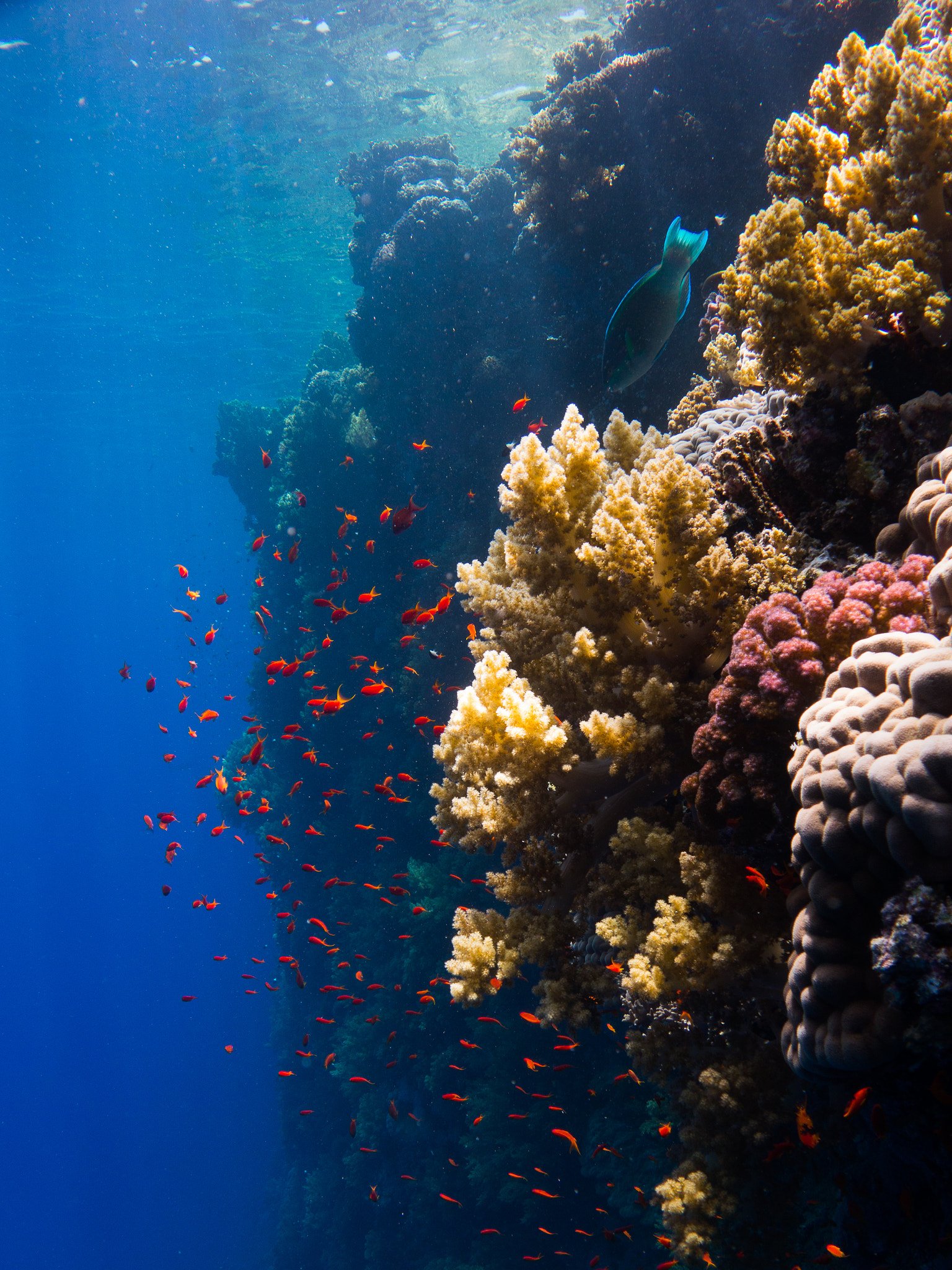
You do not need a certificate to see the best of this coast. The reef top sits in shallow bright water, and the drop-off is often a short swim out.
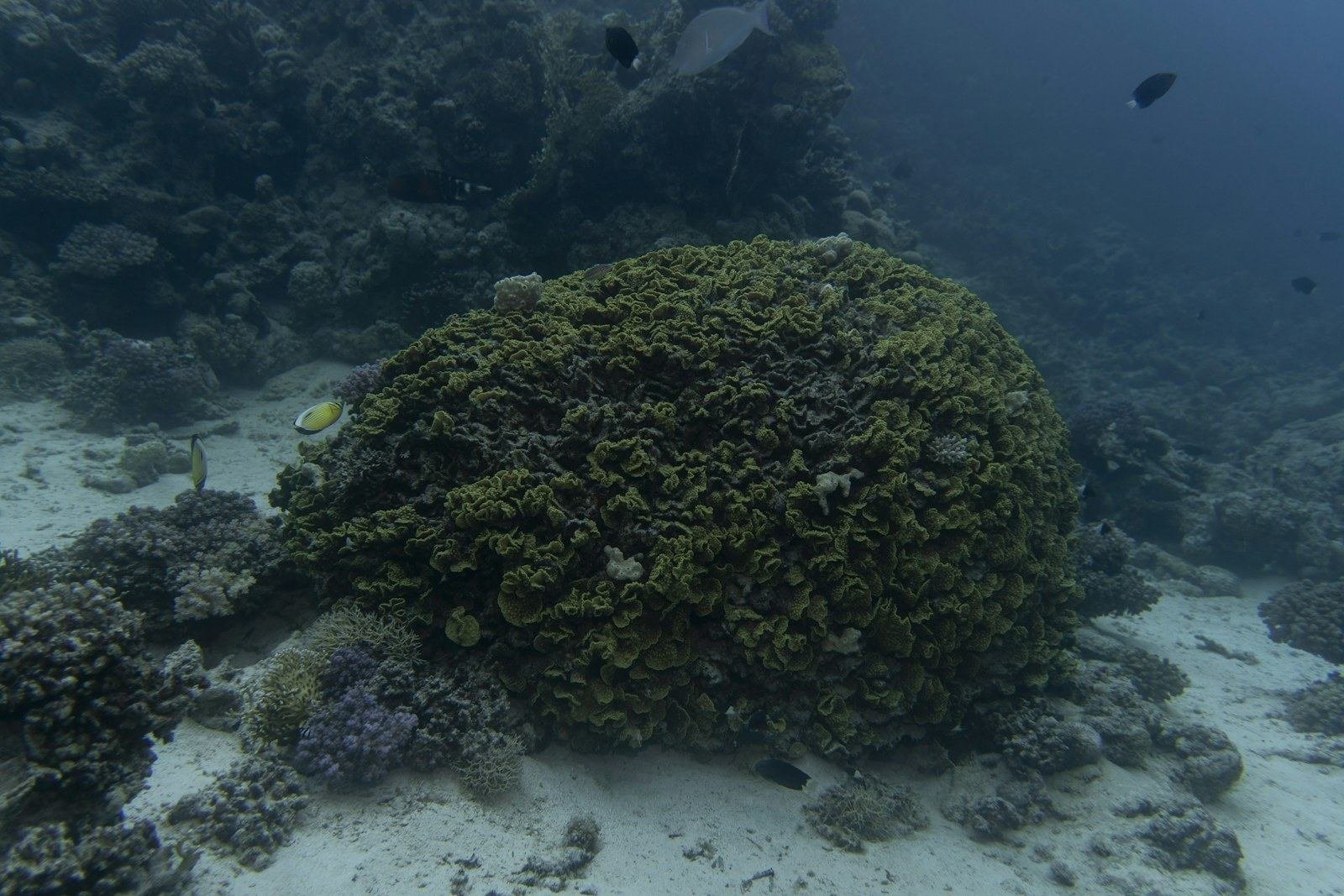
Shore snorkeling here means walking along a wooden jetty and entering at the edge of the reef flat. Those jetties exist because the reef top is alive and shallow, and standing on it kills it. Ras Um Sid below Hadaba, the house reef at Sharks Bay, Near Garden from the Naama Bay hotel jetties and Temple at Sharm el Maya are the classic entries. Most jetty entries sit inside hotel beaches and carry a day-use arrangement, which we set up in advance.
Bring or rent fins. Current on this coast ranges from nothing to strong and it can run away from shore, so check conditions with the beach dive center before you swim, and never snorkel alone off a jetty.
A boat day changes the scale rather than the quality. Boats to Ras Mohammed leave from the Sharm el Maya marina, and Tiran boats from the jetties further north at Naama Bay and Sharks Bay, closer to the strait. Our page on what to pack for Egypt covers the reef-safe basics worth bringing.
Ras Mohammed overland, not by boat
Most visitors see Ras Mohammed only from a dive boat and miss the land half of the park. The park gate is about half an hour from central Sharm on the desert road south, and longer from Nabq. There is more driving on the tracks inside.
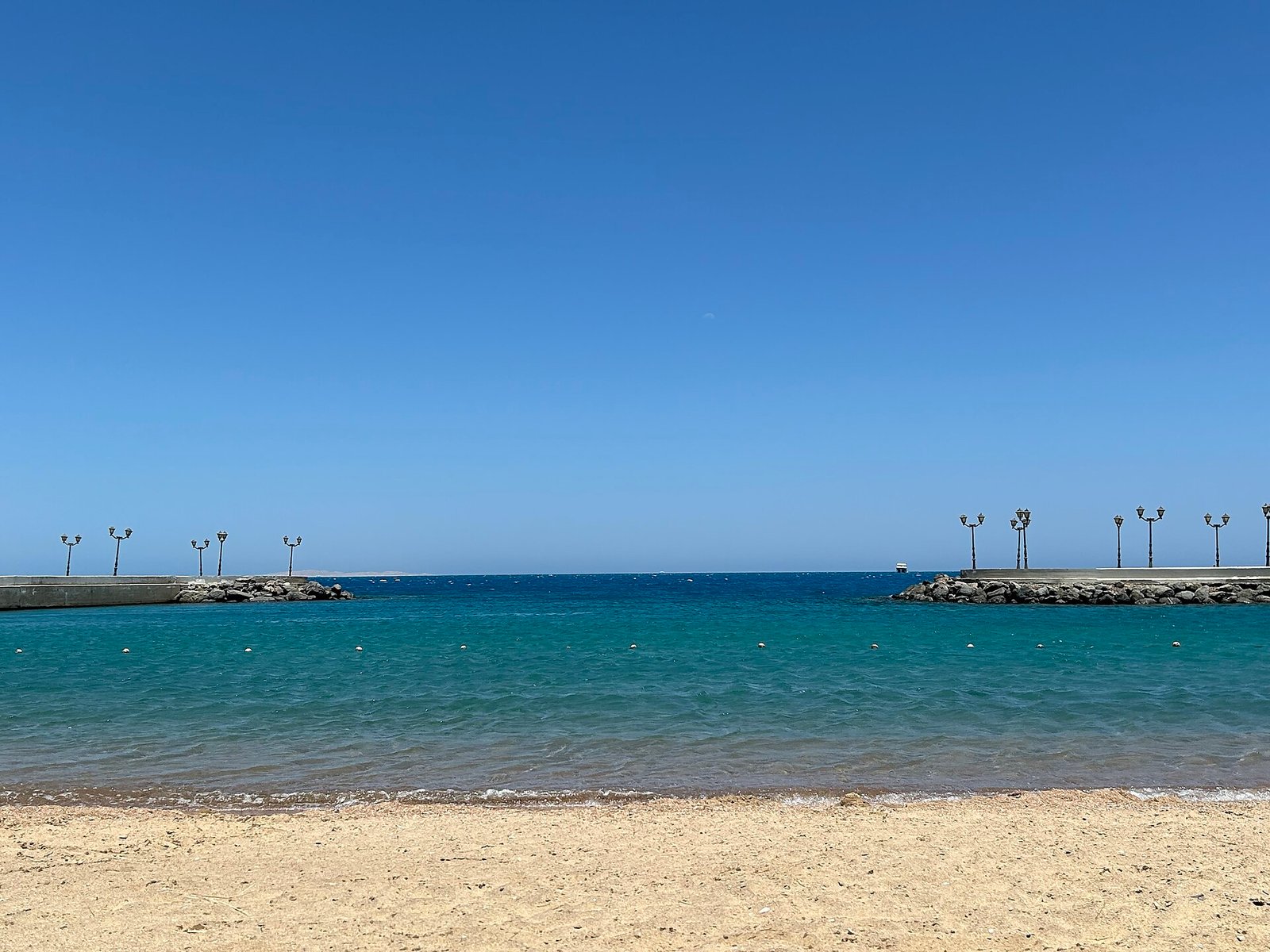
Inside the park a track passes the Shark Observatory, a limestone cliff standing over the drop-off. There is a mangrove channel, a salt lake, and a viewpoint over the meeting of the two gulfs. At Yolanda Bay you walk in and snorkel over the reef with no boat and far fewer people.
Bring your passport, because the road south passes a checkpoint. Park access arrangements change, so we confirm them when we fix your date.
Mount Sinai and Saint Catherine's Monastery
The best excursion from Sharm has nothing to do with the sea. Mount Sinai stands inland in the high granite interior, and the climb is made at night so you reach the summit before first light.
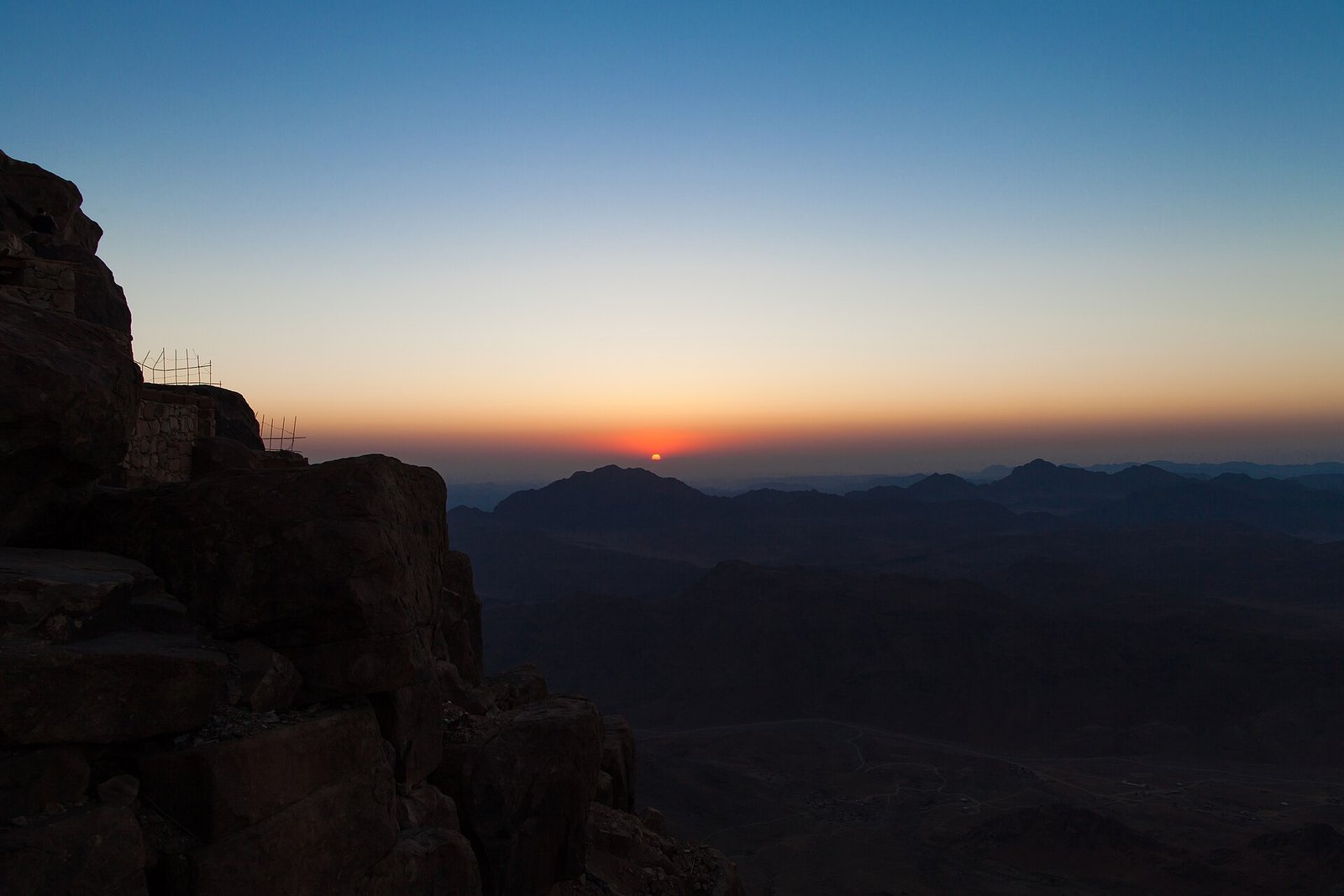
The trip leaves Sharm in the middle of the night. From the trailhead beside Saint Catherine's Monastery there are two routes. The camel path is a steady walk that ends in a flight of steep steps. The Steps of Repentance are several thousand rough stone steps cut by monks. Almost everyone walks up the camel path. The summit stands at about 2,285 meters (7,497 feet) and carries a small chapel and a mosque. It is cold up there in every season, so a warm layer, gloves and a flashlight are not optional.
Reasonably fit walkers manage it, but it is a three hour ascent at altitude in the cold and the dark. It is not suitable for anyone with a heart or breathing condition or poor night vision. Climbers go with a local Bedouin guide, which we arrange.
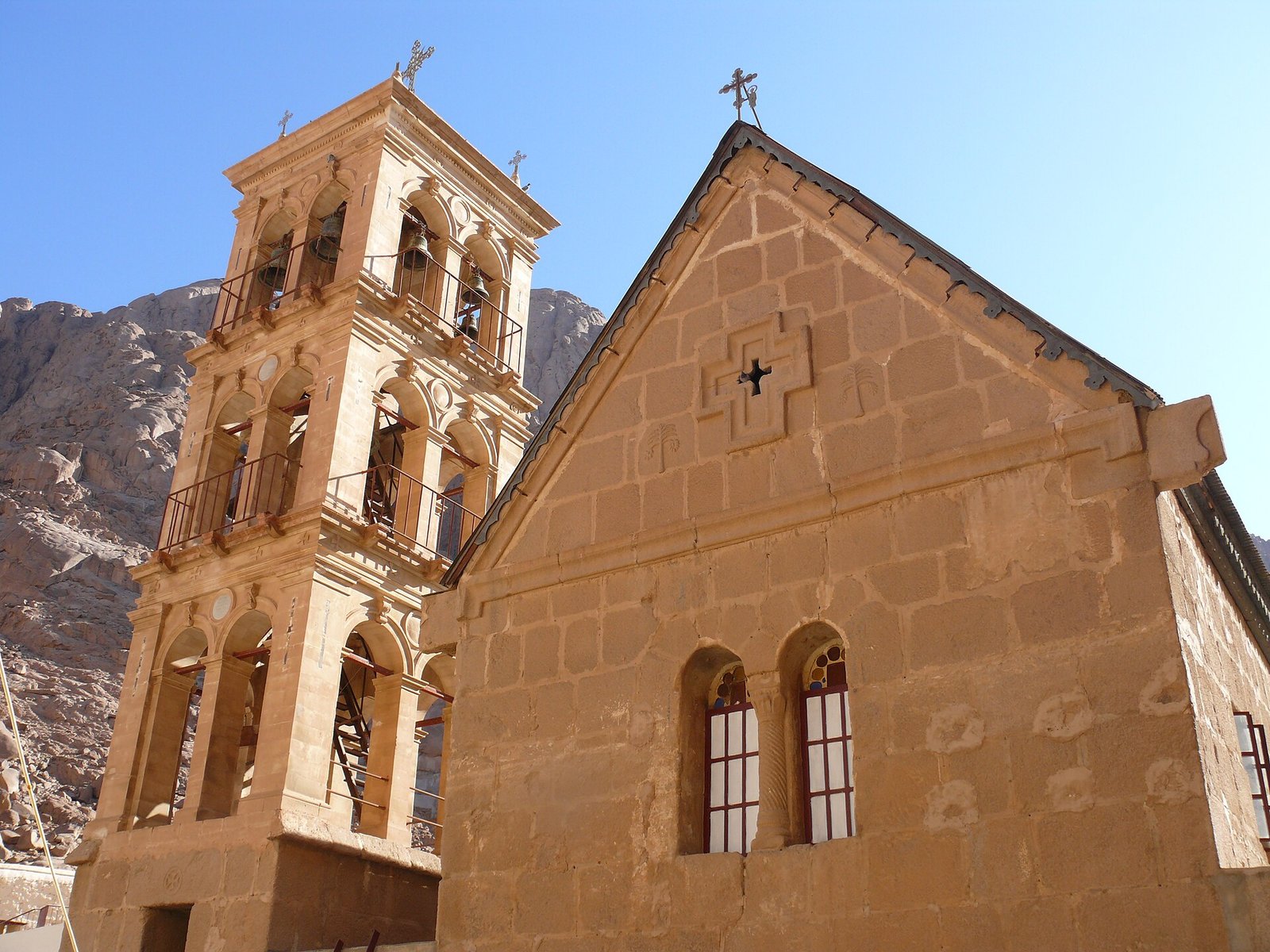
After sunrise you descend to Saint Catherine's Monastery, a Greek Orthodox community inhabited without interruption since the sixth century. It holds an extraordinary library and the bush identified by tradition as the Burning Bush. Its opening days and access arrangements have changed at short notice in the past, so we confirm them against your dates before we commit the overnight. Our account of the night climb of Mount Sinai for sunrise explains who should attempt it.
The desert behind the coast
Sinai's interior is mountain desert, not dune desert, and it begins immediately behind the hotels. The short version is an afternoon on a quad bike across the flats inland of Nabq. It ends at a Bedouin camp for tea, dinner and a sky with no light pollution. The Nabq Protected Area to the north is quieter and stranger. Mangroves line the shoreline, desert runs down to the water, and the hull of a cargo ship sits where it grounded on the beach.
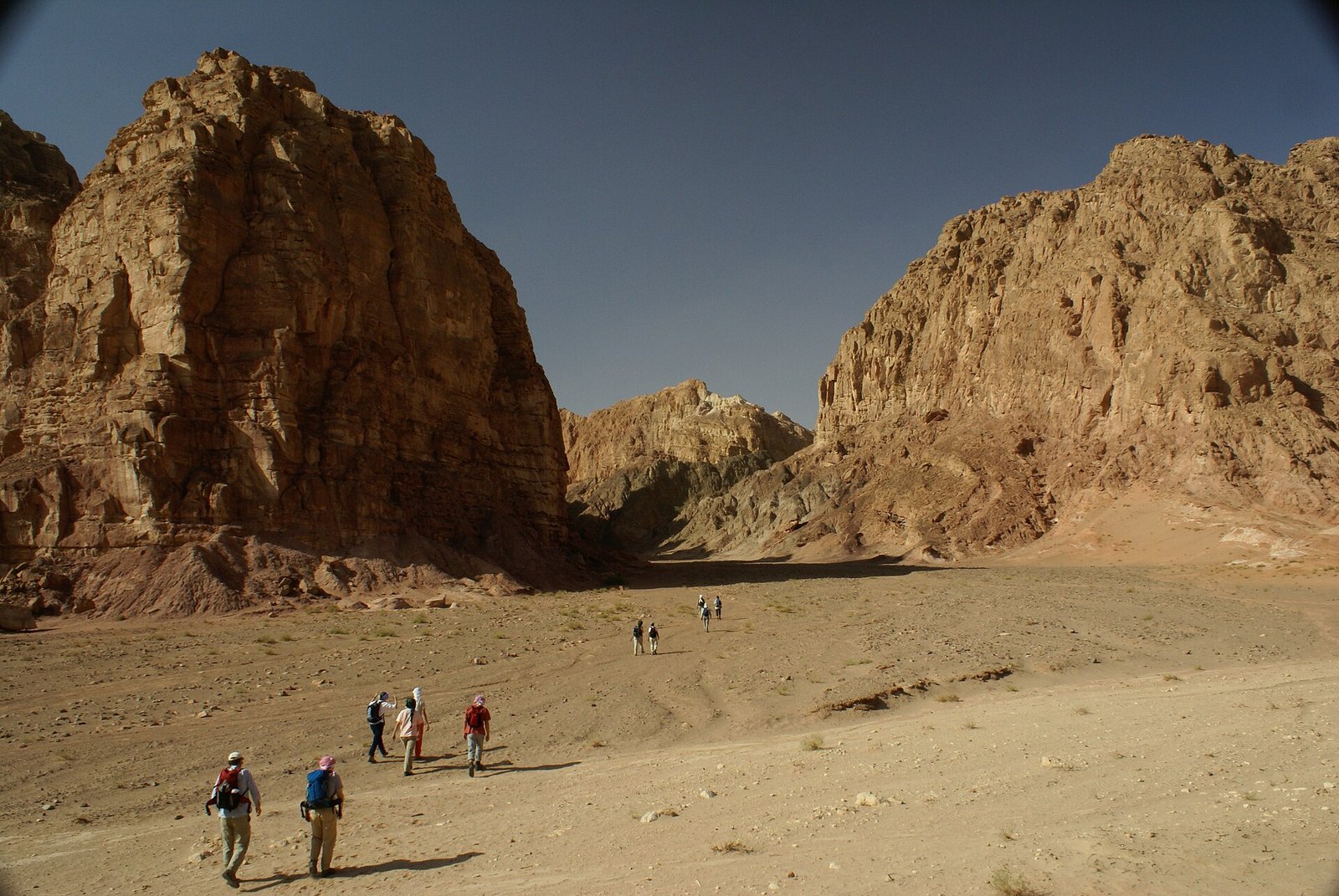
Deeper trips go towards Saint Catherine and the high valleys around it, where Bedouin guides lead walks between walled gardens and rock pools. The Colored Canyon lies far north near Nuweiba, in an inland area where UK travel advice warns against all but essential travel, so we do not sell it as a day trip from Sharm.
Sharm, Dahab or Hurghada
Sharm el Sheikh, Dahab and Hurghada are the three Red Sea bases most travelers weigh against each other. Dahab is an hour and a half up the same gulf. Hurghada sits on the mainland side, opposite Sinai.
| Sharm el Sheikh | Dahab | Hurghada | |
|---|---|---|---|
| The feel | Built resort bays, large hotels | Former fishing village, backpacker culture | A working town with a resort strip |
| Signature diving | Ras Mohammed and the Straits of Tiran | The Blue Hole, on the saddle route, and the Canyon | Offshore reefs and wrecks, by boat |
| Shore access | Reef wall close in, via a jetty | Walk-in shore dives along the corniche | Sandy beaches, coral offshore |
| Evenings | Promenades and bars in Naama Bay | Low-key seafront cafes | The widest choice of restaurants |
| Mount Sinai | A standard overnight excursion | The easiest base for it | Not practical, it is across the water |
| Reaching the Nile | Domestic flight through Cairo | Road to Sharm, then a flight | Road to Luxor in a few hours |
| Best for | Diving with comfort, families, first-timers | Independent travelers | Beach weeks combined with Luxor |
Choose Sharm for strong diving with comfort around it, Dahab for the same coast without the resort machinery, and Hurghada if the Nile Valley matters more. One clarification belongs with the Dahab row. The Blue Hole is a normal recreational dive on the saddle route and a good snorkel from the shore. The Arch, at around 55 meters, is a technical dive that has killed a large number of divers, and it is not part of a recreational trip. Our page on day trips from Hurghada sets out the mainland alternative.
Sharm el Sheikh weather: when to go and how warm the water is
Sharm has usable weather all year, but the seasons feel completely different. Water temperature decides what you wear in it.
Autumn, from late September to November, is the best all-round window. The air has come off its summer peak. The sea holds its warmth, generally 79 to 82 °F (26 to 28 °C), and visibility is usually excellent.
Spring, March to May, is close behind. Land temperatures are pleasant and the water climbs from the low twenties to the middle twenties. It is also the windiest season. The khamaseen, a hot dusty wind out of the desert to the south, belongs to these months. The steady northerly down the gulf builds through the day, so a rough afternoon can cancel a boat.
Summer, June to early September, is very hot on land and the sea is at its warmest, around 82 to 84 °F (28 to 29 °C), peaking in August. That is when the big schooling fish gather at Ras Mohammed.
Winter, December to February, brings mild sunny days, cool evenings and the coolest water of the year, usually 70 to 73 °F (21 to 23 °C), so a thicker wetsuit matters. It is also when the Mount Sinai summit is harshest, with frost before dawn and snow at Saint Catherine.
Sharm el Sheikh weather by month
Average daytime highs and night lows for each month, from the long-term climate averages published by the World Meteorological Organization. Rain is close to zero all year; a stray shower in November is about as wet as Sharm gets.
| Month | Daytime high | Night low |
|---|---|---|
| January | 71 °F (22 °C) | 56 °F (13 °C) |
| February | 72 °F (22 °C) | 57 °F (14 °C) |
| March | 77 °F (25 °C) | 61 °F (16 °C) |
| April | 86 °F (30 °C) | 68 °F (20 °C) |
| May | 93 °F (34 °C) | 75 °F (24 °C) |
| June | 99 °F (37 °C) | 80 °F (27 °C) |
| July | 100 °F (38 °C) | 80 °F (27 °C) |
| August | 100 °F (38 °C) | 82 °F (28 °C) |
| September | 96 °F (35 °C) | 80 °F (27 °C) |
| October | 89 °F (32 °C) | 74 °F (23 °C) |
| November | 81 °F (27 °C) | 66 °F (19 °C) |
| December | 74 °F (23 °C) | 59 °F (15 °C) |
Crowding follows European holidays and the Egyptian summer break rather than the weather. For the country-level view, see our guide to the best time of year to visit Egypt.
Combining Sharm with the Nile, on domestic flights
Sinai is a long way round by road from the Nile Valley, so in practice the link is a domestic flight. The Cairo road exists, through the Ahmed Hamdi Tunnel under the Suez Canal, but at six to seven hours it takes a day out of each end of the trip. Sharm el Sheikh International Airport connects with Cairo, and Cairo connects onward to Luxor and Aswan. Direct services between Sharm and Luxor have come and gone, so we check what is flying against your dates. We arrange the Egyptian domestic legs, so Sinai and the Nile Valley join up once you are in the country.
- Cairo first, Sharm last. Pyramids and the museum at the start, the Nile in the middle, Sinai at the end so the trip finishes with rest.
- Nile cruise in the middle. Fly Cairo to Luxor or Aswan, sail between them, fly back through Cairo to Sharm. Our notes on the Nile cruise between Luxor and Aswan explain how the sailing directions differ.
- Diving-led trip. Base the stay in Sharm, add two nights in Cairo for Giza and Saqqara, and keep the rest for the reef.
- Families with young children. Fewer moves. Cairo and Sharm only, a lagoon hotel in Nabq, and the overland Ras Mohammed day instead of a boat.
- Leave a clear day before flying. After your last dive, allow a full day on the surface before any flight. We build that gap into the itinerary.
We run these trips ourselves from Cairo. Tell us how long you have and we will draft a tailor-made Egypt itinerary.
Common questions about Sharm el Sheikh
Is Sharm el Sheikh worth visiting if you do not dive?
How many days do you need in Sharm el Sheikh?
Can you visit Ras Mohammed without taking a boat?
Is Sharm el Sheikh better than Hurghada?
How difficult is the night climb of Mount Sinai?
Can you combine Sharm el Sheikh with the pyramids and a Nile cruise?
Where is Sharm el Sheikh on a map?
Sharm el Sheikh sits at the southern tip of the Sinai Peninsula, where the Gulf of Suez and the Gulf of Aqaba meet the Red Sea. It is in South Sinai, across the water from the mainland resorts like Hurghada, and it has its own international airport, so most visitors fly straight in rather than driving from Cairo.
Is Sharm el Sheikh safe to visit?
Sharm el Sheikh is in South Sinai, away from the areas that travel warnings single out. As of October 2026 the US State Department rates Egypt at Level 2 and says do not travel to Northern and Middle Sinai, and UK advice has no objection to the Sharm resort area itself. Inland, north of the Saint Catherine to Nuweiba road, UK advice warns against all but essential travel, which is why we do not sell the Colored Canyon.
Do you need a visa for Sharm el Sheikh?
If you fly into Sharm el Sheikh and stay less than 15 days only in the resorts of Sharm, Dahab, Nuweiba or Taba, you get a free entry stamp. Any trip outside the resorts, onward travel to the rest of Egypt or a longer stay needs a full visa, which US citizens can get online as an e-Visa or at the airport. Our trips combine Sinai with Cairo and the Nile, so they always use the full visa.
Let us build your Sharm el Sheikh week around the water and the mountain.
Tell us your dates and whether you dive. We will come back with a plan that puts Ras Mohammed, Tiran and Mount Sinai in the right order.
Keep exploring
To finish planning your trip to Egypt
- ▸Saint Catherine's Monastery, Sinai: Visitor Guide
- ▸Grand Egyptian Museum or Egyptian Museum: Which to Visit
- ▸Hurghada All Inclusive Resorts: What Is Included and Where
- ▸Things to Do in Aswan: 12 Experiences Beyond the Temples
- ▸15 Must-See Places in Egypt, Ranked by a Local Guide
- ▸Qaitbay Citadel Alexandria: Pharos Site, Walls and Sea View
- ▸Solar Eclipse Egypt 2027: Luxor, the Path and How to See It
- ▸See all our Egypt tours