The Sinai Peninsula: Where Egypt Crosses Into Asia
The Sinai Peninsula: Where Egypt Crosses Into Asia
The Sinai Peninsula is the triangular block of land at Egypt's north eastern corner, and the only part of the country that sits on the Asian continent. For a traveler it delivers two things at once: a coastline of almost unbroken coral reef along the Red Sea, and a range of granite mountains holding the summit that tradition identifies as the place where Moses received the Ten Commandments. It looks and feels nothing like the Nile valley, and that is the whole reason to go.
What the Sinai Peninsula actually is
Picture an inverted triangle. The Mediterranean forms the flat top edge. The point at the bottom pushes down into the Red Sea, with the Gulf of Suez on the western side and the Gulf of Aqaba on the eastern side. Along the western edge runs the Suez Canal, one of the most important maritime routes on the planet and, in practice, the line where Africa ends and Asia begins. Sinai is the land bridge between the two continents, which explains almost everything about its history.
It is also a face of Egypt very different from the temples and tombs you meet in a general guide to what to see in Egypt. The canal and the gulf cut it off from the Nile valley, so it behaves as a separate block inside an itinerary. You decide about Sinai in advance or you do not go.
The south and the north are two different places
The south: granite, coral and altitude
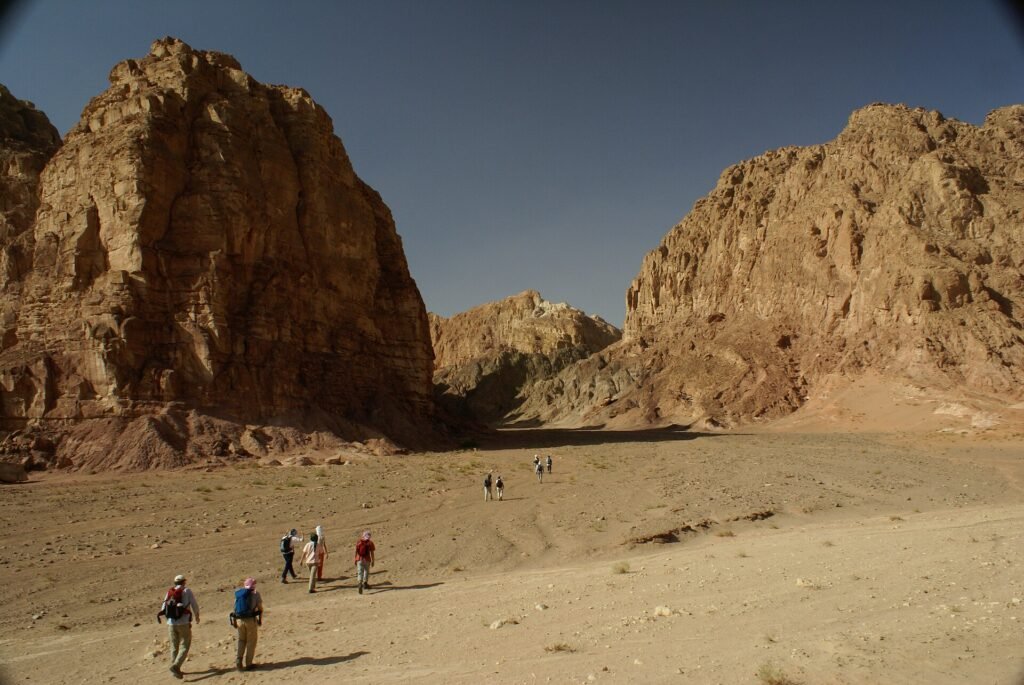
Southern Sinai is mountainous. Massifs of granite and volcanic rock rise above two thousand meters, dry wadis run between them, and the coastline is a nearly continuous coral reef. This is where the resorts are, where St Catherine's Monastery is, and where every recognisable Sinai photograph was taken. When people talk about traveling to Sinai in a tourist sense, they mean this southern tip and nothing else.
The north: flat, sandy and a separate question
Northern Sinai is a different country in everything but name. It is low, sandy and Mediterranean, with dunes, coastal lagoons and rain fed farming, and it carries a different social and security reality. It is not part of any tourist circuit, and most governments treat it separately from the south in their published travel advice. If you see a headline about Sinai and want to know whether it affects your holiday, the first question to ask is which half it refers to. Our note on safety in Egypt takes the same regional approach, and you should read your own government's current advice alongside it rather than relying on any article, including this one.
Mount Sinai and St Catherine's Monastery
The night climb for sunrise
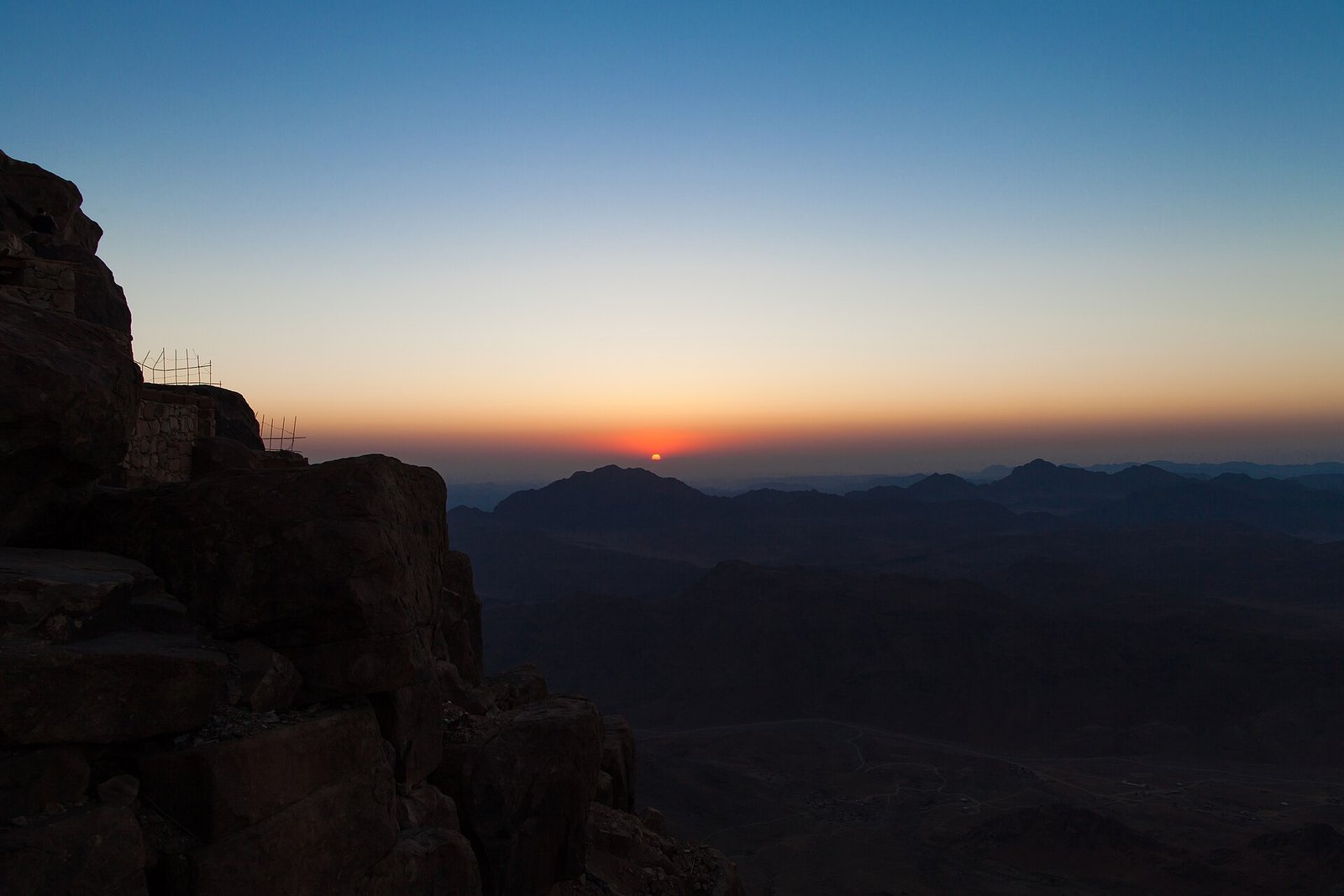
The classic Sinai experience is not a beach. It is walking up Mount Sinai in the dark so that you reach the summit before first light, and watching the sun come up over a sea of bare mountain ridges. Believers and hikers get the same thing out of it. Egypt's highest peak, Mount Catherine, stands in the same massif and is a longer, harder proposition for anyone who wants a full mountain day rather than a sunrise.
Two practical points catch people out. The summit is cold before dawn even when the coast that afternoon was warm, so layers and a head torch are not optional. And the walk is long rather than technical, which fools travelers into treating it casually after a full day of diving. If you want the ascent and the reefs in the same week, put the mountain first. Guidance on when to visit matters more here than it does on the coast, because winter nights on the mountain are genuinely cold and high summer inland is punishing.
The monastery at the foot of the mountain
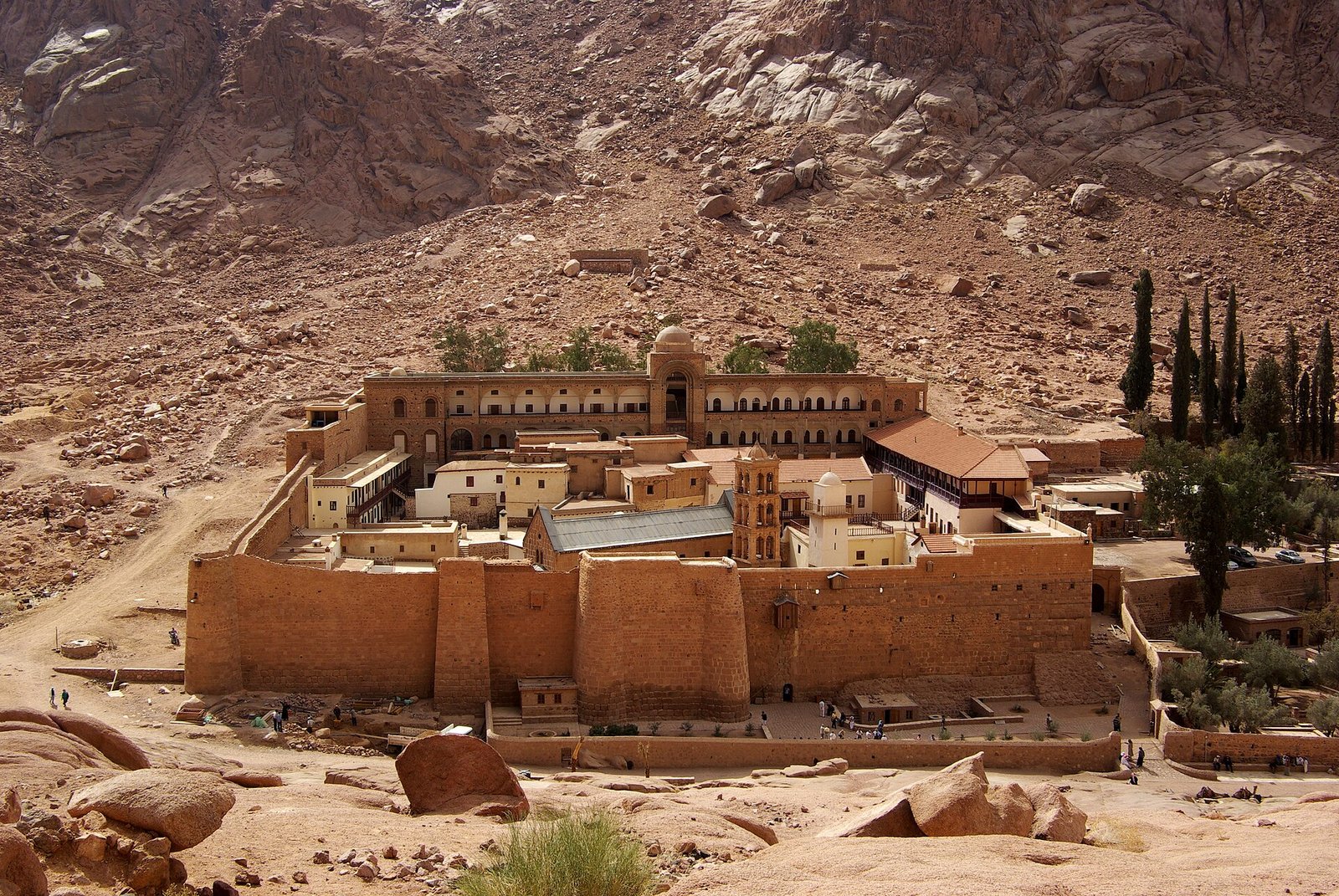
At the base sits St Catherine's Monastery, one of the oldest continuously working monasteries anywhere in the world and a UNESCO World Heritage site. Its library and icon collection are the reason specialists come. Visiting hours are short, restricted on certain days, and the site's access arrangements have been under review in recent years, so treat opening times as something to confirm close to your travel date rather than a fixed fact you read online months earlier.
Diving and snorkeling the Red Sea
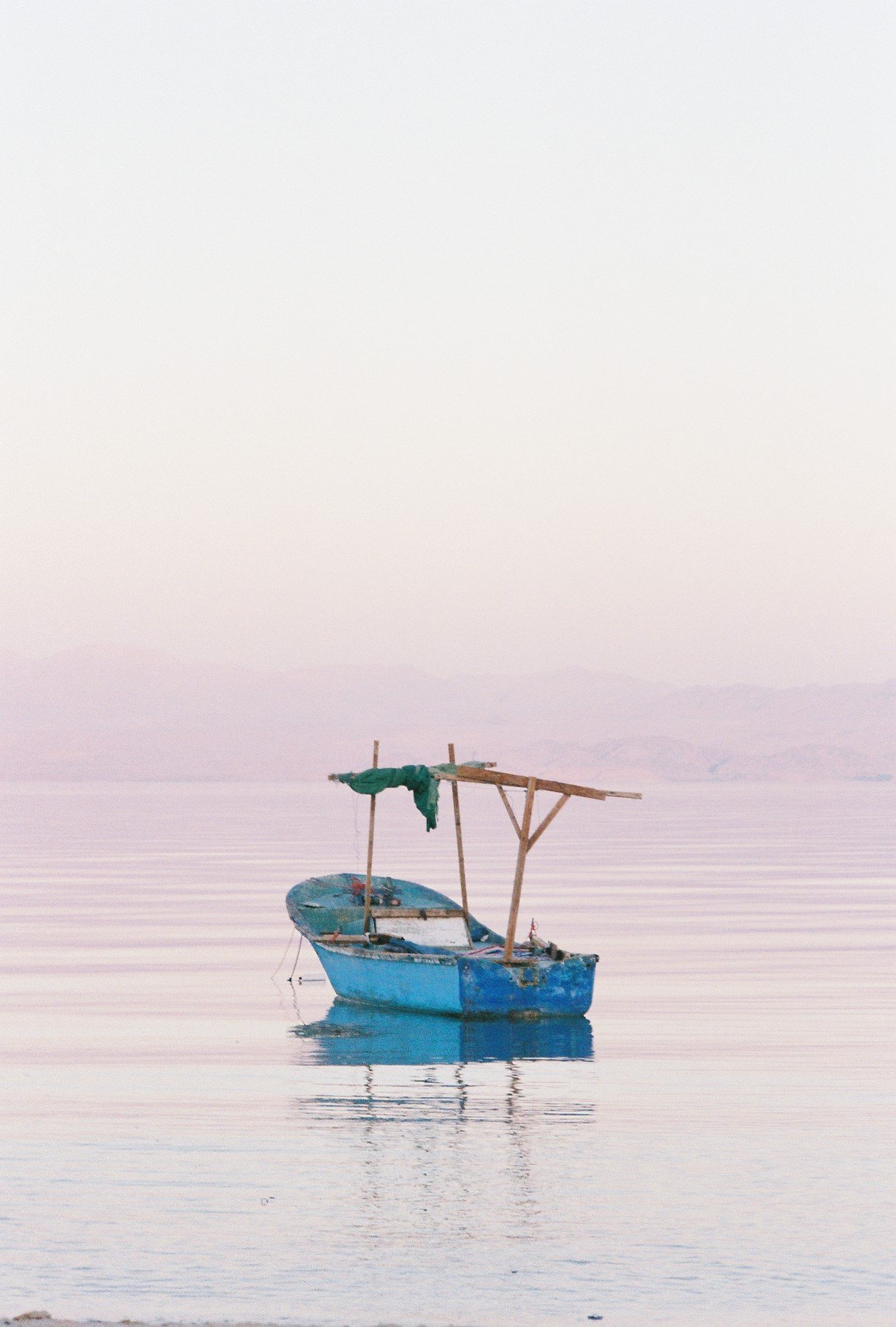
The southern Sinai coast is one of the best diving destinations on the planet, and that is not a marketing sentence. The water is warm and clear, the reefs start close to shore, and the fish life, turtles and coral gardens are why divers return to the same few kilometers of coast for decades.
Ras Mohammed and the Blue Hole
Ras Mohammed National Park occupies the very tip of the peninsula, where the two gulfs meet, and it is reachable as a boat day from Sharm el-Sheikh. The Blue Hole at Dahab is the other famous name, a shore dive that most visitors experience as a snorkel over the rim or a guided dive well inside recreational limits. It also carries a reputation earned by divers who went beyond their training, so book through a center that asks to see your certification and turns you away if the answer is wrong.
Choosing your base
| Base | Character | Suits |
|---|---|---|
| Sharm el-Sheikh | The best known resort town, large hotels, busy evenings | Families, first timers, boat diving, anyone who wants a full resort |
| Dahab | Quieter and low rise, with a long standing backpacker and diver character | Shore diving, freediving, longer stays, people who dislike resorts |
| Nuweiba and Taba | Further north up the Gulf of Aqaba, quieter again | Isolation, desert access, travelers who want almost nothing around them |
One clarification worth making, because it causes real booking mistakes. Hurghada is on the Red Sea but on the African mainland, across the Gulf of Suez. It is a different destination reached a different way, and it is not part of the peninsula.
If you plan to dive, check that your travel insurance with diving cover genuinely includes recreational diving to the depth you intend, since a standard leisure policy often excludes it.
A land bridge, and what it has meant
Armies, caravans, pilgrims and whole migrations have crossed Sinai in both directions for thousands of years. The pharaohs came for minerals: turquoise and copper were mined here and carried west to the Nile, and remains of the mining camps and rock inscriptions survive in the western part of the peninsula.
The most remarkable thing to come out of those mines was not metal. Graffiti scratched at one mining site is among the earliest known attempts to write a Semitic language using simplified Egyptian signs, which places it very close to the beginnings of alphabetic writing. Scholars still argue about how direct the line is, and Sinai sits at the center of that argument.
After the pharaohs came Christian pilgrimage routes, a Byzantine province, caravan roads toward the Arabian peninsula and, in the twentieth century, several wars and a territorial handback that closed in the 1980s. Every one of those layers left something you can still see on the ground.
Planning this trip yourself takes hours. We build it for you, and we answer every question before you commit to anything.
Bedouin south Sinai
The traditional population of the south is Bedouin, organized in tribes with their own recognized territory, and that shapes a large part of what a visitor can actually do. Desert routes, camps, mountain ascents and trips into the interior wadis run with guides from those communities, who know the terrain, the water sources and the passes between valleys. This is not a courtesy arrangement for tourists. Off the main tracks, finding your way depends on exactly that knowledge.
A night in a desert camp
If you do one thing in Sinai beyond the mountain and the water, make it an overnight in the interior. Dinner is cooked on the ground, bread is baked buried under hot sand, tea comes out of the embers, and the conversation is usually worth as much as the landscape. Nights are cold for most of the year once the sun is down, which visitors arriving straight from a beach hotel consistently underestimate.
Manners that matter
- Ask before photographing people, particularly women, and accept a refusal without negotiating.
- Dress more conservatively in camps and villages than you would inside a beach resort. Our guide on what to wear covers the difference.
- Follow your guide's routing instead of wandering off it. Some ground is tribal territory and some is restricted, and neither is signposted.
Fitting Sinai into an Egypt trip
Because the peninsula sits apart from the Nile valley, there are three workable shapes for a trip and one that wastes your time.
- Sinai only. Fly straight into a southern airport and stay put. This is what most people who come purely for the sea do, and it is the simplest version.
- A final block after the culture. Cairo, then Luxor and Aswan, then a transfer across to the coast for the last stretch. This is the formula that works best for a full trip, and it is how most of our Egypt tour packages that include Sinai are built.
- A short escape from the capital. Possible, but the least efficient option once you count the transfers in both directions.
The order matters more than the arithmetic. Ruins first, sea last, because nobody wants to leave a reef at dawn for a temple. Settling how many days you need before you start pricing anything avoids the most common mistake, which is bolting three Sinai nights onto a trip already too short for the pharaonic half.
A note on getting there. We arrange ground programs and domestic Egyptian flights, for example Cairo to Luxor, but we do not book international flights. You arrange your own arrival into Egypt, and we build everything from the airport onward, including the excursions across Egypt that connect the two halves of a trip like this.
Two things to check before you book
Your entry document. Entry to Egypt at certain points on the peninsula can, under certain conditions, be made with a permit limited to that zone. It does not cover travel to the rest of the country. If your plan involves leaving Sinai at any stage, confirm in advance that you hold the correct document for the whole itinerary. Eligibility for Egyptian entry documents depends on published nationality lists, so check the rules for your own nationality rather than assuming that what applied to someone else's trip applies to yours.
Flying after diving. If your trip ends with a flight, leave an interval between the last dive and take off. Diver training agencies generally recommend at least eighteen hours after repetitive or multi day diving, which in practice means keeping the final day out of the water. Put the monastery, a desert afternoon or a slow morning in a Dahab cafe there rather than losing the day.
How we put the Sinai part together
We design the Sinai section to order inside a wider Egypt itinerary, adjusted to the calendar and to the state of the area at the time you travel, rather than selling a fixed module. Our classic 7 to 10 day tours start from US$1,348, and the Sinai days are quoted on top of whatever shape your trip takes. Everything is booked direct with a local agency based in Egypt, so the person answering your questions before departure is the one arranging the vehicle on the day. Message us on WhatsApp at +201032295513, tell us which half you care about more, the mountain or the reef, and we will build outward from there.
Common questions about the Sinai peninsula
What is the Sinai peninsula?
Why is Sinai in Asia and not Africa?
What is there to see and do in Sinai?
What are the resorts of Sinai?
Is it safe to travel in the Sinai peninsula?
How does Sinai combine with the rest of Egypt?
Let us put the trip together
We are a local agency in Egypt. Tell us your dates and what you want to see, and we will come back with a plan, the practical details sorted and someone to ask when you are here.
Part of our guide to
Destinations and Monuments 6 guides
This article is part of that pillar. The rest of it:
- ▸Abu Simbel Sun Festival: 22 October and 22 February
- ▸Abu Simbel: Tickets, Timing and Getting There
- ▸Grand Egyptian Museum: Tickets, Opening Hours and a Complete Visiting Guide for 2026
- ▸Climbing Mount Sinai at Sunrise: the Night Ascent, the Summit and St Catherine's Monastery
- ▸The National Museum of Egyptian Civilization and Its Royal Mummies
- ▸Valley of the Kings: Tickets, Tombs and How to Visit in 2026
Keep exploring
To finish planning your trip to Egypt
- ▸Grand Egyptian Museum 2026: Tickets, Hours and Visit Guide
- ▸Colossi of Memnon: History, Singing Statue and How to Visit
- ▸Deir el Medina, Luxor: Workers' Village and Painted Tombs
- ▸Cairo in One Day: Pyramids, Museum, Bazaar, an Honest Plan
- ▸Ramesseum, Luxor: Ramesses II Temple and Ozymandias
- ▸Abu Simbel Sun Festival: 22 October and 22 February
- ▸Solar Eclipse Egypt 2027: Luxor, the Path and How to See It
- ▸See all our Egypt tours