The Egyptian Museum in Tahrir Square: What Is Still There and How to Visit
The Egyptian Museum in Tahrir Square: What Is Still There and How to Visit
The Egyptian Museum on Tahrir Square is the one that lost its headline act and stayed worth visiting anyway. For most of a century it held the Tutankhamun treasure and the royal mummies, and a trip to Cairo was arranged around it. Both of those collections have since moved out. What remains is a dense, old-fashioned, faintly overwhelming museum in a salmon-pink building from 1902, holding tens of thousands of objects that never went anywhere.
What the museum is, and what changed
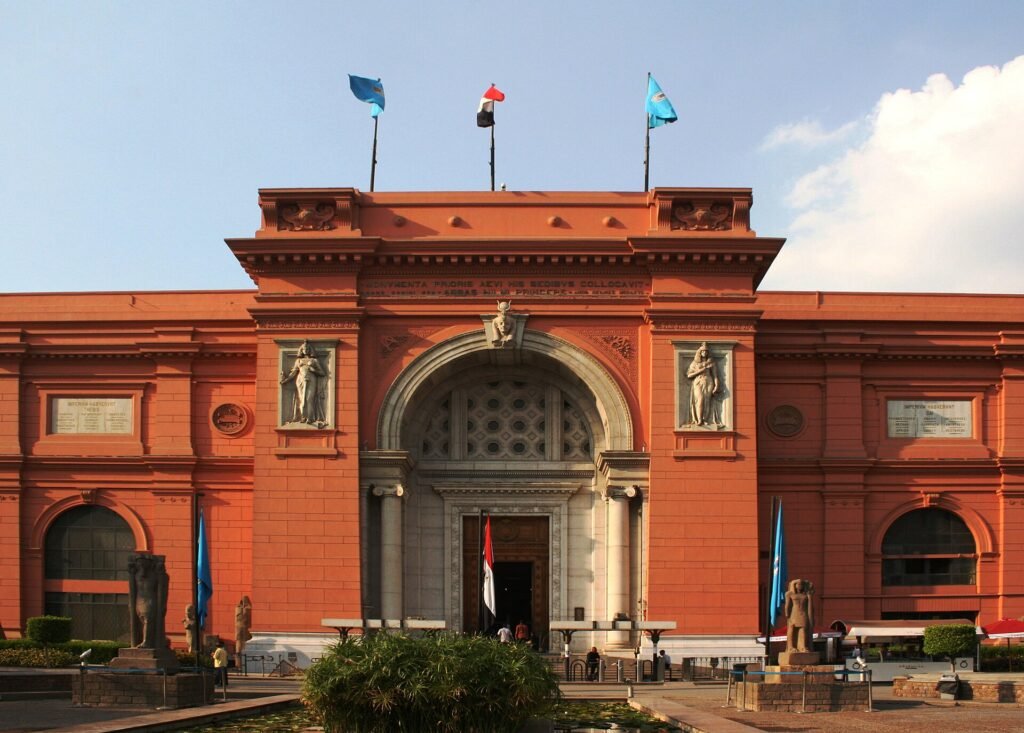
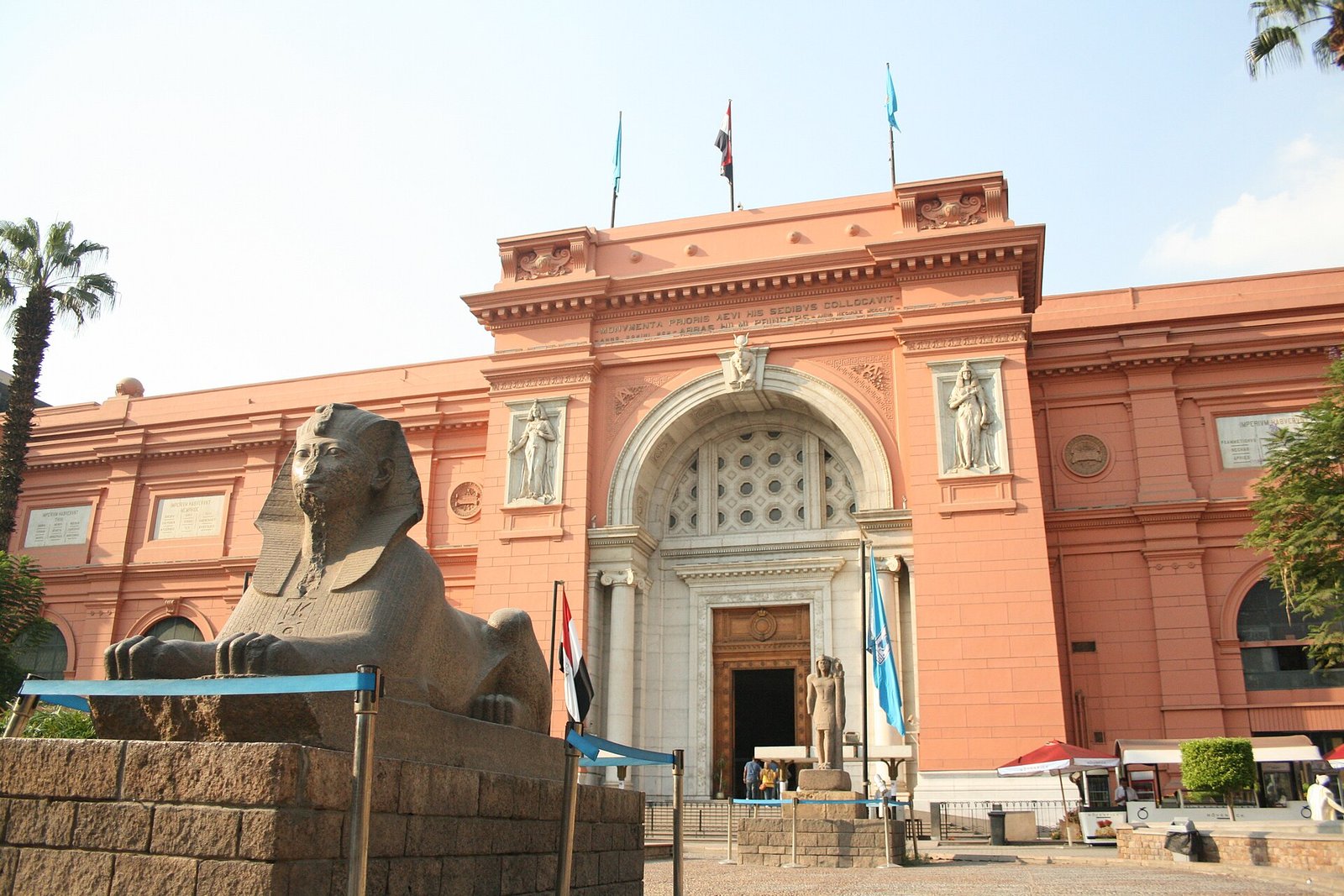
The building opened in 1902 on the north side of what is now Tahrir Square, in the middle of Cairo. It was designed from the ground up as a museum rather than adapted from an older building. The design came from a French architect, Marcel Dourgnon, who won an international competition for it. The result is neoclassical, painted salmon pink, arranged as two floors of galleries running around a covered central court, and lit largely from above.
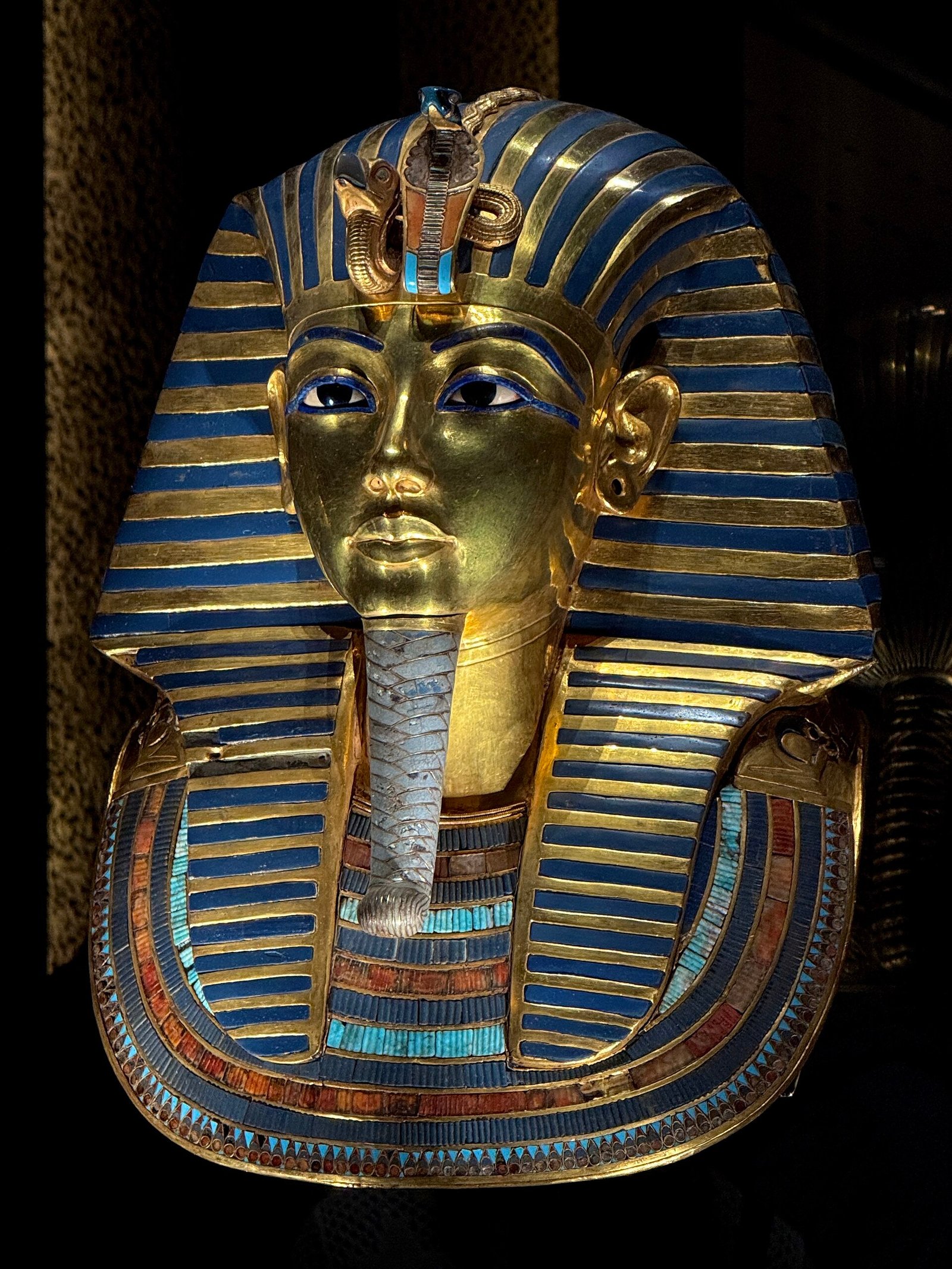
Two departures reshaped it. The complete Tutankhamun assemblage, everything recovered from the tomb, went to the Grand Egyptian Museum beside the pyramids. The royal mummies went to the National Museum of Egyptian Civilization at Fustat, in the south of the city, where they are displayed in a deliberately somber lower hall.
What did not move is the rest: the Old Kingdom sculpture, the Amarna material, the Predynastic objects, the jewelry, the coffins, the papyri, and the enormous quantity of everyday things that make ancient Egypt feel inhabited rather than ceremonial. If you want the full picture of Tutankhamun and the monumental pieces, that is a separate visit, and our Grand Egyptian Museum tickets and opening hours page covers it properly.
The pieces worth crossing the room for
The collection is large enough that a list of highlights is more useful than a list of galleries. These are the objects that repay standing still.
- The Narmer Palette. A flat shield-shaped slab of dark siltstone, carved around 3100 BCE, showing a king wearing the crown of Upper Egypt on one face and the crown of Lower Egypt on the other. It is usually read as the earliest surviving record of Egypt unified under one ruler. It is also small, undramatic and very easy to walk past, which is worth knowing before you are standing next to it.
- The seated statue of Khafre. Carved from hard greenish stone, with the falcon god Horus folding his wings around the back of the king's head. Khafre built the second pyramid at Giza, and this is the piece that explains what the Old Kingdom was aiming at: absolute stillness, absolute symmetry, no hint of a human mood.
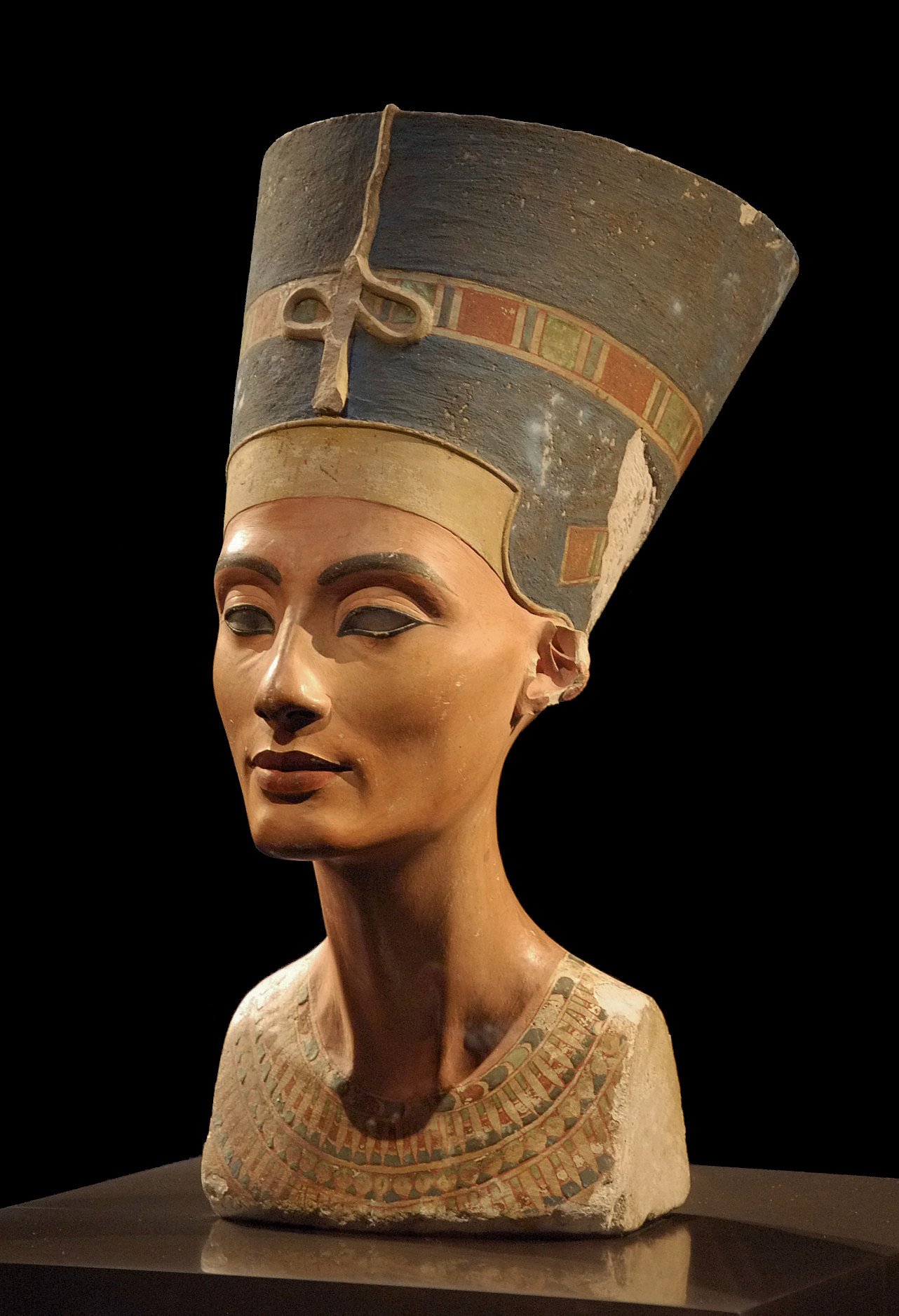
- The Amarna room. Akhenaten's reign produced Egyptian art at its strangest, with elongated skulls, heavy hips and drooping faces replacing the standard proportions almost overnight. The colossal statues of Akhenaten himself are unsettling in a way no photograph conveys.
- The Predynastic and Early Dynastic cases. Flint knives, slate palettes and pottery from before the pyramids. It makes the rest legible, because it shows the civilization before it settled into the style everyone recognizes.
Many of the gods you will meet in the sculpture galleries are identifiable on sight once you know the animal heads, and our short guide to recognizing Egyptian gods by their animal heads is worth ten minutes before you go in. The same is true of cartouches: once you can pick a royal name out of an oval ring, the labels stop being the only way to read a case, and how to read Egyptian hieroglyphs covers enough to make that possible.
Tickets, timing and what you pay
The general adult ticket for foreign visitors is 550 EGP, roughly 11 USD at mid-2026 exchange rates. Tickets are set by the Ministry of Tourism and Antiquities and sold in Egyptian pounds, so the pound figure is the real one and the dollar equivalent moves with the rate. The full ministry list for the sites on a normal itinerary is on our page of official Egypt monument entrance fees.
Photography inside is a separate ticket, bought at the same time. Tripods are not permitted anywhere in the building, so check at the window what your ticket covers rather than assuming one ticket covers everything. If cameras matter to you across the whole trip, the rules vary site by site and are summarized in our note on camera rules at Egyptian sites.
On time: two hours is the realistic minimum, three to four is comfortable, and past five hours the collection stops going in. The museum is not generously supplied with places to sit, which becomes a factor faster than you expect. Going at opening helps on two counts: the light through the skylights is better early, and the coach groups arrive later in the morning.
One warning that applies to this museum more than most. The distribution of objects between the three big Cairo museums has been shifting for several years and is still being adjusted, and internal renovation moves things between halls. If you are traveling specifically to see one object, confirm on the museum's own official channel that it is on display before you go.
Getting there
The museum sits directly on Tahrir Square, which is as central as Cairo gets. Sadat metro station sits under the square itself, so arriving by metro puts you within a few minutes' walk of the entrance and skips the traffic entirely.
Otherwise, ride-hailing works well in Cairo and removes the fare negotiation that street taxis involve. Our page on using Uber and Careem in Cairo explains how pickups work around busy squares, which matters here because the square is large and drivers cannot always stop where the pin lands. Traffic around Tahrir is heavy in both directions of the working day, so build in more time than the map suggests.
The area around the square is busy and heavily policed rather than dangerous, and the practical concerns are ordinary city ones. If you would rather have that spelled out before you arrive, the practical detail is in how safe Cairo is for visitors.
There is a security check at the main entrance with a bag scan, so travel light. Large bags may need to be left, and the queue moves faster if you are not carrying much.
How to walk it without wasting the visit
The collection is dense and the signage is thin. Without a plan people zigzag, see a great deal and remember almost none of it. This order works.
- Take the ground floor clockwise, starting to the left of the central rotunda. The ground floor is arranged chronologically, so walking the loop in one direction takes you through roughly three thousand years in sequence rather than at random.
- Do the sculpture while you still have energy. The major stone pieces are downstairs, and they need looking at from more than one angle, which is not something a tired person does.
- Go upstairs afterwards. The upper floor is grouped by theme and by find, meaning objects that came out of a single tomb are kept together and make far more sense read as a set than as individual cases.
- Stop before you are saturated. Leaving with one gallery unseen and a clear memory of the rest is a better outcome than completing the building in a fog.
A guide changes this museum more than it changes most. The labeling is sparse and often original, the arrangement assumes knowledge the average visitor does not have, and the difference between a curated two hours and a wandering two hours is very large here. We build the museum into private Cairo days with an Egyptologist and tickets included, which you can see on our private Cairo day tours page.
Tahrir, the Grand Egyptian Museum or the Civilization Museum
Cairo now has three major museums covering overlapping ground. They are not really competing, because each one is doing something different.
| Museum | What it holds | Where |
| Egyptian Museum, Tahrir | The historic collection: Old Kingdom sculpture, the Narmer Palette, Amarna art, jewelry, coffins, daily life | Central Cairo, on Tahrir Square |
| Grand Egyptian Museum | The complete Tutankhamun material and the monumental pieces, in a purpose-built modern museum | Giza, beside the pyramids |
| National Museum of Egyptian Civilization | The royal mummies, plus all periods of Egyptian history rather than the pharaonic era alone | Fustat, south of the center |
With one museum-shaped slot in your trip, the honest answer is that the Grand Egyptian Museum is the one to take, because it holds the objects that draw people to Egypt in the first place and it sits next to the pyramids anyway. With two slots, Tahrir in the morning and one of the other two after lunch splits the day cleanly and avoids repeating material. With a longer stay, all three are comfortable and none of them repeats another.
What Tahrir has that neither of the others can manufacture is age. The wooden cases, the handwritten labels, the objects packed close together, the sense of a nineteenth-century storehouse that grew into an institution: that is a way of displaying antiquities nobody practices any more, and for a certain kind of visitor it is more evocative than a calibrated modern gallery. How many of the three you can fit depends on how much of your itinerary is Cairo, which our page on how many days to spend in Egypt works through.
The building and the garden are part of the visit
The collection did not begin here. It began with Auguste Mariette, who assembled it from the middle of the nineteenth century specifically to stop antiquities leaving the country, at a point when they were leaving in industrial quantities. It was stored first in a warehouse at Bulaq beside the Nile, which flooded, and then in a palace at Giza, before the Tahrir building was completed for it.
Mariette is buried in the entrance garden, beside the papyrus pond, with his statue next to the tomb and a semicircle of busts of other Egyptologists around it. It takes two minutes and almost everyone walks straight past it on the way to the door.
The building itself has become an exhibit. The design shows what its architect was solving for: overhead daylight falling on stone sculpture, galleries deep enough for large pieces, a circulation loop that doubles as a timeline. Standing in the rotunda, you are looking at how the discipline of Egyptology chose to present itself at the moment it was inventing its own public image.
Fitting it into a Cairo day
Because it is downtown rather than out at Giza, this museum combines easily with the other central sights. Khan el Khalili and Coptic Cairo are both short trips from Tahrir, and either pairing makes a full but unhurried day without long transfers. The alternative shape is to spend the morning on the Giza plateau and come back into the center for the museum in the afternoon, though that is a heavier day and works better in the cooler months.
Timing matters more than people plan for. Cairo in July and August regularly passes 35C (95F), and a downtown museum in the middle of a hot afternoon is a much better idea than a pyramid plateau at the same hour, which is worth remembering if your dates are fixed and fall in summer.
Our Egypt tour packages with an Egyptologist guide page has the longer itineraries that this Cairo day fits into, or ask us directly on WhatsApp at 201032295513.
A last suggestion: go in without a checklist. The collection is so densely packed that the real pleasure is stopping in front of whatever catches your eye rather than ticking off names. The famous objects turn up on their own.
Planning this trip yourself takes hours. We build it for you, and we answer every question before you commit to anything.
Common questions about the Egyptian Museum in Tahrir Square
What is the Egyptian Museum in Tahrir Square?
Is Tutankhamun still in the Tahrir museum?
What can you see at the Tahrir museum today?
What is the difference between the three Cairo museums?
How long does the Tahrir museum take to visit?
Where is the Egyptian Museum in Tahrir Square?
Let us put the trip together
We are a local agency in Egypt. Tell us your dates and what you want to see, and we will come back with a plan, the practical details sorted and someone to ask when you are here.
Part of our guide to
Culture and History 6 guides
This article is part of that pillar. The rest of it:
- ▸Ancient Egyptian Amulets: What the Ankh, the Scarab and the Eye of Horus Actually Did
- ▸Egyptian Gods and How to Recognize Them
- ▸Egyptian Hieroglyphs: What They Mean and How to Read Them
- ▸The Nile River: From Its Source to the Sea, and How to Sail It
- ▸The Pharaohs of Ancient Egypt: God-Kings of the Nile
- ▸The Ancient Egyptian Calendar: How the 365-Day Year Began
Keep exploring
To finish planning your trip to Egypt
- ▸Tea and shisha in Egypt: how to sit in a cafe like a local
- ▸Cleopatra: The Last Queen of Egypt and Where to See Her
- ▸Egyptian Mythology: The Myths Behind the Temples You Visit
- ▸Egyptian Hieroglyphs: What They Mean and How to Read Them
- ▸Fun Facts About Egypt: True Facts and Where You See Them
- ▸Ancient Egyptian Amulets: The Ankh, Scarab and Eye of Horus
- ▸Time Difference Egypt USA: What Time Is It in Egypt Now
- ▸See all our Egypt tours