Valley of the Kings: Tickets, Tombs and How to Visit in 2026
Valley of the Kings: Tickets, Tombs and How to Visit in 2026
The Valley of the Kings is the site people book a whole trip around, and also the one most often visited badly. Travelers arrive at eleven with a cruise group, queue in full sun, walk into three tombs chosen at random, and leave with a headache. It rewards a small amount of planning: knowing what your ticket covers, which tombs are open the week you are there, and what time to be standing at the gate.
This guide covers the ticket structure as it stands in 2026, the rotation system that decides which tombs you can enter, opening hours, how to cross the river from Luxor, and the practical business of heat and photography.
What the Valley of the Kings actually is
The valley is a dry desert ravine on the west bank of the Nile at Luxor, the city the Greeks called Thebes. It served as the royal cemetery of the New Kingdom pharaohs between roughly 1539 and 1075 BC, spanning the eighteenth, nineteenth and twentieth dynasties. More than sixty numbered tombs have been catalogued there, cut directly into the limestone.
The valley exists because of a change of strategy. Egypt had spent centuries burying its kings under pyramids, and the pyramids had been robbed almost as reliably as they were built. So the tombs went underground and out of sight, hidden in a barren wadi behind the Theban hills under the natural pyramid shape of the peak now called El Qurn. The concealment failed too, but the decoration survived.
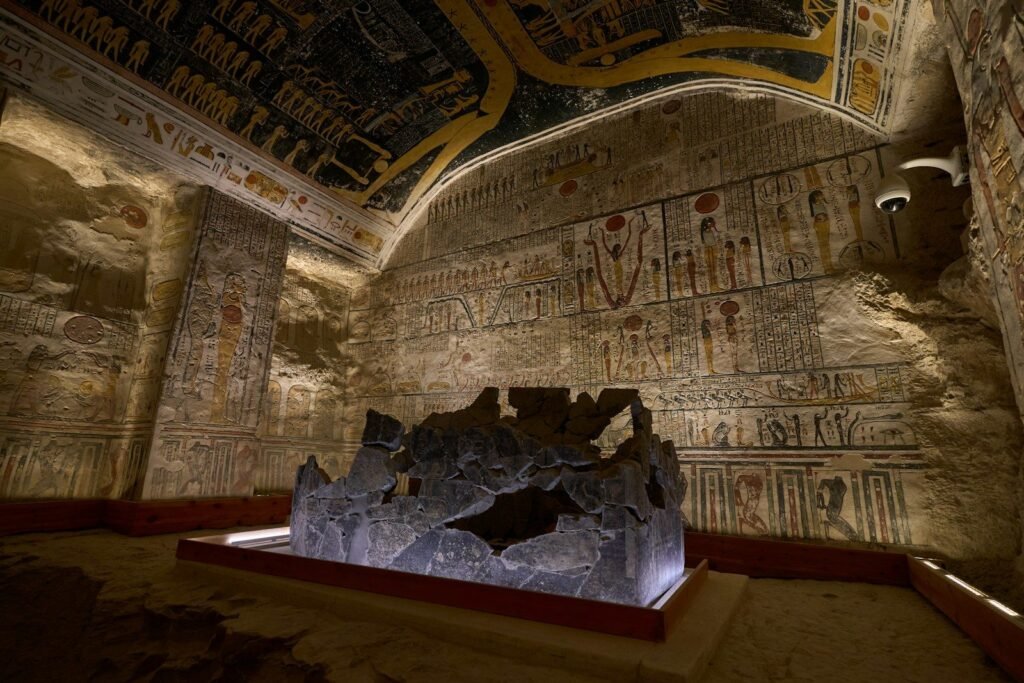
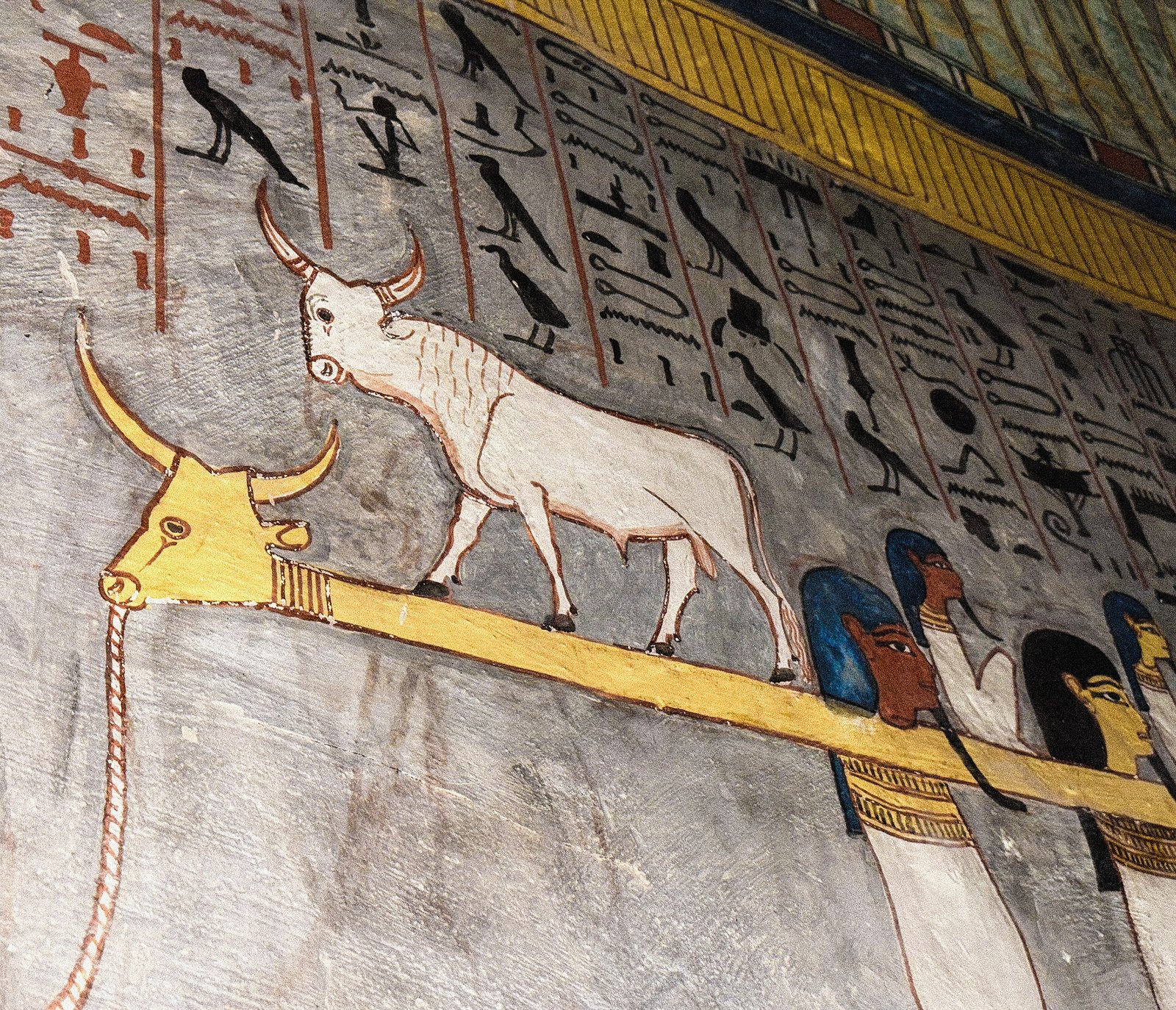
That decoration is the point of the visit. You walk down a sloping corridor cut into living rock, with hieroglyphs and painted funerary scenes covering the walls from floor to ceiling, and in the best tombs a ceiling painted deep lapis blue that still holds its color after more than three thousand years. These are not museum reconstructions behind glass. They are the original burial chambers, and you are standing inside them.
More than thirty rulers were buried here, among them Ramesses II, Seti I, Hatshepsut and Tutankhamun. One caution worth stating plainly: almost none of the mummies are still in place. Priests moved the royal bodies to hidden caches in antiquity to save them from robbers, and today they are in Cairo. Tutankhamun is the exception, and he is the reason his small, plain tomb draws the queue it does.
The valley is normally visited as part of a west bank morning, together with the mortuary temple of Hatshepsut at Deir el-Bahari, the Colossi of Memnon, and often the Valley of the Queens. If you have more than one day, the rest of the Luxor sites deserve a second morning on the east bank at Karnak and Luxor Temple.
Tickets and prices in 2026
The ticketing works in two layers, and this trips up most first-time visitors. First you buy a general ticket, which gets you into the enclosure and lets you choose three tombs from whichever ones are open that day. Then, separately, you buy an extra ticket for each of the headline tombs you want to add. Those extra tickets are not included in anything, not in the general ticket and not in most tour prices.
| Ticket | Price in EGP | Approx. USD | What it covers |
|---|---|---|---|
| General entry, adult | 750 EGP | about 15 USD | Site entry plus three tombs from the open rotation |
| General entry, student | 375 EGP | about 7.50 USD | 50 percent off with a valid international student card |
| Tutankhamun, KV62 | 700 EGP | about 14 USD | Separate extra ticket |
| Seti I, KV17 | 2,000 EGP | about 40 USD | Separate extra ticket, no student discount |
| Ramesses V and VI, KV9 | 220 EGP | about 4.40 USD | Separate extra ticket |
| Internal shuttle train | 20 EGP | about 0.40 USD | Optional, gate to the tombs and back |
Treat these as indicative rather than fixed. They were correct in mid-2026, and the Ministry of Tourism and Antiquities revises entry fees periodically, essentially always upward. The USD column is a conversion at roughly 50 EGP to the dollar and will drift with the exchange rate. If you are budgeting a whole trip rather than a single site, the wider picture of Egypt monument entrance fees is worth reading, because Luxor's west bank is only one line in it.
Where to buy, and how to pay
There is one ticket office, in the visitor center at the entrance to the valley, next to the large scale model of the terrain. It sells both the general ticket and every extra ticket. Nothing at all is sold once you are inside the site, and the walk back out to the gate in the sun is not one you want to make twice.
The practical consequence: decide about Seti I and Tutankhamun before you go through the gate, not after you have seen two tombs and started wondering. Payment methods at the window change, and card is increasingly the norm at Egyptian sites, so carry a card and some cash and have your hotel or guide confirm what the office is taking before you cross. Either way, you will want small notes for the shuttle train and for tipping, which is a normal part of daily life around the site.
Which tombs are open: the rotation system
Only about eight to ten tombs are open at any one time. The authorities close and reopen them in rotation to spread the damage, because the humidity from visitors' breath and the physical wear of hundreds of thousands of people a year is what degrades the pigment.
This has a direct effect on your planning. No guide, no website and no tour operator can promise you a specific tomb, because the open list changes every few months and occasionally at short notice. Anyone who guarantees you a named tomb months in advance is guessing. What you can rely on is the structure: three tombs on the general ticket, plus whatever extras you pay for.
Tombs usually in the general ticket
- Ramesses III, KV11. One of the longest and best decorated in the valley, and unusual for its scenes of everyday life sitting alongside the standard funerary texts.
- Ramesses IV, KV2. Short, easy to walk, and the astronomical ceiling has some of the most vivid surviving color on the site.
- Ramesses IX, KV6. Wide and relatively bright, which makes it the sensible choice if you are short of time or struggling with the heat.
- Merenptah, KV8. Deep and monumental. Merenptah was the thirteenth son of Ramesses II and outlived his brothers to take the throne in his sixties.
- Tausert and Setnakht, KV14. A double tomb, and one of the very few in the valley originally cut for a queen.
- Thutmose III, KV34 and Thutmose IV, KV43. Earlier tombs with curved plans and steep staircases, harder going but architecturally the most interesting.
Not all of these will be open on the same day. They give you the level to expect.
The tombs that need an extra ticket
- Seti I, KV17. The finest tomb in the valley and not seriously disputed. Every surface is carved and painted, the astronomical ceiling is an intense blue, and the reliefs of the king's journey through the underworld are on another level from anything else on site. At 2,000 EGP it is the most expensive ticket in the valley by a wide margin, and if you care about Egyptian art it is worth it.
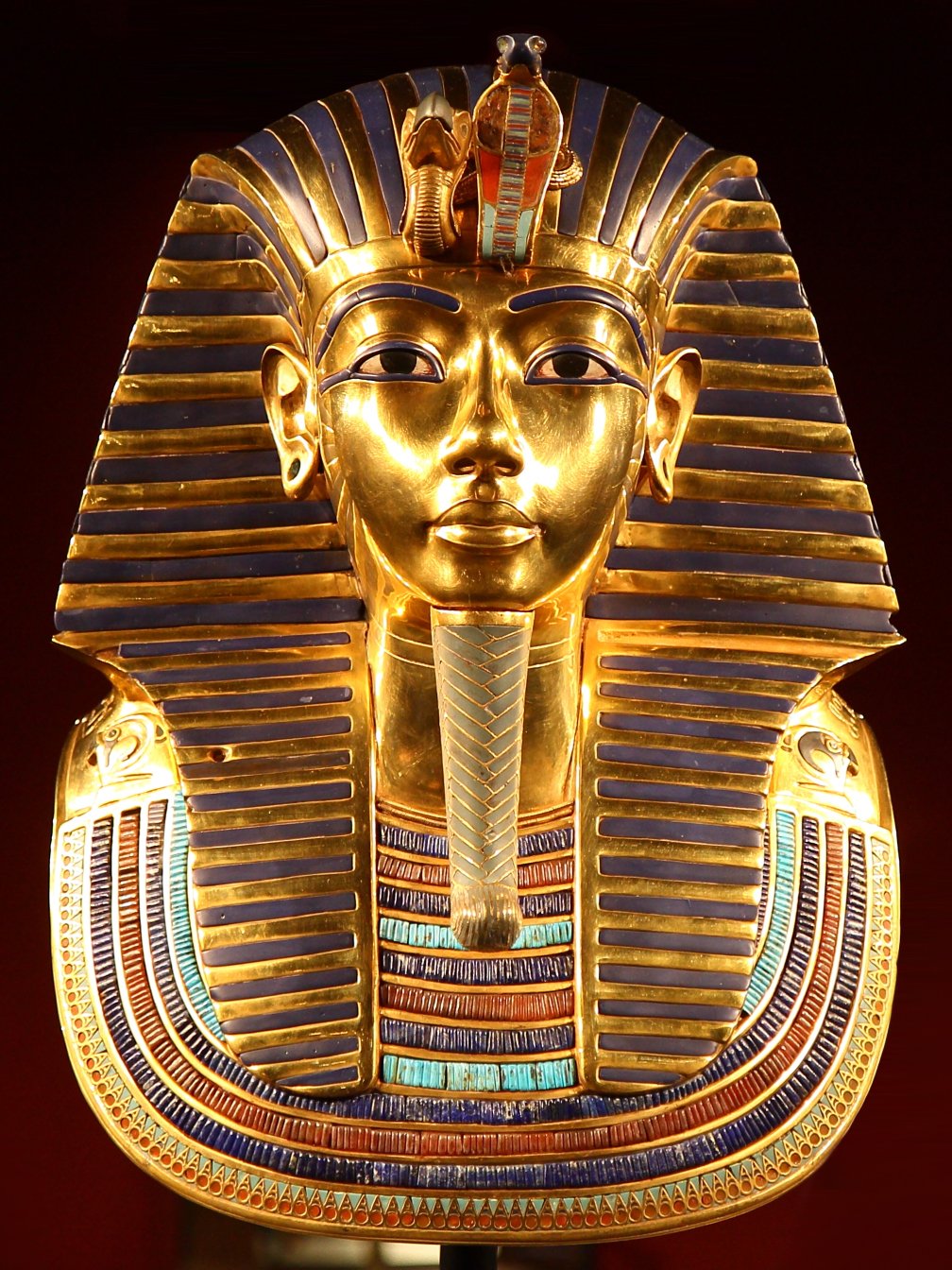
- Tutankhamun, KV62. Famous because of what Howard Carter found in it, not because of the tomb itself, which is small and barely decorated. The king's mummy is still there in a climate-controlled case. You go for the history.
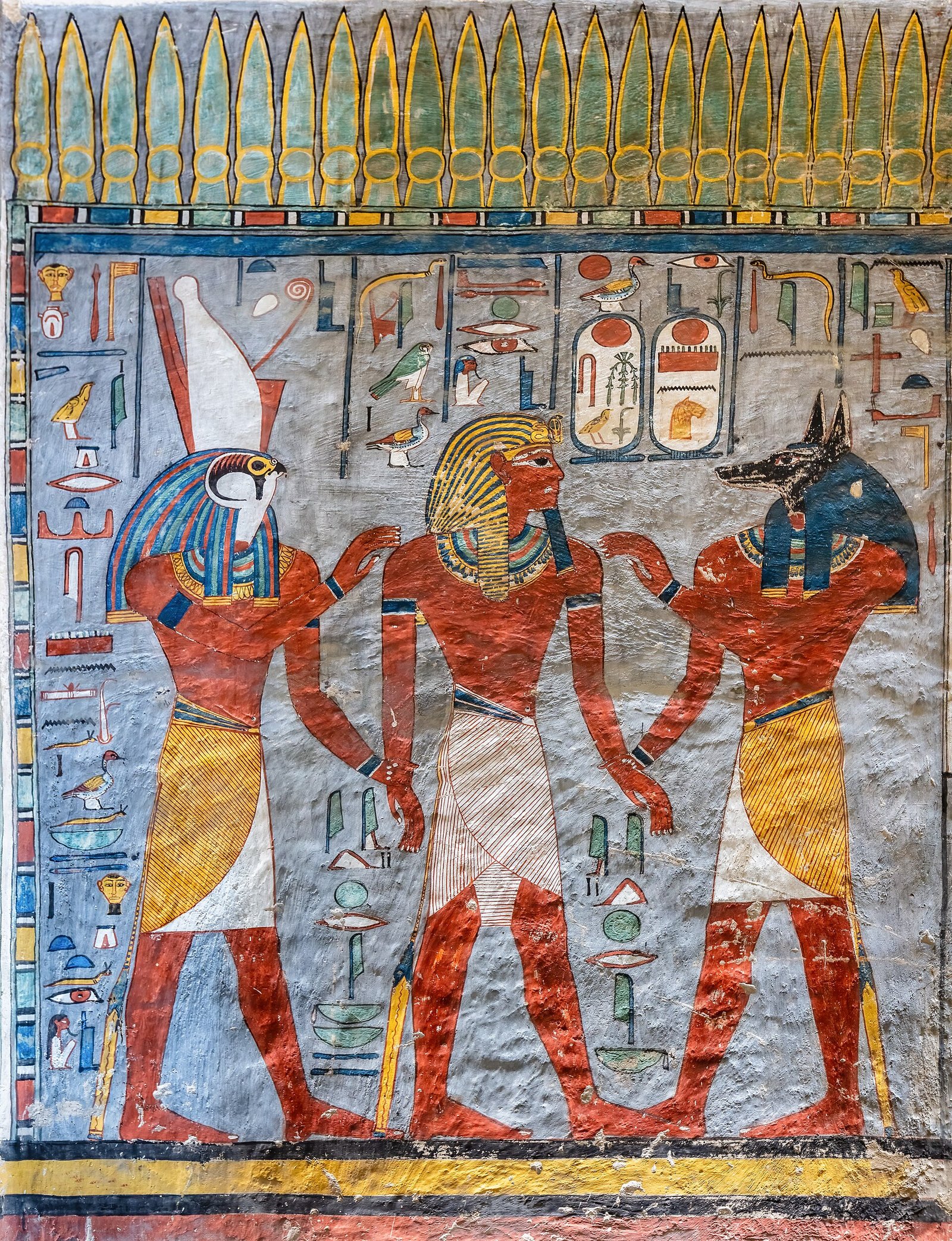
- Ramesses V and VI, KV9. The best value on the site. The double ceiling shows the sky goddess Nut swallowing the sun in the evening and giving birth to it at dawn, in remarkable condition, for a fraction of what Seti I costs. Learning to recognize a handful of gods before you go turns these walls from pattern into narrative.
You may also see the tomb of Ay, KV23, listed as an extra. It is worth knowing that Ay lies in the West Valley, a separate branch of the wadi some distance from the main site with its own access. It is not part of a standard Valley of the Kings visit, and reaching it needs a specific arrangement with your driver or guide.
If your budget stretches to one extra ticket only, buy Ramesses V and VI. It costs a few dollars and it is spectacular. Keep Seti I for a return trip or for the day you decide to treat yourself, and treat Tutankhamun as optional unless seeing the mummy matters to you personally.
Opening hours and the hour that matters
The valley opens every day of the year, from 6:00, and closes at 17:00 for most of the year, with a modest extension into the early evening in the height of summer. Last admission is normally an hour before closing. Hours do shift, so have your hotel or guide confirm the closing time for the day you are going rather than relying on any published table, this one included.
| Season | Opens | Closes | Best time to arrive |
|---|---|---|---|
| Winter, October to April | 6:00 | 17:00 | 6:00 to 8:00 |
| Summer, May to September | 6:00 | 17:00, sometimes later | 6:00 to 7:30 |
Arriving at opening is the single best decision you will make in Luxor. Cruise groups start landing on the west bank from about 10:00, and between 11:00 and 15:00 the valley is both crowded and genuinely unpleasant. At 6:30 you can have a tomb almost to yourself. It is also the hour the balloons are coming down over the west bank, so a balloon flight at dawn slots in ahead of the valley on the same morning without a scheduling conflict.
Getting there from Luxor
The site is on the west bank, roughly thirty minutes from central Luxor. There are three sensible ways across.
- A guided west bank tour. Pickup from your hotel or your cruise boat, the crossing, and the Valley of the Kings, Hatshepsut and the Colossi covered in one morning. The simplest option, and the only one that comes with someone who can read the walls to you.
- A taxi for the half day. Agree a fixed price for the whole morning including waiting time before you get in. Fine if you prefer to move at your own pace, though you get no historical context at all.
- The public ferry plus a taxi. The local ferry crosses for a few pounds and taxis wait on the far bank. Cheapest, slowest, and the most enjoyable if you like arriving somewhere the way residents do.
Planning this trip yourself takes hours. We build it for you, and we answer every question before you commit to anything.
How much time to allow
For the valley alone, entering three tombs plus one extra ticket, allow two to three hours inside the site. Add Hatshepsut and the Colossi of Memnon and the full west bank morning runs to four or five hours, finishing around lunchtime, which is exactly when you want to be somewhere with air conditioning.
Do not try to compress this into a rushed cruise stop. If your itinerary includes a cruise, Luxor almost always comes with two nights, which is comfortably enough. If you are building the trip yourself, the question of how many days Egypt needs usually resolves as at least two full days in Luxor, with the domestic flight from Cairo taking about an hour.
Heat, water and what to wear
The valley is a rock amphitheatre with essentially no shade, and the air inside the tombs is hot, still and heavy with the breath of everyone ahead of you. Luxor summers reach the mid-forties Celsius in the afternoon, and even in the shoulder months mid-morning is warm work.
Carry at least a litre and a half of water per person and refill before you go through the gate. Bring a hat, sunglasses and sunscreen, and wear closed, comfortable shoes, because the staircases are steep and the ground is uneven and loose. Light, breathable clothing that still covers your shoulders and knees is the right call, both for the sun and out of respect for local norms, and the general rules on what to wear in Egypt apply here as much as anywhere.
A small torch helps in the darker chambers, pointed at the floor rather than the walls. Above all, avoid the middle of the day. If you have flexibility over when you travel at all, the best months for visiting Egypt are the winter ones, and Luxor in January is a completely different experience from Luxor in July.
Photography and what not to touch
Photography with a phone is generally permitted inside the tombs on the general ticket in 2026. Rules do change and individual tombs can be excepted, so check the signs at each entrance and ask the inspector at the gate rather than assuming. Professional camera equipment needs a separate photography permit, bought at the same ticket office.
Two rules are absolute wherever you are. No flash, ever, because it damages pigment that has survived thirty-three centuries. And do not touch the walls. The oil from human hands is one of the main causes of deterioration in these tombs, and the reason the rotation system exists in the first place.
Valley of the Kings tours with an Egyptologist guide
The Valley of the Kings is one of the sites where a guide changes what you actually see. Without one, the walls are beautiful patterns. With one, they are a text describing the twelve hours of the night, and you understand why a particular king is shown doing a particular thing on a particular wall. Our guides are qualified Egyptologists, and they also check the day's open-tomb list before you buy, which saves you from paying for a rotation you cannot use.
The valley is included in every itinerary we run through Luxor. Nile cruises between Luxor and Aswan start from US$755 and include the west bank excursion, and our classic seven to ten day programs covering Cairo, Luxor and Aswan with domestic flights start from US$1,348. Day excursions in Luxor start from US$120. Current inclusions and prices are on each program page, and you can compare the full range of Egypt tour packages there. International flights to Egypt are not something we sell or arrange, so you book those yourself and we handle everything from arrival.
To plan a west bank morning or a full Egypt itinerary, message us on WhatsApp at +201032295513 and tell us your dates and how much time you have in Luxor.
Common questions about the Valley of the Kings
What does a Valley of the Kings ticket include?
Which tombs are open in the Valley of the Kings?
What is the best time of day to visit the Valley of the Kings?
How long do you need at the Valley of the Kings?
Can you take photographs in the tombs?
What should you wear and take to the Valley of the Kings?
Can I book a Valley of the Kings tour from Luxor?
Yes. Most Valley of the Kings tours start from a Luxor hotel or cruise ship early in the morning, cross to the West Bank and combine the valley with the temple of Hatshepsut and the Colossi of Memnon. With an Egyptologist you choose the open tombs worth your ticket that day, and the visit usually fits in a morning.
Where is the Valley of the Kings?
The Valley of the Kings is on the West Bank of the Nile at Luxor, in a dry valley of the Theban hills behind the Temple of Hatshepsut. From the hotels on Luxor's East Bank it is roughly half an hour by road across the bridge, and it is usually combined in one morning with Hatshepsut and the Colossi of Memnon.
How many tombs are in the Valley of the Kings?
Archaeologists have numbered 65 tombs and chambers in the valley, from KV1 to KV65, although only a rotating selection is open at any one time. Some are grand royal tombs, like those of Seti I and Ramesses VI; others are simple pits. The most famous, Tutankhamun's tomb, is KV62, found almost intact by Howard Carter in 1922.
Can you visit the Valley of the Kings from Hurghada?
Yes. It is a long but popular day trip: the drive from Hurghada to Luxor takes about four hours each way, and most tours combine the valley with Hatshepsut's temple and Karnak on the same day. If you can, an overnight in Luxor makes the visit far less rushed. See our <a href="/en/luxor-day-trip-from-hurghada/">Luxor day trip from Hurghada</a> guide for how the day is organized.
Let us put the trip together
We are a local agency in Egypt. Tell us your dates and what you want to see, and we will come back with a plan, the practical details sorted and someone to ask when you are here.
Part of our guide to
Destinations and Monuments 6 guides
This article is part of that pillar. The rest of it:
- ▸Abu Simbel Sun Festival: 22 October and 22 February
- ▸Abu Simbel: Tickets, Timing and Getting There
- ▸Grand Egyptian Museum: Tickets, Opening Hours and a Complete Visiting Guide for 2026
- ▸Climbing Mount Sinai at Sunrise: the Night Ascent, the Summit and St Catherine's Monastery
- ▸The National Museum of Egyptian Civilization and Its Royal Mummies
- ▸The Sinai Peninsula: Where Egypt Crosses Into Asia
Keep exploring
To finish planning your trip to Egypt
- ▸Hurghada All Inclusive Resorts: What Is Included and Where
- ▸Pyramids of Giza Tour: Guided Visit with an Egyptologist
- ▸Catacombs of Kom el Shoqafa, Alexandria: Visitor Guide
- ▸Luxor in One Day: The Itinerary That Works, Hour by Hour
- ▸Tombs of the Nobles, Luxor: Which Tombs to See
- ▸Unfinished Obelisk Aswan: Why It Cracked and How to Visit
- ▸Real vs Fake Papyrus: How to Tell Real Papyrus in Egypt
- ▸See all our Egypt tours