Recent archaeological discoveries in Egypt keep coming from the same handful of places, and most of them you can visit
Recent archaeological discoveries in Egypt keep coming from the same handful of places, and most of them you can visit
Recent archaeological discoveries in Egypt are not scattered at random. Season after season they come out of the same few zones: the Saqqara necropolis south of Cairo, the Luxor west bank, the Old Kingdom cemetery at Abusir, the animal catacombs of Tuna el Gebel near Minya, and the seabed around Alexandria. Most of those zones are open to visitors even while the missions are digging a few hundred yards away. The trick is knowing which finds you can walk into, which you will only see in a museum case, and how to read a headline before you build a trip around it.
Why Egypt never stops producing new finds
Egypt has been excavated for two centuries and the people who work there will tell you that most of what lies under the sand has never been touched. Cemeteries were reused for thousands of years, the desert preserves wood, linen and paint, and every generation of archaeologists has better tools than the last.
Dozens of foreign missions and a large Egyptian team work under permits from the antiquities authority every winter, each on a concession it returns to for years or decades. When a season ends, the ministry announces the best of what came up. That is why the news arrives in bursts, in the cooler months, from the same place names.
For a traveler this is good news. A site that has produced finds for twenty seasons will produce more, and the tombs already opened there are the ones you can see today. You do not chase the announcement. You go to the zone.
Saqqara: where most of the headlines come from
If you have read about painted coffins pulled from a shaft, a sealed tomb with its reliefs still bright, or a catacomb of mummified cats, it was probably Saqqara. The necropolis of Memphis runs for miles along the desert edge south of Giza, and an Egyptian mission has worked the cliffs below the Bubasteion, the cat sanctuary, for many seasons. That is where the coffin caches and the New Kingdom tombs come from. Around the pyramid of Teti and the causeway of Unas, other teams keep opening Old Kingdom mastabas.
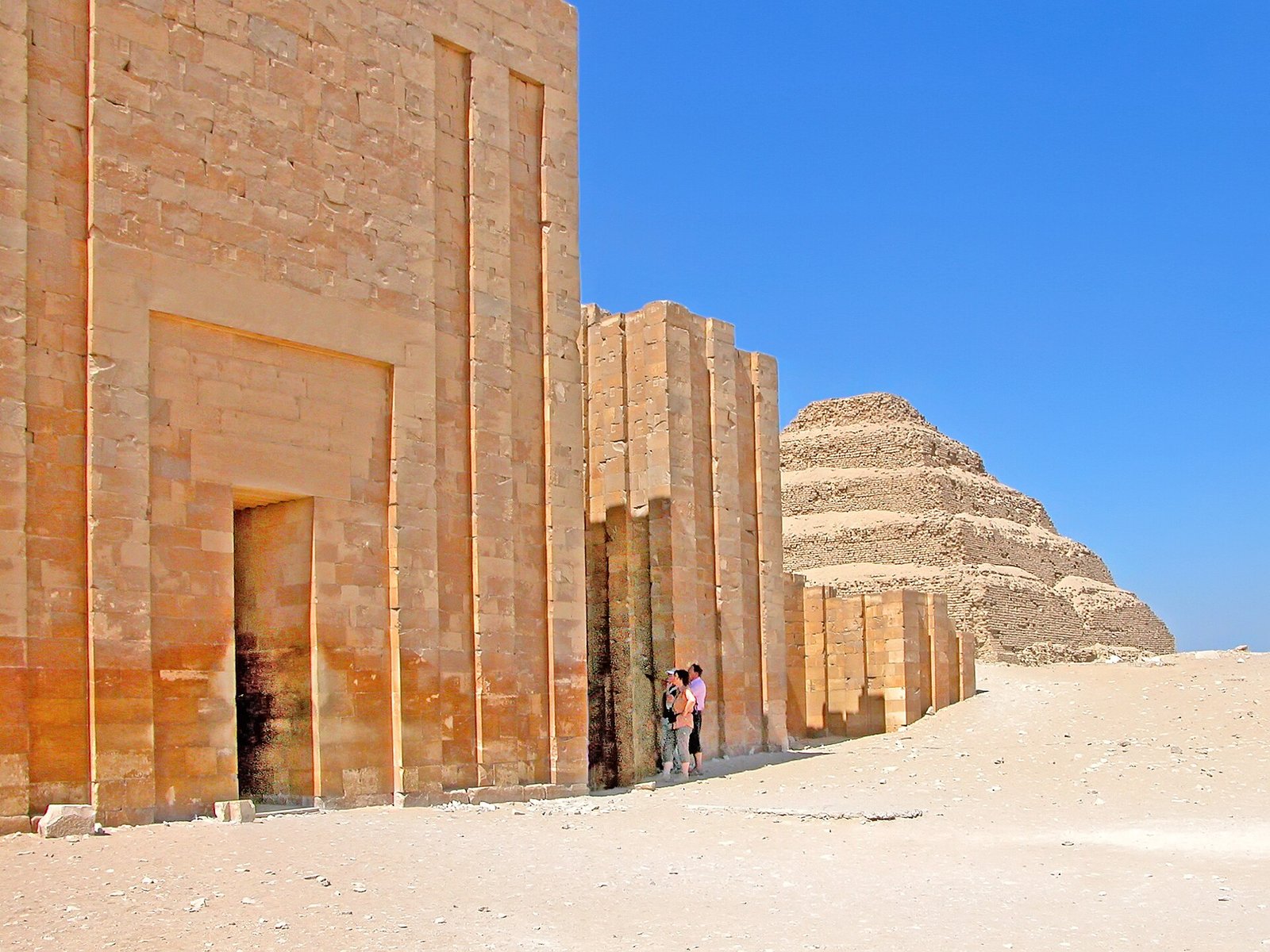
What can you see? Plenty. The Step Pyramid of Djoser has been through a long restoration and its interior galleries are open, as is the South Tomb in the same enclosure. The Serapeum, with its granite bull sarcophagi, is open. The mastabas of Ti, Mereruka and Kagemni are the finest painted Old Kingdom tombs you can walk into. Recently cleared tombs near the Bubasteion open in stages, then close for conservation, so the list changes.
Give Saqqara a full morning, not the forty minutes it gets on a standard pyramids tour, ask for the Bubasteion area and the Teti cemetery by name, and pair it with Dahshur, twenty minutes south, where the Bent and Red pyramids are open and nearly empty. It is the day we recommend first to anyone who came because of an article. Our Cairo excursions page lists the combinations that work, and the pyramids of Giza guide explains how Giza and Saqqara fit in the same two days.
The Luxor west bank: the lost golden city and the working hills
The other great engine of discoveries is the desert across the river from Luxor. The site the press called the lost golden city sits near the edge of the cultivation, south of the royal mortuary temples, and it is a settlement rather than a cemetery: bakeries, workshops, walls with the street plan intact. It is not open to visitors: work is ongoing, the mudbrick is fragile, and there is no public infrastructure. You drive past it on the way to Medinet Habu, and that is as close as it gets.
Deir el Bahari, the bay of cliffs holding the temple of Hatshepsut, has hosted a Polish mission for decades, and their restoration is why the upper terraces look as they do. The temple is fully open. Next door, the hill of Dra Abu el Naga has been worked by several teams, including a long-running Spanish mission, with finds that include intact burials, gardens beside tombs and painted coffins. Those tombs are not open, but the hill overlaps with the Tombs of the Nobles, where a rotating handful of private tombs are open and superb.
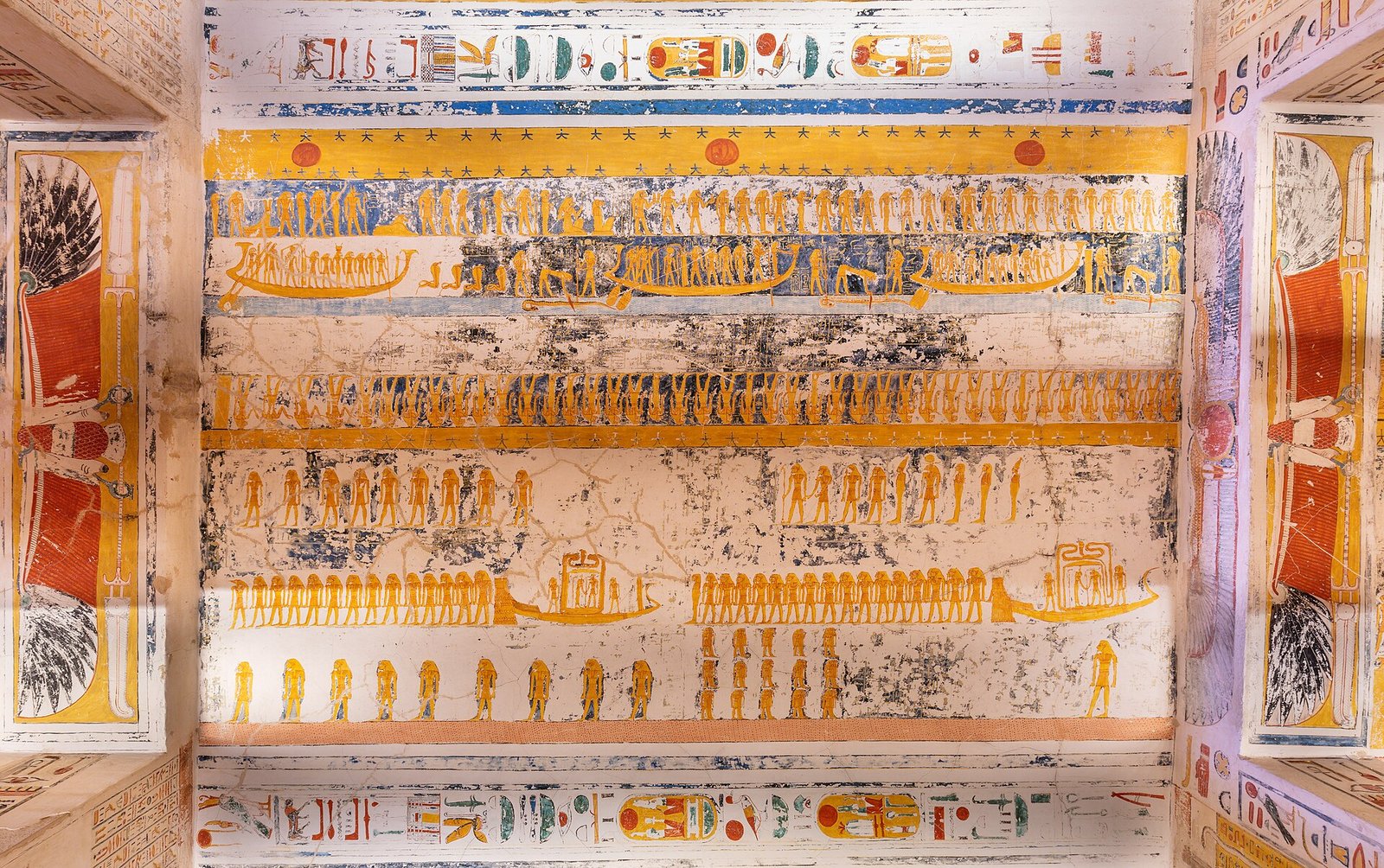
The Valley of the Kings is a special case. Digs continue in the side valleys and the tomb list changes as conservation finishes, so a tomb closed on your last visit may be open now. Our guide to Valley of the Kings tickets and tombs explains the ticket tiers and which tombs earn the extra ticket.
A discovery-minded west bank day runs Valley of the Kings at opening, Deir el Bahari, a few noble tombs or Deir el Medina, and Medinet Habu in the afternoon. The Luxor excursions page shows how it pairs with an east bank day.
Abusir: the Old Kingdom cemetery the tour buses skip
Between Giza and Saqqara lies Abusir, a field of ruined Fifth Dynasty pyramids and sun temples where a Czech mission has worked for generations. Their finds are the scholarly kind that fill the journals rather than the front page: tombs of priests and officials, papyrus archives, statues, a boat burial. When you read that an untouched tomb of a court official was found near the pyramid of Sahure, this is where it was.
Access is the difficulty. Abusir has never been a standard stop, it has opened and closed to visitors over the years, and it is a place you arrange, not one you turn up to. If it matters to you, tell us when you book and we check with the inspectorate rather than promising something from a guidebook.
Tuna el Gebel and Minya: catacombs of ibises, baboons and priests
Four hours south of Cairo, in Middle Egypt, the necropolis of Tuna el Gebel is one of the most productive sites of recent seasons and one of the least visited. The catacombs hold millions of mummified ibises and baboons, offerings to the god Thoth, in galleries that run a long way under the desert. Around them an Egyptian mission keeps opening family tombs of high priests, each with stacks of coffins and papyri.
The site is open. You can go down into a stretch of the animal galleries, visit the tomb of Petosiris with its blend of Egyptian and Greek art, and see the tomb of Isadora, one of the most affecting memorials on the Nile. Half an hour away, the rock tombs of Beni Hasan look down on the river, and the region also holds Tell el Amarna, the city of Akhenaten.
Minya is a long road trip, hotels are simple, and you travel with your own driver and guide. We build it as a two-day detour between Cairo and Luxor for people on a second trip to Egypt who have done the classics and want the working sites.
Alexandria: the harbor floor and the search at Taposiris Magna
Alexandria produces two kinds of news. The first comes from underwater. The royal quarter, the base of the lighthouse and streets of the Ptolemaic city lie a few yards down in the eastern harbor and at Abu Qir, and marine archaeologists have been raising statues, sphinxes and columns from the silt for years. The second comes from Taposiris Magna, a temple site west of the city, where a long-running mission has explored tunnels and burials hoping to find the tomb of Cleopatra. Every few seasons a headline says it is close. No tomb has been found.
What can a visitor do? Pieces raised from the seabed are on display in the Alexandria National Museum, and the fort of Qaitbay stands roughly where the lighthouse stood, with its blocks visible in the breakwater. Licensed operators have run dives to the submerged sites when permits allow, though visibility is poor. Taposiris Magna is reachable by car along the coast road, but the working areas are fenced. Kom el Shoqafa, the Roman catacombs in the city, is the best underground visit in Alexandria and works as a day trip from Cairo.
The Grand Egyptian Museum: where the new pieces end up
A find does not go from the shaft to a display case. It goes to a conservation lab, then a storeroom, then, if it is exceptional, a museum. The Grand Egyptian Museum at Giza has the country's largest conservation center on its campus, and many of the coffins and statues you read about pass through it. Some go on display there. Others end up at the National Museum of Egyptian Civilization, the Egyptian Museum on Tahrir Square, or a regional museum. A large share stays in the site magazines for study.
So when a story says a discovery will be exhibited, read it as: a few pieces may appear, somewhere, at some point. The reliable way to see recently found material is the museums where the great collections already sit. The Tutankhamun collection and the cedar boat of Khufu are at the Grand Egyptian Museum, and our Grand Egyptian Museum guide explains how to plan the visit around the galleries that matter.
How a dig season works, and why it matters for your dates
Excavation in Egypt is a winter activity. Missions arrive around October and pack up by spring, because trench work in a Saqqara summer, with the ground over 100 F (38 C), is not sustainable. The antiquities authority assigns an inspector to each mission, and announcements cluster at the end of a season.
What this means for a visitor:
- In winter you will see missions at work: tents, sieves, baskets on the far side of a rope. You cannot enter the trench, but you can often watch from a path, and a guide who knows the inspector may get you a short explanation.
- Parts of a site close during active work. A tomb open last year may be shut while a mission clears the shaft beside it. This is why we never promise a specific tomb.
- In summer the missions are gone, the sites are quieter, and conservation teams sometimes open what they finished.
How to read a discovery headline without being misled
Archaeology stories pass through two filters: the ministry's press office, which wants the find to sound important, and the news desk, which wants it to sound unique. Neither is lying, but the language drifts.
- Who found it. A ministry announcement of an Egyptian mission's find is usually a burial at a known site. A university announcement is often a paper about something found seasons ago.
- Found versus re-found. Many stories describe the restoration of a tomb known for a century. Not new, and often the one you can visit.
- Oldest and first. These words almost always carry a qualifier: the oldest of its type, the first in this cemetery. Read the qualifier.
- Lost city and Cleopatra's tomb. Two phrases that guarantee coverage. A lost city is normally a settlement already known from texts. Cleopatra's tomb has been close for a very long time.
- Opened to the public. The only phrase that changes your trip. Everything else is context.
When you send us a story, we check whether the site is visitable, whether the find is accessible, and what nearby is open from the same period.
Which recent-find sites you can visit, and which you cannot
Site status changes every season, so treat this as a planning tool rather than a promise, and ask us for the current situation before you fix dates.
| Area | What keeps turning up | Can you visit? |
|---|---|---|
| Saqqara, Bubasteion and Teti cemetery | Coffin caches, New Kingdom and Old Kingdom tombs, animal catacombs | Yes; new tombs open and close. |
| Saqqara, Djoser complex | Restorations and reopenings inside the Step Pyramid enclosure | Yes, interior included. |
| Luxor, lost golden city area | Settlement remains, workshops, streets | No. Active excavation, no public access. |
| Luxor, Deir el Bahari | Restoration of Hatshepsut's temple, nearby tombs | Yes, the temple is fully open. |
| Luxor, Dra Abu el Naga | Private tombs, gardens, coffins | Partly; adjacent noble tombs only. |
| Valley of the Kings | Side valley work, tomb conservation and reopenings | Yes, on a rotating tomb list. |
| Abusir | Fifth Dynasty tombs, papyri, boat burials | By arrangement only, and not always. |
| Tuna el Gebel | Animal catacombs, priestly family tombs | Yes. Long drive, well worth it. |
| Alexandria harbor | Statues and architecture from the seabed | Museums, or an advanced dive. |
| Taposiris Magna | Tunnels, burials, the Cleopatra search | The ruin is reachable; working areas are closed. |
The places with the most headlines, Saqqara and the Luxor west bank, are also the places with the most open tombs. Build around them.
What a guide with an Egyptology background adds
Every licensed guide in Egypt has studied Egyptology, but there is a difference between a guide who recites and a guide who reads, and on this kind of trip that difference is the whole point. A guide who follows the journals can stand in the Teti cemetery and tell you which mastaba was cleared recently, why its reliefs look different from the ones next door, and what the excavators argued about.
They also know people: the inspectors, the foremen, the guard with the key to a tomb that is technically closed but opens for ten minutes if the right person asks. We do not promise that, but it happens, and only with a guide who is known on the site.
If the history itself draws you, our guide to the pharaohs as god kings of the Nile is a primer for the dynasties you will hear about most.
How to build a trip if you follow archaeology news
The shape we suggest, in priority order:
- Cairo, three days. Giza and the Grand Egyptian Museum on one day. Saqqara and Dahshur on the second. The Tahrir museum or the National Museum of Egyptian Civilization on the third, plus Abusir if it can be arranged.
- Luxor, three days. The west bank discovery day above, a second west bank morning for the noble tombs and Deir el Medina, and Karnak, Luxor Temple and the Luxor Museum.
- Optional Minya detour, two days, between Cairo and Luxor, for Tuna el Gebel, Beni Hasan and Amarna.
- Optional Alexandria, one or two days, from Cairo.
Travel in the cooler months to see missions at work, or in late spring and autumn for quieter sites. Ten to twelve days covers the core; two weeks adds Minya and Alexandria. Tell us which stories brought you here and we build the days around the sites behind them.
Frequently asked questions
Can tourists visit the sites where recent discoveries were made in Egypt?
Usually yes, at the level of the site. Saqqara, the Luxor west bank, Tuna el Gebel and Deir el Bahari are open, and tombs that have finished conservation join the visitor list. What you cannot enter is the active trench or a tomb still being cleared. The lost golden city near Luxor and the working areas of Taposiris Magna are closed. We check each site before your dates.
Where do newly discovered artifacts in Egypt go on display?
First to a conservation lab, often the one on the Grand Egyptian Museum campus, then to storage for study. The finest pieces go on display at the Grand Egyptian Museum, the National Museum of Egyptian Civilization, the Egyptian Museum on Tahrir Square or a regional museum. Many objects never go on show. If recently found material matters to you, the museums are the reliable option.
What is the best time of year to see archaeologists working in Egypt?
Winter. Foreign missions arrive in autumn and leave by spring because summer heat makes trench work impractical. In those months you will see tents, sieves and workers at Saqqara, Abusir and on the Luxor west bank, and you can often watch from a path. The trade-off is that parts of a site may be closed while a team works beside them.
Is the lost golden city near Luxor open to visitors?
No. It is an active excavation of fragile mudbrick with no visitor infrastructure. The area sits near the road to Medinet Habu, so you pass close to it and your guide can explain what has been found. For the same period, Deir el Medina, the workers' village on the west bank, is open and gives a real sense of how such a place looked.
Can I dive to the underwater ruins in Alexandria?
Sometimes. Licensed operators have run dives to the submerged royal quarter and lighthouse area when permits and sea conditions allow, but visibility is poor and it is not for beginners. Most visitors see the harbor finds in the Alexandria National Museum and the lighthouse blocks in the breakwater beside Qaitbay fort. Tell us if diving matters and we find out what is possible.
Do I need a specialist guide for a trip focused on new discoveries?
You need a licensed guide who reads. All Egyptian guides study Egyptology, but on this kind of trip the value comes from someone who follows the missions, knows the inspectors and can explain what changed since last season. We assign guides by interest, so when you tell us the trip is about the digs, you get one who is known on the sites.
See the ground the news comes from
Send us the stories that caught your eye and your travel dates. We will tell you which of those sites you can walk into, which tombs are open that month, and where the pieces you read about are on display.