
Belly dance in Egypt is called raqs sharqi, and this is where to see it done properly
Belly dance in Egypt is called raqs sharqi, and this is where to see it done properly
Belly dance in Egypt goes by its real name here, raqs sharqi, the dance of the East, and Cairo is the city that turned it from a wedding dance into a stage art in the cabaret years of the 1930s and 1940s. As a visitor you see it in three places: on a Nile dinner cruise in Cairo, at the evening shows of the big hotels in Cairo, Luxor and Hurghada, and, if you prefer the folk side, in the tanoura and Sufi whirling performed at Wekalet el Ghouri in Islamic Cairo. Below: where the dance comes from, how to tell a real show from a tourist trap, what to wear, and how we fit a dinner show into a Cairo evening.
What raqs sharqi is, and why Egypt is the place it comes from
The phrase belly dance was coined by nineteenth-century Western visitors who had no word for what they were seeing. Nobody in Cairo says it. Egyptians say raqs sharqi, oriental dance, when they mean the stage art, and raqs baladi, the dance of the people, when they mean what happens at a wedding the moment the drums start.
Baladi is the root. It is a social dance Egyptian women have done among themselves for generations, feet planted, knees soft, the hips marking the beat of the tabla drum. Sharqi is its theatrical cousin: it travels across a stage, borrows arm lines from ballet, adds veils and an orchestra, and is performed by a professional for an audience. Both share the same vocabulary of hip drops, shimmies and undulations.
Why Egypt? Turkey, Lebanon and North Africa have oriental dance traditions of their own, but Cairo had a combination nobody else did: a living folk dance, a capital with a paying audience, and a film industry that shipped the result to every Arabic-speaking country. The dance never left the streets, either. It still shows up at every Egyptian wedding, and that popular base is what no studio in Los Angeles or New York can teach. It is why dancers from Eastern Europe, Latin America and the United States come to Cairo to train, and often stay.
The golden age: Cairo's cabarets and Egyptian cinema
The version of the dance the world recognizes was invented in downtown Cairo between roughly the 1920s and the 1950s. The central figure was Badia Masabni, a Syrian-Lebanese entrepreneur who opened entertainment halls in the city center and reworked the party dance into a stage number. She added floor movement, veils, a full orchestra, and the beaded two-piece costume Hollywood later copied.
Her halls produced the stars who then filled the movie screens: Samia Gamal, Tahia Carioca, Naima Akef. Egyptian films of those decades were watched from Morocco to Iraq, almost every one carried a dance number, and those scenes became the visual reference for a whole region. The songs of the era, Umm Kulthum and Abdel Halim Hafez above all, are still the backbone of any serious show.
Downtown Cairo keeps the geography of that period: art deco cinemas, old coffee houses, and the blocks around Talaat Harb square where the halls once stood. Walking it with someone who knows what stood on each corner is part of how we plan Cairo at night.
Where to see belly dancing in Cairo today: the Nile dinner cruise
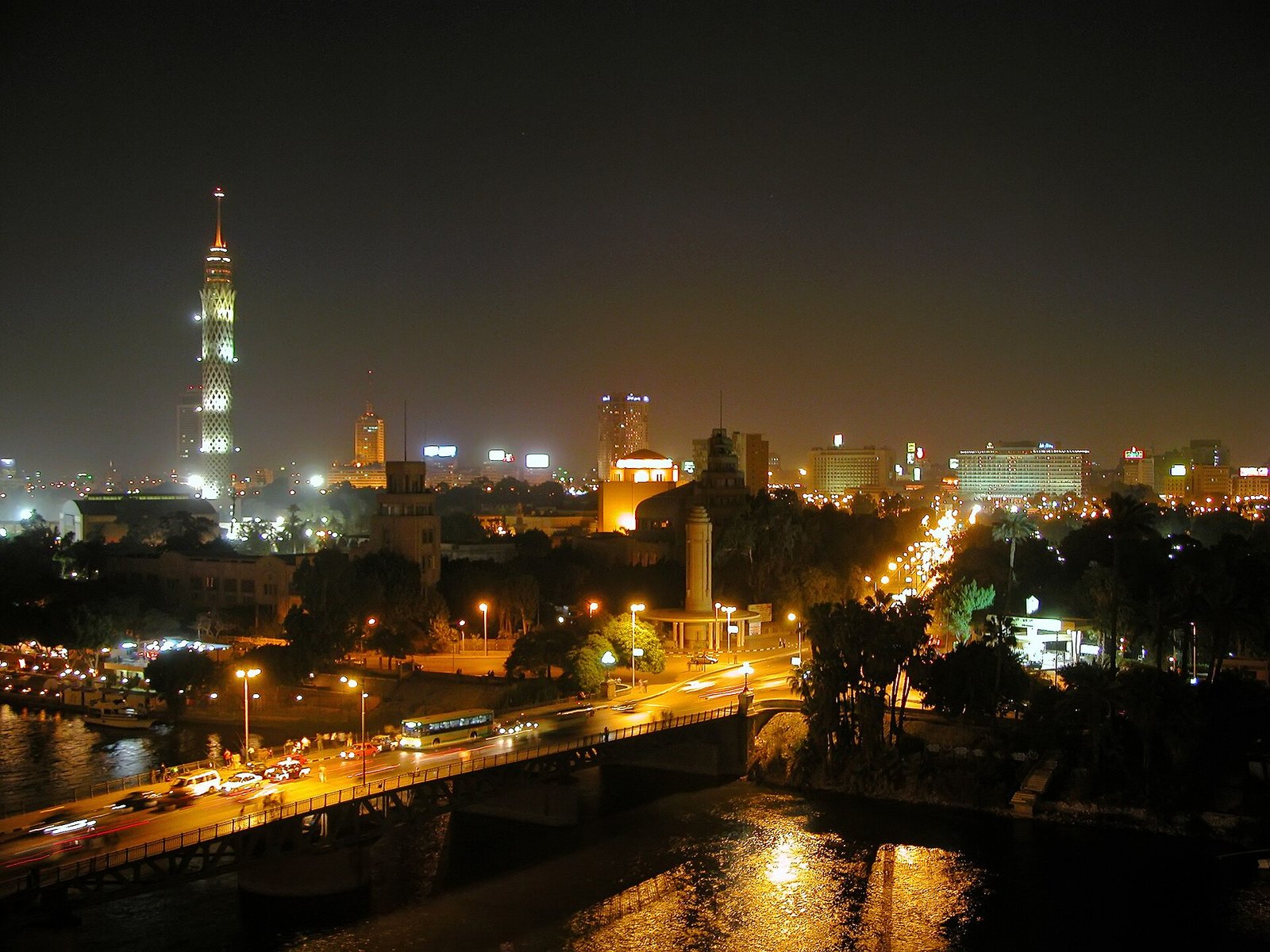
For a visitor with a few days, the simplest and most pleasant way to see the dance is a dinner cruise on the Nile in Cairo. A restaurant boat leaves the downtown docks after dark, sails slowly with the lit bridges on both sides, serves dinner, and between courses puts on a show with a dancer, live musicians and almost always a tanoura number.
Everything happens in one place, nobody waits until two in the morning, the city is the backdrop, and families and groups feel at ease. It runs about two hours and fits after a day at the Pyramids without finishing you off.
Quality varies a great deal from boat to boat. Some carry a live band and a dancer of real standing; others play recorded music and give you ten minutes of dancing wedged between the soup and the dessert. You cannot tell the difference from the dock, only from having sat through both, which is why we choose the boat ourselves rather than leaving it to a hotel concierge.
Hotel shows and the downtown nightclubs
The second option is the big hotels. Several five-star hotels downtown, on the Nile and near the Pyramids stage oriental dance nights, sometimes only on certain nights or in high season. These are usually the highest artistic standard a visitor can reach, with a full orchestra and first-rank dancers.
The catch is the clock. Cairo tradition puts the headline dancer on very late, often past midnight, after singers and warm-up acts. If you have a dawn start for Saqqara the next day, think hard. Programs change constantly, so check what is on during your specific week.
The downtown nightclubs and the venues along the Pyramids road are a different world: rooms built for an Egyptian and Gulf Arab crowd, loud, smoky, running until dawn, with a show that is superb or dreadful depending on the night. They are for repeat visitors with an Egyptian friend, and we do not put them in itineraries.
| Option in Cairo | Timing | Atmosphere | Best for |
|---|---|---|---|
| Nile dinner cruise | Early evening, about two hours | Family friendly, dinner served, the lit city on both banks | First visit, families, groups, couples |
| Hotel show | Night, headline dancer comes on late | Dressy, full orchestra, seated tables | Anyone chasing the best artistic level |
| Downtown nightclub | The small hours | Local, loud, unpredictable | Repeat visitors with Egyptian company |
| Tanoura at Wekalet el Ghouri | Early evening, set nights only | Heritage courtyard, no dinner, no alcohol | Everyone, including families and solo women |
The folk alternative: tanoura and Sufi whirling at Wekalet el Ghouri
If belly dance does not appeal, or you want something Egyptian to the bone, the answer is tanoura. It is the spinning dance descended from the Sufi dervish tradition, in its Egyptian folk version: a male dancer in layered skirts of bright colors turns for minutes without stopping, then peels the skirts off and spins them above his head like wheels, to drums, a reed flute and a chanting chorus.
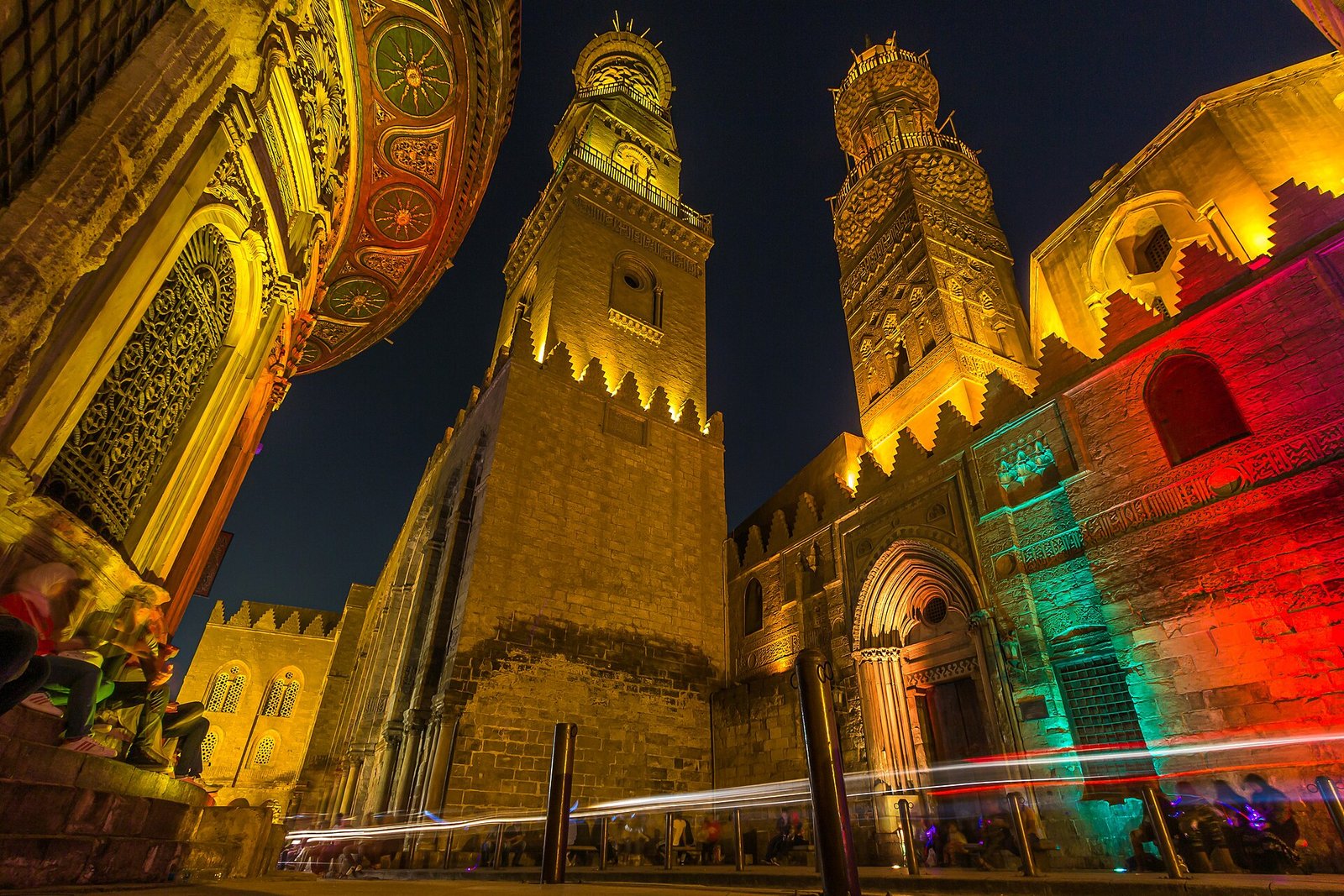
The place to see it is Wekalet el Ghouri, a restored Mamluk caravanserai in the heart of Islamic Cairo, a few steps from Al Azhar mosque and the bazaar. A traditional troupe performs there on set evenings in the stone courtyard, with no dinner, no alcohol, and an audience of Cairo families and travelers. Check which nights it runs during your stay and arrive early, because the courtyard fills.
It pairs beautifully with an afternoon in the neighborhood: the mosques of Al Muizz street, a wander through Khan el Khalili as the stalls shut, and then the show on the hour. It is the evening we recommend most to anyone who wants to understand Islamic Cairo beyond its monuments.
Luxor and Hurghada: shows in hotels and resorts
Outside Cairo the scale changes. In Luxor a few Nile-side hotels and the cruise boats put on evenings with a dancer and sometimes a tanoura after a day of temples. Nile cruises usually include a galabeya party, where the crew talks passengers into dressing Egyptian and dancing; it is a party, not a professional show.
In Hurghada, El Gouna and Sharm el Sheikh nearly every resort has an amphitheater with nightly entertainment that includes, on some nights, an oriental dance or tanoura act. Standards range from excellent to karaoke. The practical rule: the great show is in Cairo; on the Red Sea you enjoy the atmosphere without expecting the same thing. If the dance matters to you, add a Cairo night rather than hoping the resort delivers it. The rest of the stay is covered in Luxor excursions and excursions from Hurghada.
How to tell a good show from a tourist trap
Signs of a good show
- Live music. A tabla, an accordion or a violin on stage changes everything. The dancer improvises over the drum solo, which is the part Egyptians wait for.
- An Egyptian repertoire. If you hear the classics of Umm Kulthum or Abdel Halim, the house knows what it is doing. If you hear international pop with an Arabic remix, it does not.
- A dancer who dances for the room, not the tables. Good raqs sharqi holds the stage. A bad show sends the dancer to the tables every two minutes to collect tips and pose for photos.
- Structure. A serious set has an entrance, a classical piece, a drum solo and an exit, and lasts long enough to develop.
Signs of a tourist trap
- It is sold to you on the street beside the Pyramids or outside the museum, in a hurry, with a car already waiting.
- Recorded music and a short number bolted onto dinner, like wallpaper.
- Pressure to get on stage, or to pay for a photo with the dancer.
- No information in advance about who performs, which boat it is or where the dock is.
Etiquette, what to wear, and tipping in general terms
What to wear. On a dinner cruise or at a hotel the code is smart casual: long pants and a collared shirt for men, a dress, skirt or pants with a blouse for women. Nobody dresses to the nines, but it is not a place for shorts and flip-flops. For the tanoura, comfortable and respectful clothes, because you are sitting in an open-air monument. Our guide to what to wear in Egypt as a woman settles the rest.
How to behave. Applaud, enjoy it, clap along when the tabla asks you to. Do not whistle, do not shout at the dancer, do not climb on stage unless invited, and no flash photography. Egyptians take this art seriously, which surprises visitors who expected something racy. It is closer to a jazz set than to Las Vegas.
Tipping. In the old-style halls there is a custom of the audience handing bills to the dancer or the musicians as a mark of appreciation. On a dinner cruise or at a hotel show that is not expected; the usual tip for the waiting staff, as in any restaurant in the country, is enough. To recognize a musician, do it discreetly through the staff. The wider habits are in our guide to tipping in Egypt.
Women and families: will you feel comfortable
This is the question we get asked most, and the answer is reassuring. A Nile dinner cruise is a family outing in Egypt. You will see Egyptian families with children and grandparents, honeymoon couples, groups of girlfriends and solo women. The show is elegant, nothing about it is lewd, and children are usually the ones who enjoy the tanoura most, because spinning colored skirts are hypnotic at any age.
The same goes for the hotel shows and, even more so, for Wekalet el Ghouri, which is a cultural performance in a heritage building. A woman traveling solo can go to any of these without a moment of discomfort. The one exception is the small-hours nightclub scene downtown, where the crowd is almost entirely male; we leave it out of every itinerary.
For families with younger kids, the dinner cruise beats a hotel show on timing alone. It ends at a normal hour and the boat itself is half the entertainment. The rest of the family logistics are in our guide to traveling in Egypt with kids.
Taking a belly dance class in Cairo
More and more women ask us for a class during their stay, and there are three formats. A private lesson with a professional dancer, in her studio or at your hotel, is the one we recommend to anyone who already dances: in one session with an Egyptian teacher you get corrections that years of classes back home never touched.
A group introduction class, with basic rhythm and a little baladi, is designed to be fun for a bachelorette group, a mother and daughter, or friends who want a story to take home. And on set dates in the year, international festivals bring teachers and students from around the world to Cairo; if you dance seriously, timing your trip to one is a plan in itself.
Bring comfortable clothes and a hip scarf if you own one; the teacher has spares. We book the teacher, the space and the transfer, and fit the class into a free afternoon. For a group of friends, a class followed by the dinner cruise the same night is as good as a Cairo evening gets.
How Explora Egipto slots a dinner show into a Cairo evening
In our itineraries the dinner show is a piece we place with care. The right day is the second or third in Cairo, once you have done the Pyramids and the museum, not the first, when you would sleep through the drum solo.
- Late afternoon. Back to the hotel with time to shower and change; your guide confirms the exact pickup time the day before.
- Transfer. Our own vehicle takes you to the dock with a margin, because Cairo traffic at dusk is unpredictable, and the guide walks you to your table.
- The boat. Dinner, the show, the lit city on both banks; around two hours on the water.
- Return. Back at the hotel at a sensible hour, no small hours, with the next morning's plan intact.
If you prefer the tanoura, the evening moves neighborhoods: Islamic Cairo at dusk, tea and the bazaar, the show at Wekalet el Ghouri, and a late dinner nearby. With three nights or more we do both; on a Cairo in 3 days plan, cruise on the second night and tanoura on the third. We choose the boat or the venue, reserve the table, and tell you what to wear. No middlemen, an English-speaking guide, and the quote arrives on WhatsApp.
Frequently asked questions
Where can you see belly dancing in Cairo?
The most comfortable place for a visitor is a Nile dinner cruise in Cairo, with dinner, live musicians, a dancer and a tanoura number on board, finished by a reasonable hour. The big hotels also program oriental dance nights, usually with the headline dancer on late. For the folk side, the place is Wekalet el Ghouri in Islamic Cairo on its set performance nights.
Did belly dance really originate in Egypt?
The social hip dance exists across the Middle East, but the stage version the world knows as belly dance, raqs sharqi, was created in Cairo between the 1920s and the 1950s, in the entertainment halls of Badia Masabni and in Egyptian cinema. The costume, the veil work and the orchestra format all date from then, which is why dancers worldwide still train in Cairo.
Is a belly dance show appropriate for families with kids and for women traveling alone?
Yes on a dinner cruise, at the hotel shows and at the tanoura in Wekalet el Ghouri. These are elegant evenings with an Egyptian audience of all ages and nothing racy about them; children usually love the spinning skirts of the tanoura most of all. The only options we do not recommend are the small-hours nightclubs downtown.
What is tanoura and how is it different from belly dance?
Tanoura is the Egyptian spinning dance, descended from the Sufi dervish tradition: a male dancer in layered colored skirts turns without stopping while lifting the skirts and spinning them overhead. It is male folk dance with a spiritual root, while raqs sharqi is the female stage dance. Many dinner cruises include both; tanoura in its purest form is seen at Wekalet el Ghouri.
What should I wear and how should I behave at a show?
Smart casual on boats and in hotels: long pants and a collared shirt, or a dress, skirt or pants with a blouse; no shorts or flip-flops. Comfortable, respectful clothes for the tanoura, which takes place in an open-air monument. Applaud and clap along when the drum asks for it; no whistling, no climbing on stage uninvited, no flash. Tip the waiting staff as in any restaurant.
Can I take a belly dance class in Cairo?
Yes. We arrange private lessons with professional dancers, in their studio or at your hotel, and group introduction classes for travelers who just want to try it. Bring comfortable clothes and a hip scarf if you have one. We fit the class into a free afternoon; for groups of friends, a class followed by the dinner cruise the same night is one of our most popular evenings.
An evening of raqs sharqi with the Nile behind it
Tell us how many nights you have in Cairo, who is traveling, and whether you lean toward the orchestra and the dancer or the spinning skirts of the tanoura. We choose the boat or the venue, reserve the table, and bring you back at a sensible hour. No prices on this page, just the quote on WhatsApp.