
Renting a car in Egypt is almost never worth it for a visitor, and here is what to do instead
Renting a car in Egypt is almost never worth it for a visitor, and here is what to do instead
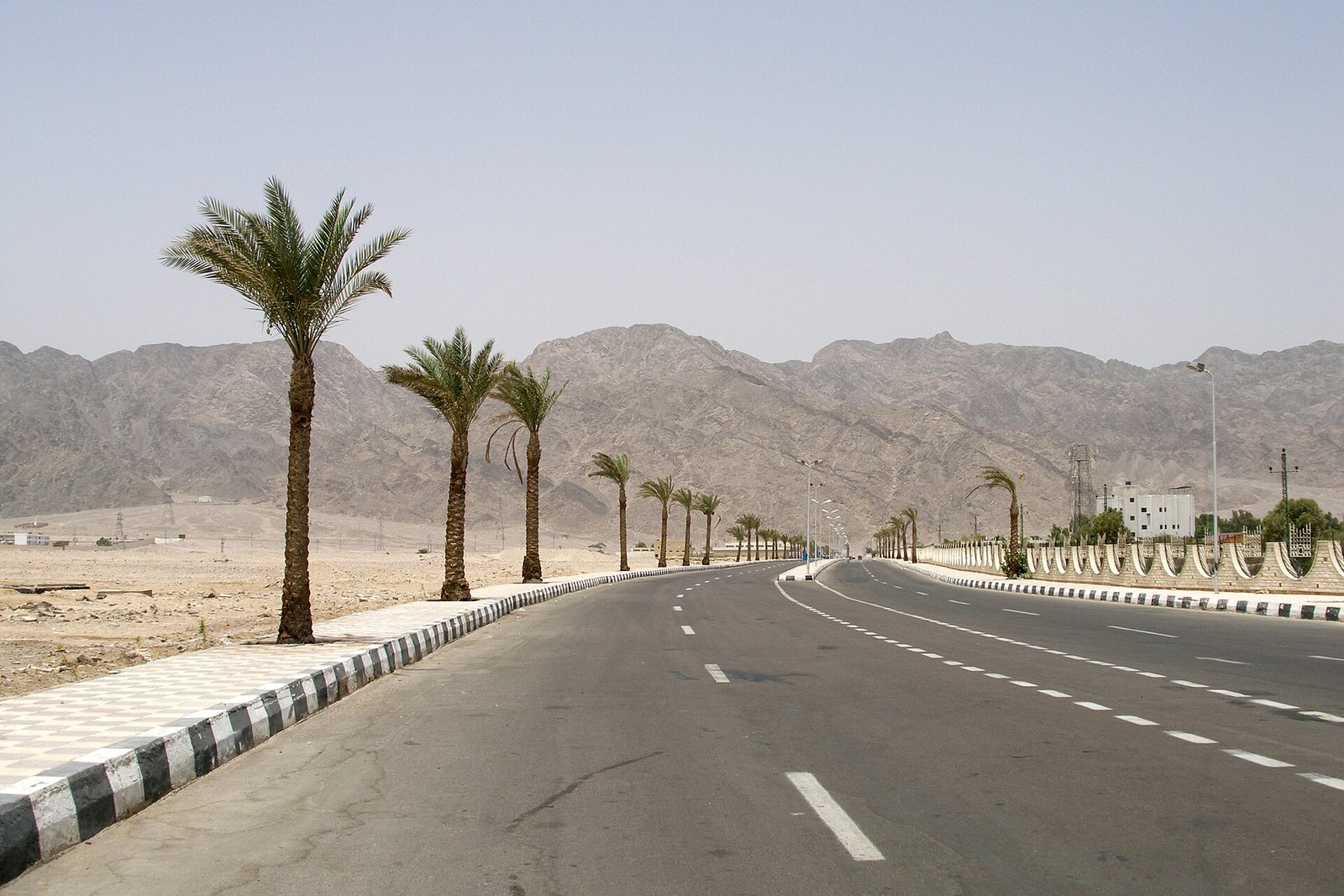
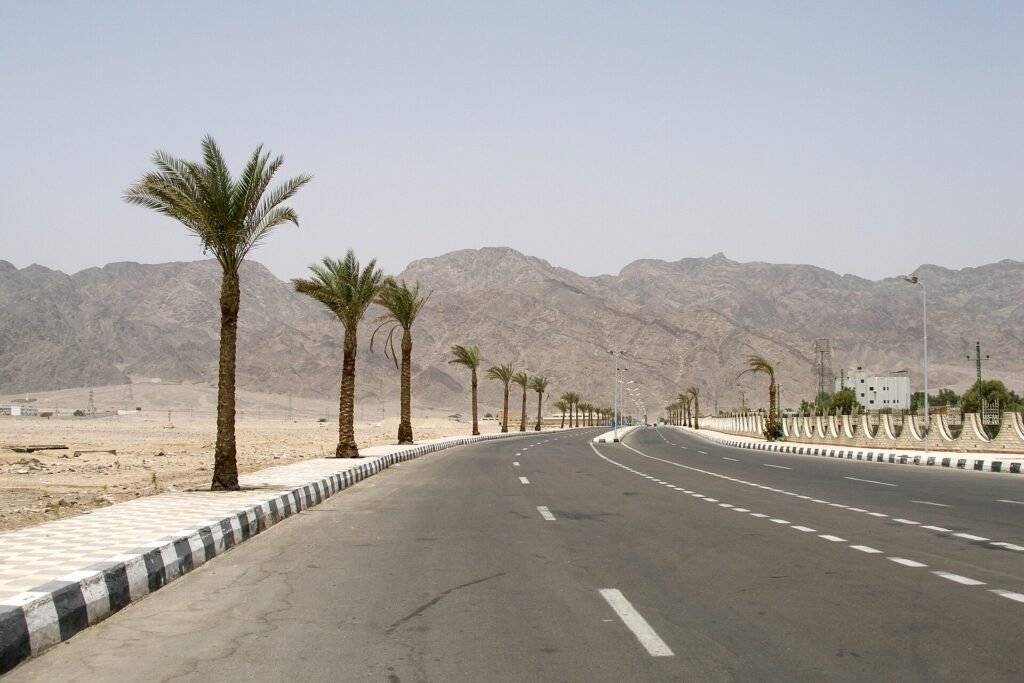
You can rent a car in Egypt. The international rental brands have desks at Cairo airport and in Hurghada and Sharm el Sheikh, and with your home license, an international driving permit and a passport the paperwork is straightforward. The honest answer, though, is that for almost every visitor driving in Egypt subtracts from the trip. Cairo traffic runs on negotiation rather than lanes, intercity roads have checkpoints, unmarked speed bumps and unlit trucks after dark, and the stress lands on the person who came here to relax. The exceptions are the Red Sea resort corridor around Hurghada and the Sinai road between Sharm el Sheikh and Dahab. Everywhere else, a private car with a driver wins on every count.
Yes, you can rent a car in Egypt. The question is whether you should
On paper, renting is easy. The major international rental companies operate from the arrivals hall at Cairo International and from the airports in Hurghada, Sharm el Sheikh and Luxor, alongside local firms. You show a valid license from your home state, an international driving permit to go with it, your passport and a credit card in the driver's name. Minimum age and years of driving vary by company, so confirm them before you fly rather than at the counter.
The catch is not the paperwork. It is everything that happens once you pull out of the lot. Egypt is a wonderful country to be driven around and a punishing one to drive yourself in, and that gap is the whole reason this guide exists.
We say this as a local agency with its own vehicles and drivers, so weigh our bias. But ask anyone who has lived in Cairo and you will hear the same thing: people here who can afford it hire a driver. That tells you most of what you need to know.
What driving in Egypt is actually like
Start with the horn. In the United States a horn means anger. In Egypt it means presence: I am here, I am passing, I am about to merge. It sounds constantly and carries no hostility at all. Understand that and the rest of the system starts to make sense.
Lanes are painted on the big roads and treated as a suggestion. A three-lane highway carries five lines of cars, and a gap the width of a car plus a hand is a gap. Merging is negotiated in real time with eye contact, a flash of the lights and a tap of the horn. Right of way belongs to whoever has committed first.
Add the mix of what shares the road. Microbuses stop wherever a passenger waves. Motorcycles carry three people. Tuk-tuks fill the side streets. A donkey cart appears on an agricultural road at any speed. Pedestrians cross an eight-lane bridge on foot and expect you to flow around them.
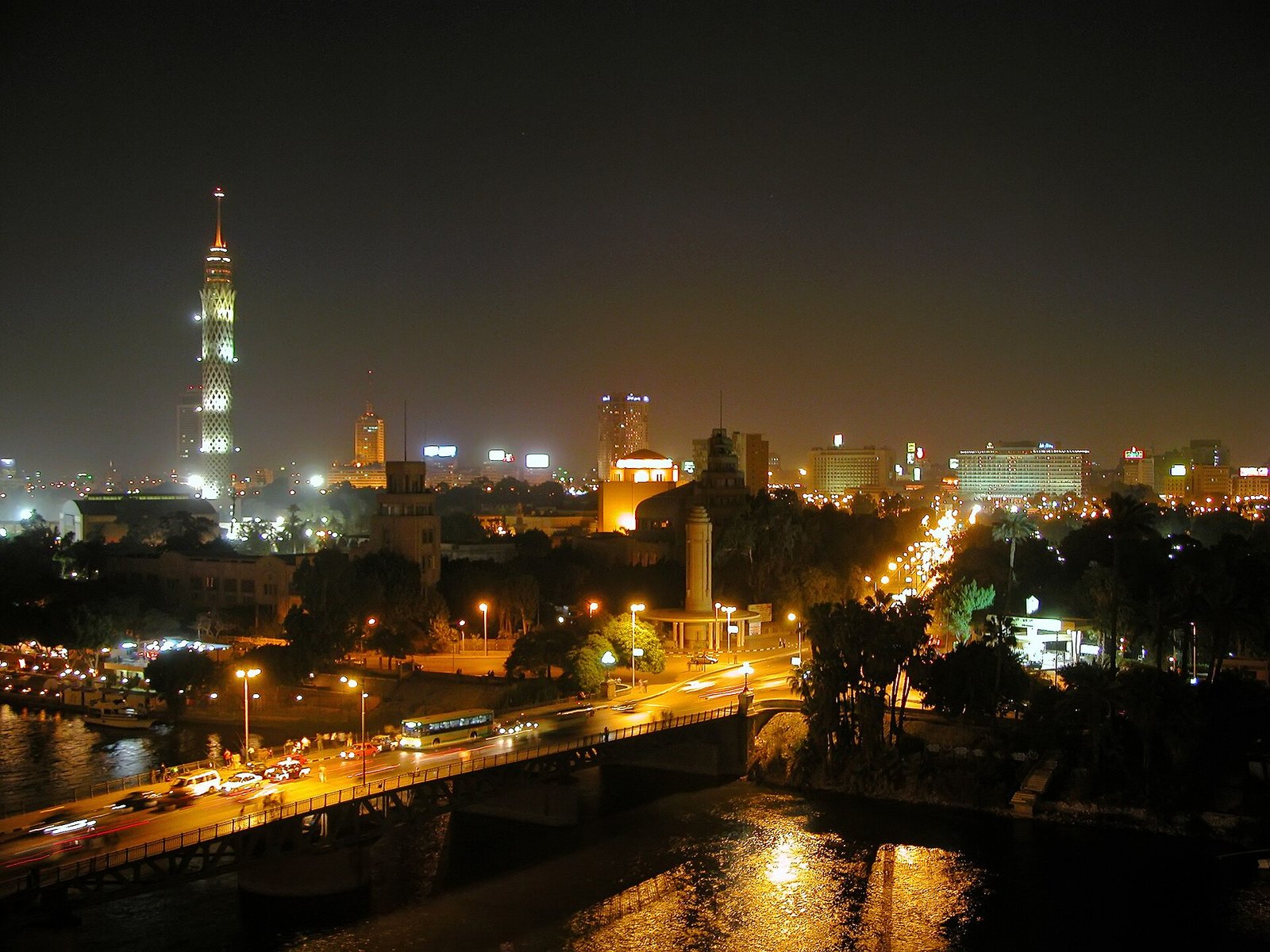
Cairo is the extreme version. The ring road, the 6th of October bridge and the approaches to Giza jam for hours in the late afternoon. Navigation apps work, but their routing assumes you will take the U-turn under the flyover and hold your nerve in the roundabout. Luxor and Aswan are calmer, and the resort towns calmer still.
None of this is chaos to the people who live in it. It is a different system that a jet-lagged newcomer has to decode at forty miles an hour, and that decoding comes straight out of your vacation.
Checkpoints, documents and the rules that catch foreign drivers
Egypt drives on the right, the same as the United States, and speed limits are posted in kilometers per hour. Highway signage is in Arabic and English; inside cities it thins out fast.
The part that surprises Americans is the checkpoints. Police and army posts sit at governorate borders, on every road into the Sinai and the Red Sea coast, on the desert highways to Upper Egypt and at the entrances to many towns. Most wave through local traffic. A rental car with a foreign face behind the wheel is more likely to be stopped and asked for passport, license and rental contract. The officers are polite and it takes a few minutes, but it repeats several times on a long day.
Some routes are closed to independent foreign drivers or need a permit arranged in advance: the Western Desert oases, tracks off the main Sinai road, the border zones. The list changes without notice. A licensed driver knows which road is open this week. A rental customer finds out at the checkpoint, and turns around.
- Keep passport, license, international permit and rental contract in the car, not in the hotel safe.
- Do not photograph checkpoints, bridges, dams, military sites or police. This is taken seriously.
- Every village entrance has speed bumps, and many are unpainted. Slow down whenever you see houses.
- Speed cameras exist on the main highways. Fines reach the rental company, and the company reaches your card.
- At a police-directed intersection, the officer's signal overrides the light.
Night driving is the part nobody defends
Everything above is manageable in daylight by a confident driver who accepts the stress. Night driving between cities is different. It is the one point where locals, foreign residents and our own drivers agree completely: do not do it.
Intercity roads are largely unlit. Trucks run with no rear lights or with one. Slow tractors and carts share the fast lane. Animals cross. Broken-down vehicles sit in the road marked by a rock or a branch. Oncoming drivers use high beams as a matter of course, and there is often no shoulder to pull onto when you are dazzled.
Our drivers plan every long transfer to arrive before sunset. If you rent a car anyway, adopt one rule and never bend it: when the sun is going down, you are already parked where you will sleep.
Insurance, parking and gas, in plain words
We will not quote an insurance figure because contracts differ and change. What we will tell you is where the surprises live. Read what the contract covers and, more importantly, what it excludes: tires, glass, the underside of the car, damage on an unpaved road and damage with a second driver at the wheel are common exclusions. Check whether your credit card benefit or travel policy applies in Egypt at all, because some exclude the country or rented vehicles. Learn that at home, not at a roadside in Minya.
Before you leave the lot, photograph every existing scratch, the tires, the windshield and the odometer with the agent watching. It is the best five minutes of the rental.
Parking in Cairo and Alexandria is largely informal. A man in a vest or a galabeya waves you into a space, guards the car and expects a small tip when you leave. This is normal and legitimate, which is why tipping in Egypt matters even for drivers; carry small bills. Official garages under the big hotels and malls are worth using downtown.
Gas stations are staffed, not self-service, and the attendant expects a small tip. Confirm the fuel type at the rental desk, because pumps are labeled by octane number. Fill up before any desert stretch; stations are far apart.
The few places where renting a car makes sense
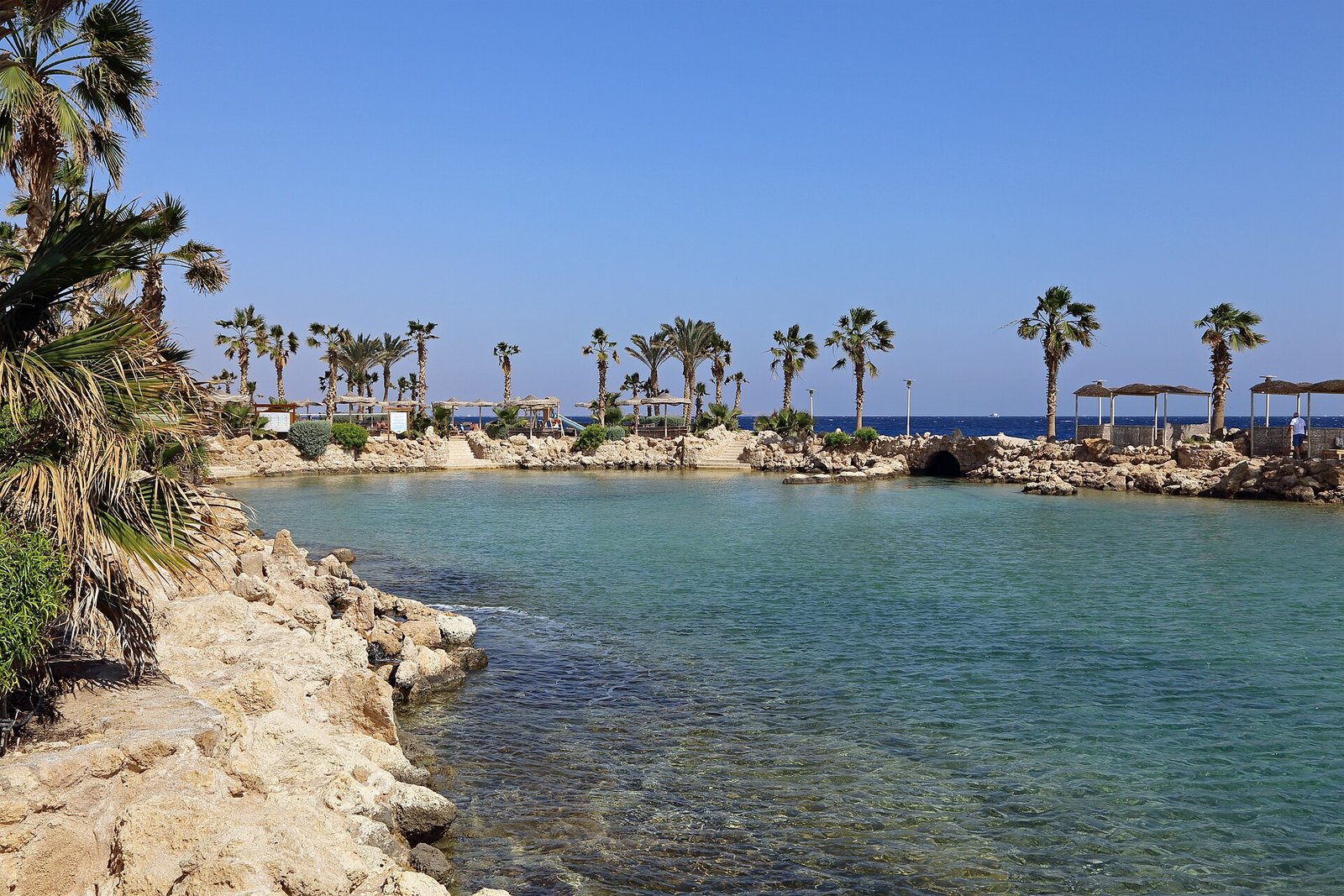
There are two. The first is the Red Sea resort corridor: Hurghada, El Gouna, Sahl Hasheesh, Makadi Bay and Soma Bay, strung along one straight coastal highway with light traffic and resorts spread out enough that a car saves you a taxi every time you leave the property. For a week of diving and dinners in El Gouna, a small rental can be pleasant.
The second is the Sinai between Sharm el Sheikh and Dahab. One road, spectacular scenery, a checkpoint at the edge of Sharm and very little traffic. Dahab itself is walkable, but the coves and dive sites north and south of town are a short drive apart. Our Sinai peninsula travel guide covers the checkpoints and interior roads.
Even here the rules hold: daylight only, no side tracks into the desert, no driving onward to Luxor or Cairo. Those roads cross open desert with checkpoints, long empty stretches and areas where independent driving is regularly restricted. For those legs, fly or let a driver take you.
| Where | Rent and drive yourself? | What works instead |
|---|---|---|
| Cairo, Giza, Alexandria | No. Dense traffic, informal parking, no upside. | Car with driver for the sights, Uber or Careem for evenings |
| Luxor and Aswan | Not worth it. The sites need a guide anyway. | Driver and guide by the day, Nile cruise between the two |
| Hurghada and the Red Sea corridor | Can make sense for a beach and diving week. | Resort transfers and taxis |
| Sinai, Sharm el Sheikh to Dahab | Can make sense, daylight, main road only. | A driver for the Mount Sinai and Saint Catherine days |
| Western Desert, Siwa, Bahariya | No. Permits and a licensed 4x4 driver required. | Organized desert safari with our drivers |
| Between regions, Cairo to Luxor or Hurghada | No. Long desert highways, checkpoints, night risk. | Domestic flight, sleeper train or driver transfer |
The alternative that wins: a private car with a driver
Here is the thing Americans rarely expect until they price it. In Egypt a car with a professional driver costs far closer to a bare rental than it would at home, and the difference buys back everything the rental takes away. The driver handles the traffic, the parking, the checkpoints, the fuel, the navigation and the one road that closed this morning. You sit in the back and watch the Nile go by.
A driver also knows what a map cannot tell you: that the Saqqara road is faster through the villages at this hour, or which restaurant on the way to Fayoum has a clean restroom. Small things that turn logistics into vacation.
The vehicles are the class you would rent, an air-conditioned sedan for two or three people or a minivan for a family, with a driver licensed to carry tourists. It is the base layer of every well-run custom Egypt tour, with a guide added for the monument days and a flight or cruise for the long distances.
How a driver day works
People who have never hired a driver imagine something formal. It is not. A typical day runs like this:
- The evening before. You agree on the pickup time and the shape of the day: which sites, in what order, lunch stop or late finish. It can change in the morning without drama.
- Pickup at your hotel. The driver waits at the door with the car cool and water in the back.
- At each site. The driver drops you at the entrance, parks and waits. At the Pyramids or the Valley of the Kings, the guide walks in with you and the driver stays with the car and your bags.
- Between sites. You stop where you like: a papyrus workshop, a view, a bakery, a pharmacy. A driver day is flexible in a way a tour bus never is.
- Lunch. The driver suggests a place or takes you to the one you found online.
- End of day. Back to the hotel, to a restaurant with a pickup afterward, or to the station or airport with time to spare.
For transfers between cities the same driver takes you door to door: Cairo to Alexandria and back in a day, Luxor to Hurghada, Aswan to Abu Simbel before dawn. On multi-day trips we keep the same driver wherever the route allows.
Getting around cities and between them without a wheel in your hands
A driver is for the sightseeing days. For everything else, Egypt has stress-free answers.
In Cairo, Alexandria and Hurghada the ride apps are the way to move around in the evening. They fix the fare before you get in, which ends the meter negotiation, and the map takes you to the door. Our guide to Uber and Careem in Cairo covers the setup, cash versus card and the tricks for a pickup at the airport or a crowded square.
For the long distances, drive nothing. Domestic flights in Egypt link Cairo with Luxor, Aswan, Hurghada, Sharm el Sheikh and Abu Simbel in about an hour, and the sleeper train to Luxor and Aswan saves a hotel night. Between Luxor and Aswan the transport is the trip itself: a Nile cruise that moves you while you sleep.
The pattern writes itself: fly or train for the big jumps, cruise the middle, a driver and guide for every sightseeing day, an app for dinner. Our guide to getting around Egypt lays out each piece with timings.
How Explora Egipto provides drivers
We are a local agency based in Egypt with our own vehicles and our own drivers, not a booking site passing your request to a subcontractor. The drivers are employed by us, licensed for tourist transport, and have driven these exact routes for years. Most speak enough English for the day, and the guide covers the rest.
The vehicles are air-conditioned sedans and minivans we maintain ourselves, with working seat belts in every seat, which is not a given in Egypt. Child seats are available if you tell us the ages. For desert routes we use 4x4s with drivers who know the tracks and carry the permits.
You get the driver's name and phone number before the pickup, and the office is on WhatsApp for anything bigger. One car for a day in Cairo, a transfer from Hurghada to Luxor or a driver for every day of a two-week trip: tell us the dates and we send you the quote.
If safety is the question behind renting versus hiring, read our plain-spoken guide to whether Egypt is safe. The roads are the main risk a visitor faces here, and a driver is how residents manage it.
Frequently asked questions
Can Americans drive in Egypt with a US license?
Rental companies expect a valid state license together with an international driving permit, which you get in the United States before you travel. The permit is a translation of your license, not a license on its own, so carry both, plus your passport, for the checkpoints. Without the permit, a rental desk may refuse the car and an officer may treat you as unlicensed.
Is it safe to drive in Egypt?
Road accidents, not crime, are the real safety issue for a visitor behind the wheel. The traffic culture is fast and fluid, intercity roads are unlit at night and the mix of vehicles is unlike anything at home. A confident driver can manage the Red Sea corridor in daylight. For Cairo and the intercity routes, the safe choice is a professional driver, which is what residents who can afford it choose too.
Can I rent a car in Hurghada and drive to Luxor?
You can rent one in Hurghada, and the coastal corridor is one of the two places where driving yourself can make sense. The road to Luxor is different: several hours across the Eastern Desert with checkpoints, long empty stretches and a strict daylight rule, and most rental contracts limit where the car may go. The usual pattern is a driver transfer or a short domestic flight for that leg, then a driver and guide in Luxor.
Can I drive to Siwa or the White Desert on my own?
No, and it is not a question of nerve. The desert routes need permits issued to licensed operators, the tracks are unmarked and a rental contract excludes them anyway. A stuck car in the White Desert is a serious situation. Every visit to Siwa, Bahariya, the White Desert or the Fayoum dunes runs with a 4x4 and a driver who knows the ground, and we arrange it as part of the trip.
Is a private driver the same as a guide?
No. The driver drives, parks, waits and gets you where you are going. The guide is a licensed Egyptologist who walks into the sites with you and explains them. On most sightseeing days you want both, and they travel in the same car. On a transfer day, a beach day or an evening out, the driver alone is enough. Tell us which days need which and the quote reflects it.
How far ahead should I book a driver in Egypt?
For a full itinerary, as soon as your dates are fixed, so the same driver and vehicle can be held for every day. For a single day or a transfer, a few days ahead is normally enough outside the peak winter weeks and the holidays, when cars and guides are stretched. Last-minute requests are possible, and we tell you honestly whether we can cover them well.
See Egypt from the back seat, not through the windshield
Tell us your dates, your route and how many of you are traveling, and we come back with a plan that puts a driver under every sightseeing day and a flight or a cruise under every long distance. The quote comes to your inbox.