Fun facts about Egypt that will change how you look at the pyramids, the Nile and Cairo
Fun facts about Egypt that will change how you look at the pyramids, the Nile and Cairo
The best fun facts about Egypt are the ones you can check with your own eyes. Cleopatra lived closer in time to the Moon landing than to the building of the Great Pyramid. The Egyptians gave us the 365-day year. The Nile flows north, so Upper Egypt is in the south. Egypt sits on two continents, Cairo ran the first subway in Africa, and the national dish is rice, lentils and pasta in one bowl. The weekend is Friday and Saturday, and the word pharaoh originally meant a building, not a person. Below are twenty-odd facts like these, grouped by theme, each with a note on where a traveler meets it. Nothing invented.
The fact that breaks everyone's sense of time
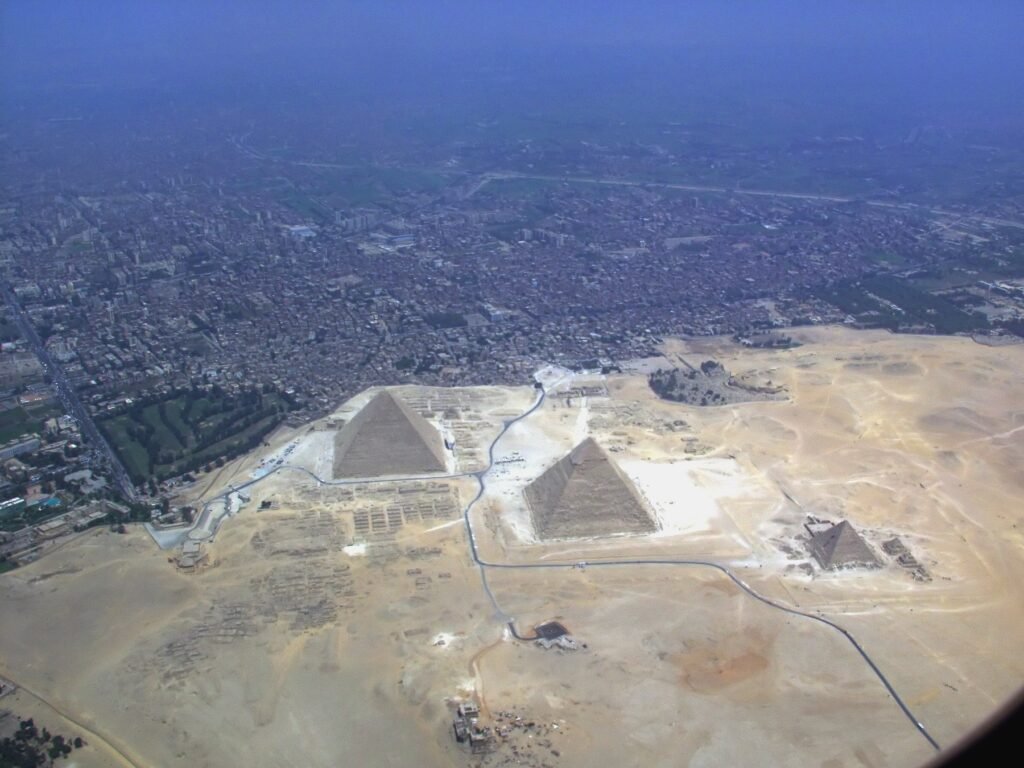
Start with the one that stops every group at the foot of the Great Pyramid. The pyramid was finished around 2560 BC. Cleopatra died in 30 BC. Neil Armstrong stepped onto the Moon in 1969. Do the subtraction and the queen is closer to the astronaut than to the pharaoh Khufu by more than five centuries.
When Cleopatra sailed up the Nile with Julius Caesar, the pyramids were already ancient monuments visited by Greek and Roman tourists. One more: when the last blocks went onto the Great Pyramid, a small population of woolly mammoths was still alive on Wrangel Island in the Arctic.
Where you meet it: the Giza plateau in the first hour after opening, before the buses. Read our guide to the pyramids of Giza before you go, and the piece on Cleopatra if you want to know how much of her legend is real.
Fun facts about ancient Egypt
The 365-day year is an Egyptian idea
The Egyptian civil calendar had twelve months of thirty days plus five extra days at the end, for a total of 365. It was tied to the rising of the star Sirius and the Nile flood, and it ran on three seasons: flood, growing and harvest. Julius Caesar borrowed the structure for Rome, and through the Julian and Gregorian reforms it became the year on your phone. The full story is in our guide to the pharaonic calendar and the origin of the 365-day year.
Where you meet it: the calendar relief on a wall at Kom Ombo temple, a standard Nile cruise stop, where the festival days are carved in neat columns.
The tallest building on Earth for close to four thousand years
The Great Pyramid was the tallest structure built by human hands from its completion until the spire of Lincoln Cathedral in England overtook it in the fourteenth century. No other building has held a record that long.
Where you meet it: the north face of the Great Pyramid, where a few original casing stones still sit at the base and show how polished the whole thing once was.
The first surviving peace treaty in the world
After the battle of Kadesh, Ramesses II of Egypt and Hattusili III of the Hittites signed a treaty around 1259 BC. It is the earliest peace treaty whose full text survives, in hieroglyphs on Egyptian temple walls and in cuneiform on clay tablets found in Turkey. A copy of the Hittite version hangs at the United Nations headquarters in New York.
Where you meet it: carved on a wall in Karnak temple in Luxor. Most groups walk straight past it. Ours stop.
Cats were sacred, and it was dangerous to harm one
The goddess Bastet took the form of a cat, and Greek writers reported that killing one, even by accident, could cost an Egyptian his life. Cats were mummified by the hundreds of thousands as offerings, so many that a cache found at Beni Hasan in the nineteenth century was shipped to England and sold as fertilizer.
Where you meet it: the animal mummy cases in the Egyptian Museum on Tahrir Square, and the very much alive cats that patrol every temple courtyard in the country.
Four short ones a guide will add
- Both men and women lined their eyes with black kohl. It cut the desert glare, and its lead-based minerals appear to have kept eye infections down.
- The pyramids were not built by slaves. The workers' town beside Giza has bakeries, breweries, meat rations, medical care and proper tombs for the crews.
- The first recorded labor strike in history happened at the tomb builders' village of Deir el Medina under Ramesses III, when rations arrived late and the men laid down their tools.
- Egyptian women could own property, run a business, sign contracts and divorce in their own name, rights European women would not recover for thousands of years.
Fun facts about Egypt's geography
The Nile flows north, and it is usually called the longest river on Earth
The Nile runs up the map, from East Africa to the Mediterranean, which is why Upper Egypt is the south and a cruise from Luxor to Aswan sails against the current. On length, be careful: the Nile is conventionally listed as the longest river in the world at roughly 4,100 miles, but some measurements of the Amazon put the two very close, and the answer depends on where you decide each river starts. A guide who says "one of the two longest" is being honest with you.
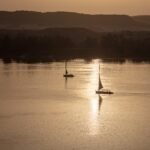
Where you meet it: the sundeck of your cruise boat, watching the water move the opposite way from what your brain expects. Our guide to the Nile river covers the two sources and where they join.
Almost all of the country is desert, and almost nobody lives there
The Western Desert, the Eastern Desert and the Sinai make up the overwhelming majority of Egypt's land, and they are close to empty. The population is squeezed into the ribbon of green along the Nile valley and the fan of the Delta.
Where you meet it: the west bank of Luxor, where you can stand with one foot in a sugar cane field and the other on desert rock.
Egypt sits on two continents
The mainland is in Africa. The Sinai Peninsula, across the Suez Canal, is in Asia, and the boundary between them is a waterway you can drive under through a tunnel. The Sinai gives Egypt a second face: granite mountains, the Bedouin, Saint Catherine's monastery and the Red Sea coast around Sharm el Sheikh and Dahab.
Where you meet it: the Ahmed Hamdi tunnel on the drive from Cairo to the Sinai. You enter it in Africa and come out in Asia.
Two seas, and two of the Seven Wonders
Egypt has a Mediterranean coast in the north and a Red Sea coast in the east, which is why it has both a Greek-flavored port city and world-class coral reefs. It also held two of the Seven Wonders of the ancient world: the Great Pyramid, the only one still standing, and the Lighthouse of Alexandria, whose stones ended up inside the Qaitbay citadel on the same spot.
Where you meet it: Alexandria's corniche for the lighthouse site, and Hurghada or Marsa Alam for the reefs.
Fun facts about modern Egypt
Cairo is one of the largest cities in Africa and the largest in the Arab world
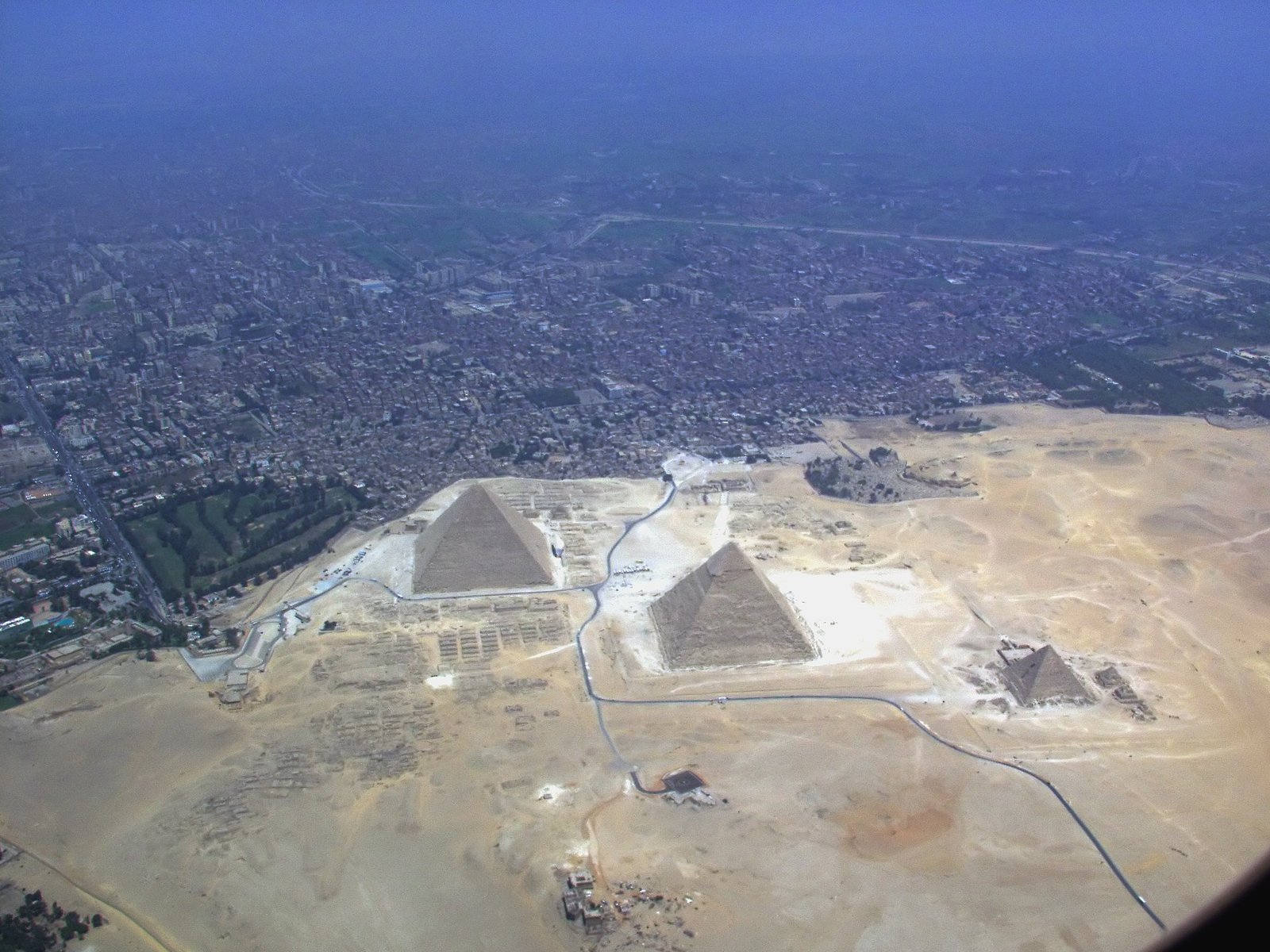
Greater Cairo is a metropolis of tens of millions, spread across Cairo proper, Giza and a ring of satellite cities in the desert, and it has been the biggest city in the region since the Middle Ages. Egyptians simply call it Masr, the same word they use for Egypt itself.
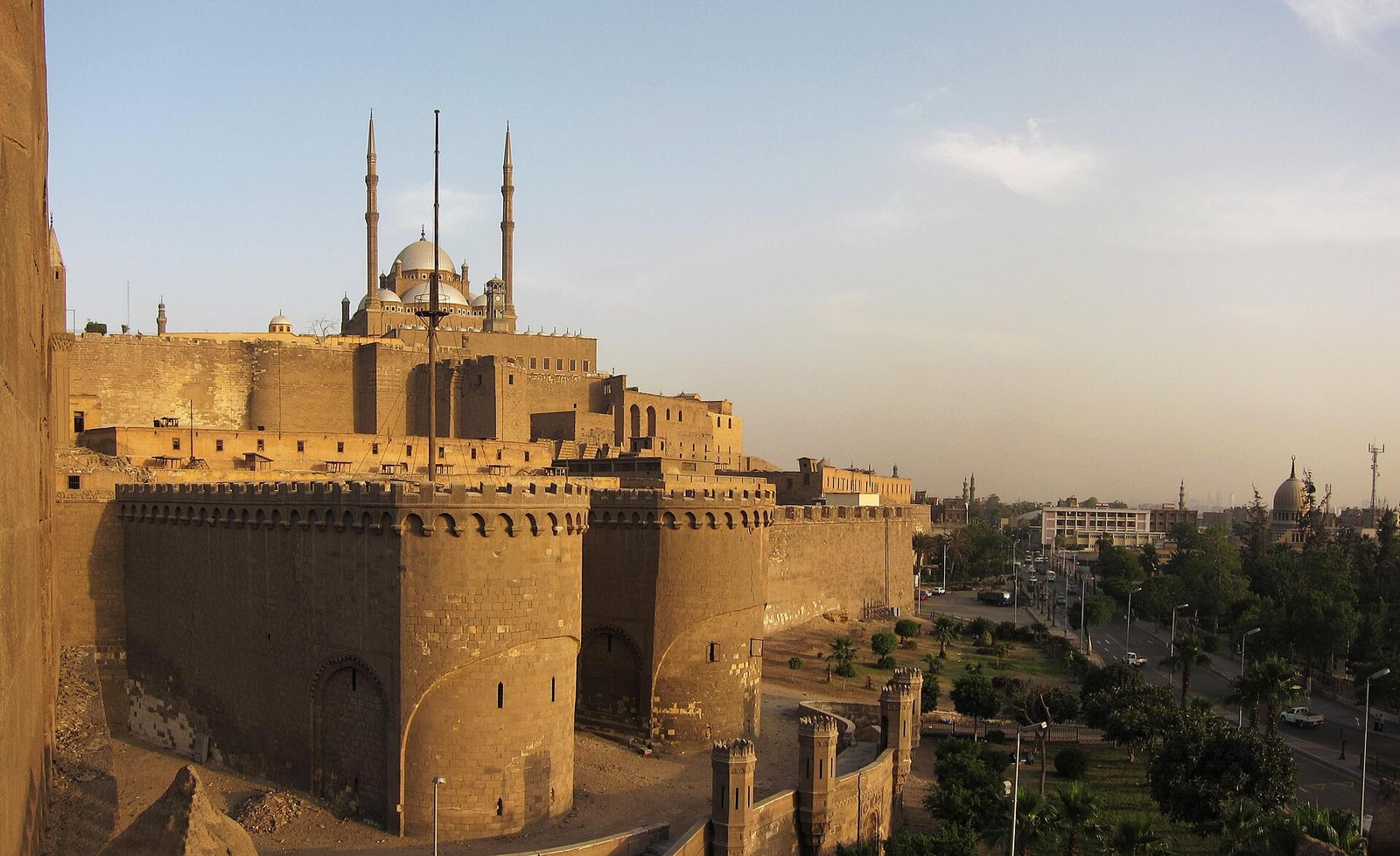
Where you meet it: the view from the Citadel of Saladin at dusk, when the city stretches to the horizon and the pyramids sit on its western edge.
Cairo ran the first subway in Africa
The Cairo Metro opened in 1987, decades before any other African city had one, and it is still one of the cheapest ways to cross the city. Two cars on every train are reserved for women, a detail many visitors do not expect.
Where you meet it: Sadat station under Tahrir Square, beside the Egyptian Museum. If you want, your guide will ride one stop with you for the experience.
The Suez Canal has no locks
Opened in 1869, the canal links the Mediterranean to the Red Sea across about 120 miles of desert without a single lock, because the two seas sit at close to the same level. It carries a large share of the world's container traffic between Asia and Europe.
Where you meet it: the drive from Cairo toward the Sinai or Ismailia. Ask us and we route the transfer past a viewpoint.
The High Dam stopped a flood that had run for millennia
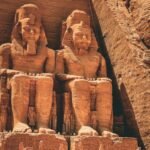
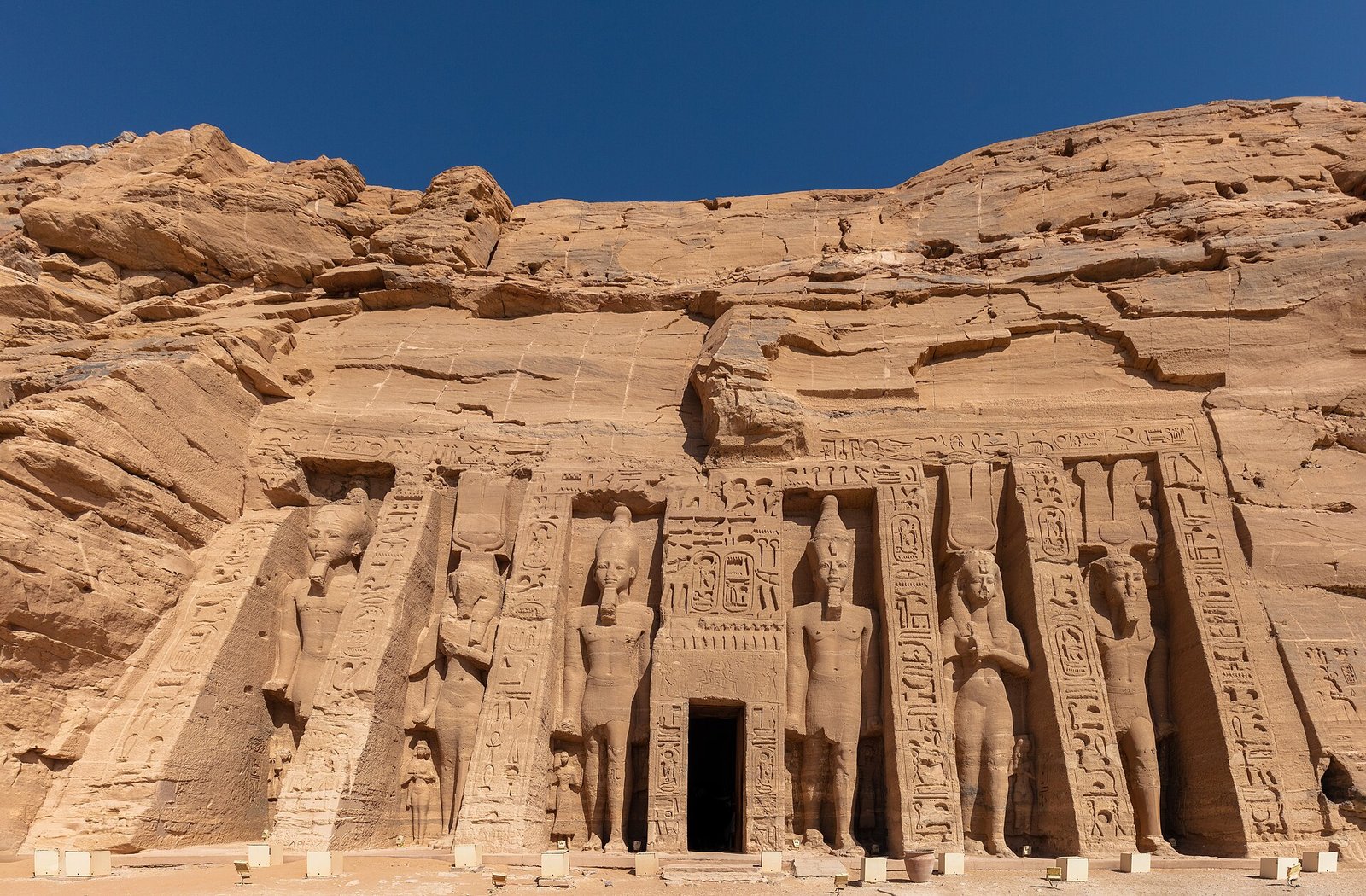
Until the Aswan High Dam was completed in 1970, the Nile flooded every summer and had done so throughout recorded history. The dam ended the flood, created Lake Nasser behind it, and forced the rescue of Abu Simbel and Philae, two temples cut into blocks and rebuilt on higher ground.
Where you meet it: the top of the dam itself, a short stop on any Aswan day, then Philae by boat the same morning.
Fun facts about Egyptian culture and daily life
The national dish is rice, lentils and pasta in one bowl
Koshari is a layered bowl of rice, brown lentils, small macaroni and chickpeas under a spiced tomato sauce, garlic vinegar and a crown of crispy fried onions. It is vegan by accident, filling by design, and eaten by everyone from students to ministers. It is the first meal we suggest in Cairo, and our guide to Egyptian food and what to eat lists the rest.
Where you meet it: a downtown Cairo koshari shop on the first day, between the museum and the bazaar.
Pharaoh originally meant "great house"
The word comes from the Egyptian per-aa, the great house, meaning the palace. For most of Egyptian history it referred to the building and the royal household, not the man. Only from the New Kingdom onward did it become a title for the king himself. Ancient Egyptians would have called Khufu a king, not a pharaoh.
Where you meet it: the cartouches on any temple wall. Your guide shows you the king's name inside its oval ring and reads it out.
Egyptian Arabic is the dialect the whole Arab world understands
The official language is Arabic, but the Arabic Egyptians speak at home is its own dialect, Masri. Because Cairo has produced the region's films, songs and television for a century, Egyptian Arabic is understood from Morocco to Iraq in a way no other dialect is. Underneath it survives Coptic, the direct descendant of the language of the pharaohs, still sung in Coptic Orthodox services.
Where you meet it: a Coptic church in Old Cairo, and every taxi ride. Our guide to what language is spoken in Egypt gives you the ten words that get a smile.
The weekend is Friday and Saturday
Egypt's week runs Sunday to Thursday. Friday is the day of communal prayer and the quietest morning you will see in Cairo; Saturday is the second day off. Offices and banks close both days, museums and sites do not. Sunday is a normal working day, which surprises American visitors who plan around it.
Where you meet it: Friday morning in Khan el Khalili, when the alleys are half empty until after noon prayer, then fill up fast.
Three "facts" about Egypt that are not true
A list of fun facts about Egypt is only worth reading if the writer is willing to throw some out. These three circulate everywhere.
- Slaves built the pyramids. They did not. The excavated workers' town at Giza shows paid, fed, housed crews organized into gangs, buried with honor beside the monument they built.
- Cleopatra was Egyptian. She was Greek by ancestry, the last ruler of the Ptolemaic dynasty founded by one of Alexander the Great's generals. What is true, and more interesting, is that she was the first of her line in nearly three centuries to learn the Egyptian language.
- The curse of Tutankhamun. A newspaper invention of the 1920s. Studies of the people present at the tomb's opening found nothing unusual in how long they lived. Howard Carter himself died seventeen years after the discovery.
Egypt's documented reality is strange enough. It does not need any of the three.
How Explora Egipto weaves these facts into the guiding
Our guides are Egyptian, licensed, and trained to teach rather than recite. A fact lands when you are standing in front of the evidence, not when it is read from a list on the bus. So our Karnak visit pauses at the treaty wall, our Kom Ombo visit ends at the calendar, our Egyptian Museum route goes past the animal mummies on purpose, and our west bank day includes the Deir el Medina workers' village if you want it, the stop most standard tours skip.
We also correct the myths out loud. If you have read that slaves built the pyramids, your guide shows you the bakeries in the workers' town. If you arrive with the Tutankhamun curse in mind, you hear how the story was made up. We would rather you leave with fewer facts that are true than more that are not.
Practical details follow the same logic. We plan around the Friday and Saturday weekend so the bazaar day lands right, we put koshari on the first day, and we route a Sinai transfer past the canal if you ask.
- Every tour is private or small group, with your own guide and vehicle, so a question can turn into a ten-minute detour.
- Itineraries are written by hand for your dates. Tell us which of these facts you care about and we build around them.
- Domestic flights between Cairo, Luxor and Aswan, cruise cabins, hotels and every entrance are booked by us before you land.
Frequently asked questions
Are these fun facts about Egypt actually true?
Yes, and each was chosen because you can verify it in person. The treaty is carved at Karnak, the calendar at Kom Ombo, the workers' town is excavated at Giza and the cat mummies are on display in Cairo. Where a claim is contested, such as whether the Nile or the Amazon is longer, we say so instead of picking a side. The three myths are included precisely because they are false.
What is the most surprising fact about Egypt for first-time visitors?
In our experience it is the Cleopatra one: that she lived closer in time to the Moon landing than to the building of the Great Pyramid. It reframes the trip, because it tells you the pyramids were already ancient ruins when the most famous Egyptian in history saw them. The runner-up is the Nile flowing north, learned on the cruise sundeck.
Did the ancient Egyptians really invent the 365-day calendar?
They ran a civil calendar of twelve thirty-day months plus five added days, which gives 365, and used it for thousands of years. It lacked a leap day, so it drifted slowly against the seasons. Julius Caesar adopted the Egyptian structure and added the leap year, which the Western world later refined into the calendar we use today. The skeleton is Egyptian, the leap-day fix is Roman.
Is Egypt in Africa or Asia?
Both. The bulk of the country, including Cairo, the Nile valley and the Red Sea coast around Hurghada, is in Africa. The Sinai Peninsula east of the Suez Canal is in Asia, so Sharm el Sheikh, Dahab and Mount Sinai are technically Asian. Most travelers cross the boundary without noticing, through a road tunnel under the canal or on a short domestic flight.
Can I visit the Suez Canal on a trip to Egypt?
You can see it, but it is not a tourist site on the classic route. The practical way is to pass it on a transfer between Cairo and the Sinai, or to add a half-day drive to Ismailia, where the canal runs beside the town and ships pass close enough to read the names. Tell us if it matters to you and we route the day accordingly.
Will my guide explain these facts, or do I need to read up first?
Your guide covers all of them and more, at the place where each one makes sense. Reading first helps, because you arrive with questions, and the guides enjoy a group that asks. Our articles on the pyramids, the calendar, Cleopatra and Egyptian food are a good evening's preparation, and the details pile up fast once you are there.
See the facts where they happened, with a guide who knows them
Tell us your dates, how many days you have and which of these stories caught your attention, and we come back with a guided itinerary through Cairo, Luxor and Aswan that puts you in front of the evidence: the treaty wall, the calendar, the workers' town, the cats, the river running north. No prices on this page. Write to us and we send you the quote.