A Lake Nasser cruise is the quiet way to reach Abu Simbel, and the only way to see the temples of Nubia
A Lake Nasser cruise is the quiet way to reach Abu Simbel, and the only way to see the temples of Nubia
A Lake Nasser cruise is the other Egyptian cruise, the one most visitors never hear about. It sails between Aswan and Abu Simbel across the reservoir behind the High Dam, three or four nights on a lake with no towns, no traffic and only a handful of ships. Along the way you land at the Nubian temples that were cut apart and moved uphill before the water rose, Kalabsha, Wadi el Seboua and Amada, most of them awkward to reach any other way. It ends, or begins, with the ship anchored in front of Abu Simbel, which you visit at sunset and again at dawn while the day-trip buses are still on the road.
What Lake Nasser is, and why anyone sails it
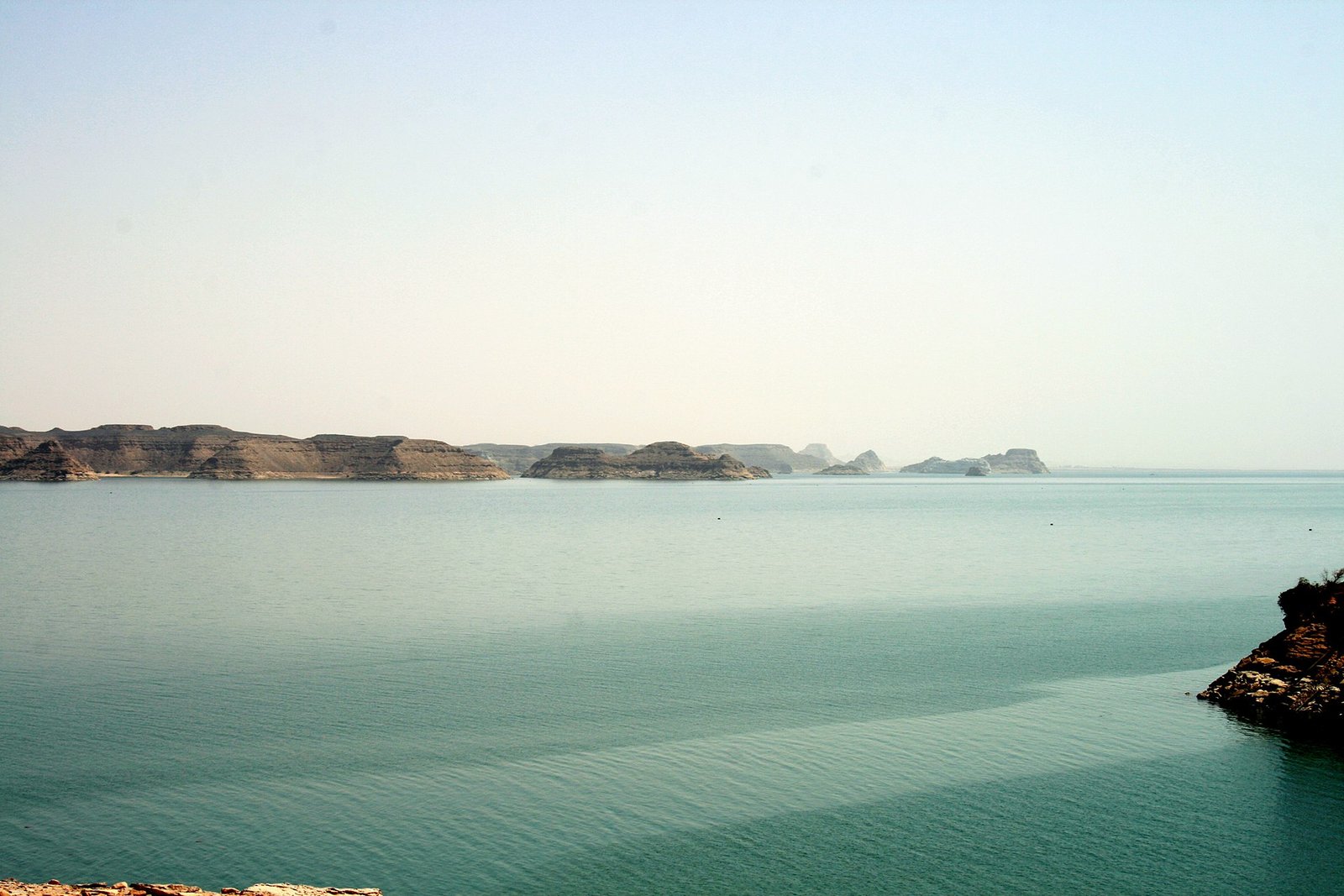
Lake Nasser is not a natural lake. It is the reservoir that filled behind the Aswan High Dam in the 1960s, roughly 300 miles long, running south from Aswan across the Sudanese border. Under it lies most of old Lower Nubia, the villages, the palm groves and the stretch of river the Nubians had farmed for thousands of years.
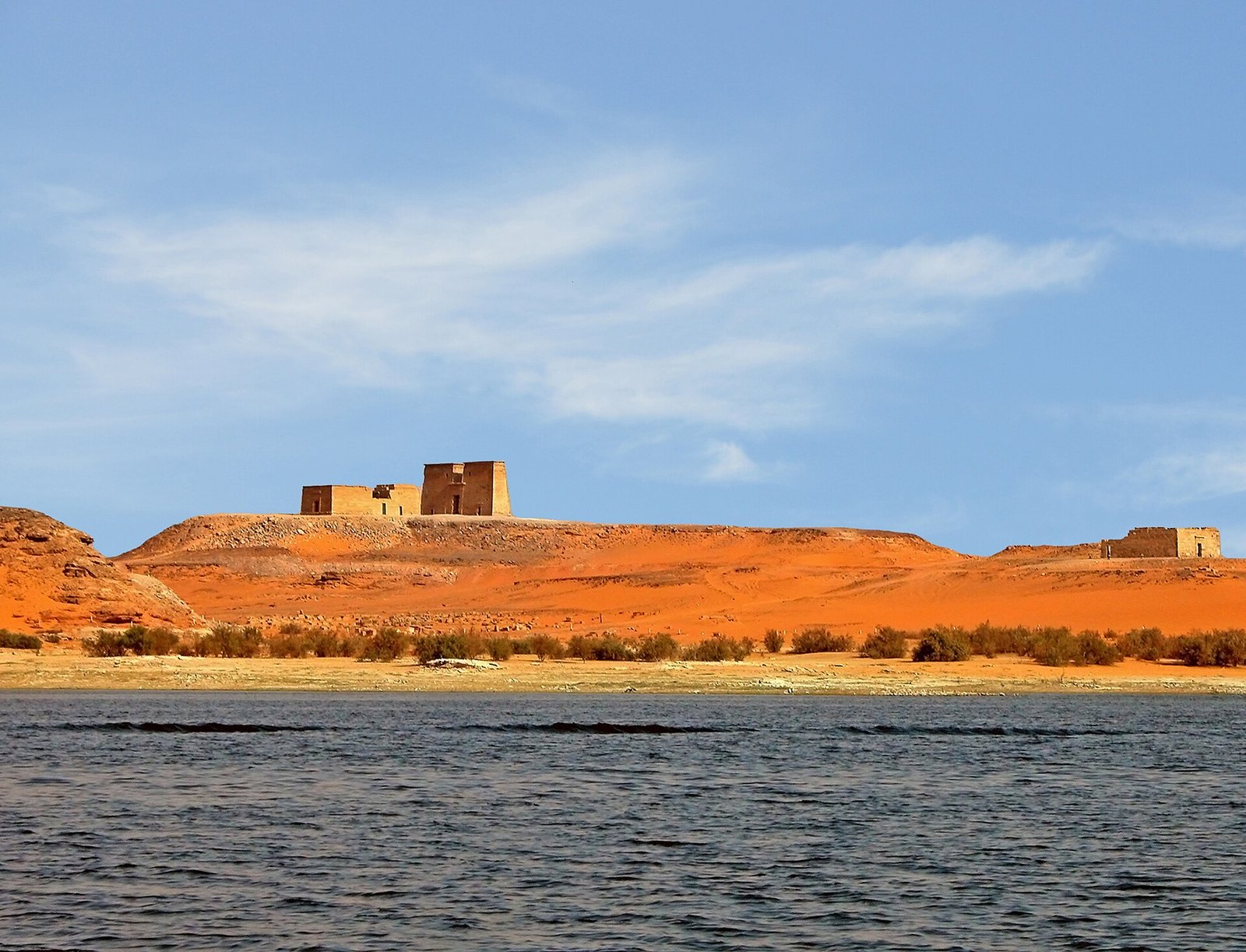
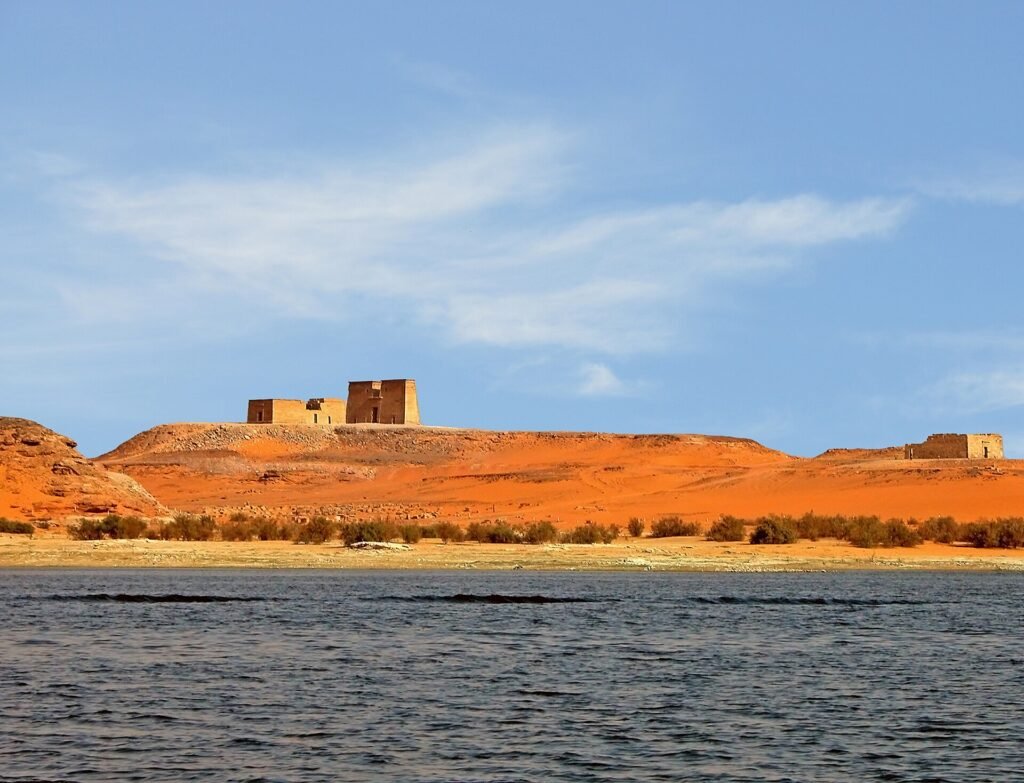
Before the water rose, a campaign led by UNESCO dismantled the major temples of the region and rebuilt them on higher ground, in clusters near their original sites. That rescue is the reason to sail the lake. The temples now stand on headlands and islands along a shoreline with almost no roads, and a ship is the only comfortable way to reach them in a single trip.
The second reason is the lake itself. South of the High Dam there are no towns on the banks, no farmland, no traffic beyond a few fishing boats. It is water, rock and sky for hours, and after the Nile Valley that emptiness feels like a different country. In a sense it is: this is Nubia.
The ships that sail the lake, described as a category
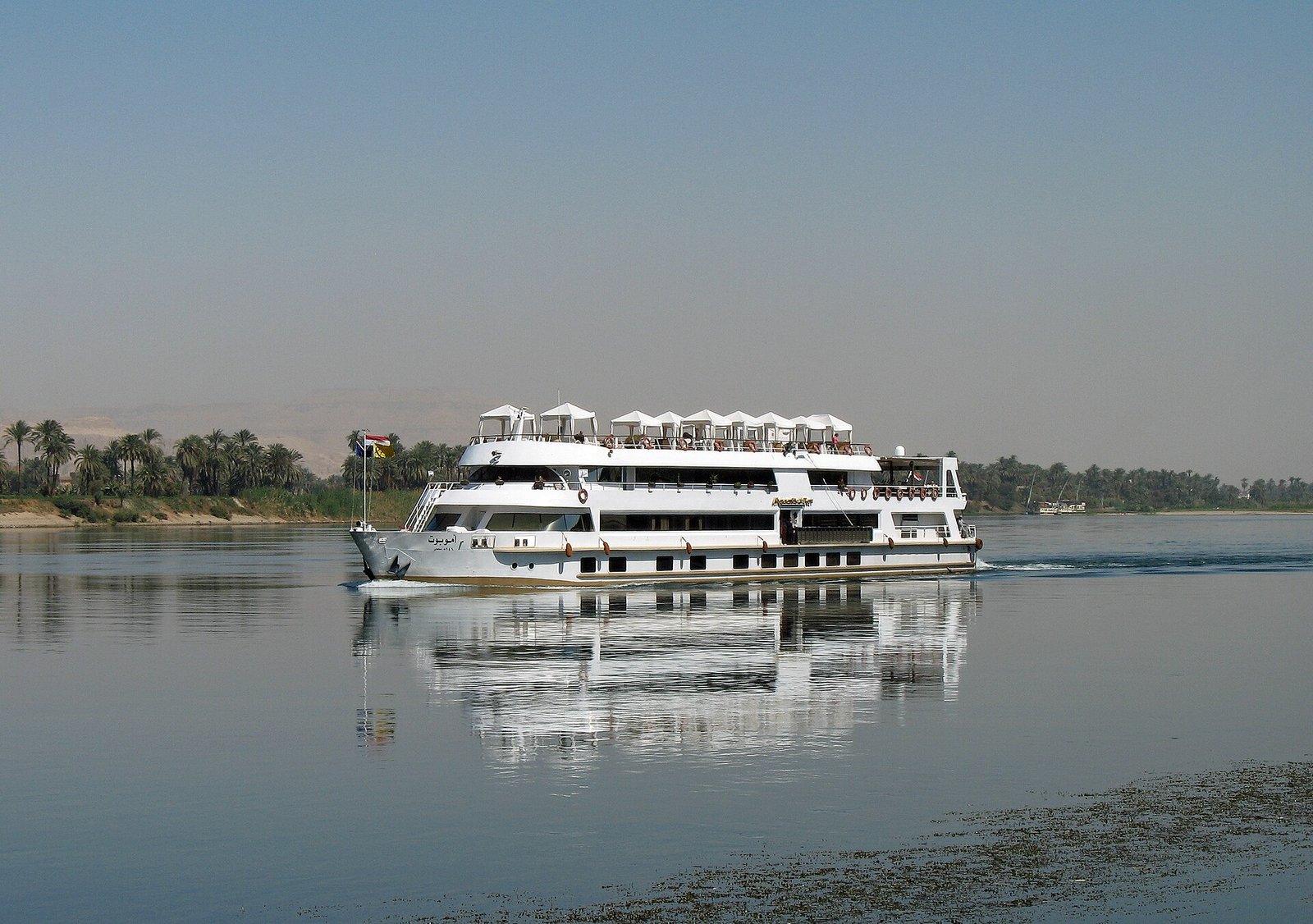
Do not expect the Nile cruise scene here. Between Luxor and Aswan a few hundred vessels work the river. On Lake Nasser the fleet is a handful, and it has stayed that way for decades because the distances are long and the season is short.
The ships fall into two broad types. The larger motor vessels carry around 50 to 65 cabins, with a sun deck, a small pool, a lounge and a restaurant, and feel like a compact version of a good Nile ship. The smaller ones are boutique boats with a dozen or two cabins. Both land at the same temples; the difference is scale and finish. We do not name ships here because deployments change by season, but we tell you exactly which vessel you would be on before you commit.
Cabins have wide windows facing the water. Meals are on board, because there is nowhere else to eat. An Egyptologist travels with the ship and leads every landing. Evenings are spent on the upper deck under the darkest night sky most travelers will ever see.
For the broader picture, read our guide to Nile cruise boat types and how to choose between them. The lake ships sit at the small, calm end of that spectrum.
The rescued temples of Nubia, stop by stop
The itineraries are broadly the same on every ship: a chain of temple landings between the High Dam and Abu Simbel. Here is what you step off the boat to see, in the order a southbound cruise meets them.
Kalabsha, Beit el Wali and the Kiosk of Qertassi
The first stop is just south of the High Dam, on an island reached by a short tender ride. Kalabsha is the largest of the moved temples after Abu Simbel, built under the Roman emperor Augustus for the Nubian god Mandulis, with a pylon, a colonnaded court and a hypostyle hall that catch the morning light. German engineers cut it into some 13,000 blocks and rebuilt it here in the 1960s.
A few minutes' walk away is Beit el Wali, a small rock-cut temple of Ramesses II whose painted reliefs show Nubian tribute processions with giraffes and monkeys, and the Kiosk of Qertassi, four Hathor-headed columns standing alone on the rock.
Wadi el Seboua, Dakka and Maharraqa
Wadi el Seboua means the valley of the lions, after the avenue of sphinxes that leads to a temple Ramesses II had half built and half carved into the sandstone. The site is a plateau with nothing around it for miles, and walking the sphinx avenue in the late afternoon with the ship waiting below is a moment the cruise is remembered for.
A short walk, or a ride on whatever is waiting, often a tractor trailer or a camel, brings you to Dakka, a Ptolemaic and Roman temple to Thoth with a pylon you can climb, and to the small Roman temple of Maharraqa, both moved here from other sites.
Amada, Derr and the tomb of Pennut
Amada is the oldest temple surviving in Nubia, begun under Thutmose III in the 15th century BC, and the one to slow down in. Its painted reliefs were too fragile to cut apart, so French engineers moved the whole building in one piece, sliding it on rails to a site over a mile and a half away. The colors inside are the best preserved on the lake.
Next to it stand Derr, another rock-cut temple of Ramesses II, and the small painted tomb of Pennut, a Nubian administrator under Ramesses VI, brought here from the drowned town of Aniba. It is usually the last landing before Abu Simbel.
Qasr Ibrim, seen only from the deck
Between Amada and Abu Simbel the ship slows and the guide gathers everyone on the upper deck. Ahead is Qasr Ibrim, a fortress that once stood on a cliff about 200 feet above the river and is now a low island. It is the only ancient site in Lower Nubia still on its original ground, and it is closed to visitors, so you look from the water while the guide explains the layers: Egyptian fort, Roman garrison, medieval cathedral, Ottoman outpost.
You cannot land, and that is part of the point. The lake keeps a few things for itself.
Arriving at Abu Simbel by water, and sleeping in front of it
Every other visitor reaches Abu Simbel by road or on a morning flight, sees the temples in the crowded middle of the day and leaves. The lake ships do the opposite. They approach in the late afternoon, and the four seated colossi of Ramesses II appear on the shore exactly as the builders intended them to be seen: from the water, by people arriving by boat.
The ship moors within sight of the facade. You visit the great temple and the smaller temple of Nefertari that evening, when the day-trippers have gone, and can walk back for the sound and light show after dinner. Then you sleep on board, and if you are up before dawn you watch the light reach the facade from your deck. Our page on sunrise at Abu Simbel explains why that hour matters so much at these particular temples.
A second visit the next morning is usually possible before the first buses arrive, when the interior is quietest. Entry is handled by the guide; the practical details are in our guide to Abu Simbel tickets and how to visit. If your dates fall near the sun alignment in February or October, tell us early, because those departures fill months ahead.
Three nights or four, and which direction to sail
There are two standard itineraries, the same route sailed in opposite directions. The 3 night cruise boards in Aswan, sails south past Kalabsha, Wadi el Seboua and Amada, and finishes at Abu Simbel, where you disembark after the morning visit. The 4 night cruise boards at Abu Simbel, spends its first evening in front of the temples, and sails north to Aswan with one extra night on the water.
Each ship runs one fixed departure per direction each week, so the calendar often decides. Still:
- Southbound, 3 nights. Abu Simbel is the finale, and you can fly from Abu Simbel to Cairo or ride back to Aswan by road the same day. The better choice when your Nile cruise ends in Aswan.
- Northbound, 4 nights. You fly into Abu Simbel, see the temples the first evening, and have a slower run north. The better choice when a Nile cruise from Aswan to Luxor follows.
The landings are the same either way. The extra night on the 4 night version is spent on the lake, not at an extra site.
The silence, and the wildlife
Nobody warns you about the quiet. A Nile cruise passes villages, ferries, minarets and other ships every few minutes. On Lake Nasser the engine is the only sound for hours, and at anchor there is nothing at all. Phone signal is mostly gone.
The lake is also the wildest water in Egypt. Nile crocodiles live here in real numbers, and the guide will point them out sunning on sandbanks, at a comfortable distance from the ship. Monitor lizards patrol the shore. Birdlife is rich: herons, egrets, pied kingfishers, ospreys and fish eagles, pelicans in winter, and migrating flocks using the lake as a stopover between Europe and Africa. The small boats you pass are after Nile perch, which turn up on your dinner table.
The landscape shifts from rocky headlands near Aswan to long sand shores and the flat desert horizon around Abu Simbel. Bring binoculars.
Who this cruise suits, and who should skip it
This is not a first-trip essential. If you have never been to Egypt, the classic Nile cruise between Luxor and Aswan gives you Karnak, the Valley of the Kings, Edfu and Kom Ombo, and should come first.
The lake cruise is for:
- Returning visitors who want the missing piece. It is the first thing we suggest for a second trip to Egypt.
- Anyone for whom Abu Simbel is the reason for the trip, and who wants more than a three-hour window at midday.
- Travelers who like remote places, quiet and a book on deck, and find a large Nile ship too social.
- Ancient Egypt enthusiasts who want the Nubian temples almost nobody else visits.
It is a weaker fit for families with young children, for anyone who needs constant connectivity, and for travelers with only a week in Egypt, who will get far more from Cairo plus the Nile.
Combining Lake Nasser with a Nile cruise
Most people sail the lake as the southern end of a longer trip, and the two cruises fit together because they share Aswan. A typical build is Cairo, a domestic flight to Luxor, a 4 night Nile cruise south to Aswan, a day for what to see in Aswan (Philae, the Nubian villages, a felucca), then the 3 night lake cruise to Abu Simbel and a flight back to Cairo. That is around 11 nights and covers three Egypts in one line.
| Nile cruise | Lake Nasser cruise | |
|---|---|---|
| Route | Luxor to Aswan, or the reverse | Aswan to Abu Simbel, or the reverse |
| Length | 3 to 7 nights, 4 is standard | 3 or 4 nights |
| Ships on the water | Hundreds | A handful |
| What you see | Karnak, Valley of the Kings, Edfu, Kom Ombo, Philae | Kalabsha, Wadi el Seboua, Amada, Qasr Ibrim, Abu Simbel |
| Scenery | Farmland, villages, palm groves | Open water, desert, rock |
| Crowds at the sites | Busy at peak hours | Often your ship alone |
| Best for | A first visit | A second visit, or Abu Simbel devotees |
The reverse also works: fly Cairo to Abu Simbel, take the 4 night cruise north to Aswan, then board a Nile ship to Luxor. Flight timings decide which way round; our page on domestic flights in Egypt covers the routes. Either way, do not do the lake as a standalone, because getting to Aswan or Abu Simbel is most of the effort.
Seasons, with the temperatures that matter
The lake is in the deep south of Egypt, and the season is short. October to April is the window. Winter days run about 72 to 80 F (22 to 27 C) with dry air, and nights on deck drop to around 50 to 55 F (10 to 13 C), so pack a sweater. It is the most comfortable weather in the country.
May and September are hot but workable, with afternoons around 100 F (38 C), and sailings are fewer. From June through August the shore temples reach 110 F (43 C) and beyond, most ships tie up, and we do not recommend it.
Cabins sell out fastest for Christmas to New Year, for February and October around the sun alignment, and for spring break. Because the fleet is so small, a full ship means no alternative that week, so book the lake first and build the rest of the trip around it. Month by month detail is in our guide to the best time to visit Egypt.
How Explora Egipto books it
We are a local agency in Egypt with our own guides and vehicles, and the lake cruise is the piece we watch most carefully, because a missed connection costs you the whole cruise. What we do:
- You tell us your dates, who is traveling and whether the lake is an add-on to a Nile cruise or the centerpiece.
- We check which ship has cabins in your window and in which direction, and name the vessel before you decide.
- We build the transfers, Aswan hotel to the mooring or Abu Simbel airport to the ship, with our own driver at both ends.
- We book the domestic flights to and from Cairo, and the Nile cruise if you are joining the two.
- On board, the ship's Egyptologist leads every landing; on shore, our own guide takes over.
- You get one WhatsApp contact for the whole trip, before and during.
Prices depend on the ship, the cabin and the season, so ask us for the quote with your dates and we send it the same day.
Frequently asked questions
How many nights is a Lake Nasser cruise?
Three or four. The 3 night version sails south from Aswan and ends at Abu Simbel; the 4 night version starts at Abu Simbel and sails north to Aswan with one extra night on the water. Both land at the same temples and include the evening and morning at Abu Simbel. Which one you take usually comes down to the ship's departure day and your onward connections.
Does the Lake Nasser cruise include Abu Simbel?
Yes, and it is the best way to see it. The ship moors within sight of the two temples, you visit in the late afternoon after the day-trip buses have left, you can return for the sound and light show, and you sleep on board facing the facade. A second visit early the next morning is usually possible.
Is a Lake Nasser cruise better than a Nile cruise?
Different, not better. The Nile cruise between Luxor and Aswan is the essential first-trip experience, with Karnak, the Valley of the Kings, Edfu and Kom Ombo. The lake cruise is quieter and emptier, with the Nubian temples and Abu Simbel from the water. If you have the time, combine them. If you must choose on a first visit, take the Nile.
Are there crocodiles in Lake Nasser, and is the cruise safe?
There are Nile crocodiles in the lake, and spotting them from the deck is part of the trip. They keep to sandbanks and shallows away from the ships and landing stages, and there is no swimming in the lake in any case. Follow the guide on the landings and the wildlife is a highlight, not a worry.
What is the best month for a Lake Nasser cruise?
October to April, with November through February the most pleasant: days around 72 to 80 F (22 to 27 C) and cool evenings on deck. February and October carry the extra draw of the sun alignment at Abu Simbel and fill first. Summer is above 110 F (43 C) on the shore and most ships do not sail.
Can I fit the Lake Nasser cruise into a short Egypt trip?
It is tight. The cruise is 3 or 4 nights and you need to reach Aswan or Abu Simbel first, so a realistic minimum with Cairo is about 7 nights, and that leaves out the Nile cruise. With 10 nights or more it fits comfortably alongside the Nile. Tell us how many days you have and we will say honestly whether the lake belongs in the plan.
Sail to Abu Simbel the way its builders meant it to be seen
Send us your dates and whether you want the lake on its own or joined to a Nile cruise. We check which ships have cabins in your window and come back with the whole southern leg mapped out, transfers, flights inside Egypt and guide included. No prices on this page, just a quote with your name on it.