Luxor in one day is possible, if you start at opening and cross the river only once
Luxor in one day is possible, if you start at opening and cross the river only once
Yes, you can see Luxor in one day, and done properly it is one of the best days you will have in Egypt. The plan is dictated by the sun, not by preference: the west bank first, at opening, with three tombs in the Valley of the Kings, the temple of Hatshepsut and a stop at the Colossi of Memnon; a late, light lunch through the hottest hours; Karnak in the afternoon, when the great hall is half in shade; and Luxor Temple at dusk, as the floodlights come on. You cross the river once. You give up Medinet Habu, the Tombs of the Nobles and the museum without regret. A private car and an Egyptologist guide are what make it fit.
Yes, you can see Luxor in one day, if you accept one trade
Luxor is the largest open-air museum in the world and it deserves two days. It is also true that most people searching for one day in Luxor have exactly one, because their cruise docks for a night, their Hurghada hotel is four hours away, or their itinerary gave Cairo the extra night.
So here is the honest version. One day gives you the four sites that define the place: the Valley of the Kings, the temple of Hatshepsut, Karnak and Luxor Temple. It does not give you the quieter west bank sites or the museum. The trade is depth for coverage, and if you only come once, it is the right trade.
The east bank is the city of the living, with the two great temples and your hotel or boat. The west bank is the city of the dead, with the royal tombs and mortuary temples at the desert edge. We explain the split in the guide to the east bank and west bank of Luxor. For one day, you take the best of both, in an order the heat decides for you.
The one-day plan, hour by hour
This is the skeleton we use for every single-day booking. Times shift with the season, but the order never changes.
| Time | Where | What happens | Why then |
|---|---|---|---|
| Before sunrise | Your hotel or boat | Early breakfast, driver and guide waiting | The west bank is at its best in the first hour |
| At opening | Valley of the Kings | Three tombs, chosen the night before | Cool corridors, empty walkways, no buses yet |
| Mid morning | Temple of Hatshepsut | The three terraces and the Punt reliefs | The cliff still shades the lower courts |
| Late morning | Colossi of Memnon | A short roadside stop | It is on the way back to the river |
| Midday | East bank | Late, light lunch and rest | Nobody should be in the sun now |
| Afternoon | Karnak | Two to three hours with your guide | The hypostyle hall goes into shade as the sun drops |
| Dusk | Luxor Temple | The last visit, lights coming on | The only site that improves after sunset |
Notice the rule underneath: west in the morning, east in the afternoon, one crossing of the river. Anyone proposing two crossings is planning the day around a bus depot rather than around you.
The west bank at opening: three tombs, Hatshepsut and the Colossi
The Valley of the Kings, and which three tombs
The standard ticket admits you to a set of open tombs, and the trick is to choose three from different dynasties rather than three that look alike. The shift in style from the early Eighteenth Dynasty to the late Ramesside tombs is the whole story of the valley, and you see it in three doorways. Your guide knows which tombs are open this week, because the rotation changes without notice.
Tutankhamun and Seti I need a separate ticket each. Tutankhamun is small and famous; Seti I is the most beautiful tomb in the valley. Decide the night before, not at the gate. Tickets, tomb families and camera rules are in our guide to Valley of the Kings tickets and tombs.
Hatshepsut and the Colossi
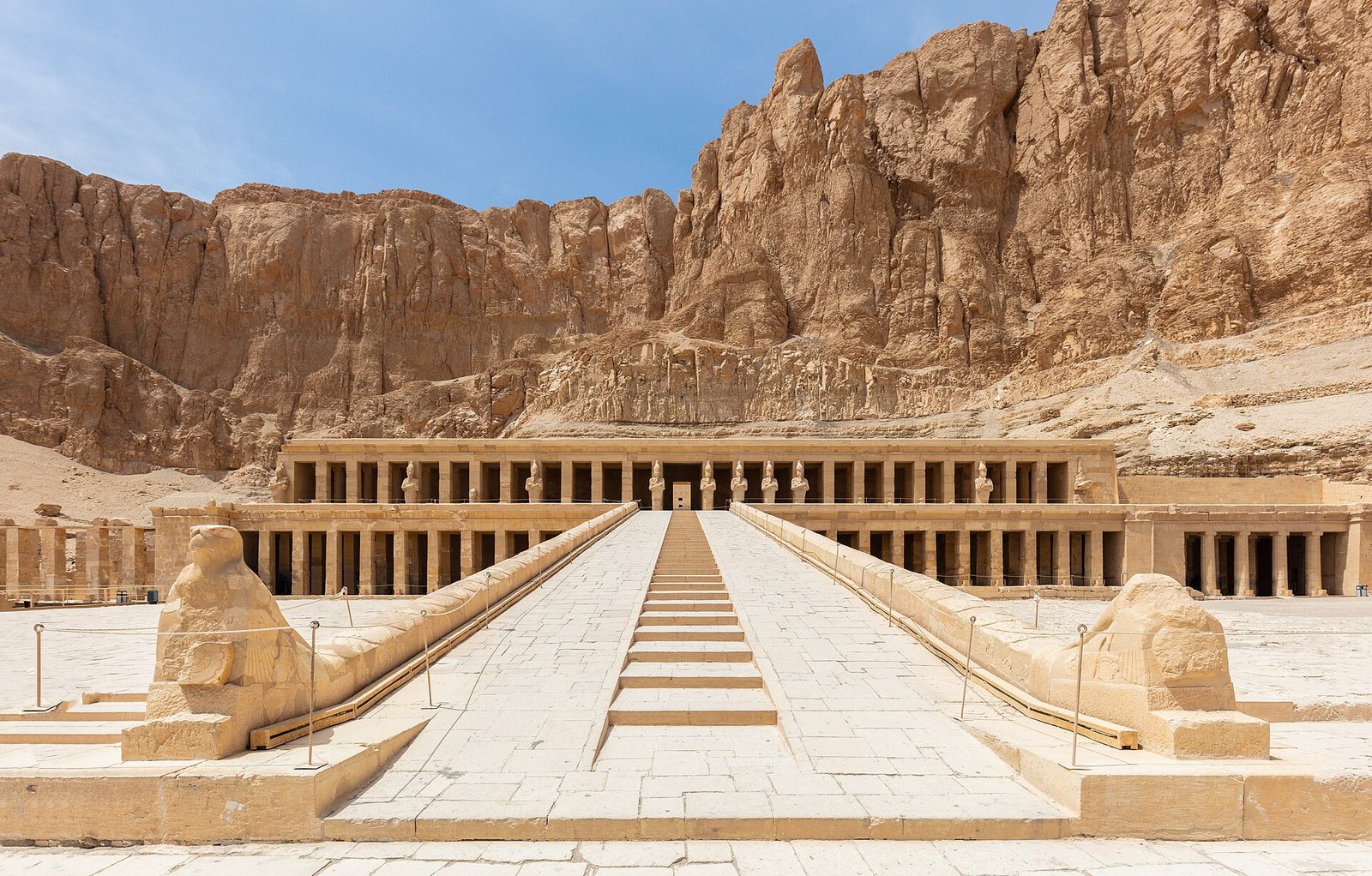
Ten minutes by car from the valley, the terraced temple of the queen who ruled as pharaoh sits under a curved wall of cliff. Seen from the causeway with the morning sun behind you, it is the most photogenic building on the west bank. Walk the ramps, find the expedition to Punt on the middle terrace, then leave before the light turns white.
The Colossi of Memnon, two seated statues of Amenhotep III alone in a field, are a ten-minute stop on the road back to the river, and worth exactly that: long enough to grasp the scale, not long enough to eat into lunch.
Lunch and the hours you should not be outdoors
By late morning the west bank is a stone oven. From April to October the air in Luxor reaches 100 to 108 F (38 to 42 C) in the early afternoon, and even from November to March the midday sun on an unshaded temple court is stronger than it feels. This is not the moment for a fourth site. It is the moment to cross the river, eat and sit down.
Keep lunch late and light. A long, heavy meal at noon steals the part of the afternoon you need for Karnak. We usually stop near the Corniche for grilled fish or a plate of koshari in forty minutes, then rest until the shadows lengthen. On a cruise boat, this is when you go back on board for the buffet, which is exactly what the ship's schedule assumes.
Karnak in the afternoon, Luxor Temple at dusk
Karnak
Karnak is not a temple, it is a city of temples built over two thousand years, and the hypostyle hall with its 134 columns is probably the most overwhelming built space that survives from the ancient world. Give it two to three hours. In late afternoon the sun slides behind the western pylons and the hall fills with long shadows, which is when the carved columns finally read as sculpture.
Go straight down the main axis: first pylon, the ram-headed sphinxes, the great hall, the obelisks of Hatshepsut and the sacred lake. Everything else is a bonus. The full walk is in our guide to the temple of Karnak.
Luxor Temple
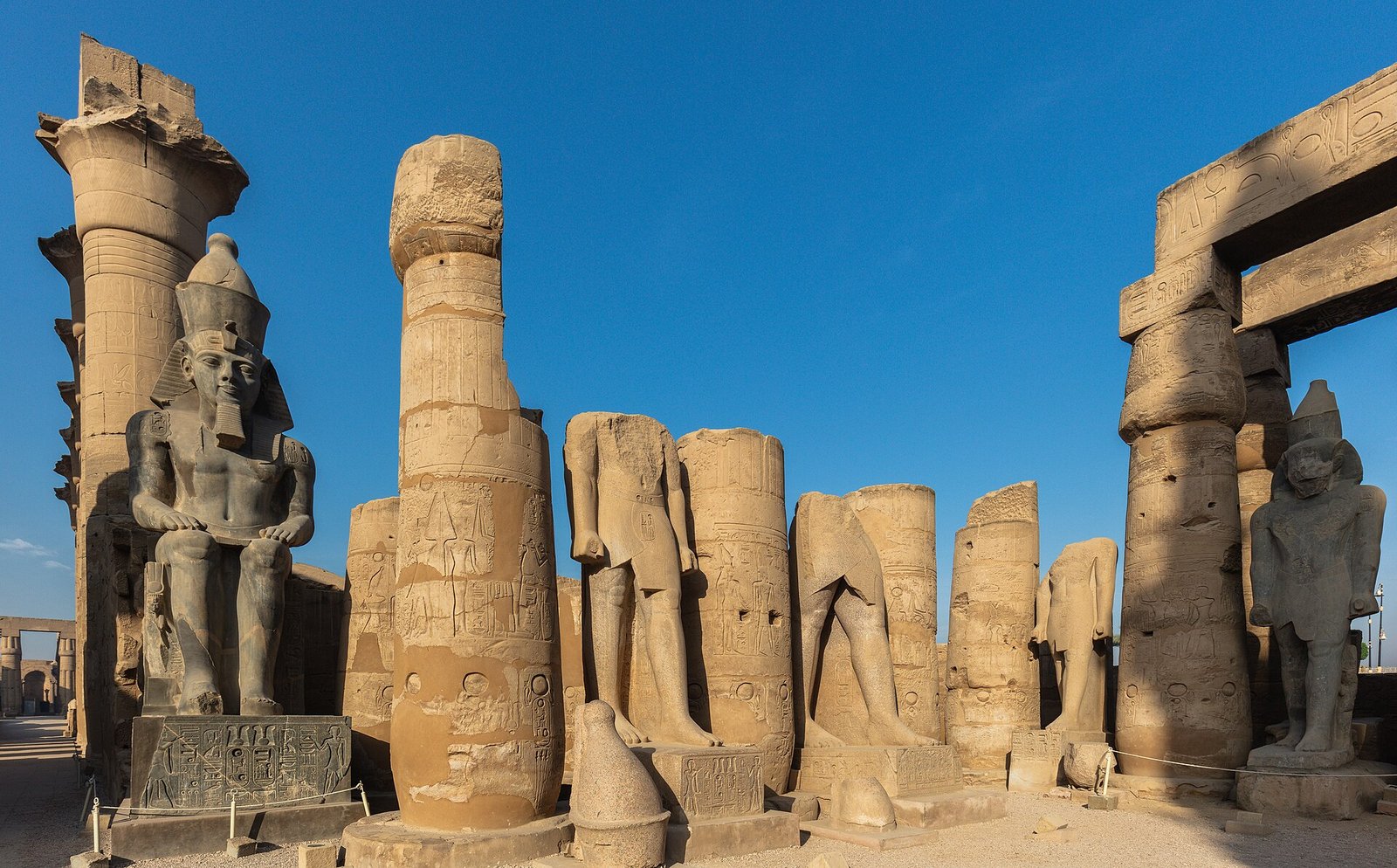
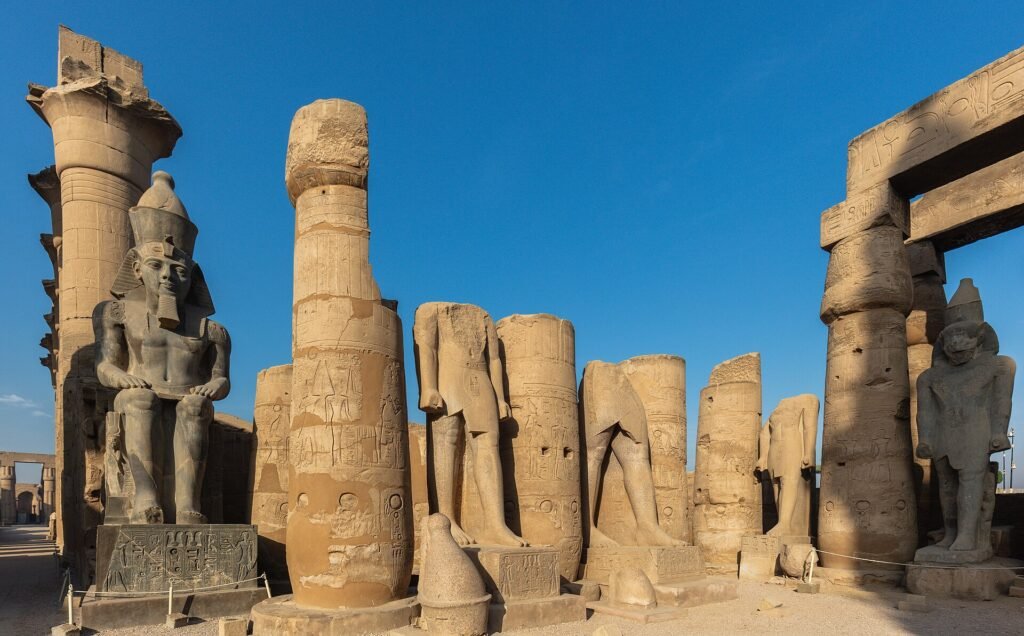
Save the temple in the center of town for last, because it is the only site in Luxor that gets better after sunset. Arrive as the light goes, walk in past the avenue of sphinxes and the single standing obelisk, and by the colonnade of Amenhotep III the floodlights are on and the columns glow amber against a violet sky. It takes about an hour, it is a short walk from most hotels and cruise berths, and it costs you no daylight. Our guide to Luxor Temple covers the mosque built inside it and the Roman fresco most visitors walk past.
If your one day in Luxor is a Nile cruise stop
Most Americans with exactly one day here arrive on a cruise, and that version has its own rules. The window is set by the boat. The usual pattern is a morning excursion to the west bank with the ship's guide, a return on board for lunch, then either a scheduled Karnak visit or a free afternoon.
Two consequences follow. First, the included tour normally covers the valley, Hatshepsut and the Colossi, so the only thing left to decide is the afternoon. Second, Luxor Temple is walking distance from the cruise berths on the Corniche, so if the boat overnights in Luxor, the dusk visit is yours even when it is not on the program.
Check whether the ship overnights or sails after lunch, ask the cruise manager the exact time to be back on board, and build in a margin. If the ship's tour is a large group moving at the slowest passenger's pace, you can opt out and do the same morning privately with our guide and car, timed so you are back for the buffet. Ask us for the quote with your boat name and docking day.
If you are coming from Hurghada for the day
The other big group with one day in Luxor is staying on the Red Sea. The road from Hurghada takes roughly four hours each way across the Eastern Desert, with checkpoints where you will need your passport, so a Hurghada day trip means leaving the resort well before dawn and returning after dark. It is a long day, and for many of our Hurghada guests the one they remember most.
The version that works is the private one, because timing is everything. You reach the west bank by mid morning rather than at opening, so the valley is busier and warmer. To compensate we limit the morning to the valley and Hatshepsut, take the Colossi as a rolling photo stop, lunch early and give Karnak the full afternoon. The dusk visit to Luxor Temple usually does not fit, because you need to be on the desert road before nightfall.
If you can spare one night, the answer changes completely. Drive over in the afternoon, sleep in Luxor, do the whole plan from opening and return the following evening. Both versions are in our guide to excursions from Hurghada.
What you give up, and why it does not matter today
Every item on this list is extraordinary. It still does not fit, and it is better to accept that before you land than at the gate.
- Medinet Habu. The mortuary temple of Ramesses III keeps more original color than anything else on the west bank. Adding it means cutting time inside the tombs, and the tombs are where the content is.
- The Tombs of the Nobles. Smaller, more human, painted with harvests and banquets rather than gods. Exactly the place that rewards a slower second day.
- The Valley of the Queens and the Ramesseum. Nefertari's tomb is the finest painted chamber in Egypt and needs its own ticket and its own hour. Both wait for a return trip.
- The Luxor Museum. The best small museum in the country. It only fits if you sacrifice the dusk temple, and we would not.
- The hot air balloon. It takes the first hour of daylight, precisely the best hour for the valley. With two days it is the obvious extra.
None of these omissions makes the day thinner. Trying to squeeze in all of them does. If the list hurts, look at our two-day Luxor tour, which adds every one of them at a human pace, and at the complete rundown of what to see in Luxor.
Heat, timing and the five rules that make the day work
Every rushed day in Luxor we have heard about broke one of these rules.
- Leave at opening. On the west bank, the first hour is the difference between quiet tombs and packed tombs, and between manageable heat and brutal heat. It is worth a 5 am alarm.
- Cross once. West in the morning, east in the afternoon. Going back and forth twice throws away an hour on the bridge.
- Keep the car for the whole morning. Distances between west bank sites are long, there is no useful public transport and taxis at the ferry landing negotiate every leg.
- Eat late and light. A leisurely lunch at noon eats the useful half of the afternoon.
- End at Luxor Temple. It is the only site that improves as the light fades, so it is the only one that can safely be last.
On heat: a hat you will actually wear, sunglasses, closed shoes for the polished tomb ramps and a liter of water per person for the morning; the car carries more. In winter, mornings can start around 50 F (10 C) and climb to the mid 70s F (about 24 C), so carry a layer you can shed.
Why a private car and a guide are the only way to do it in a day
With one day, an Egyptologist guide and a private vehicle are not a luxury, they are the plan. Here is how the three ways of doing it compare.
| Option | Sites covered | Timing | Verdict for one day |
|---|---|---|---|
| Private car and guide | All four essentials, tombs chosen for you | At opening, one river crossing, dusk temple | The only option that completes the plan |
| Group bus tour | The same four, at the slowest pace on the bus | Fixed pickup, long stops, midday in the sun | Fine for cruise mornings, tiring for a full day |
| On your own with taxis | Two or three, depending on negotiation | Ferry queues, haggling at every site | Cheaper on paper, costs the day in practice |
A guide does three things a guidebook cannot. They know which tombs opened this month and which closed for restoration. They tell the story that makes a wall of hieroglyphs mean something, the difference between seeing paint and understanding a funeral. And they manage the clock, so that when you run late at Hatshepsut they trim the Colossi rather than Karnak. The days we run are listed under Luxor excursions.
How Explora Egipto runs one day in Luxor
We are a local agency in Egypt with our own licensed Egyptologist guides and our own air-conditioned vehicles, which is what lets us start when the gates open rather than when a bus depot does. The night before, your guide messages you the pickup time, confirms which tombs are open and asks whether you want Seti I or Tutankhamun added.
On the day, the driver waits at each site, the tickets are arranged in advance and the guide sets the pace to you: longer in the tombs if you are absorbed, a shorter Colossi stop if the heat is winning. We finish at Luxor Temple after dark and drop you at your hotel, your boat or the airport for the evening flight to Cairo.
It works as a stand-alone day between the morning and evening flights from Cairo, as a private replacement for a cruise ship's group tour, or as the long day out from a Red Sea resort. Tell us which one you are and ask us for the quote.
Frequently asked questions
Is one day in Luxor enough?
Enough to see the four sites that define the place: the Valley of the Kings, the temple of Hatshepsut, Karnak and Luxor Temple. Two days is the comfortable version and adds Medinet Habu, the Tombs of the Nobles and the museum. If one day is what you have, start at opening, cross the river once and end at Luxor Temple at dusk, and you leave with a complete impression rather than a rushed one.
What is the best order for one day in Luxor?
West bank in the morning, east bank in the afternoon. Begin in the Valley of the Kings at opening, continue to the temple of Hatshepsut and stop briefly at the Colossi of Memnon, then cross for a late lunch. Spend the afternoon at Karnak and finish at Luxor Temple as the lights come on. The order follows the heat and the light, which is why we never reverse it.
How many tombs can you see in the Valley of the Kings in one day?
The standard ticket admits you to a set number of the open tombs, usually three, and three well-chosen tombs from different dynasties are more rewarding than six similar ones. Tutankhamun and Seti I need a separate ticket each. Which tombs are open changes without notice, so let your guide pick the trio the evening before.
Can I do Luxor as a day trip from Hurghada?
Yes, and many of our Red Sea guests do. Expect roughly four hours of driving each way, a departure well before dawn and a return after dark. The private version reaches the valley by mid morning, gives Karnak the afternoon and usually skips the dusk visit to Luxor Temple because of the road. Add one night in Luxor and the day stops being a race.
Should I take the hot air balloon if I only have one day?
Only if you accept that it costs you the valley at its best. The balloon flies in the first hour of daylight, exactly when the tombs are coolest and emptiest, so on a single day it pushes your Valley of the Kings visit into the warmer, busier mid morning. With two days it is the obvious extra. With one, we would rather you had the tombs.
Do I need a guide for one day in Luxor?
With one day, more than anywhere else in Egypt. An Egyptologist guide knows which tombs are open, chooses the three that tell the story, moves you between the banks without wasted time and explains what you are looking at while you look at it. With a private car waiting at every site, it is the difference between visiting Luxor and understanding it.
One day in Luxor, done the way it should be done
Tell us your date, where you are sleeping the night before and how you are arriving, by cruise, from Hurghada or on the morning flight from Cairo, and we come back with the day built around it: the guide, the car, the three tombs and Luxor Temple after dark. We send you the quote and you decide.