Egypt at Easter is warm, bright and busy, and this is how to plan the week well
Egypt at Easter is warm, bright and busy, and this is how to plan the week well
Egypt at Easter means late March or April, which is close to the best weather the country gets: warm, dry days around 82 F (28 C) in Cairo and the low 90s F (33 to 35 C) in Luxor and Aswan, with cool evenings on the deck of a Nile cruise. It is also one of the busiest weeks of the year, because European Easter vacations, US spring break, Coptic Easter and the spring holiday Sham el Nessim usually land within a few weeks of each other. The monuments stay open, the cruise boats sell out months ahead, and Abu Simbel is packed by mid-morning. Book early, start your days at opening time, and you get the best of it.
The weather in late March and April, city by city
Easter moves between late March and late April, and the two ends of that window feel different. Late March is spring proper: warm afternoons, a light jacket after dark. By the second half of April, Upper Egypt is edging toward summer, and Karnak feels hot in the open after noon, though nothing like July.
| Where | Late March, typical day | Mid to late April, typical day |
|---|---|---|
| Cairo and Giza | 77 to 82 F (25 to 28 C), nights near 57 F (14 C) | 84 to 90 F (29 to 32 C), nights near 63 F (17 C) |
| Luxor | 86 to 90 F (30 to 32 C), nights near 60 F (16 C) | 93 to 99 F (34 to 37 C), nights near 66 F (19 C) |
| Aswan and Abu Simbel | 88 to 93 F (31 to 34 C), nights near 63 F (17 C) | 95 to 101 F (35 to 38 C), nights near 68 F (20 C) |
The Red Sea coast sits in the high 70s to mid 80s F (25 to 30 C) with a sea warm enough to swim. Rain is not part of the picture and humidity is low. For each month on its own, see visiting Egypt in March and visiting Egypt in April.
The khamsin, the one weather wildcard of spring
The khamsin is a hot, dry wind from the south that carries sand and fine dust north across Egypt for a day, sometimes two. The name comes from the Arabic word for fifty, roughly the number of days when it can blow. When it arrives the sky turns flat yellow, the temperature jumps 15 to 20 F (8 to 11 C) in a few hours, balloons over Luxor are grounded and feluccas stay tied up. Temples and tombs do not close. Most Easter trips never meet one; if yours does, it is a museum morning, and it clears as fast as it came.
Why Easter week is one of the busiest of the year in Egypt
Four calendars converge on the same few weeks, and together they fill every cruise cabin on the Nile.
- Western Easter. Catholic and Protestant Easter sets the school calendar across Europe, and families from Britain, Germany, France, Italy and Spain get one to two weeks off. This is the largest wave.
- US spring break. Colleges and school districts scatter their breaks from early March to mid-April. Some line up with Easter; many fall a week or two earlier, which is good news we come back to below.
- Coptic Easter. Egypt's Christians follow the older Julian calculation, so Coptic Easter usually lands on the same Sunday as Greek and Russian Orthodox Easter. Some years that is the same day as Western Easter; other years it is one to five weeks later.
- Sham el Nessim. The national spring holiday is always the Monday after Coptic Easter, a day off for every Egyptian, Muslim and Christian alike.
The dates shift every year, so check the calendar for your travel year before you settle on a week. When Western and Coptic Easter coincide, the peak is sharp and a week long; when they are weeks apart, the quiet gap between the two can be the sweetest week of spring. Our page on Egypt's festivals and public holidays lists the moving feasts, and high and low season in Egypt puts the whole year side by side.
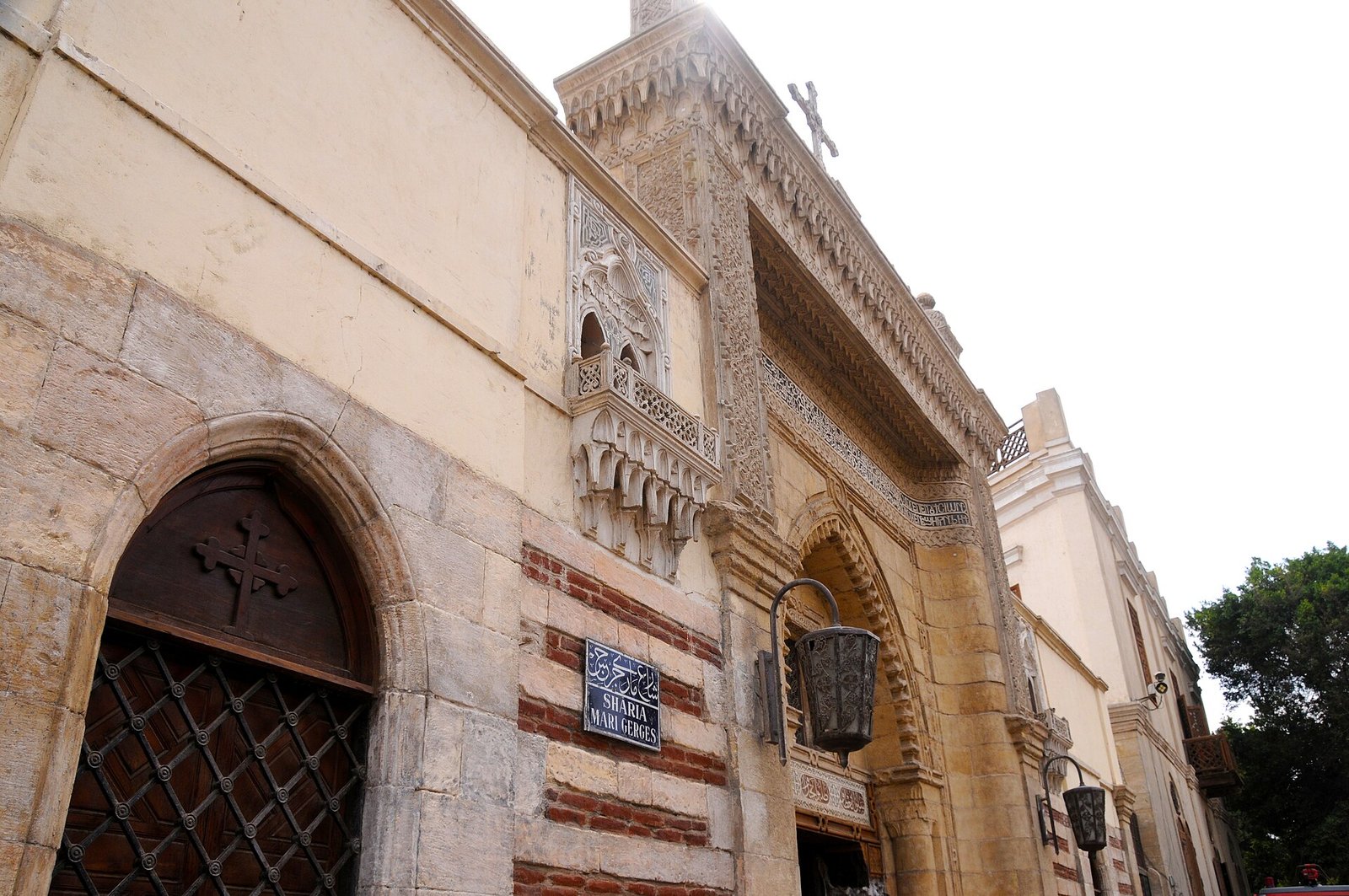
Coptic Holy Week and Easter, and how a visitor can respectfully see it
The Coptic Orthodox Church traces itself to Saint Mark in Alexandria, and its Holy Week, called Pascha, closes a fast of more than seven weeks without meat, eggs or dairy.
- Palm Sunday. The most visible day for a traveler. Outside every church in Coptic Cairo, families weave palm fronds into crosses, rings and little donkeys.
- Good Friday. The longest service of the year, most of the day, with hymns in a mournful tune the Copts save for this one day.
- The Easter Vigil. Saturday evening builds to the Resurrection liturgy around midnight: bells, incense, white vestments, the empty tomb reenacted at the sanctuary door. Families then break the fast at home on fatta, rice and toasted bread with meat in a garlic and vinegar broth.
- Easter Sunday. Family visits and kahk cookies. Christian-run shops close for the day.
How to attend without getting in the way
Visitors are welcome in Coptic churches during services if they behave like guests. Cover shoulders and knees; women need not cover their hair, but a scarf is appreciated in the older churches. Stand at the back, leave quietly, no flash, no photographs of people praying. Men and women often sit on separate sides, so follow the people next to you.
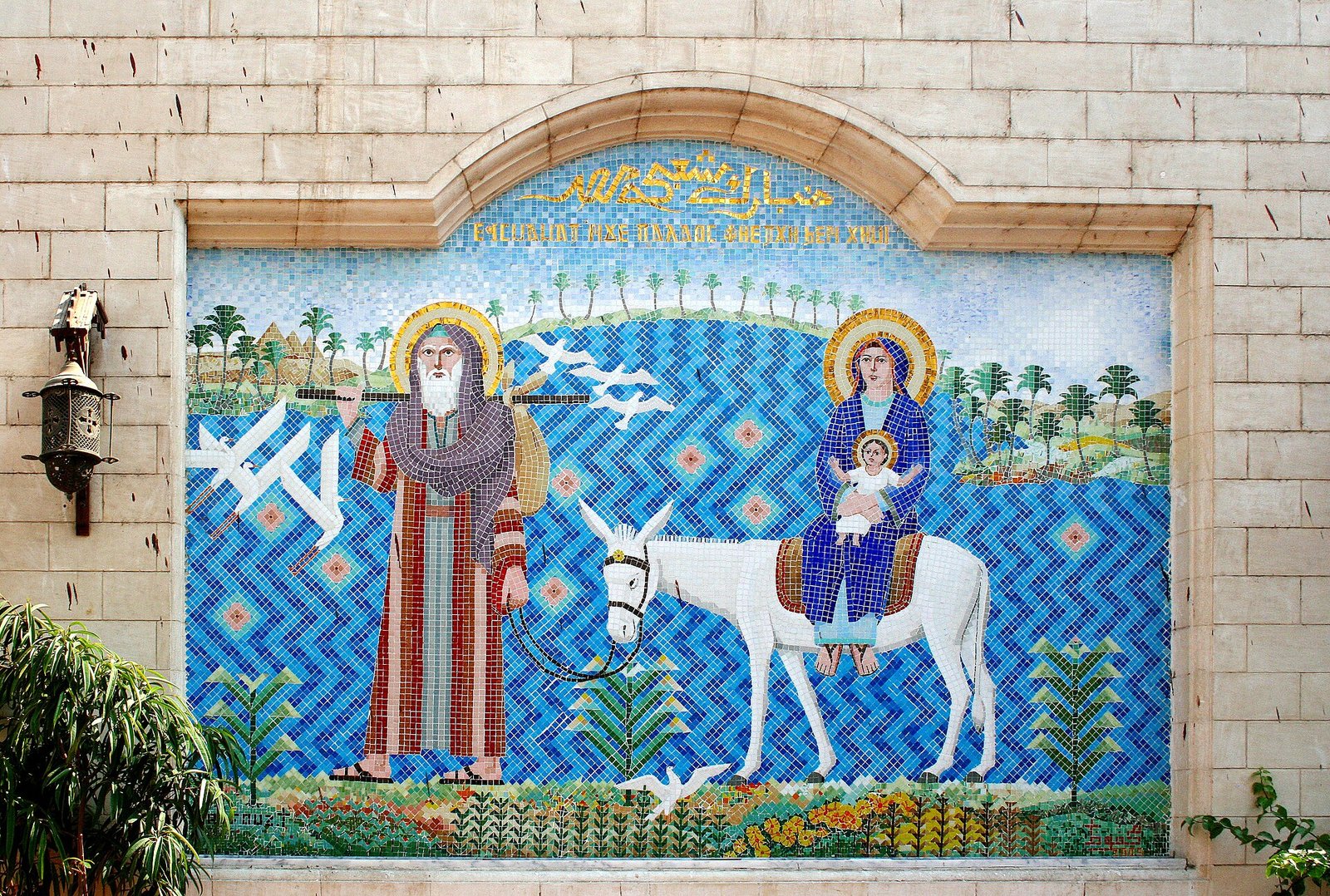
The best places are the churches of Coptic Cairo, especially the Hanging Church and Saints Sergius and Bacchus, and Saint Mark's Cathedral in Abbassia for the vigil itself. Go with a guide who knows the timing, because churches limit tourist entry while the liturgy is under way.
Sham el Nessim, the spring day that is older than the church
Sham el Nessim means, more or less, smelling the breeze. It is the national spring festival, celebrated on the Monday after Coptic Easter by every Egyptian regardless of religion, and usually described as the descendant of the ancient harvest festival Shemu.
The star dish is feseekh, grey mullet salted and fermented for weeks until it has a smell you notice from the next room. Alongside it come ringa, a milder smoked herring, spring onions, lettuce, termis beans, and hard-boiled eggs dyed in bright colors by the children the night before. Then everyone goes outside: parks fill from early morning and the Nile corniche in Cairo becomes one long picnic.
If you are in Egypt on the day, ask your guide to take you to a park or the river in the morning with a few colored eggs; you will be offered more food than you can eat. Be careful with feseekh, though. It is fermented raw fish and badly prepared batches make people sick every year. A small amount from a source your guide trusts, or stick to the ringa.
What closes, and what does not
The ancient sites do not know it is Easter. Pyramids, temples, tombs and museums keep their normal hours through Western Easter, Coptic Easter and Sham el Nessim. Check current hours for each site, since they change with the season, but do not expect a holiday closure.
| Day | Open as usual | Closed or changed |
|---|---|---|
| Western Good Friday and Easter Sunday | Everything. In Egypt these are ordinary days | Nothing, apart from services in the Catholic and Anglican churches of Cairo |
| Coptic Good Friday and Easter Sunday | Monuments, museums, restaurants, bazaars, most shops | Coptic churches are in service most of the day and limit sightseeing entry; Christian-owned shops close on Easter Sunday |
| Sham el Nessim (Monday) | Monuments, museums, hotels, restaurants, Khan el Khalili | Banks and government offices; parks and the corniche are full; heavy traffic out of Cairo in the morning |
Change money or use an ATM before Sham el Nessim, because bank branches close. And do not plan a Coptic Cairo walk for Coptic Easter Sunday morning unless you want the celebrations rather than the buildings.
Crowds on the Nile cruise and at Abu Simbel
This is where Easter shows. Every cruise boat between Luxor and Aswan leaves the same docks on the same days and reaches Edfu and Kom Ombo within the same two hours. At Easter that means the full fleet, moored four and five abreast, so your cabin window may look into another cabin rather than the river. On board nothing is worse than usual; the difference is at the temples, where Edfu gets a line for the sanctuary and Kom Ombo at sunset is shared with several hundred people.
A dahabiya, the small sailing boat with a handful of cabins, moors away from the fleet and visits the temples at different hours. It is the single biggest upgrade you can make to an Easter cruise.
Abu Simbel at Easter
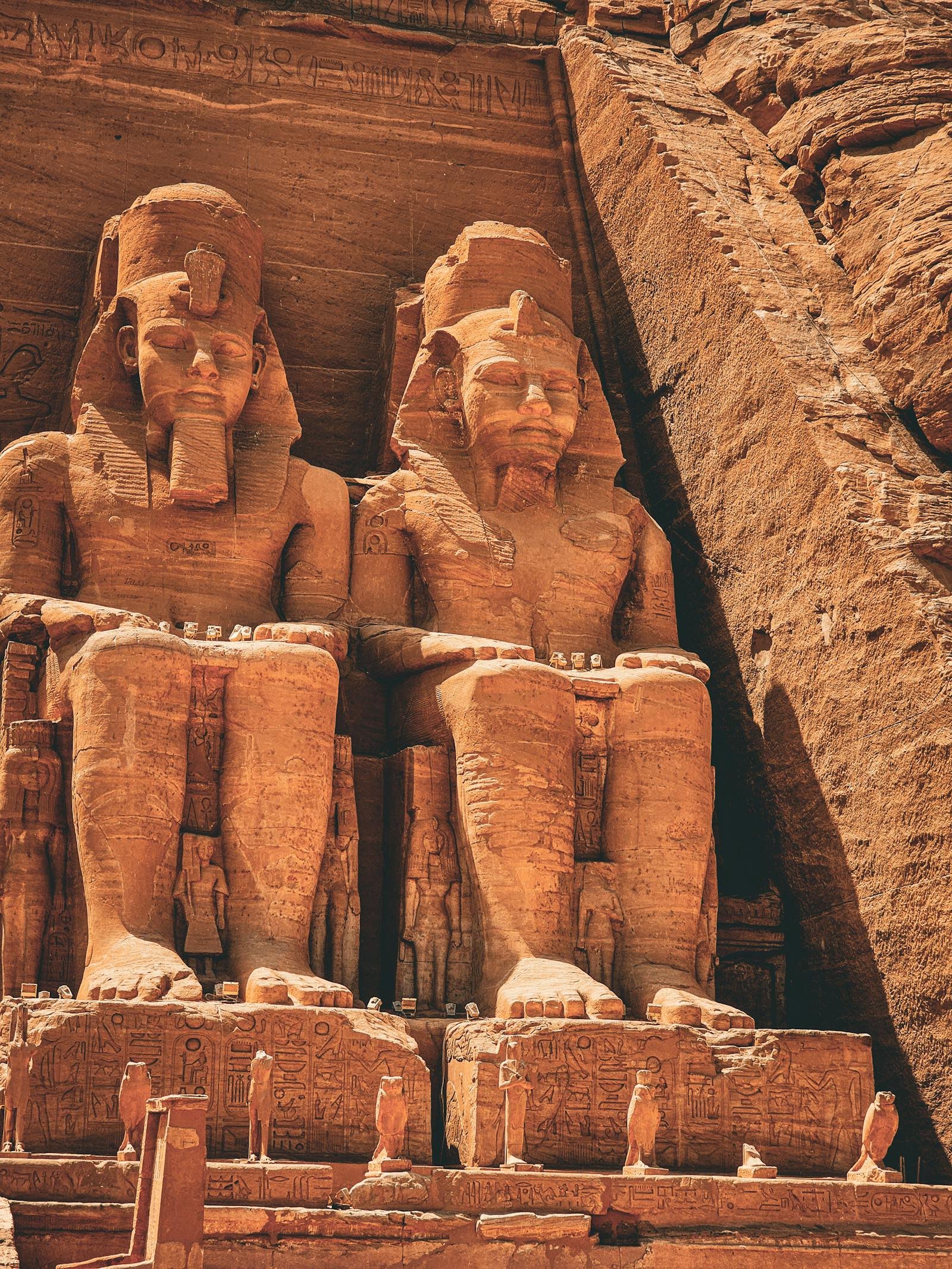
Abu Simbel takes the hardest hit because everyone arrives in the same window. The first flights from Aswan and the vans up the desert road land the crowd between about eight and eleven in the morning, and the hall of Ramesses statues inside the Great Temple is narrow. Two fixes work: take the very first flight and go straight in ahead of the vans, or sleep in Abu Simbel and see the temples at sunset and again at dawn before anyone arrives. Our page on Abu Simbel tickets and how to visit covers both.
Booking early: what sells out first, in order
Because the demand is predictable, so are the shortages. This is the order in which things disappear for an Easter week.
- Dahabiyas and small luxury boats. A boat with eight or ten cabins is full six months out, earlier when one family group takes the whole vessel.
- Upper-deck cabins on the better standard ships. By the turn of the year, an April cruise is a matter of what is left rather than what you prefer.
- The overnight in Abu Simbel. Only a few hotels exist there, and the sunset-plus-dawn plan depends on one of them.
- The dawn domestic flights. Cairo to Aswan and Aswan to Abu Simbel at first light are the ones everyone wants. Later departures cost you a morning.
The realistic timeline: four to six months before Easter for a free choice of boat, no later than three months for a good one. Later than that the cruise becomes the fixed point and everything else bends around it. We hold cabins while you decide; ask us for the quote and the availability for your year.
A 7 to 9 day Easter plan that works with the crowds, not against them
This is the shape we use most for an Easter week. It runs south to north, against the direction most groups take, and domestic flights do the long distances so no day is lost to a road.
- Day 1, Cairo. Arrive, settle in, and if there is daylight left, a first look at the Pyramids at sunset.
- Day 2, Giza and the Grand Egyptian Museum. Inside the plateau at opening, the Sphinx, then the museum through the heat of the day.
- Day 3, Coptic and Islamic Cairo. Coptic Cairo first thing, timed around the services, then Al Muizz street and Khan el Khalili.
- Day 4, fly to Aswan. The High Dam, Philae by boat, and a felucca at sunset around Elephantine Island. Sleep on the boat.
- Day 5, Abu Simbel. First flight of the day, back by lunch, and the cruise sails north in the afternoon.
- Day 6, Kom Ombo and Edfu. Kom Ombo at dawn before the fleet wakes up, Edfu by horse carriage mid-morning, sail on to Luxor.
- Day 7, Luxor west bank. Optional balloon at sunrise, the Valley of the Kings at opening, Hatshepsut, the Colossi, and Karnak in the golden hour.
- Day 8, back to Cairo. Morning flight, then the Egyptian Museum in Tahrir or the Citadel in the afternoon.
- Day 9, Sham el Nessim or the Red Sea. If the calendar gives you the holiday, a park picnic with your guide. Otherwise swap days 8 and 9 for two nights in Hurghada or El Gouna.
The bones are the same as our 7 day Egypt itinerary; the Easter version reverses the direction and fixes the wake-up calls, with our own guide and vehicle at every stop.
Spring break with kids in Egypt
If your spring break falls in the first half of March, you have the best of both worlds: the same weather, Egyptian schools still in session, and the European wave still two weeks away. Boats have space and the Pyramids at eight in the morning are close to empty. If your break lands on Easter week itself, the early-booking rule matters twice.
- The heat is real by midday in Luxor. Sites before eleven and after four, a pool in between.
- A Nile cruise is the easiest three days of the trip for a family: unpack once, the sights come to the boat, and the sundeck is a safe place to run.
- Camel rides at the Pyramids, a felucca in Aswan, the Nubian village and the sound and light show at Karnak are the moments kids talk about afterwards.
- If Sham el Nessim falls in your week, buy eggs and food coloring the day before and let the kids dye them in the hotel.
- Pack a scarf per child for khamsin days and a warm layer for the pre-dawn Abu Simbel flight.
Our family guide to Egypt with kids goes through ages, strollers, food and which tombs are worth the climb.
How Explora Egipto plans around Easter week
We are a local agency in Egypt with our own guides and vehicles, and Easter is the week we plan hardest for.
- We block cruise cabins early and hold them while you decide, because the boat is the one part of the trip that cannot be fixed later.
- We run the itinerary south to north in peak weeks, so you reach Abu Simbel and the Valley of the Kings before the northbound groups.
- We time Coptic Cairo around the liturgy. If Holy Week overlaps your dates, your guide knows which services welcome visitors and when the doors are open for sightseeing.
- We put Sham el Nessim on the plan if the calendar gives it to you, with a park or riverbank picnic and the right food, feseekh optional.
Tell us your week and who is traveling, and we come back with the boats that still have cabins, the plan around the holidays of that year, and the quote.
Frequently asked questions
Is Easter a good time to visit Egypt?
Yes, one of the best for weather. Late March and April give warm dry days, cool evenings and long light. The trade-off is demand: European Easter holidays, US spring break, Coptic Easter and Sham el Nessim fill the cruise boats and the early flights to Abu Simbel. Book months ahead and start each day at opening time.
How hot is Egypt at Easter?
Cairo runs from about 77 F (25 C) in late March to around 88 F (31 C) in late April, with nights of 57 to 63 F (14 to 17 C). Luxor and Aswan are hotter, from the high 80s F (about 31 C) up to the high 90s F (36 to 37 C) by late April, but the air is dry and mornings are pleasant.
Does Coptic Easter fall on the same day as Easter in the US?
Not usually. The Coptic Church calculates Easter on the older Julian calendar, so it lands on the same Sunday as Greek and Russian Orthodox Easter. Some years that coincides with Western Easter; more often it falls one to five weeks later. Sham el Nessim is the Monday after. Check the calendar for your year before you fix your dates.
Can tourists join Sham el Nessim?
Absolutely, and you will be welcomed. It is a public holiday for all Egyptians, spent outdoors with picnics of salted fish, spring onions, lettuce and colored eggs. Ask your guide to take you to a park or the Nile corniche in the morning and bring a few dyed eggs to share. Try the feseekh only from a source your guide trusts.
Is anything closed in Egypt over Easter?
The pharaonic sites and museums stay open through all of it. Western Easter is an ordinary day in Egypt. On Coptic Easter Sunday, churches are in service and Christian-owned shops close. On Sham el Nessim, banks and government offices close, but hotels, restaurants, monuments and the bazaars run as normal. Change money before the Monday.
How far ahead should I book a Nile cruise for Easter?
Four to six months ahead for a free choice of boat, and no later than three months for a good one. Dahabiyas and the small luxury boats go first, then the upper-deck cabins on the standard ships, then the overnight in Abu Simbel. Write to us with your dates and we send you what is available and the quote.
Spend Easter week on the Nile with the crowds behind you
Send us your dates, who is traveling and how many days you have. We check the holidays of your year, hold the boat that fits, build the early starts and the picnic into the plan, and send you the quote with everything laid out.