
Cairo in 3 Days: The Itinerary a Private Guide Would Run
Cairo in 3 Days: The Itinerary a Private Guide Would Run
Three days in Cairo covers everything a first visit needs: the Giza plateau and Saqqara on day one, the Grand Egyptian Museum, Coptic Cairo and Khan el Khalili on day two, the Citadel, Al Muizz street and a second museum on day three, with a felucca or a dinner cruise to close. The plan works because each day stays on one side of the city, so your hours go to monuments instead of traffic. Start early every morning, keep the museums for the middle of the day when the sun is worst, and leave the bazaar and the river for dusk. Below is the 3 days in Cairo itinerary a private guide would actually run, with a table, where to stay, and how to adapt it.
Why three days, and why the order of this plan matters
Cairo is a chain of cities laid end to end along the Nile, and the sights sit at opposite ends of the chain. The Pyramids, Saqqara and the Grand Egyptian Museum are on the west bank, out toward the desert. The Citadel, Al Muizz street, Khan el Khalili and Coptic Cairo are on the east bank, in the medieval core. Downtown and the Tahrir museum sit in between.
Crossing from one end to the other takes twenty minutes at dawn and well over an hour at four in the afternoon. A plan that bounces between Giza and Islamic Cairo in the same day burns its best hours on a bridge.
So the rule behind this 3 day Cairo itinerary is simple: one side of the city per day, outdoor sites first thing in the morning, the big air conditioned museum in the middle of the day, and the bazaar and the river at dusk when the light turns gold and the city cools off.
The city has its own clock too: Giza is at its best in the first hour after the gates open, and Khan el Khalili is dead at noon and alive after sunset. If Cairo is one stop on a longer trip, our Cairo excursions page shows how these same days slot into a full Egypt tour.
The 3 day Cairo itinerary at a glance
| Day | Morning | Afternoon | Evening |
|---|---|---|---|
| Day 1 | Giza plateau at opening: the three pyramids, the panorama point, the Sphinx, an optional short camel ride | Saqqara and Memphis, or Dahshur for the Bent and Red pyramids without the crowds | Early dinner with a pyramid view, optional sound and light show, early night |
| Day 2 | Grand Egyptian Museum, three to four unhurried hours | Coptic Cairo: the Hanging Church, the Babylon fortress towers, Ben Ezra synagogue, St Sergius | Khan el Khalili at dusk, coffee at a historic cafe, dinner in the old quarter |
| Day 3 | The Citadel and the Alabaster Mosque, then Al Muizz street and Al Azhar | The Egyptian Museum in Tahrir or the National Museum of Egyptian Civilization | Sunset felucca on the Nile, or a dinner cruise with a show |
Notice the shape: day one stays west of the river, day three starts on the eastern hills, and the only real crossing, on day two, comes after the museum at the quietest hour of the afternoon.
Day 1: the Giza plateau at opening, then Saqqara and Memphis or Dahshur
Morning on the plateau
Be at the gate when it opens. The first hour on the Giza plateau is a different experience from the tenth: cool air, long shadows, the Great Pyramid with a handful of people at its base instead of a few hundred.
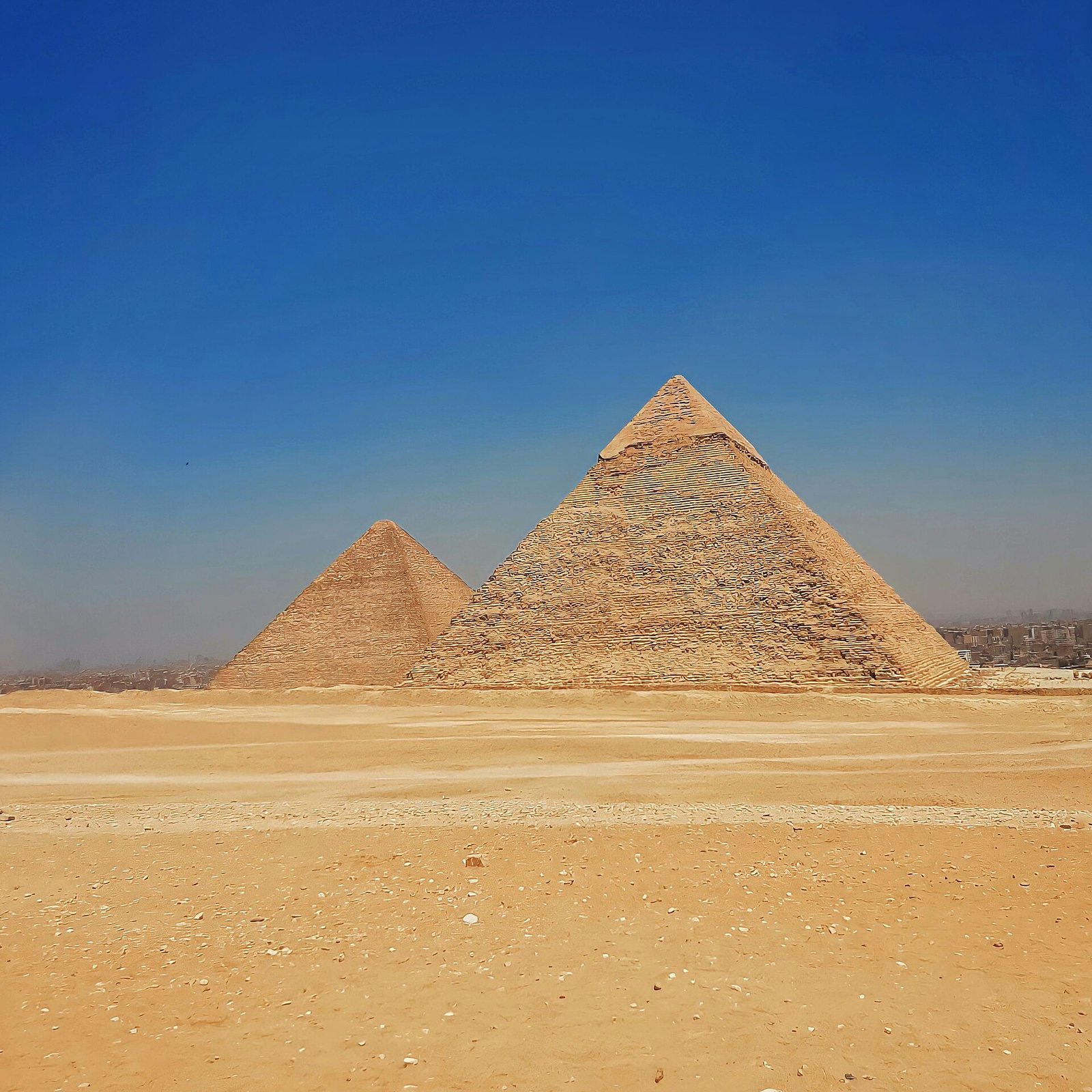
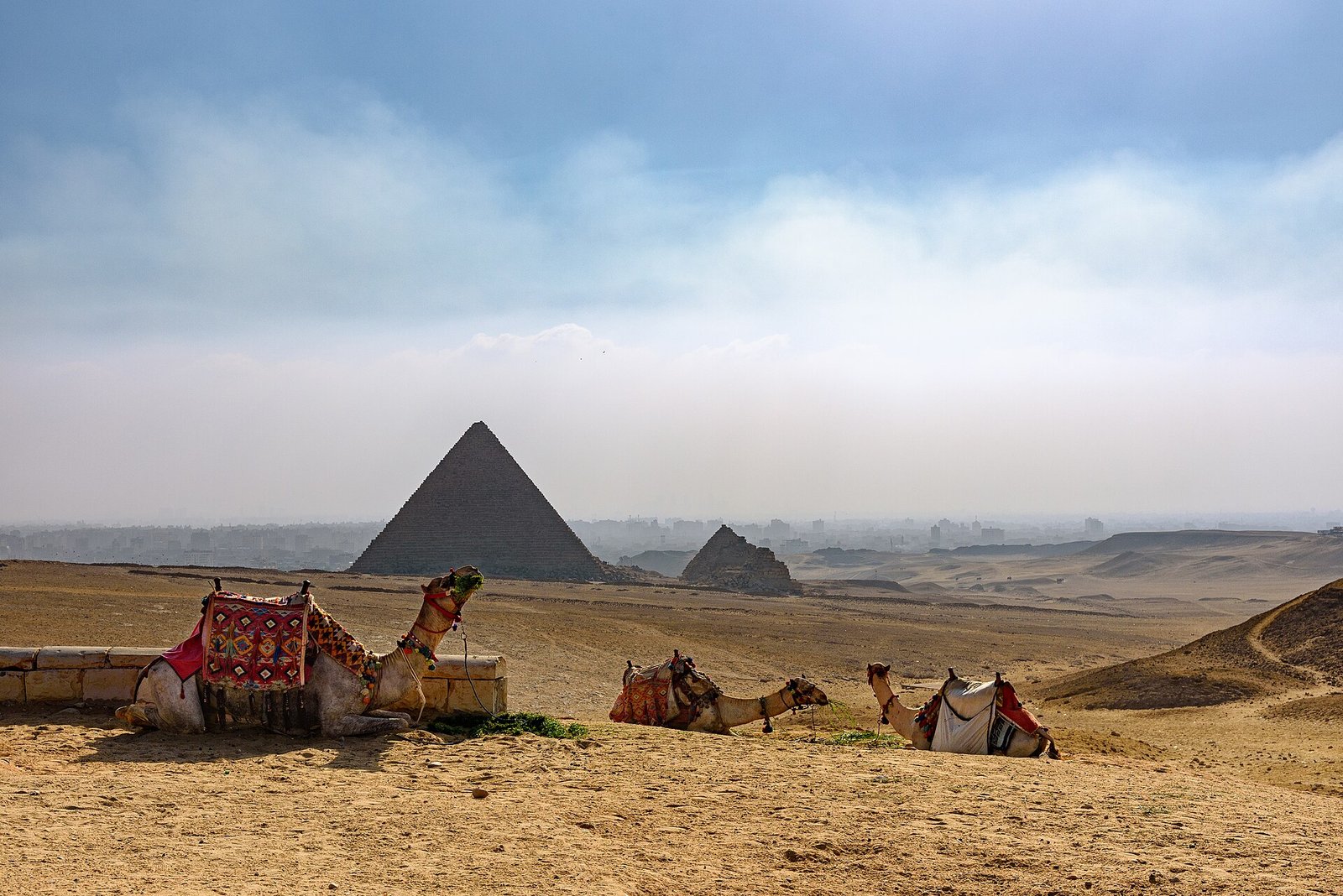
The classic order is Khufu first, then Khafre with its cap of original casing stone, then Menkaure. Between them the site's electric bus takes you up to the panorama point, since private cars no longer drive inside the plateau, where all three line up in one photograph and the camel handlers wait. A short ride along the ridge is worth it for the picture and for the kids; a long ride to the Sphinx is mostly sand in your shoes. Agree the length with your guide before anyone mounts.
Finish at the Sphinx and the Valley Temple beside it. By then the sun is high, the crowds have arrived, and you are leaving. Going inside the Great Pyramid is a hot, stooped climb through a narrow passage: worthwhile once, skip it if anyone is claustrophobic. Our guide to the Pyramids of Giza covers the interior and the practicalities in depth.
Afternoon: Saqqara and Memphis, or Dahshur
Both options lie south of Giza along the same desert road, so this afternoon never crosses the city. Saqqara is the safe recommendation for a first visit. The Step Pyramid of Djoser is the oldest large stone building on earth, and the painted tombs of the nobles around it show Old Kingdom daily life in a way the Giza pyramids never do. Memphis, a few minutes away, is a small open air museum whose star is the colossal fallen statue of Ramesses II. Half an hour is enough.
Dahshur is the alternative for people who want fewer people and more pyramid. The Bent Pyramid, with its strange change of angle, and the Red Pyramid, which you can enter, stand almost alone in the desert.
Evening
Keep it short: dinner on a terrace facing the pyramids, the sound and light show if it appeals, then bed.
Day 2: the Grand Egyptian Museum, Coptic Cairo and Khan el Khalili at dusk
Morning at the Grand Egyptian Museum
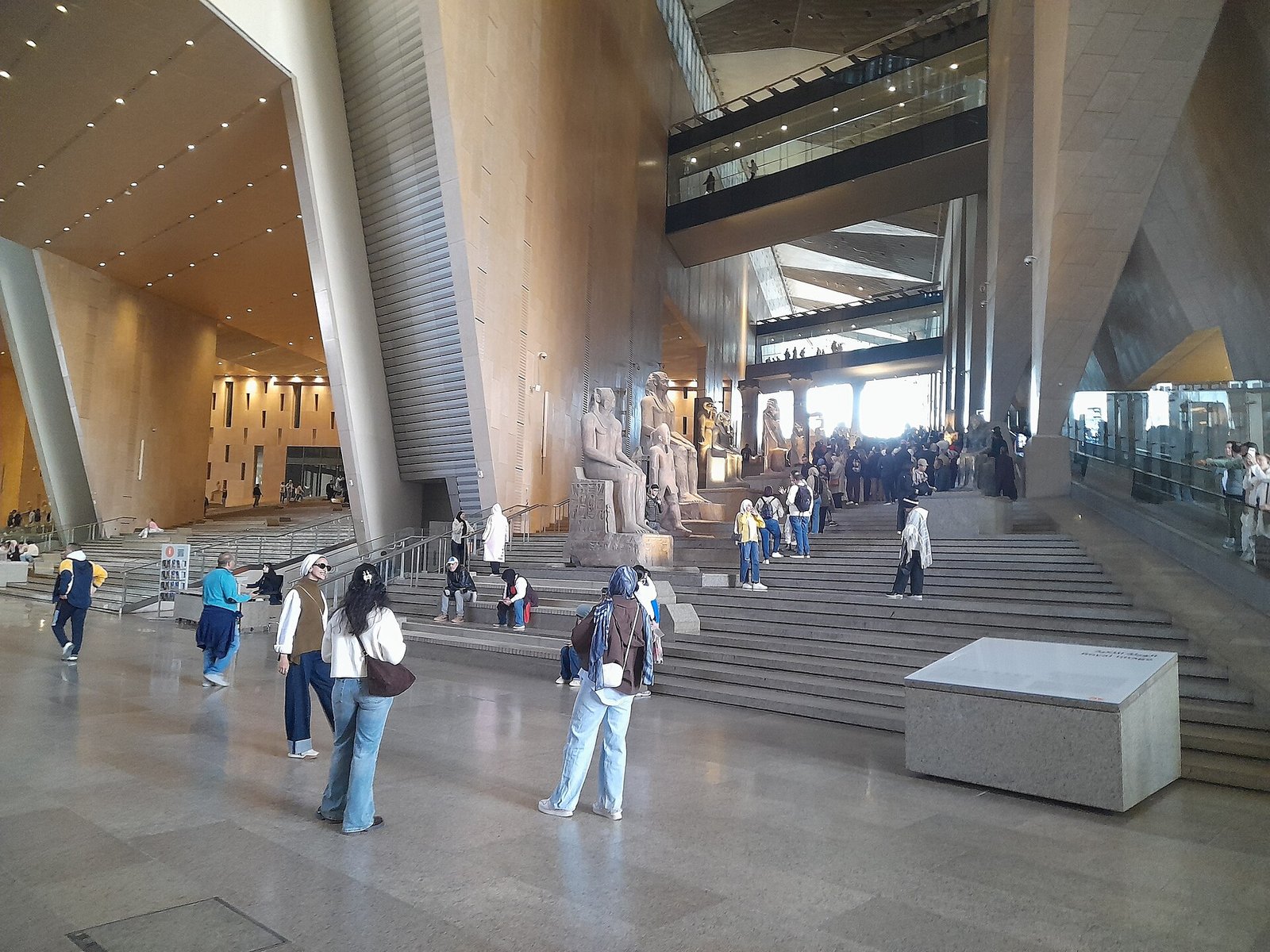
The Grand Egyptian Museum sits at the edge of the Giza plateau, a short drive from the hotels with a pyramid view, which is why it belongs with the west bank days. Arrive as it opens and go straight to the Tutankhamun galleries before the groups reach them. The full contents of his tomb are displayed together for the first time, and they deserve an hour and a half on their own.
Then work back through the grand staircase and the period galleries to the atrium where the colossus of Ramesses II stands. Three to four hours is right for most people. Our Grand Egyptian Museum guide explains which galleries to prioritize and how the ticket options differ.
Afternoon in Coptic Cairo
The drive from the museum to Coptic Cairo follows the ring road and the corniche, and at this hour it is bearable. Coptic Cairo is a compact walled enclave you explore on foot. Start with the Hanging Church, built above the gatehouse of the Roman fortress of Babylon so that its nave literally hangs over the old passage. The two round Roman towers by the metro station are the fortress itself.
Walk down the sunken lane to the church of St Sergius, whose crypt is traditionally where the Holy Family sheltered, and finish at the Ben Ezra synagogue, where the Cairo Geniza documents were found. Shoulders and knees covered; this is a place of worship for a living community.
Khan el Khalili at dusk
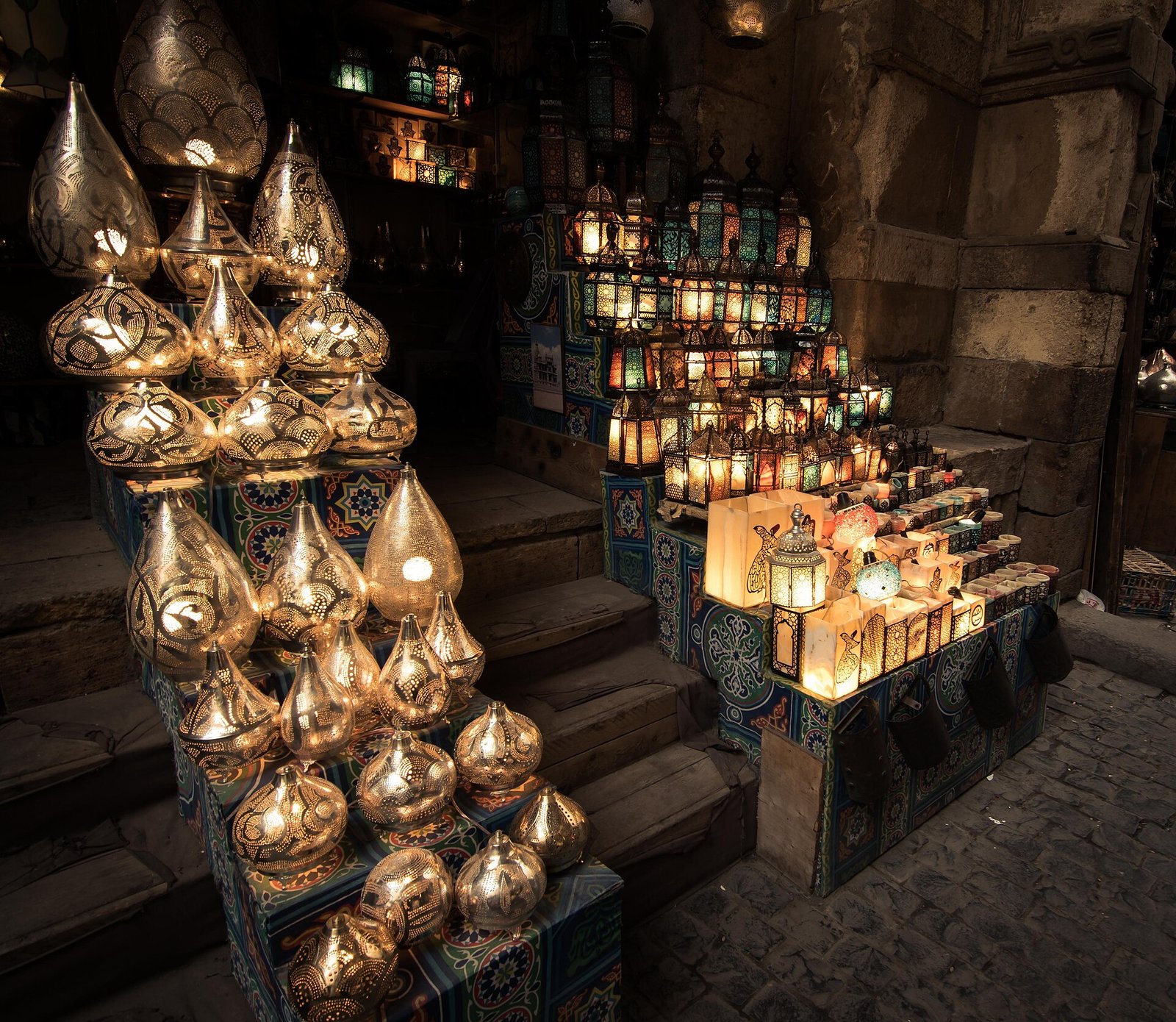
Now cross to the old city, timed so the sun is dropping as you walk in. The lamps come on, the brass shop fronts glow, the coffee houses fill. Wander the spice and gold lanes, then sit down for a mint tea at one of the historic cafes. Haggle with a smile, and have dinner around Al Hussein square.
Day 3: the Citadel, Islamic Cairo, one more museum and a night on the Nile
Morning at the Citadel and the Alabaster Mosque
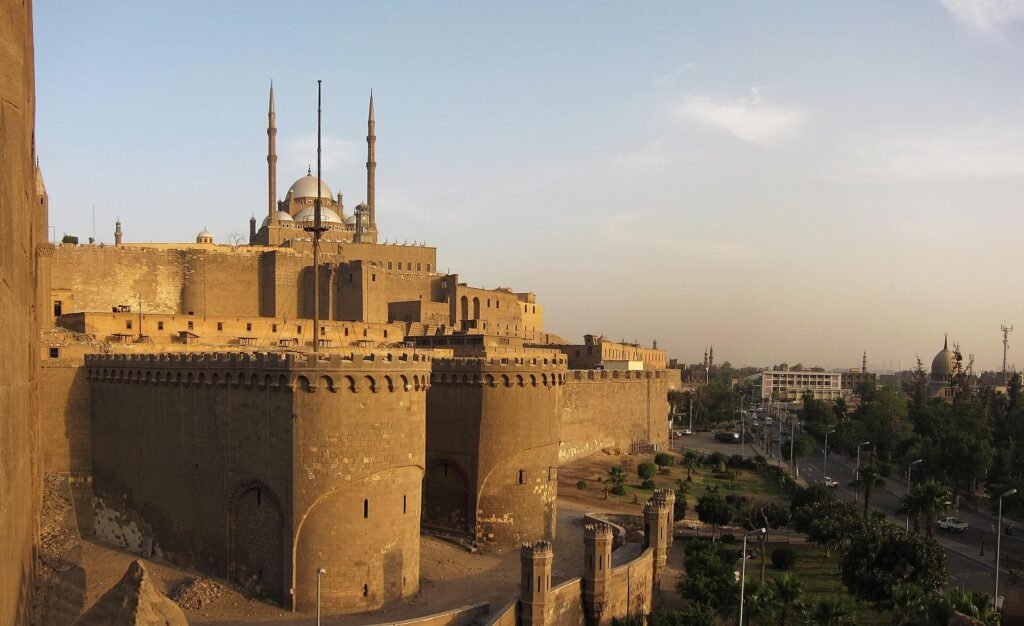
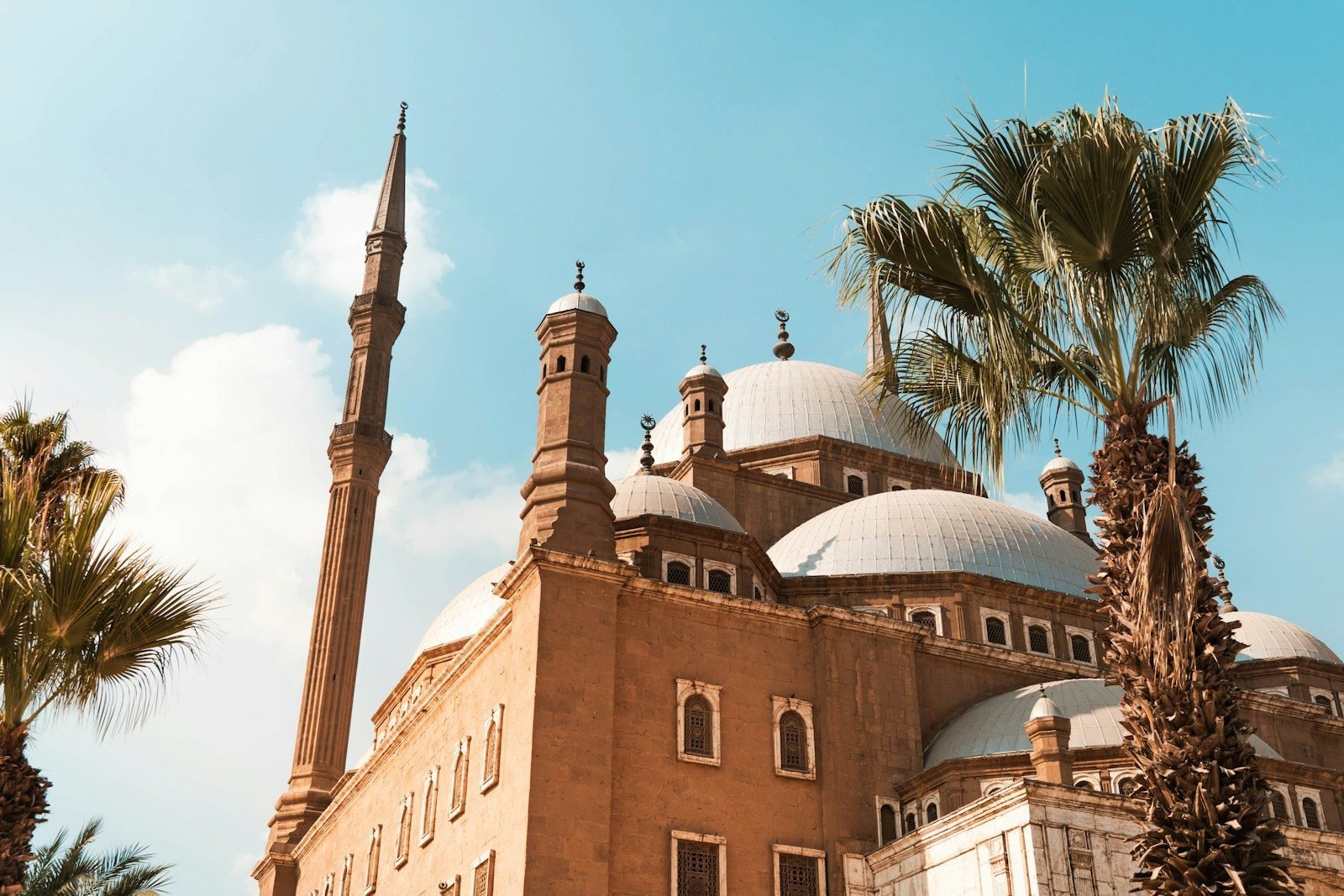
Day three starts high. The Citadel of Saladin sits on a spur of the Mokattam hills, and from its terrace you can see the whole city out to the pyramids on a clear morning, which is the reason to come early before the haze thickens. The Mosque of Muhammad Ali, the Alabaster Mosque, is the domed silhouette you see from everywhere in Cairo; inside, the cascade of hanging lamps is what people remember.
Al Muizz street and Al Azhar
From the Citadel, drive down to Bab Zuwayla, the medieval southern gate, and walk north up Al Muizz street: the densest stretch of medieval Islamic architecture anywhere, one monument after another for almost a mile, ending at the great gates of Bab al Futuh. Al Azhar Mosque, one of the oldest universities on earth and still teaching, is a couple of minutes off the street. Sit for a moment in the white marble courtyard and listen. Your guide handles the covering and shoe rules.
Afternoon: the Egyptian Museum in Tahrir or the NMEC
Both are valid. The Egyptian Museum in Tahrir Square is the grand old pink building, and even with Tutankhamun moved to Giza it still holds the Narmer palette and the Old Kingdom statues. Atmospheric, slightly chaotic, utterly charming.
The National Museum of Egyptian Civilization in Fustat is the modern alternative, and its Royal Mummies Hall, where the great pharaohs lie in a dim, hushed gallery, is the single most affecting room in Cairo. If you want something different from yesterday, choose the NMEC. If you love old museums, choose Tahrir. On a second visit, do the other one.
Evening on the Nile
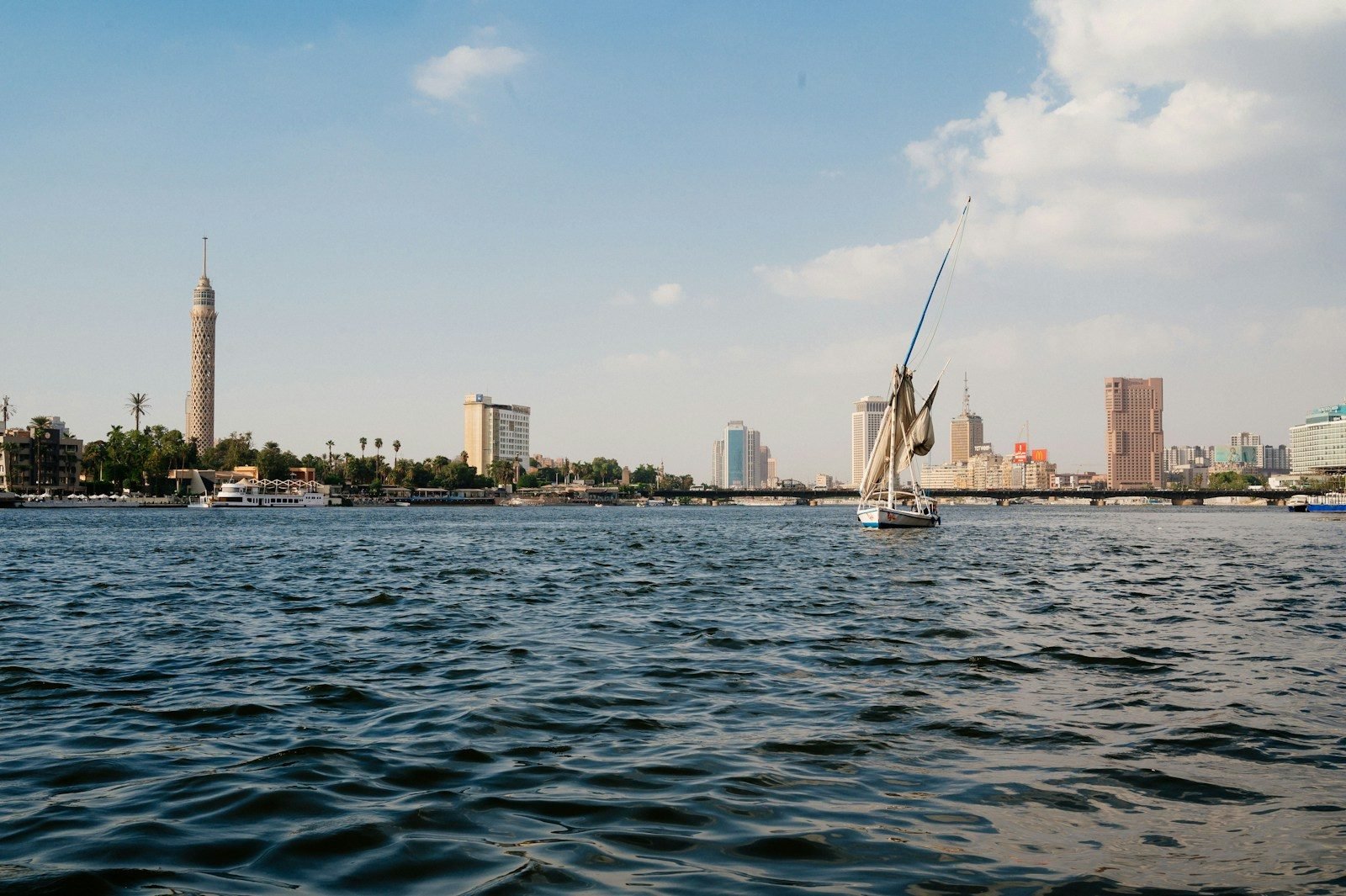
Close the three days on the water. A felucca is a wooden sailboat with a wide deck: an hour at sunset drifting between Zamalek and the Garden City corniche. A dinner cruise is a larger boat with a buffet, a band and a folk dance show. Families with young kids usually prefer the cruise; couples usually prefer the felucca.
Where to stay for 3 days in Cairo
For a three day plan the location matters more than the star rating, and there are three sensible answers.
| Area | Best for | Trade off |
|---|---|---|
| Giza, pyramid view | Waking up to the pyramids, day one and day two mornings a five minute drive away, quiet nights | Furthest from the old city and downtown; day three needs a longer morning drive |
| Downtown and Garden City | The Tahrir museum on foot, the Nile corniche, the felucca docks, easy access in every direction | Noise and traffic at street level; the pyramids are a proper drive each morning |
| Zamalek | Leafy island neighborhood, cafes, galleries, the calmest evenings in the city | Bridges in and out jam at rush hour; nothing on the plan is walkable |
My honest recommendation for a first visit with this plan is Giza with a pyramid view: two of your three mornings start there. If you want cafes and street life in the evenings, take Zamalek and accept the bridges. Downtown is the practical middle option and the easiest for the airport; our Cairo airport arrival and departure guide covers transfer times from each area.
Getting around Cairo: private car with guide or Uber
You can do this itinerary by Uber, and plenty of independent travelers do. But three days is exactly the length of stay where a private car with an Egyptologist guide earns its place.
- Time. Your driver knows which Giza gate to use at seven in the morning, which road to Saqqara avoids the market traffic, and where to park for Al Muizz street. Each decision saves twenty to forty minutes, several times a day.
- Understanding. The pyramids without a guide are big piles of stone. With a good guide they are a story about a state, a religion and a family. Saqqara's tombs and Al Muizz street's monuments say almost nothing about themselves.
- Friction. The handlers, the vendors, the ticket windows, the unofficial guides who attach themselves at the Sphinx: a guide absorbs all of it, and you look at things.
The apps still have their place in the evenings after the guide has gone home. Our page on using Uber and Careem in Cairo explains how they behave here. On safety, the sites on this plan are busy, well policed and welcoming, and the real concerns are traffic and pushy vendors; the long version is on our page is Cairo safe for tourists.
How to adapt the plan: families, second visits, two nights and extreme heat
With children
The skeleton stays the same, the details change. Keep the camel ride on day one and make it a real one along the ridge; it is usually the moment the kids talk about for years. Skip the interior of the Great Pyramid with anyone under about ten. At the Grand Egyptian Museum, go straight to Tutankhamun, then the children's museum, and leave when the first meltdown threatens. On day three choose the NMEC over Tahrir: shorter, and the mummies are a hit with kids. End with the dinner cruise rather than the felucca.
On a second visit
If you have already done the Pyramids and the Grand Egyptian Museum, rebuild day one around Dahshur and the Saqqara tombs you skipped, and spend day two in Islamic Cairo: Ibn Tulun mosque, the Gayer Anderson house, the City of the Dead. Day three can become a day trip to Alexandria or to the Fayoum.
With only two nights
Two nights means two full days if you land in the morning and leave in the evening. Day one stays exactly as written. Day two becomes the Grand Egyptian Museum in the morning, then the Citadel, Al Muizz street and Khan el Khalili at dusk. Coptic Cairo and the Tahrir museum are the casualties, and they are the right ones to drop.
In extreme heat
From June through early September, afternoons on the plateau regularly pass 100 F (38 C), and the desert at Saqqara and Dahshur is hotter still. In that season every outdoor site moves to the first two hours after opening, and the afternoons become museum afternoons without exception. Skip the interior of the Great Pyramid, cut Memphis, shorten Coptic Cairo to the Hanging Church and Ben Ezra, drink more than you think you need, and wear a real hat.
Small things that make the three days run smoothly
- Check current opening days. Museums and mosques change their schedules, and religious holidays shift every year. We confirm the current hours for every stop before your dates.
- Dress for the mosques and churches. Long trousers or a long skirt and covered shoulders get you into every site on this plan without a borrowed robe.
- Carry small notes for tipping. Restroom attendants, tomb guardians, the felucca captain. Small, frequent and cheerful is the local way.
- Fridays. The Friday noon prayer closes the big mosques to visitors for a stretch of the day. If one of your days is a Friday, we move the Citadel and Al Azhar to another morning.
Frequently asked questions
Is 3 days in Cairo enough?
For a first visit, yes, provided the days are organized by geography the way this plan does it. Three days gets you the Giza plateau, Saqqara, the Grand Egyptian Museum, Coptic Cairo, the Citadel, Al Muizz street, Khan el Khalili, one more museum and an evening on the Nile. What it leaves out is what a second visit is for.
Should I see the Pyramids on the first day or save them for last?
First day, first thing. You are jet lagged and awake early anyway, so use that to be at the gate when it opens, when the plateau is coolest and emptiest. Seeing the pyramids first also gives every later stop its context. Saving them for last usually means seeing them in the heat and crowds of midday.
Do I need the Egyptian Museum in Tahrir if I am visiting the Grand Egyptian Museum?
Need, no. Want, probably. The Grand Egyptian Museum holds Tutankhamun and the showpiece galleries, and it is the one not to miss. The Tahrir museum keeps thousands of older pieces in a building that is itself a monument. If you would rather see something completely different, the National Museum of Egyptian Civilization with its Royal Mummies Hall is the better second museum.
Is a private guide worth it for 3 days in Cairo?
For Cairo more than anywhere else in Egypt, yes. The sites are spread across a huge, congested city, the gate logistics are fiddly, and the monuments say almost nothing about themselves. A licensed Egyptologist with a driver turns the three days into a coherent story and saves hours of transit. You can do the plan independently; you will simply see less.
Can I fit a day trip to Alexandria into 3 days in Cairo?
Not without dropping a full day of this plan, and for a first visit that is a poor trade. Alexandria is a long drive each way, and what it offers, the catacombs, the modern library, the seafront and the fort, is very different in flavor from pharaonic Cairo. Put it on the list for a fourth day or a second trip.
What should I wear for three days in Cairo?
Light, loose, long. Linen or cotton trousers or a long skirt, tops that cover the shoulders, a wide brimmed hat and sunglasses, and shoes you have already walked miles in. That outfit gets you into every mosque and church on the plan and keeps the sun off. Bring a scarf for the mosques and a light layer for the felucca; the river breeze after sunset is cooler than you expect.
Three days, one guide, no wasted hours
Tell us your dates and who is traveling, and we will send back this 3 day Cairo itinerary shaped to you, with a private Egyptologist guide, your own car and driver, and every gate and museum confirmed for your dates. We are a local agency in Cairo with our own guides and vehicles, and we send you the quote as soon as we can.
Keep exploring
To finish planning your trip to Egypt
- ▸Luxor east bank and west bank: what is on each side and how to see both
- ▸Sahl Hasheesh, Egypt: the bay, the reefs and things to do
- ▸Hurghada or Sharm El Sheikh, which Red Sea resort should you choose
- ▸Sharm el Sheikh: things to do, diving and Mount Sinai
- ▸Citadel of Saladin Cairo: Alabaster Mosque and the View
- ▸Step Pyramid of Djoser at Saqqara: Guided Visit from Cairo
- ▸Real vs Fake Papyrus: How to Tell Real Papyrus in Egypt
- ▸See all our Egypt tours