
An Egypt and Jordan tour pairs the Giza pyramids, a Nile cruise and the temples of Luxor with Petra, Wadi Rum and the Dead Sea, normally across 11 to 14 days. The two halves are joined by a short flight between Cairo and Amman, a little over an hour in the air, which you buy yourself.
That flight is the part most operators are vague about, so we will be direct at the top of the page. We do not sell, book, coordinate or quote any international flight, and Cairo to Amman is an international flight. You buy it yourself, exactly as you buy your flight out of the United States. Everything on the ground in both countries is ours: the private vehicles, the licensed guides, the hotels, the cruise, the desert camp and the prepaid monument tickets.
We are an Egyptian operator based in Cairo, so the Egypt half is ours end to end. The Jordan half is delivered by our partner agency in Amman in the same private, no-group format. Below you will find the real itinerary shapes, the published starting price for every Egypt program, a day by day example, an honest inclusion list, a worked example of what the monument tickets cost, the visa arithmetic that catches most Americans out, and the 2026 gate fees so you can check our math against the ministry's own platform.
How an Egypt and Jordan trip actually fits together
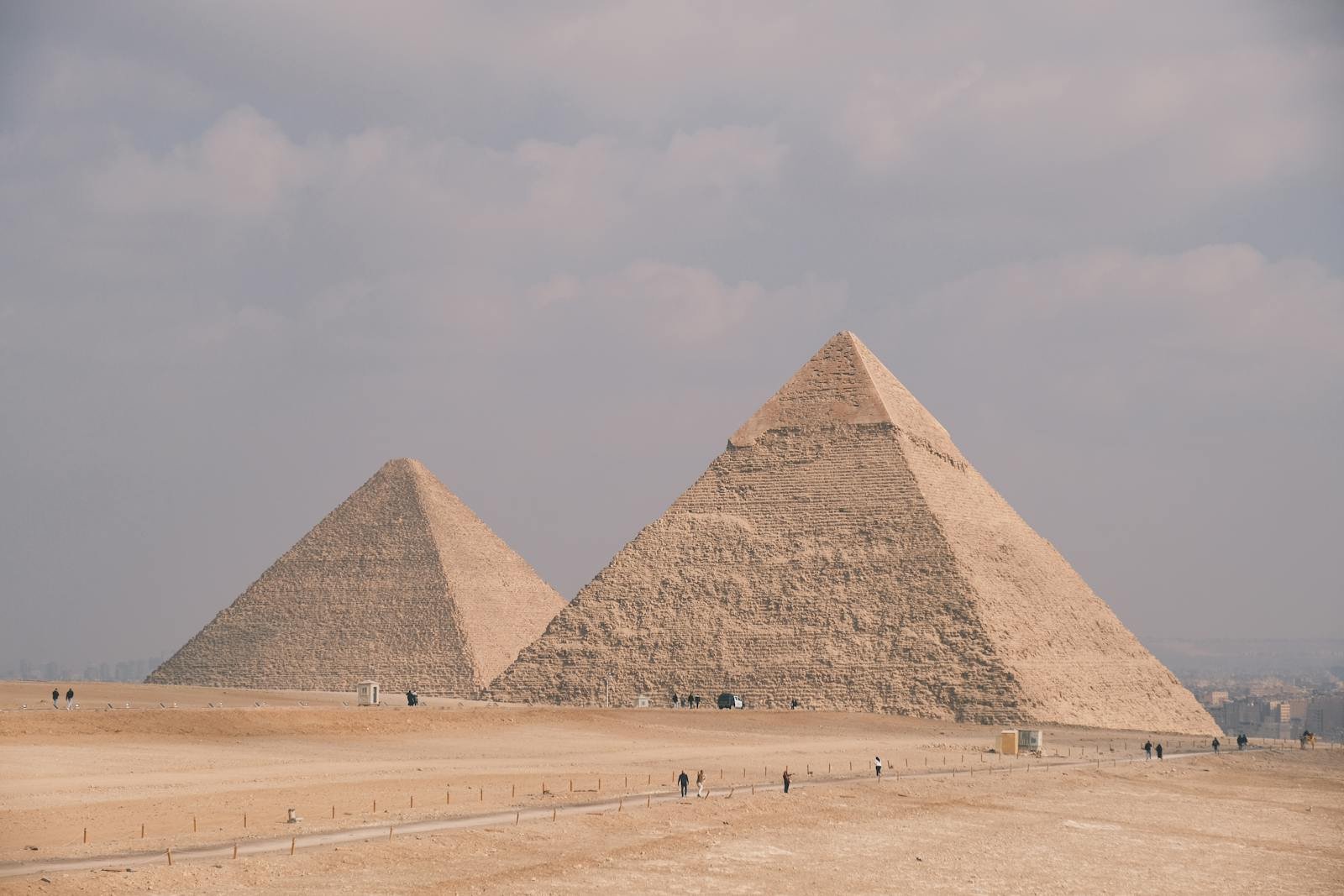
Almost every workable version of this trip follows the same skeleton. You land in Cairo, spend two or three nights on the pyramids and the museum, fly south, sail the Nile, then fly Cairo to Amman and give Jordan four to six days before flying home out of Queen Alia International.
The reason Egypt comes first is practical rather than sentimental. Egypt is the longer, more logistically dense half: domestic flights, a cruise with fixed sailing dates, and a monument list that runs past a dozen sites on the longer programs. Jordan is compact enough to absorb a delay without breaking. If a Nile cruise slips by a day, you lose an afternoon in Amman. If Jordan came first and something slipped, you would miss a sailing you cannot rebook.
The second reason is the flight itself. Several carriers fly Cairo to Amman every day and the sector is a little over an hour in the air. Schedules and fares change constantly, so check them yourself. We do not track airline timetables, we hold no airline inventory, and we will not quote you a fare. What most travelers do is lock the Egypt half first, since cruise cabins and Abu Simbel dates are the constrained part, then buy the middle sector once their dates are certain.
A word on the overland alternative, because people ask. There is a land route from Egypt to Jordan that crosses a third country, and there is a ferry from Nuweiba to Aqaba. Both exist. Neither is something we recommend for a first trip. The land route adds two border crossings, a third set of entry stamps and a real risk of losing a full day to queues. The ferry runs on a timetable that is best described as aspirational. On a 12-day trip where every day is spoken for, the one-hour flight is the only sensible answer.
The Cairo to Amman flight: what we book and what you book
This deserves its own section because getting it wrong costs you money.
We do not book any international flight. Not your flight from New York, Chicago or Los Angeles to Cairo. Not the Cairo to Amman sector. Not your flight home from Amman. We do not hold inventory with airlines, we do not issue international tickets, we do not coordinate them, and we will not quote you a fare. If an operator tells you an Egypt and Jordan price "includes flights" without naming which flights, ask them to itemize it before you pay anything.
We do book domestic Egyptian flights, and only on the multi-day Egypt programs that carry them. The 7-day Cairo and Nile cruise program, the 8-day classic that includes Abu Simbel, the 10-day Cairo, Luxor and Aswan tour and the 12-day grand tour all include their domestic sectors, pre-ticketed by us. The cruise-only and excursion products do not. The 5-day Nile cruise from Luxor to Aswan, the Aswan to Luxor sailing, the Aswan and Luxor overland tour, the 2-day Luxor tour, the Abu Simbel day trip from Aswan and the 2-day Abu Simbel program with a hotel night all exclude domestic flights. We can book and quote those Egyptian sectors separately if you want them, but they sit outside the headline price and you will see them as their own line.
We do not choose the Cairo to Amman departure for you either. You pick it, you buy it, and you own the ticket. What we give you is the information you need to judge a departure: the checkout time of your last Cairo hotel and how long the transfer to the airport takes on your dates. Once you have booked, send us the confirmation and we build your Amman arrival transfer around the actual arrival time on your ticket rather than a guess. Your guide in Jordan meets that flight, not an estimate of it.
Which Egypt program to build your Jordan half onto
The Jordan segment is quoted as a tailor-made land package once we know your dates, hotel category and how many days you want at Petra. The Egypt segment, by contrast, is a published product with a published starting price. So the honest way to price this trip is to pick the Egypt base first, then add Jordan to it.
Every figure below is per person, double occupancy, in US dollars, and covers the Egypt segment only.
| Egypt base | Days | Nile cruise | Domestic flights | Abu Simbel | Starting price |
|---|---|---|---|---|---|
| Egypt Classic, 7 days | 7 | Yes, 3 nights | Included | Not included | From US$1,348 |
| Egypt Classic, 8 days | 8 | Yes, 3 nights | Included | Included and prepaid | From US$1,451 |
| Cairo, Luxor and Aswan, 10 days | 10 | Yes, 4 nights | Included, both sectors | Included | From US$1,897 |
| Grand Egypt, 12 days | 12 | Yes, plus Hurghada | Included | Included | From US$2,196 |
| Nile cruise, Luxor to Aswan | 5 | 4 nights aboard | Excluded | Included | From US$755 |
| Aswan and Luxor overland | 5 | No, hotels | Excluded | Included | From US$520 |
For a first trip that has to cover both countries properly, the eight-day classic is the sweet spot. It carries its own domestic flights, it has Abu Simbel prepaid rather than sold to you at the gate once you are already in Aswan, and eight days leaves room for five in Jordan inside a two-week trip. The seven-day itinerary works if you are tight on paid leave and can live without Abu Simbel. The ten-day itinerary suits travelers who care more about Egypt than Jordan and want Jordan as a four-day coda.
The twelve-day itinerary with Hurghada is the one we usually steer people away from for a combined trip. Hurghada is a Red Sea beach stop with three unscheduled nights in it. If you are adding Wadi Rum and the Dead Sea, you already have your desert and your water, and twelve days in Egypt plus five in Jordan is a seventeen-day trip most Americans cannot take in one block.
If you are building the Egypt half around a cruise instead, the Luxor to Aswan sailing and the Aswan to Luxor sailing are the same boat and the same sites in opposite order. The direction matters only for where you need to be at the start and the end, and since neither includes the domestic sector, that is a real planning question rather than a preference.
Trip shapes that actually work
| Total days | Egypt | Jordan | What fits in Jordan | What you give up |
|---|---|---|---|---|
| 11 days | 7 | 4 | Petra one full day, Wadi Rum night, Dead Sea afternoon | Jerash, Amman city, second Petra day |
| 12 days | 7 | 5 | Petra two days, Wadi Rum night, Dead Sea, Amman | Jerash, Madaba and Mount Nebo |
| 13 days | 8 | 5 | Petra two days, Wadi Rum, Dead Sea, Amman, Jerash | Aqaba and the Red Sea south |
| 14 days | 8 | 6 | All of the above plus Madaba, Mount Nebo and a slow Dead Sea day | Very little |
| 16 days | 10 | 6 | The full Jordan circuit, unhurried | Nothing, but it is a long trip |
The single most common mistake is giving Jordan three days. Petra alone justifies two, Wadi Rum needs an overnight to be worth doing at all, and the Dead Sea is a half day minimum once you account for the drive down from Amman. Three days in Jordan means you see the Treasury, sleep in a tent and leave.
A 13-day Egypt and Jordan trip, day by day
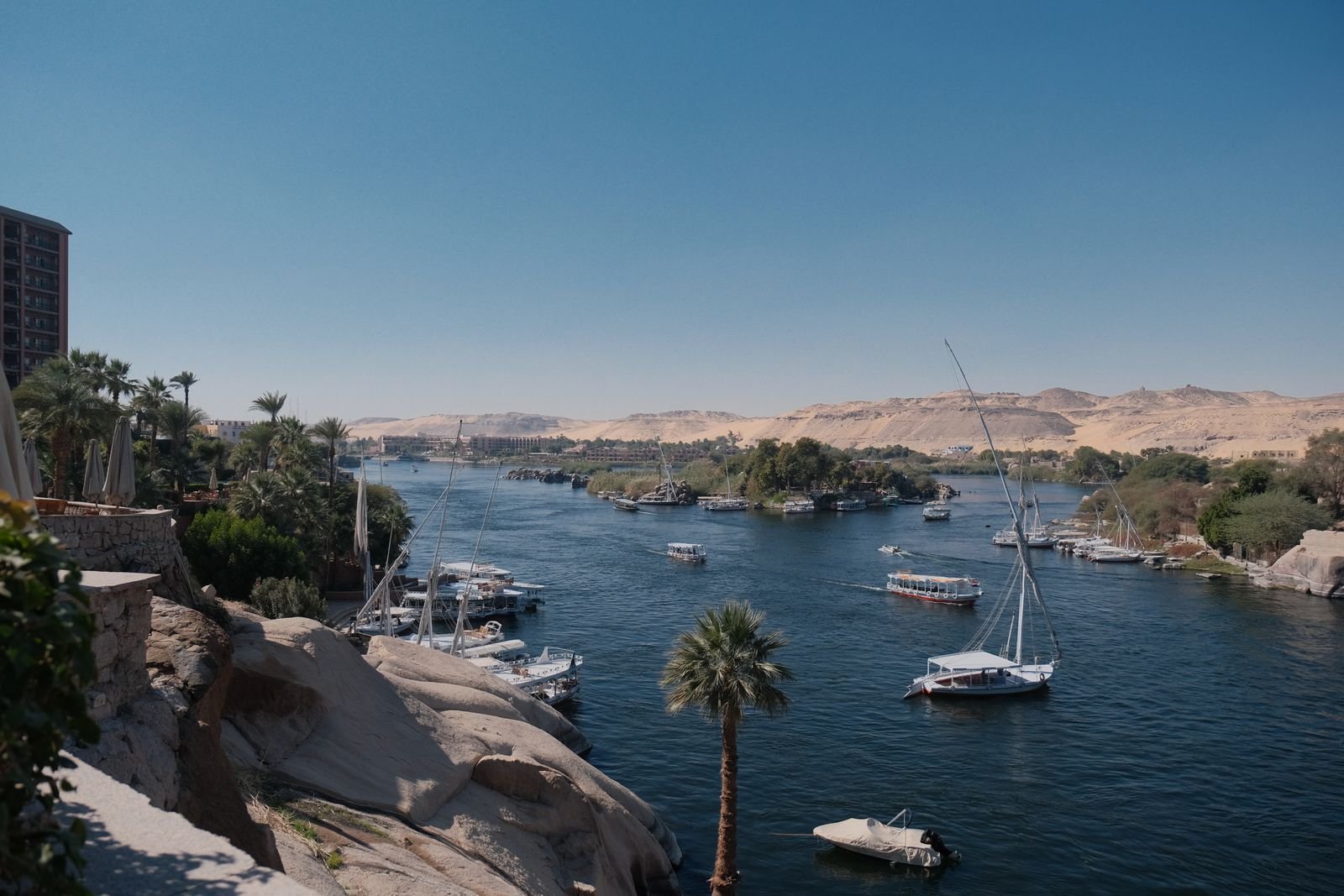
This is the shape we quote most often: the eight-day Egypt classic, then five days in Jordan. Days 1 to 8 are our published product, so the sites named below are the ones actually prepaid on it. Days 8 to 13 are the Jordan land package.
- Day 1. Arrive Cairo. Private meet and assist at the airport, transfer to your hotel. Nothing scheduled, because most US arrivals land tired.
- Day 2. The Giza plateau: the three pyramids, the Sphinx and the valley temple, with your Egyptologist. The interior of the Great Pyramid is a separate ticket you buy on the day if you want it.
- Day 3. The Egyptian Museum on Tahrir Square, then the rest of Cairo at a human pace.
- Day 4. Domestic flight Cairo to Aswan, ticketed by us. Philae temple on its island, then board the cruise boat.
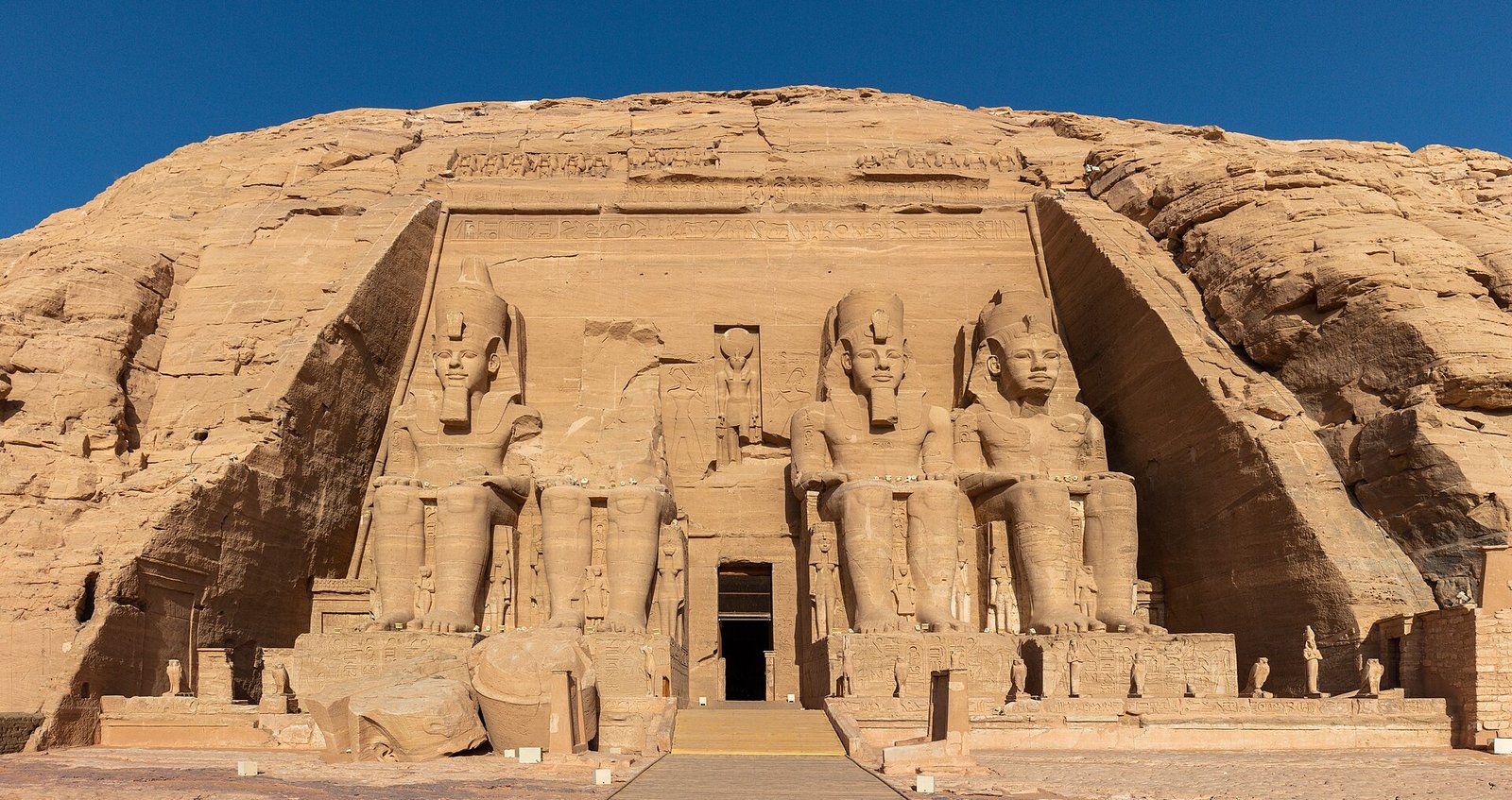
- Day 5. Abu Simbel. An early start in the dark for the road along Lake Nasser, both temples with your guide, back to the boat and sail.
- Day 6. Kom Ombo and Edfu as the boat works north, both prepaid.
- Day 7. Luxor: the Valley of the Kings with three tombs, the temple of Hatshepsut, Karnak and Luxor Temple. Domestic flight Luxor to Cairo in the evening, ticketed by us, and a final Cairo night.
- Day 8. Your Cairo to Amman flight, booked by you. We run the transfer to Cairo airport; our Jordan partner meets your arrival at Queen Alia. Afternoon in Amman.
- Day 9. Amman to Petra, about three hours on the Desert Highway, or longer and prettier on the King's Highway. Afternoon at leisure or a first short look at the site.
- Day 10. Petra, full day, guided. The Siq, the Treasury, the Street of Facades, the theater and the Royal Tombs.
- Day 11. Petra morning, your own pace, for the Monastery climb or the High Place of Sacrifice. Afternoon transfer to Wadi Rum, about an hour and a half, the 4x4 drive, then the camp overnight.
- Day 12. Wadi Rum to the Dead Sea, roughly four hours. Afternoon float, mud and a long shower.
- Day 13. Dead Sea to Queen Alia International, about an hour, for your flight home, which you booked.
Add a day and Jerash slots in between Amman and the airport. Add two and you get Madaba and Mount Nebo without cutting the Dead Sea short.
What you see in Jordan
Petra
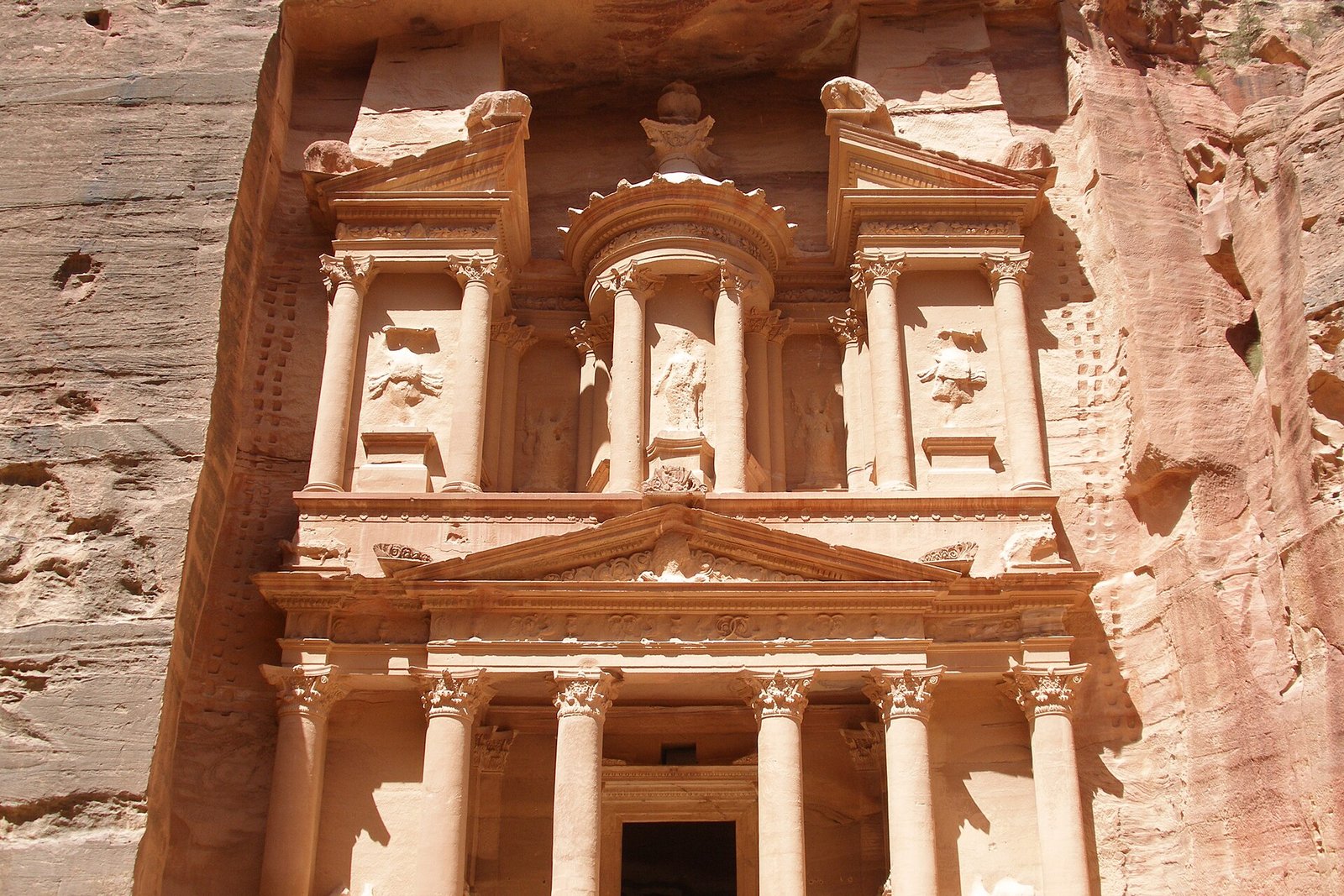
You walk in through the Siq, a fault-line canyon about three quarters of a mile long with walls that close to a few yards wide in places. It opens without warning onto Al-Khazneh, the Treasury, the facade on every poster of Jordan. Most visitors stop there. The site keeps going for hours past it: the Street of Facades, the Roman theater carved into rock, the Royal Tombs on the eastern cliff, and the colonnaded street of the Nabataean city center.
The climb to Ad-Deir, the Monastery, is around 800 rock-cut steps and takes most people 45 minutes going up. It is the thing people regret skipping. Budget a full day for Petra as an absolute floor, and two if you want the Monastery and the High Place of Sacrifice without a forced march.
Entry to Petra is covered by the Jordan Pass, which we cover in the visa section below. Petra by Night is a separate ticket on set evenings and is not included in any quote we give you.
Wadi Rum
A protected desert of sandstone and granite massifs rising out of red sand, listed by UNESCO in 2011 as a mixed natural and cultural site. The visit is a 4x4 drive of two to three hours across the valley floor to rock bridges, narrow siqs and inscription sites, timed to finish at sunset because that is when the sandstone turns the color it is famous for.
The overnight is in a Bedouin camp. Be blunt with us about what you want here, because "camp" covers everything from a shared canvas tent with a bathroom block to a private bubble dome with a real bed and air conditioning. The gap between those is substantial and it is the single biggest lever on the Jordan quote.
The Dead Sea
The lowest exposed land on Earth, around 1,400 feet below sea level, and salty enough that you float without effort. The standard visit is a day-use pass at a resort on the northern shore, which buys you the beach, the mineral mud and a freshwater shower afterward, which you will want. Do not shave that morning and do not put your face in the water.
Jerash
The best-preserved Roman provincial city outside Italy: a colonnaded street with the original chariot ruts cut into the paving, an oval forum, two theaters and the Temple of Artemis. It is about 30 miles north of Amman and takes half a day. It only fits on a 13-day trip or longer, and it is the first thing to drop if your dates tighten.
Amman, Madaba and Mount Nebo
Amman gives you the Citadel with the Temple of Hercules and the Umayyad palace, a Roman theater downtown, and the best food of the trip. Madaba holds the sixth-century mosaic map of the Holy Land on the floor of a working church. Mount Nebo, fifteen minutes further on, is the ridge from which Moses is said to have seen Canaan, and on a clear day you can pick out the Jordan Valley and the Dead Sea below. Those three combine into one comfortable day.
Cruise or overland for the Egypt half
Once you add Jordan, the Egypt half has to earn every day, and the cruise is the piece people debate. A Nile cruise moves you between Luxor and Aswan while you sleep, feeds you, and puts Kom Ombo and Edfu on the route at no extra travel time. That is genuine efficiency, not romance. The trade is a small cabin, fixed sailing dates and a set meal schedule.
The overland Aswan and Luxor tour does the same valley from hotels, with more room, better beds and a schedule you control, at the cost of road time and two hotel changes. On a combined Egypt and Jordan trip we still lean toward the cruise, because you are about to spend five days in Jordanian vehicles and the Nile nights are the only part of the trip where the travel happens while you are asleep.
If you want to see what a single segment contains before committing, the 2-day Luxor tour and the 2-day Abu Simbel program are the smallest units we sell, and their pages list every site and every ticket.
Hotels, boats and what actually changes between categories
Both halves are quoted at the hotel category you choose, and the category is the second biggest lever on the price after the length of the trip.
In Egypt, four star means a clean, well-run hotel with a good breakfast and a location that is fine but rarely a view. Five star in Cairo usually means a pyramid view or a Nile-front room, a better breakfast and a lobby you will actually use for the 3 a.m. Abu Simbel departure. On the Nile, the jump between boat categories buys you cabin size, deck space and food quality, and the difference is more noticeable than the hotel jump because you eat every meal aboard.
In Jordan, the meaningful choices are the Petra hotel, which is worth putting near the gate so you can walk in at opening, and the Wadi Rum camp, where the range runs from basic to genuinely luxurious. Dead Sea resorts are all resort-shaped; you are paying for the beach access and the spa, not the room.
Tell us which end of the range you want before we quote. We would rather build the trip you will actually enjoy than send a low number and renegotiate it later.
What is included
- Private airport transfers in Cairo, and private arrival and departure transfers in Amman, in air-conditioned vehicles, with no shared shuttles at any point.
- Hotels in Egypt with daily breakfast, in the category you choose.
- Nile cruise with full board on every program that carries one.
- A licensed English-speaking Egyptologist with you at the sites in Egypt, not a bus microphone.
- A licensed English-speaking guide in Jordan for Petra and Jerash.
- Domestic Egyptian flights, pre-ticketed by us, on the 7, 8, 10 and 12 day programs only.
- All Egyptian monument entries listed on your program, prepaid and itemized on your booking so you can check them against the table below.
- Private vehicle and driver in Jordan for the Amman, Petra, Wadi Rum and Dead Sea circuit.
- The 4x4 desert drive in Wadi Rum and the Bedouin camp overnight with dinner and breakfast.
- Hotels in Jordan with breakfast, in the category you choose.
- A WhatsApp line to a real person in Cairo for the whole trip, including while you are in Jordan.
What is not included
- Any international flight. Your flight to Egypt, your Cairo to Amman flight, and your flight home from Amman. We do not sell, book, coordinate or quote them, and no version of this trip has them inside the price.
- The Egypt e-Visa, which is US$30 for a single entry and US$65 for multiple entry. Read the visa section below before you buy the cheap one.
- The Jordan Pass or the Jordan visa fee. You buy the pass yourself, online, before you fly.
- Domestic Egyptian flights on the cruise-only and excursion products, including both 5-day Nile cruises, the short Luxor add-on, the Abu Simbel day trip and the 2-day Abu Simbel program. We can book and quote those sectors separately.
- Entry to the interior of the Great Pyramid, which is 1,500 EGP, about US$30, bought at the plateau on the day.
- Premium tombs, including Nefertari in the Valley of the Queens and Seti I in the Valley of the Kings. These carry an extra cost paid at the ticket office and are not prepaid on any of our programs.
- Petra by Night, hot air balloons over Luxor, Wadi Rum camel rides, Dead Sea spa treatments beyond the day-use pass, and any other optional extra.
- Camera and photography permits where a site charges one. Extra cost, paid at the ticket office.
- Lunches and dinners not written into your itinerary, and all drinks including bottled water at hotels and on the cruise.
- Travel insurance, which we ask every traveler to hold.
- Tips for guides, drivers and cruise crew.
Visas: the arithmetic that catches Americans out
You need two separate entry permissions, and the order of your flights decides which Egyptian visa you buy.
Egypt. The e-Visa is US$30 for a single entry and US$65 for multiple entry, applied for online before you travel. Here is the trap. If your itinerary runs Cairo, then Amman, then home from Amman, a single entry is enough. But if you fly home out of Cairo, which is common because transatlantic fares from Cairo are often better, you enter Egypt twice, and a single-entry visa is dead the moment you leave for Jordan. You need the multiple-entry visa at US$65. Work out your exit airport before you apply, not after.
Your passport needs at least six months of validity beyond your entry date and enough blank pages for the stamps, which on this trip means four entry and exit stamps rather than two.
Jordan. Most travelers use the Jordan Pass, which waives the tourist visa fee and bundles entry to Petra along with dozens of other sites, including Jerash and the Amman Citadel. Three rules govern it and all three catch people out:
- It must be bought online before you arrive in Jordan. Buying it at the airport does not work, and the visa waiver is not applied retroactively.
- The visa waiver requires a minimum stay of three consecutive nights in Jordan. Leave earlier and the standard entry fee is collected from you when you depart.
- It comes in tiers that differ by how many consecutive days at Petra they cover: one day, two days or three. Match the tier to the Petra plan in your itinerary, because you cannot change it after you buy.
We do not sell the Jordan Pass and we take no commission on it. Prices change, so buy it from the official Jordanian government platform and check the current tier prices there rather than trusting a figure printed on any tour operator's website, including ours. What we will do is tell you which tier your itinerary needs, and when in the trip you will be asked to show it.
Egyptian gate fees for 2026, so you can check our math
Every monument entry listed on your Egypt program is prepaid by us and itemized on your booking. These are the official 2026 ministry figures in Egyptian pounds, with US dollar equivalents at 49.79 EGP to the dollar. If our itemization does not match these, ask us why.
| Site | 2026 fee, EGP | Approx. USD |
|---|---|---|
| Giza plateau | 700 | US$14 |
| Egyptian Museum, Tahrir | 550 | US$11 |
| Valley of the Kings, 3 tombs | 750 | US$15 |
| Abu Simbel | 822 | US$16.50 |
| Karnak | 600 | US$12 |
| Luxor Temple | 500 | US$10 |
| Temple of Hatshepsut | 440 | US$8.85 |
| Saqqara | 600 | US$12 |
| Philae | 550 | US$11 |
| Kom Ombo | 450 | US$9 |
| Edfu | 550 | US$11 |
| Great Pyramid interior (not included) | 1,500 | US$30 |
Here is the arithmetic on a real program. The eight-day classic covers the Giza plateau, the Egyptian Museum on Tahrir, Philae, Kom Ombo, Edfu, the Valley of the Kings with three tombs, Hatshepsut, Karnak, Luxor Temple and Abu Simbel. Add those rows: 700 plus 550 plus 550 plus 450 plus 550 plus 750 plus 440 plus 600 plus 500 plus 822 comes to 5,912 EGP, about US$119 per person, all of it prepaid inside your price. Drop Abu Simbel and the same list falls to 5,090 EGP, about US$102.
Sites that are not on this table carry an extra cost paid at the ticket office. We will not print a number we cannot stand behind, and neither should anyone else.
When to go
October through April is the answer for both countries at once, which is convenient, because it is one of the few things Egypt and Jordan agree on. Daytime highs in Luxor and at Petra sit in a range where you can actually walk for six hours.
December and January are peak. Egypt is busy at the pyramids, Petra is busy at the Treasury, and cruise cabins and Wadi Rum camps price accordingly. Book those dates four to six months out, and earlier if you want a specific boat.
March, April, October and November are the value window. Good weather, thinner crowds, prices below the Christmas peak. If your dates are flexible, this is where we would put you.
June through August is the cheapest and the hardest. Luxor and Wadi Rum are genuinely punishing in the afternoon, and the workaround is real rather than cosmetic: monument visits start at 6 or 7 in the morning, you go back to the hotel through the middle of the day, and you come out again after four. If you can accept that schedule, summer is the best value on this page. Petra is more bearable than Upper Egypt because of the elevation, and the Dead Sea in August is a hot bath.
Two calendar notes worth knowing. Wadi Rum gets cold at night from December to February, close to freezing, which surprises people who packed for a Middle East trip in shorts. And Ramadan shifts about eleven days earlier each year, which changes restaurant hours in both countries more than it changes monument opening times, so ask us where your dates fall.
Practical notes for US travelers
- Money. Two currencies, the Egyptian pound and the Jordanian dinar. Cards work at hotels, resorts and larger restaurants in both countries. Carry cash for tips, small purchases and the Bedouin camp, and take small bills rather than one large one.
- Tips. Customary for guides, drivers and cruise crew in both countries and not built into any price. We give you a current guideline range with your final documents rather than printing a number here that would be stale by the time you read it.
- Water. Bottled only in Egypt, including for brushing your teeth on the boat. Jordan is easier, but hotels still push bottled.
- Dress. Shoulders and knees covered at mosques and churches, and a scarf for women at mosque visits. Otherwise normal warm-weather clothes. Nobody expects you to cover up at a Dead Sea resort.
- Shoes. This is the one that ruins trips. Petra is miles of uneven rock, the Valley of the Kings is ramps and stairs, and the Wadi Rum camp is sand. Bring shoes you have already broken in.
- Power. Both countries run 220 to 240 volts, so a US hair dryer or curling iron will not work on a plug adapter alone. Bring a universal adapter and check that your devices are dual voltage.
- Connectivity. A local eSIM in each country is cheaper and more reliable than international roaming, and it means you can reach us on WhatsApp from a temple parking lot.
- Pace. Two things Americans consistently underestimate: the walk from the Petra gate to the Treasury, which is over a mile before you have seen anything, and the heat inside the tombs, which have no ventilation.
- Mobility. Egypt is manageable with a private vehicle and a patient guide. Petra is not flat and not paved, though a horse carriage runs the Siq at extra cost. Tell us in advance and we will plan around it honestly rather than promising it will be fine.
Who this trip suits
It suits a first-time traveler to the region who wants the two headline countries in one flight from the United States and has at least eleven days. It suits couples, families with school-age children and small groups of friends traveling privately. It suits people who would rather have a guide who answers questions than a coach with forty strangers on it.
It does not suit someone with a week off. It does not suit anyone whose main goal is a beach week, because the Red Sea and the Dead Sea are stops on this trip, not the point of it. And it does not suit anyone who wants one price with airfare inside it, because we do not sell airfare and we will not pretend to.
Frequently asked questions
How many days do I really need for Egypt and Jordan?
Eleven at the absolute minimum, and thirteen to fourteen to do it without rushing. Under eleven days you are cutting either the Nile cruise or Petra down to a length that does not justify the airfare to get there.
Do you book the Cairo to Amman flight?
No. It is an international flight, and we do not book, coordinate or quote international flights of any kind. You choose the departure and buy the ticket yourself. Send us the confirmed arrival time and we build your Amman transfer around it.
Which Egypt visa do I need if I go to Jordan and come back?
If you re-enter Egypt to fly home from Cairo, you need the multiple-entry e-Visa at US$65. A single entry at US$30 only works if you leave the region from Amman and never return to Egypt.
Is the Jordan Pass worth it?
For anyone spending three or more nights in Jordan and visiting Petra, yes, comfortably. It waives the tourist visa fee and covers Petra plus dozens of other sites. Buy it online before you fly, because the waiver does not apply if you buy it after arrival.
Can I do Egypt and Jordan overland instead of flying?
You can, either overland through a third country or on the Nuweiba to Aqaba ferry, and we do not recommend either for a trip of this length. Two extra border crossings and an unreliable ferry timetable cost you a day you do not have.
Are domestic flights inside Egypt included?
On the 7, 8, 10 and 12 day programs, yes, pre-ticketed by us. On both 5-day Nile cruises, the 2-day Luxor tour and both Abu Simbel programs, no. Those are ground products and the Egyptian sectors are quoted separately if you want us to book them.
How much are the Egyptian monument tickets?
They are already inside your price, prepaid and itemized. On the eight-day classic the prepaid entries add up to 5,912 EGP, about US$119 per person at the 2026 rates in the table above. You can check every line yourself.
Is one day enough for Petra?
One long day covers the Siq, the Treasury, the Royal Tombs and the theater. It does not comfortably cover the 800-step climb to the Monastery as well. If Petra is a reason you are making this trip, take two days and buy the matching Jordan Pass tier.
What is the Wadi Rum camp actually like?
It ranges from a shared canvas tent with a shared bathroom block to a private dome with a real bed, an ensuite and air conditioning. Tell us which end of that range you want before we quote, because it moves the Jordan price more than any other single choice.
Should I fly home from Cairo or Amman?
Either works. Flying home from Amman is simpler and needs only a single-entry Egyptian visa. Flying home from Cairo sometimes prices better but adds a second entry into Egypt, which means the multiple-entry visa and a return sector you also buy yourself. Decide before you apply for the visa.
Can you handle a group of six or eight?
Yes. Everything we run is private, so party size changes the vehicle and the room count rather than the format. Prices on this page are per person in double occupancy; single travelers pay a supplement for the room, and we will quote it plainly.
Is it safe?
The tourist circuits in both countries operate normally, with private transport door to door and a guide with you at every site. We keep a WhatsApp line open to Cairo for the duration of your trip, including while you are in Jordan. As with any international travel, check your own government's current advisories for both countries before you commit.
What do other travelers say?
We hold 12 reviews at a 5.0 average. They are about the agency and about our guide Shady Said rather than about any single itinerary, and we would rather point you at twelve honest ones than at a number we cannot account for.
How do I get a price for the whole thing?
Send us your dates, your party size, your hotel category and how many days you want in Jordan. We come back with the Egypt program at its published rate and the Jordan land segment priced against your actual dates, itemized so you can see what each half costs.
Get a quote for your Egypt and Jordan trip
Tell us three things and we can quote properly: your travel dates, how many people are traveling, and whether Petra gets one day or two. From there we recommend an Egypt base, usually the 8-day classic or the 10-day Cairo, Luxor and Aswan program, build the Jordan days onto it, and give you your Cairo checkout and transfer times so you can pick a Cairo to Amman departure yourself.
The fastest way to reach us is WhatsApp on +20 103 229 5513. We are in Cairo, so we answer in Egyptian hours, which for most of the United States means a reply waiting for you in the morning. You can also use the enquiry form on this page and we will come back the same working day.
If you are still deciding between itinerary lengths, the Aswan to Luxor cruise and the Abu Simbel day trip pages show exactly what a single segment contains, which makes it easier to picture how the two countries stack together.