The Step Pyramid of Djoser is where every pyramid began, and Saqqara deserves a morning of its own
The Step Pyramid of Djoser is where every pyramid began, and Saqqara deserves a morning of its own
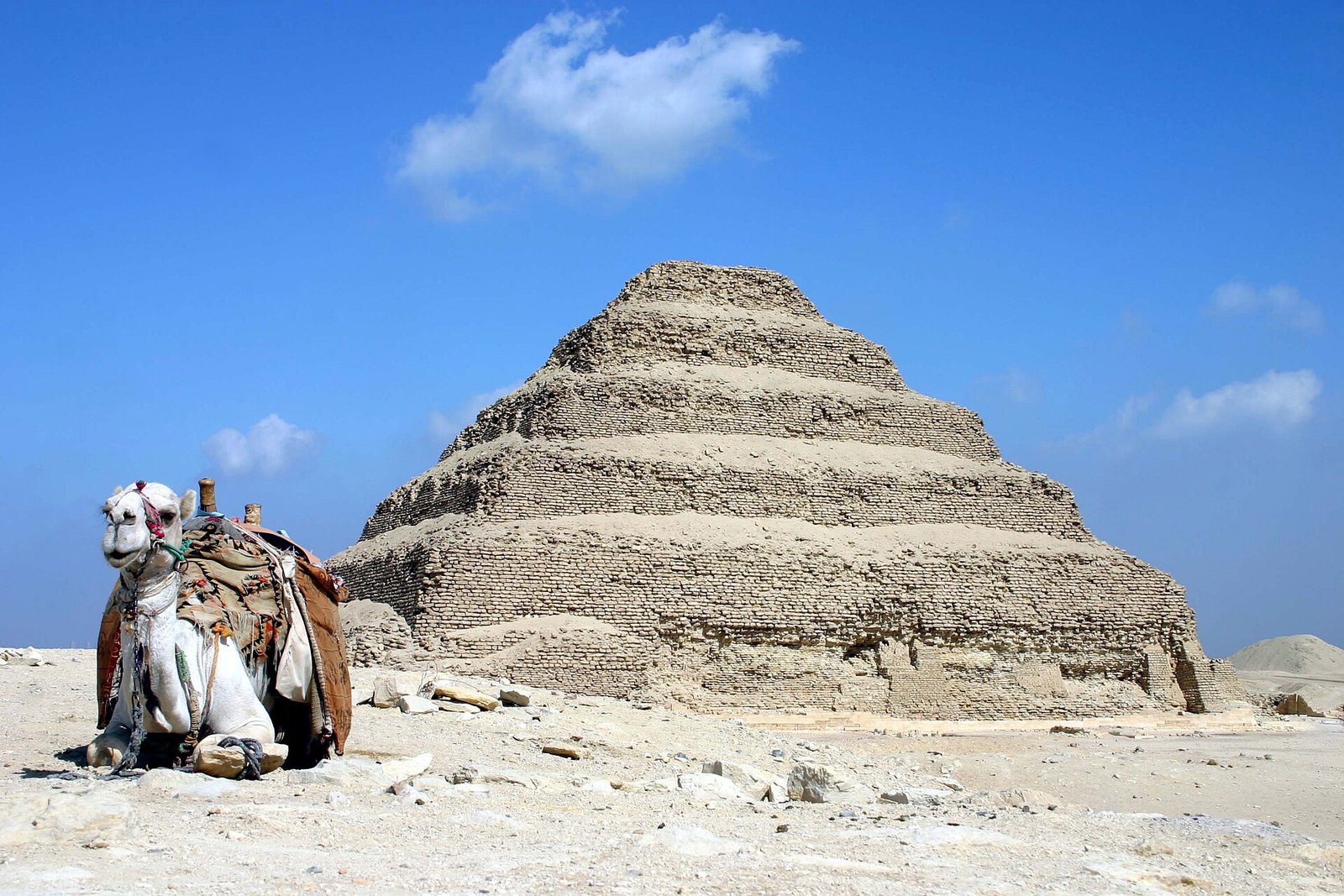
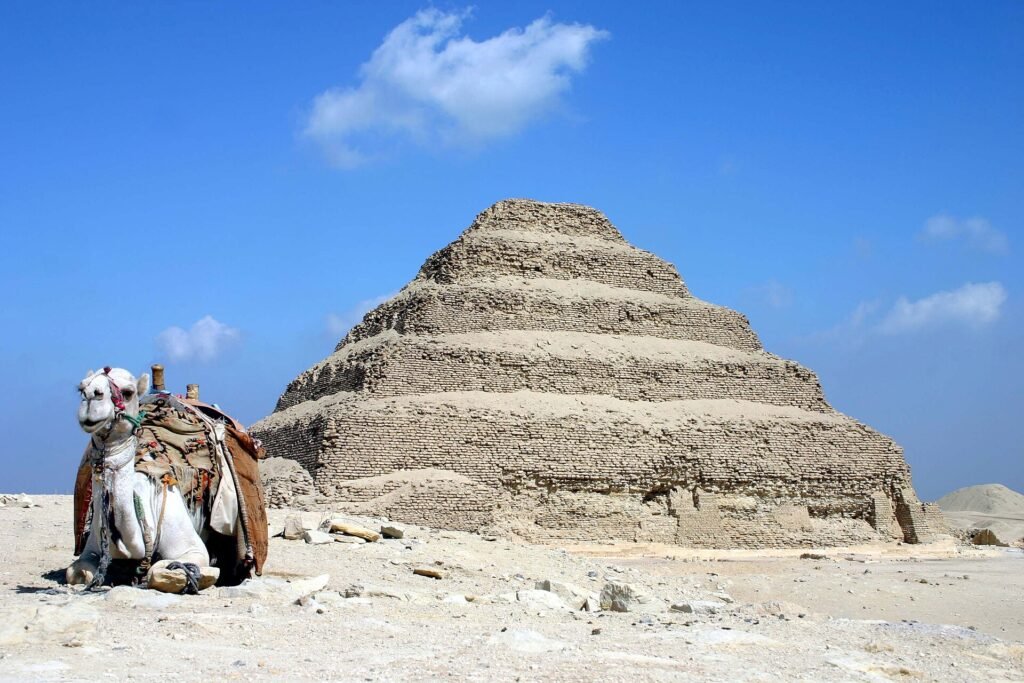
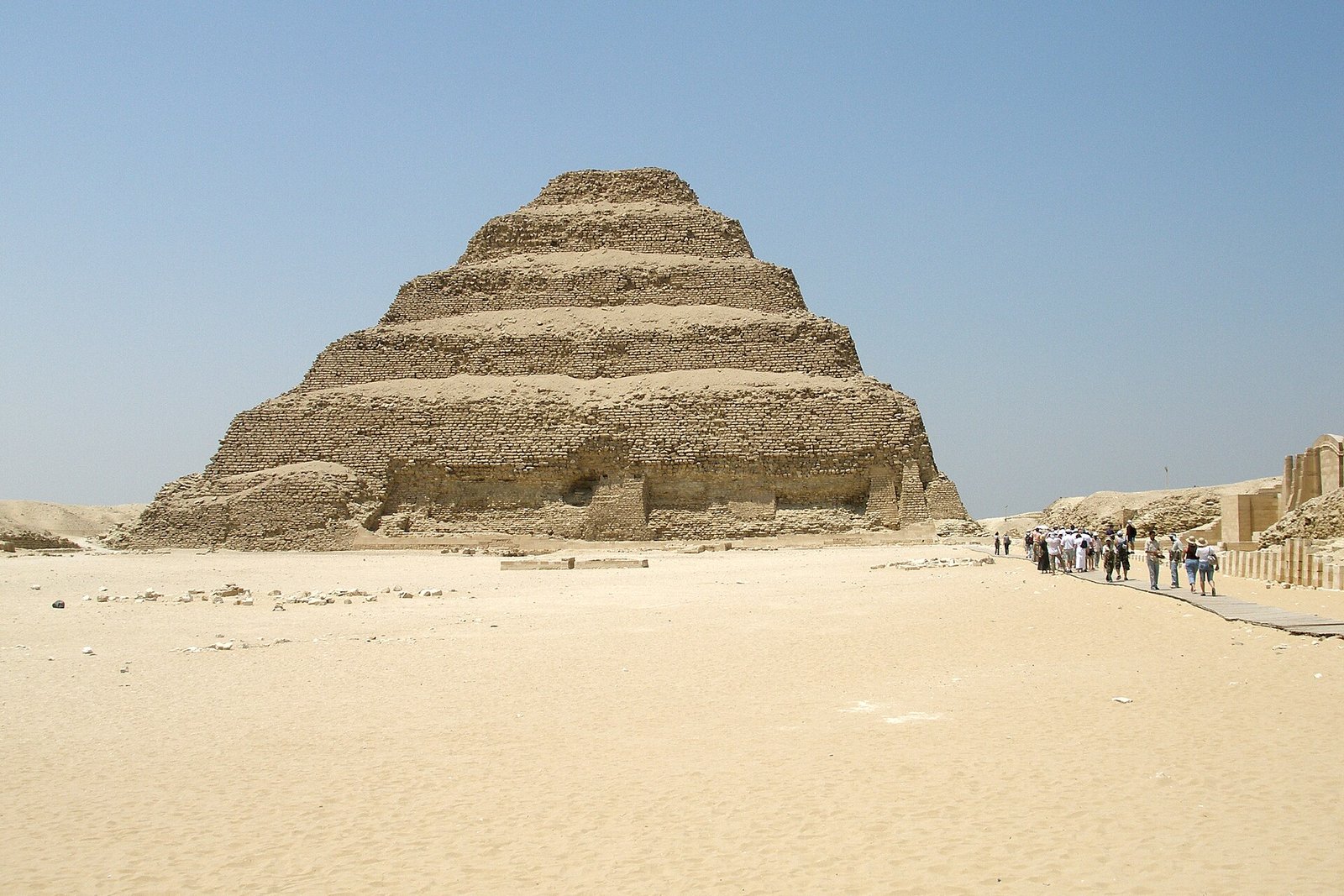
The Step Pyramid of Djoser at Saqqara is the oldest large stone building on earth, raised around 2650 BC for a Third Dynasty king by his architect Imhotep, about a century before the first pyramid at Giza. It began as a flat mastaba tomb and grew, in stages, into six stacked steps roughly 200 feet (60 meters) high, inside a walled compound of courts and dummy chapels built for the king's afterlife. It sits an hour south of central Cairo, far quieter than Giza, and it makes much more sense with a guide. Below is what each part is, when the interior can be entered, and how we fit it into a Saqqara half day.
Why the Step Pyramid of Djoser is the first stone monument on earth
Before Djoser, an Egyptian king was buried under a mastaba, a low rectangular bench of mud brick over a shaft, the same tomb type his nobles used, only bigger. Nobody had built a whole monument of quarried, dressed limestone.
Djoser ruled from Memphis around 2650 BC, give or take a few decades depending on the chronology, and his tomb changed the rules. Every block was cut, hauled and set by hand, and the pile reaches roughly 200 feet (60 meters). It is about 4,700 years old.
It is also not just a pyramid but a whole compound: wall, colonnade, courts, chapels, a second tomb and a temple, all in stone, all one plan. Everything the Old Kingdom later did at Dahshur and at the pyramids of Giza was tried here first. Standing in the court with the six steps rising over the wall is the closest you get to watching an idea being born.
Imhotep, the first architect whose name we know
The man in charge was Imhotep, and we know his name because Djoser had it carved on the base of a statue at the entrance to the compound, next to his own. The inscription lists his titles: chancellor of the king of Lower Egypt, high priest of Heliopolis and, the one that matters here, overseer of works.
His tomb has never been found, and the belief that it lies under the sand at Saqqara is one reason the site keeps being dug. His reputation survived instead: scribes poured a drop of water to him before writing, and by the Late Period he had become a god of medicine and wisdom, whom the Greeks folded into their own healer, Asclepius.
A guide will give you the plausible version of how he worked: farmers idle during the flood, a quarry at Tura across the river, copper tools, ramps, ropes, and the willingness to change the plan four or five times as the thing grew. The pyramid is the record of that indecision.
How a flat mastaba grew into six steps
The Step Pyramid was not designed as a pyramid. Archaeologists who cut into it in the 1920s and 1930s found earlier surfaces buried inside, each finished in fine limestone, then swallowed by the next enlargement. The sequence runs like this.
- A square mastaba, about 207 feet (63 meters) a side and 26 feet (8 meters) high, faced in Tura limestone.
- Extended on all four sides, slightly lower, so the first tomb stood out as a step.
- Extended east to cover a row of shafts cut for the royal family.
- The great leap: the mastaba was buried under a four-step pyramid built of inward-leaning courses that stiffened as they rose.
- Enlarged to the north and west, raised to six steps, and cased in polished white limestone, mostly gone now.
The finished base is roughly 397 by 358 feet (121 by 109 meters), not square, a leftover from the mastaba it grew out of. Why steps? The best reading is a staircase for the king to climb to the northern stars, the ones that never set. The smooth pyramid that came after swapped the staircase for a ray of sunlight.
The enclosure wall and the entrance colonnade
You approach from the east, and the first thing you meet is the wall: roughly 1,785 by 909 feet (544 by 277 meters), about 34 feet (10.5 meters) high, enclosing around 37 acres (15 hectares). Its face is built in projecting and recessed panels, the palace facade pattern. Of its fourteen carved doorways, thirteen are false; the real one is at the southeast corner.
Through it you enter a narrow passage and then the colonnade: 40 fluted columns in two rows, each attached to a short wall because Imhotep did not yet trust a freestanding column to carry a roof. They are carved to look like bundles of reeds, and the ceiling slabs are cut to look like palm logs. The whole thing is a stone impersonation of the reed and timber shrines Egyptians had always built, and that is the key to the site: festival architecture made permanent.
The colonnade ends in a small hall with eight paired columns, then you step into daylight in the Great South Court with the pyramid filling the sky to your right. Walk twenty steps in and turn around: from inside, the colonnade reads as a row of doors.
The Heb Sed court and the dummy chapels
Every part of the compound answers one question: how does a dead king keep being king? The answer was the Heb Sed, a jubilee normally held after thirty years on the throne, in which the king proved his vigor by running a course and was crowned again as ruler of Upper and Lower Egypt. Djoser built a stone version so he could celebrate it forever.
In the Great South Court you will see two low B-shaped markers set into the ground, the turning posts of the ritual run. East of it is the Heb Sed court proper, a long rectangle lined with chapels, each with a curved roof and slender columns, each standing for a provincial shrine whose god had come to witness the coronation.
Here is what visitors miss until someone points it out. The chapels are solid. Behind each doorway the stone continues, and the doors themselves are carved half open, frozen mid-swing. They were never meant for the living. Beyond stand the House of the South and the House of the North, dummy buildings with columns in papyrus and lily form, the plants of the two lands.
Inside the House of the South, look for the graffiti: scribes from the reign of Ramesses II came here more than a thousand years after Djoser and wrote that they had found the place as beautiful as if heaven were inside it. The first recorded tourists at Saqqara.
The South Tomb, the serdab and the statue that watches the sky
Along the south side of the enclosure, built into the wall, is a second tomb. Its shaft is about 92 feet (28 meters) deep, with a sealed granite chamber at the bottom too small for a body. Its galleries produced the finest blue tile panels on the site, and it was restored and opened to visitors in recent years. Ask on the day whether it is open.
Walk around to the north face, where the mortuary temple stood. Later kings put the temple on the east; Djoser's faces north, toward the stars he was climbing to. Beside it is a sealed stone box tilted back at a slight angle, with two round holes at eye level. This is the serdab, and if you crouch and look through the holes you meet a pair of painted eyes looking back.
The figure inside is a replica. The original, a seated life-size statue of Djoser in a tight jubilee cloak and a heavy striped headcloth, was found in 1924 and is the oldest life-size royal statue known from Egypt. It has spent a century in the Egyptian Museum on Tahrir Square; ask your guide where it stands the week you travel, because pieces have been moving between the Cairo museums. The face is battered and the inlaid eyes are gone, and it is still one of the most intense objects to survive from the ancient world.
Inside the pyramid: the shaft, the galleries and the blue faience tiles
The interior was closed for most of a generation while engineers stabilized it, and it reopened after a long restoration. When open, you enter from the north side, descend a modern staircase and arrive at the top of the central shaft, a square well about 23 feet (7 meters) across and 92 feet (28 meters) deep. At the bottom is the burial vault, a box of Aswan granite with a round hole in its roof sealed by a granite plug weighing several tons.
Radiating from the shaft are more than three miles (about 5.7 kilometers) of galleries, and the rooms most worth seeing are the blue chambers, faced with thousands of small turquoise faience tiles set in rows to imitate the reed matting that hung on palace walls. Three doorways carry relief panels of Djoser running the Heb Sed course in the white crown, the earliest royal reliefs on this scale. Several panels went to museums long ago; the ones still in place are behind glass.
Two honest cautions. The interior is warm, the ceiling is low in places, and the walkways cross open drops with railings; if you are claustrophobic or unsteady on stairs, the serdab and the South Court give you the same story from outside. And confirm on the day, because the pyramid, the South Tomb and the tombs around them open and close as conservation work moves through the site.
What the rest of Saqqara adds around it
Saqqara is a cemetery that stayed in use for more than three thousand years along some four miles (six kilometers) of desert edge, and the Step Pyramid is its center of gravity, not its only reason. These are the stops we build the rest of the half day from.
- Pyramid of Unas, just southwest of the enclosure: a modest heap outside, but the chamber carries the earliest Pyramid Texts, columns of hieroglyphs in blue that tell the king how to reach the stars.
- Pyramid of Teti and the mastaba of Mereruka, a short drive north: another Pyramid Texts chamber, usually open, and the largest private tomb at Saqqara, more than thirty rooms of hunting, fishing and craftsmen.
- The Serapeum: a rock-cut gallery of enormous granite sarcophagi for the sacred Apis bulls, cool underground, best left for midday.
- The Imhotep Museum by the ticket office: small, air conditioned, with the statue base carrying Imhotep's name and a model of the compound that makes the plan click.
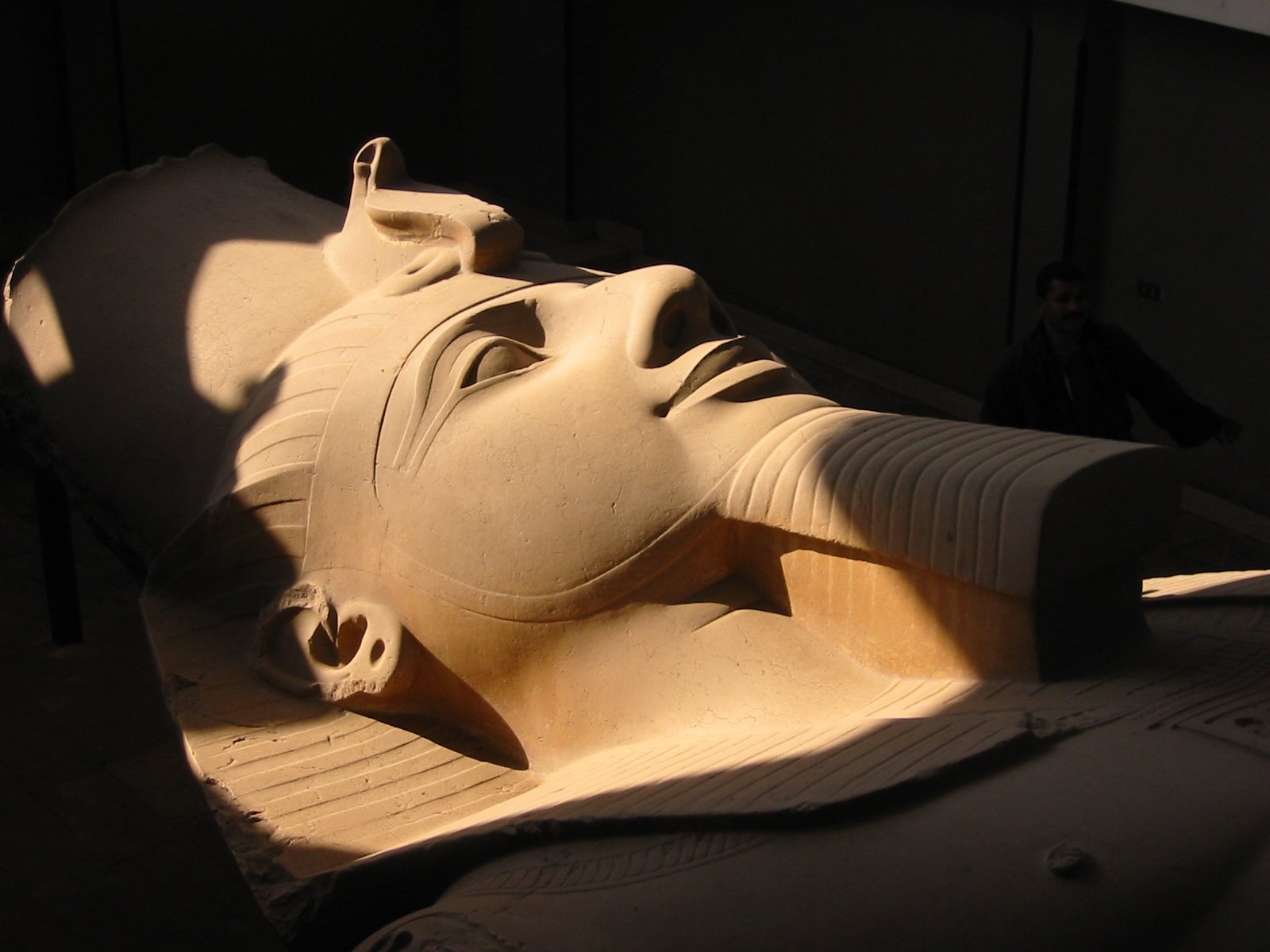
Then the news. In recent years Saqqara has produced finds that made headlines around the world: the painted tomb of a priest named Wahtye, dozens of sealed coffins stacked in shafts, mummified cats and lion cubs, a mummification workshop. Most are not open, some are opening, and we track them in our guide to Egypt's newest discoveries. Below the plateau lies Memphis itself, where a colossus of Ramesses II lies on his back under a roof.
Best light, how long it takes, and what a guide adds
Go early. The first hour after the gate opens is the best of the day: the sun is low in the east, so it rakes across the paneled wall and puts each of the six steps in shadow against the one below. By late morning the pyramid is a flat pale shape under a white sky and the buses that did Giza first begin to arrive. The other good window is the last ninety minutes before closing, when western light warms the stone and the site is nearly empty. From May to September the plateau passes 100 F (38 C) by noon with no shade, so early is the only choice.
| What you cover | Time to allow |
|---|---|
| Djoser compound only: colonnade, courts, South Tomb from outside, serdab | 60 to 90 minutes |
| Compound plus the pyramid interior, when open | Add 30 minutes |
| Compound plus Unas or Teti, one great mastaba and the Imhotep Museum | 2.5 to 3 hours |
| Saqqara with Memphis, door to door from central Cairo | 4 to 5 hours |
| Saqqara, Memphis and Dahshur | A full day |
A guide changes this place more than it changes Giza. Giza is legible without help. Saqqara is a plan, and the plan only speaks if someone reads it to you: why the doors are false, why the columns are attached to walls, what the B-shaped stones are for, which stone is original and which was added in the much-debated modern consolidation. Our guides are Egyptologists who know which tombs opened this month, and they drive you between the stops.
Three things people get wrong: sandals on sand and stairs; no hat and no water; and no small cash for the custodians who open a gate for you, see our note on tipping in Egypt.
How Explora Egipto slots it into the Saqqara half day
We run Saqqara as a private half day from your Cairo hotel, with our own vehicle, our own Egyptologist guide and no shopping stops. The shape of the morning:
- Pickup around 7:30 or 8:00. Central Cairo to Saqqara is about 19 miles (30 kilometers) and roughly an hour with traffic.
- The Imhotep Museum for ten minutes, then the colonnade, the Great South Court, the Heb Sed court, the serdab, and the South Tomb and pyramid interior when open.
- Unas or Teti with its Pyramid Texts, one great mastaba, and the Serapeum if the day is hot.
- Memphis on the way back, half an hour among the colossi, then lunch and a drop at your hotel in the early afternoon.
With two days around Cairo, we usually pair it like this. Day one: Giza, with the Great Sphinx and the Grand Egyptian Museum. Day two: Saqqara and Memphis in the morning, Dahshur if you are a pyramid person, Islamic Cairo in the afternoon. Seeing Djoser after Giza turns it into a footnote; seeing it first turns Giza into a conclusion. Our two-day Cairo plan is built on that logic, and every piece can be swapped inside our Cairo excursions. No prices on this page; tell us your dates and we send you the quote.
Frequently asked questions
How old is the Step Pyramid of Djoser?
About 4,700 years. It was built around 2650 BC for Djoser of the Third Dynasty, roughly a century before the Great Pyramid at Giza and a generation before the Bent and Red pyramids at Dahshur, which makes it the oldest large building of dressed stone in the world. Old Kingdom dates shift by a few decades between chronologies.
Can you go inside the Step Pyramid?
When it is open, yes. The interior reopened after a long restoration, and visitors descend from the north side to the top of the central shaft and follow walkways into the galleries with the blue faience tiles. The route is warm, with low ceilings and stairs, and it opens and closes as conservation work moves around the site.
Is Saqqara worth visiting if I have already seen the Giza pyramids?
Yes, and many people find it the better morning. Giza is about scale; Saqqara is about ideas. You see the first pyramid, the first stone columns, the first Pyramid Texts and the finest Old Kingdom tomb reliefs in the country, with a fraction of the crowds. Seen first, it also makes Giza read as a conclusion.
How far is Saqqara from Cairo and how do you get there?
Saqqara lies about 19 miles (30 kilometers) south of central Cairo, and the drive takes roughly an hour depending on traffic, less from a hotel in Giza. There is no practical public transport and the monuments are spread over miles of sand, so the sensible way is a private car with a guide.
Saqqara or Dahshur, if I only have one morning?
Saqqara. It has more variety, more carved relief in good condition, and the Djoser compound explains on its own where everything at Giza came from. Dahshur wins only if the engineering of the pyramid shape is what interests you, because the Bent and Red pyramids stand side by side. With an extra half day, do both.
Why is the Step Pyramid not smooth like the pyramids at Giza?
Because it was never planned as a true pyramid. It started as a square mastaba and was enlarged five times, each stage set back from the last, until six steps rose above the plateau, a staircase for the king to climb to the stars. The smooth-sided form was worked out a generation later under Sneferu at Meidum and Dahshur, and perfected at Giza.
Start where the pyramids started
Tell us your dates, your Cairo hotel and who is traveling, and we come back with a Saqqara morning built around the Step Pyramid of Djoser: the colonnade at first light, the interior when it is open, the tombs worth the walk and Memphis on the way back. No prices on this page, just a quote in your inbox.