Nile Cruise Boats: Types, Categories and How to Choose the Right One
Nile Cruise Boats: Types, Categories and How to Choose the Right One
Almost everything on an Egypt itinerary can be checked before you pay for it. You can read about Karnak, look up the Valley of the Kings, and see Philae from a hundred angles. The boat you will sleep on for four nights is usually a name you have never heard of, described in a brochure written by the people who own it. That gap is where most of the disappointment on the river comes from, and it closes quickly once you know what actually separates one Nile boat from another.
What follows is the working knowledge we use from Egypt when we place travelers on a vessel: the two families of boat that sail between Luxor and Aswan, what the star categories really change, what your fare covers, and the questions that expose a tired boat before your money has moved. If you are still deciding route and length rather than vessel, start with choosing a cruise itinerary and come back to this page.
Two families of boat sail the Nile
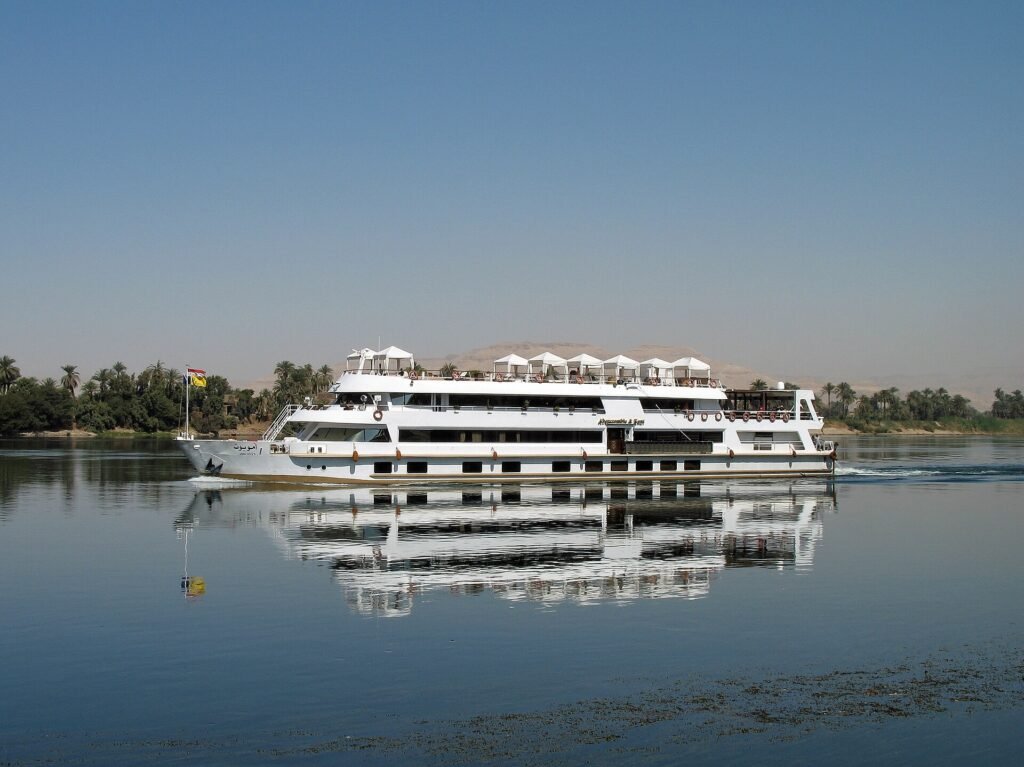
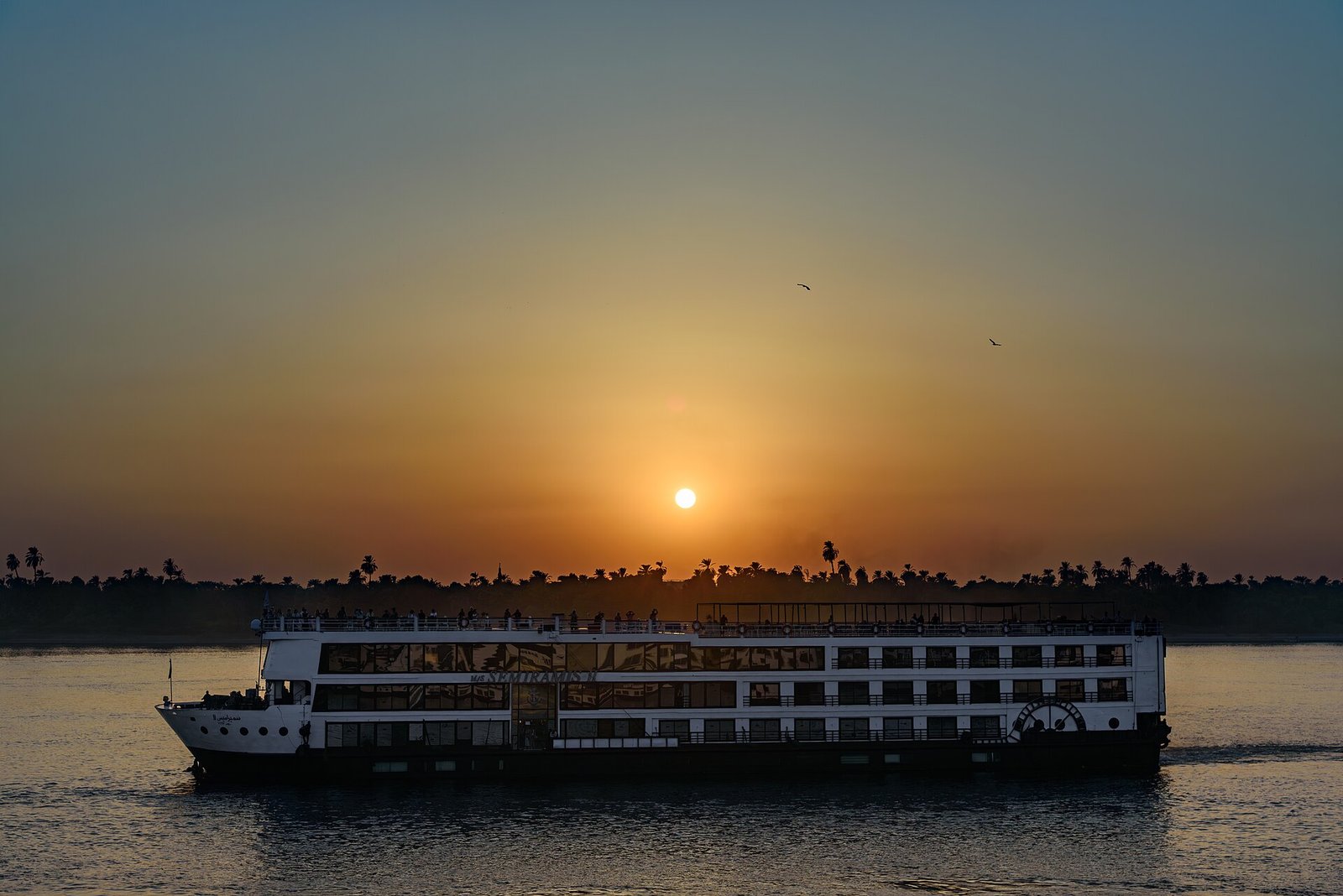
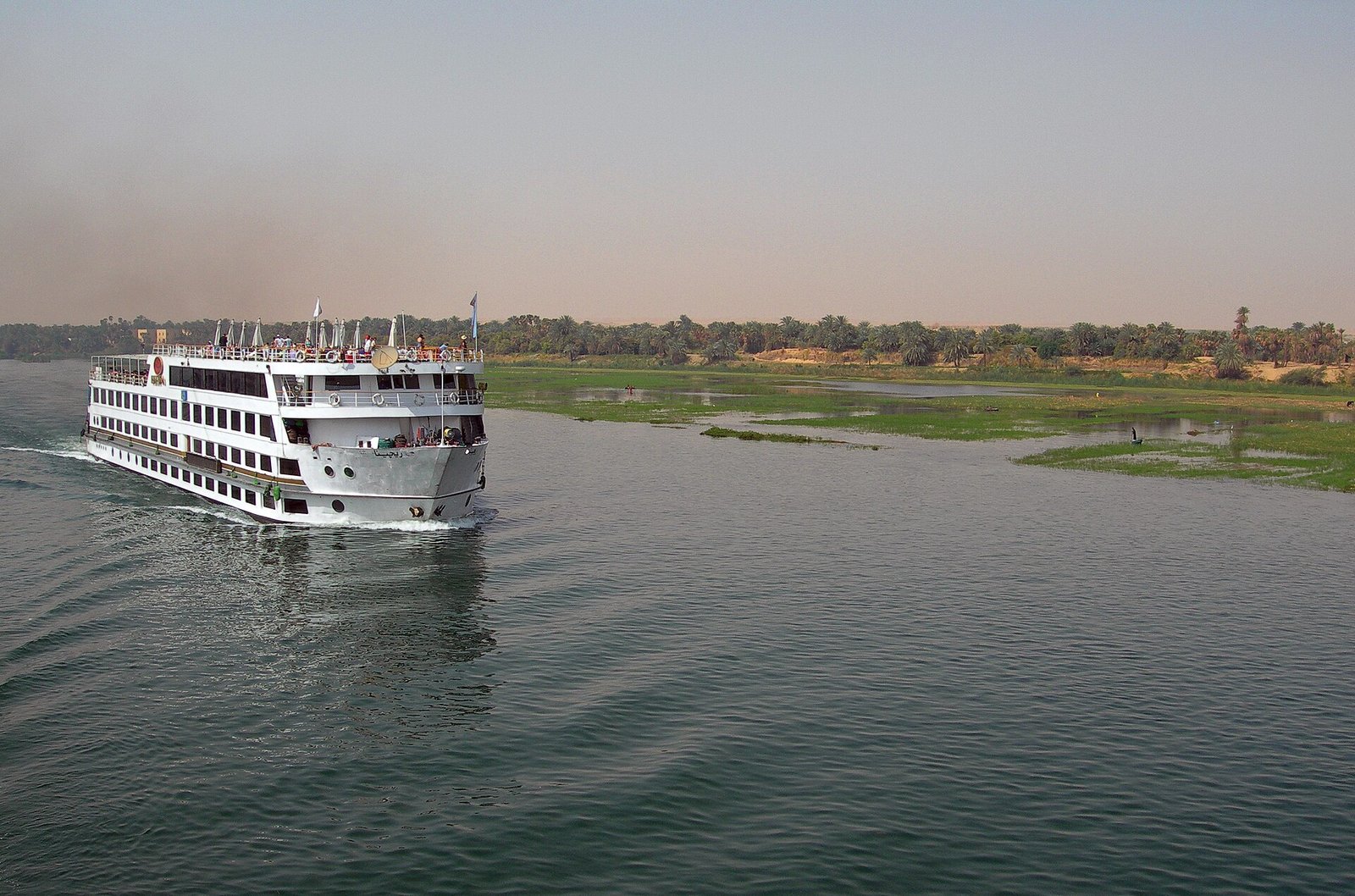
Whatever the marketing calls it, a Nile boat is one of two things. The first is the motor ship, the large floating hotel most people picture when they hear the words Nile cruise: four or five decks, its own engine, forty to eighty cabins, a pool on the sun deck and full board. The second is the dahabiya, a wooden sailing boat with a handful of cabins and two lateen sails that fill with the north wind, working the river roughly the way it was worked a century ago.
Most travelers book the motor ship because the value is hard to argue with. A minority who want something quieter and more private choose the dahabiya and accept the higher cost. The temples are the same on both. What changes is everything that happens between them.
| Motor ship | Dahabiya |
| 40 to 80 cabins | A handful of cabins |
| Four or five decks | Two decks |
| Own engine, fixed schedule | Sails, driven by the north wind |
| Pool, bar, wide sun deck | Shaded deck, rarely a pool |
| Moors at the main quays | Moors at islands and small banks |
| Hotel atmosphere, buffet dining | House-party atmosphere, one long table |
| Suits first trips, families, groups | Suits couples, friends booking several cabins together, repeat visitors |
The motor ship, and why most people end up on one
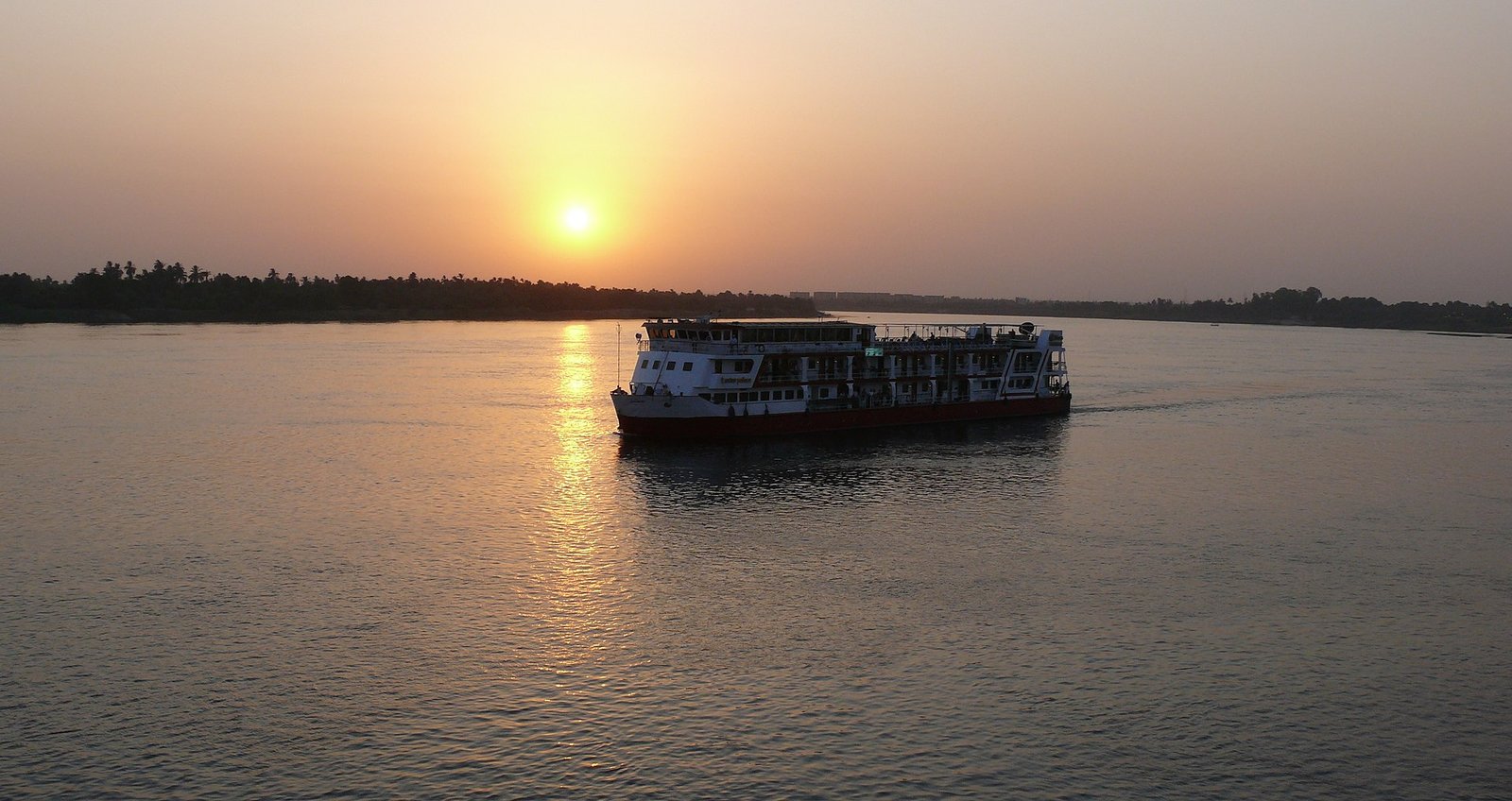
A Nile motor ship is in practice a floating four or five star hotel. Cabins run to around sixteen square meters in the middle of the fleet, tighter in the cheapest boats and considerably larger in luxury suites, with a picture window onto the river, a full bathroom, air conditioning, and in the higher categories a balcony. The top deck is the heart of the boat: pool, loungers, a bar and an awning for the hours when the sun is unbearable.
The rhythm is the same on almost every vessel. Buffet breakfast, off the boat to visit temples with an Egyptologist guide, back on board to eat, then an afternoon either sailing or on an optional excursion. Full board is included, so you never spend a minute deciding where to eat. That predictability is why a motor ship is the sensible answer for a first trip to Egypt, for anyone traveling with children, and for anyone traveling with parents who tire easily.
One thing the brochures never show you: at Luxor and Aswan these boats raft up side by side, and you walk through a neighbor's lobby to reach the quay. It is completely normal and nobody minds, but it is better known in advance than discovered at seven in the morning.
The dahabiya, and what you give up for it
Picture a white two-deck sailing boat with six or eight cabins. With that few passengers it feels less like a hotel and more like a floating house: dinner at a single long table, a crew that learns your name on the first evening, and no engine turning under the floor of your cabin. Being small, it can put in almost anywhere, so it anchors at islands and villages the big boats never touch. Tea with a Nubian family, a walk on a palm-covered island, a sunset with no other vessel in sight.
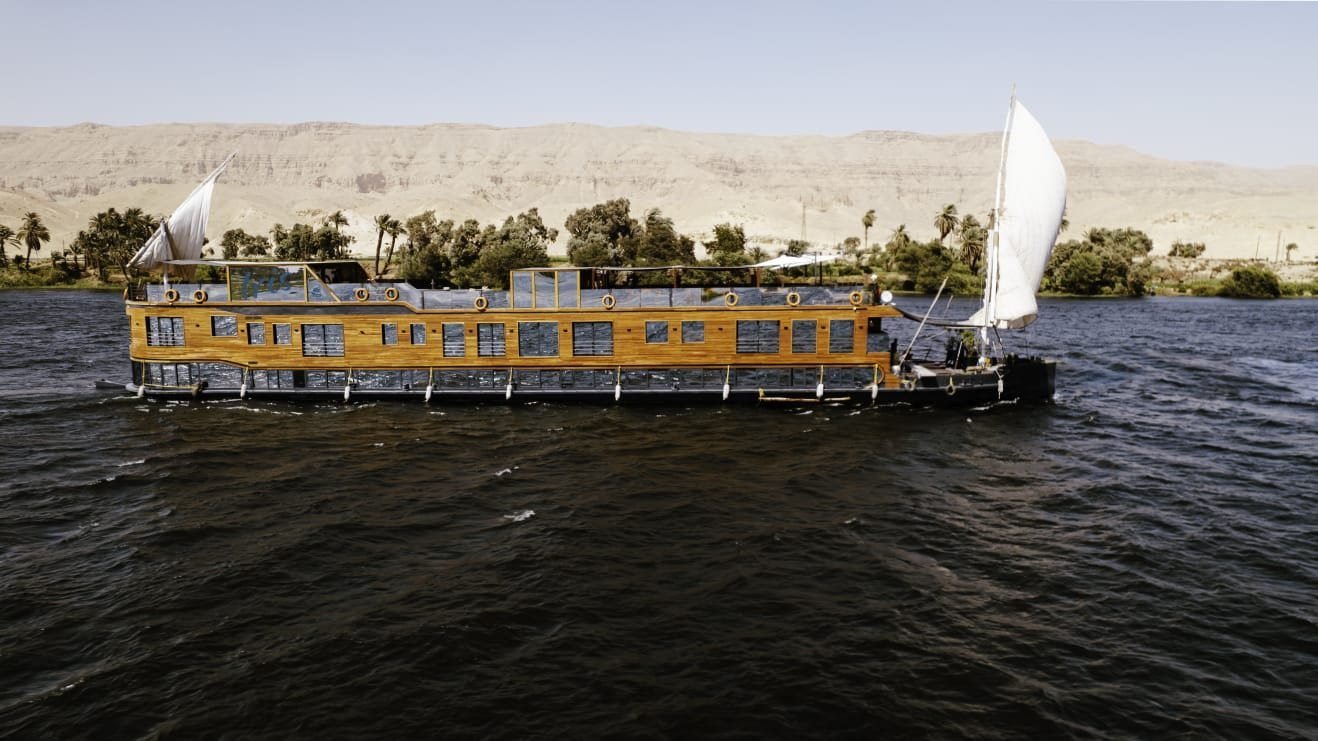
Be clear about the trade. A dahabiya depends on the wind, which is the entire point, and it also means that when the wind drops, as it regularly does in the afternoon on the Luxor to Aswan run, the boat slows down. We tell you how much a specific boat sails before you choose. It is also slower and more expensive, which is why it earns its place on honeymoons, with groups of friends who book several cabins together, and with people who have already seen the classic Egypt and want the river a different way.
Standard, superior and luxury: what actually changes
Star ratings on the Nile are handed out generously and are not a homogeneous standard, so two boats in the same nominal category can be genuinely different vessels. What never changes with category is the itinerary. The temples are identical for everyone. What changes is comfort, food and service.
Standard
Correct, clean boats with slightly tight cabins and a simple but abundant buffet. This is the best value on the river if you treat the boat as the means of reaching temples rather than part of the holiday itself. Nile cruises in our programs start from US$755.
Superior
The sweet spot for most travelers. Roomier cabins, noticeably better cooking, a well-kept deck and generally newer hulls. You gain a real step in comfort without the price running away from you, which is why more of our travelers end up here than anywhere else.
Luxury
Boutique boats with few cabins, suites with private balconies, chef-led cooking and service that comes close to personal. This earns its money when the boat is part of the point of the trip, not simply transport between the two ends of Upper Egypt.
What your fare covers, and what it does not
Included on a standard cruise: the cabin, full board on board with buffet breakfast, lunch and dinner, guided visits with an Egyptologist guide who speaks proper English rather than an escort translating as best he can, and the transfers at each end. The guided temples are Karnak, the Valley of the Kings, Edfu, Kom Ombo and Philae, and most four-night programs also take in Luxor Temple, Hatshepsut and the Colossi of Memnon. Ask for that list in writing, because the last three are where programs quietly differ.
Not included, on almost every boat: crew tips, which you hand over in Egyptian pounds at the end of the cruise and which are far better understood before you sail than improvised on the last morning, so read up on tipping customs in Egypt. Bottled drinks and anything from the bar are charged separately. Optional excursions sit outside the fare too, among them the Luxor balloon flight. Many operators also sell visiting Abu Simbel on top, while on our two 5-day cruises it is included. Confirm as well whether temple entrance fees are inside the cruise price or paid on the day, since operators differ and monument entrance fees mount up quickly across a week.
When you compare two quotes, compare the inclusion lists rather than the star counts. A superior boat with everything named is frequently cheaper by the end of the trip than a luxury boat with a short list and a long sheet of extras.
Planning this trip yourself takes hours. We build it for you, and we answer every question before you commit to anything.
Three questions that pick the boat for you
The first is your budget, and specifically what you want it to buy. If you want the money to go into seeing Egypt, a superior motor ship is very hard to beat. If the boat is itself part of the luxury of the trip, move up a category or go to a dahabiya.
The second is who is traveling with you. Families and groups are comfortable on a motor ship, where there is room to spread out and a pool to park teenagers beside. Couples and honeymooners usually want the privacy of a small boat and notice the difference immediately.
The third is the season you sail in. In high summer the pool and the shaded deck of a large motor ship stop being a nice extra and become the difference between a good day and a long one. Between November and March any decent boat works, and the small ones come into their own.
How to check a specific boat before you pay
Five checks, in order of how much they tell you.
- Ask for the boat's name and search it yourself. It is the most basic check and the one most people skip.
- Ask how many cabins it has and how many passengers it carries at full occupancy. No other figure shapes the experience more.
- Ask when it was last refurbished. Boats are renovated in cycles, and a hull that came out of the yard last season is a different holiday from one still waiting its turn.
- Ask for recent photographs that are not from the marketing set, which is often years out of date.
- If the boat is not yet confirmed for your dates, ask for the closed list of possible vessels and satisfy yourself that every one on it is acceptable.
That last point deserves a plain answer rather than a sales one. Fleets shift between seasons, boats go into maintenance and operators change hands, so on some dates a specific vessel is confirmed and on others it genuinely is not. We name the boat when it is confirmed and give you the full shortlist when it is not. An unconfirmed boat is ordinary industry practice and not a warning sign, but you should know the worst case on that list before you accept it.
Choosing your cabin: deck and which bank you face
Cabins on the upper decks have better views and less machinery noise. Lower deck cabins sit close to the waterline and often have a smaller window, which matters more than people expect when the whole point is watching the river go past. The counterweight is stairs: plenty of boats have no lift, so an upper deck means climbing several times a day.
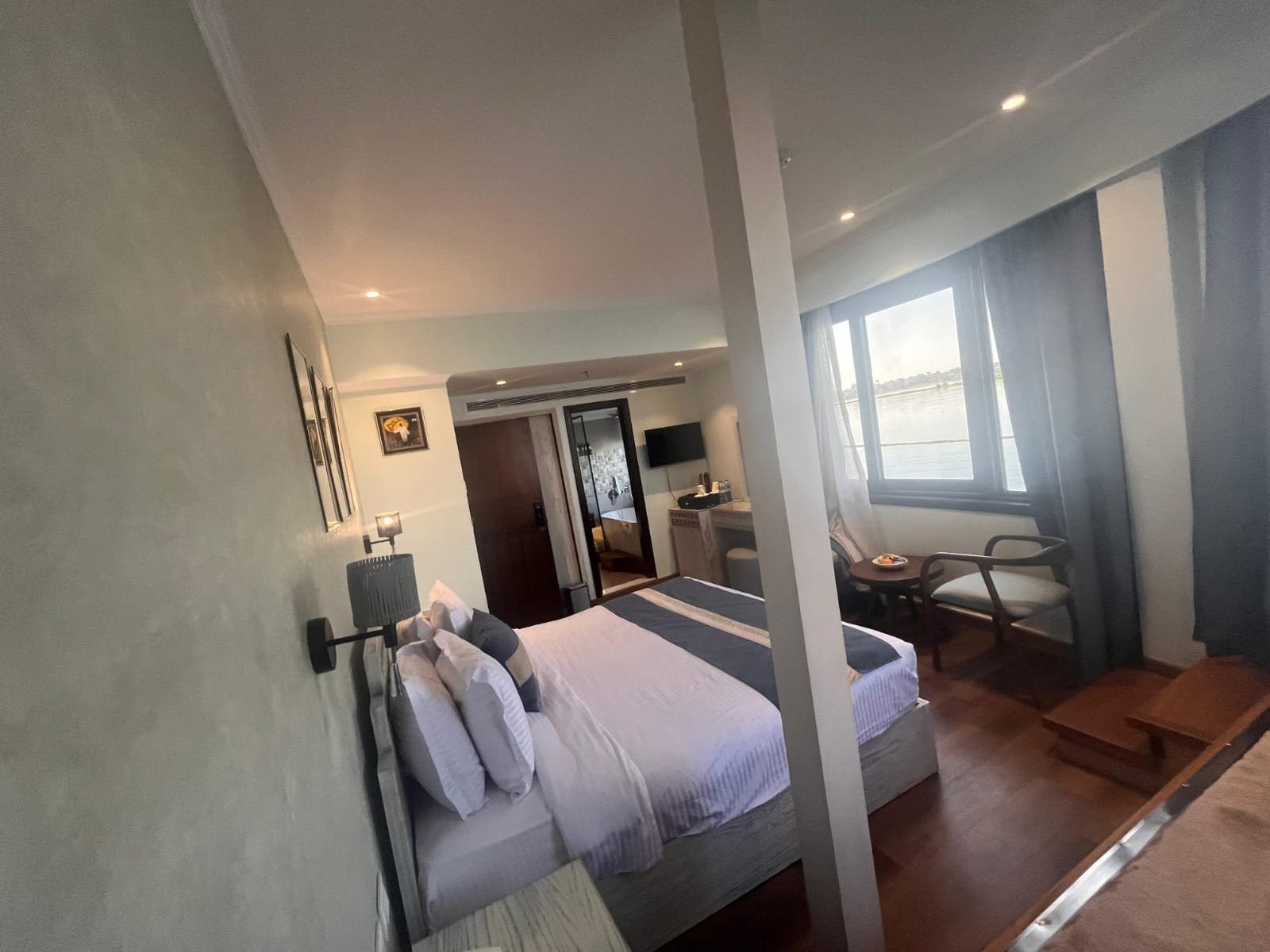
Orientation is the detail nobody mentions. Which side of the river your cabin faces decides what you wake up to and whether the afternoon sun bakes your window. On the stretches where the boat runs along the cultivated bank, one side gives you fields, palm groves and villages while the other gives you desert. Neither deck nor orientation is normally offered to you, and both can be requested when you book, which is the only moment they are free.
Book the trip, not the boat
Advice from people who run these cruises from inside Egypt: do not book a stray boat online without knowing who stands behind it. When something slips, and occasionally it does, you want a single company answerable for the boat, the transfers and the guide instead of three companies pointing at each other.
The cleanest way to arrange that is to put the cruise inside a complete Egypt package, with Cairo, the domestic flight down to Luxor and the cruise on one booking. We handle the ground program and the internal Egyptian flights; your international flights are yours to arrange. Tell us your dates, your budget and who is traveling, and we will tell you which boat we would put you on and why, with a clear price. WhatsApp +201032295513 reaches us directly.
Common questions about Nile cruise boats
How many boats are there on the Nile?
Which is the best boat for a Nile cruise?
What is the difference between a motor vessel and a dahabiya?
Do Nile boats have wifi and air conditioning?
Is a Nile cruise safe?
How many days does a Nile cruise last?
Let us put the trip together
We are a local agency in Egypt. Tell us your dates and what you want to see, and we will come back with a plan, the practical details sorted and someone to ask when you are here.
Keep exploring
To finish planning your trip to Egypt
- ▸Nile Cruise Luxor to Aswan or Aswan to Luxor: Which Way?
- ▸Christmas Nile Cruise: Which Sailing Puts the Holiday Aboard
- ▸What an all inclusive Nile cruise really includes, and what it does not
- ▸Nile Cruise from Hurghada: Formats, Transfer Day and Tips
- ▸Nile Cruise in December: Weather, Crowds and Christmas
- ▸Dahabiya Experience: What a Dahabiya Nile Cruise Is Like
- ▸Traveling to Egypt with a Baby: Heat, Cruise, Cribs, Formula
- ▸See all our Egypt tours