Egypt trip reviews repeat the same praise and the same complaints, and both tell you how to book


Egypt trip reviews repeat the same praise and the same complaints, and both tell you how to book
Read enough Egypt trip reviews and a pattern appears. Travelers praise the monuments, which outdo every photo, a guide who can make a tomb wall talk, the slow days on the Nile between Luxor and Aswan, and how warmly ordinary Egyptians treat visitors. The complaints repeat just as reliably: heat, early alarms, constant tipping, buffet fatigue, Cairo traffic, sellers who will not take no, and tours that stop at a shop every afternoon. Almost every complaint traces back to how the trip was organized, not to Egypt itself. This guide shows you how to read those reviews, how to separate the operator from the ship, the guide and the season, and what to ask before you book.
What travelers consistently praise after an Egypt trip
Whatever platform you read, positive Egypt trip reviews cluster around the same four things.
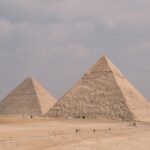
The monuments in person. Nobody is prepared for the scale. People who have seen the Pyramids of Giza in a thousand pictures still describe standing at the base of Khufu as a shock. Karnak, the painted tombs in the Valley of the Kings and the facade at Abu Simbel come up constantly, usually with some version of the line that the photos do not do it justice.
The guide. The single most repeated point in positive reviews. An Egyptologist who reads the wall in front of you, knows which tomb is quiet at nine in the morning, and answers the tenth question as patiently as the first turns a checklist of temples into a trip people talk about for years. When a review is glowing, the guide is usually named early.
The Nile cruise. Unpacking once, watching palm groves slide by from a deck chair, and stepping off the boat straight into Kom Ombo or Edfu is the favorite stretch for many travelers. For what people praise and criticize about the boats themselves, read our guide to Nile cruise reviews and what they really measure.
The people. Travelers who arrived nervous write with real surprise about how kind Egyptians are: tea offered with no pressure to buy, children waving from the riverbank, a driver who waits an extra hour without a word.
Notice that three of the four depend on how the trip was run. Only the monuments are a constant.
What travelers consistently complain about
The negative side of Egypt trip reviews is just as predictable, and knowing it in advance removes most of the sting.
| The complaint | What is usually behind it | Who controls it |
|---|---|---|
| Hassle from sellers and touts | Walking Giza, the Luxor souk or a temple exit without a guide running interference | The operator, through the guide and the vehicle |
| Heat | Traveling in July or August without being told what 104F (40C) at noon in Luxor means | The traveler's dates and the operator's daily schedule |
| Early starts | A wake-up call before dawn for Abu Simbel, the Valley of the Kings or a hot air balloon | Partly unavoidable, partly the itinerary design |
| Tipping | Nobody explained the tipping culture, so every small gesture felt like a demand | The operator's briefing and how tips are structured |
| Buffet fatigue | Seven nights of the same cruise buffet, plus identical hotel breakfasts | The ship chosen and whether nights ashore were built in |
| Cairo traffic | A hotel on the wrong side of the city and a schedule that crosses it at rush hour | The operator's hotel choice and timing |
| Shopping stops | A papyrus institute, a perfume shop and an alabaster factory on the same afternoon | Entirely the operator |
Heat and early starts are partly Egypt being Egypt. Everything else is a decision someone made when they built the itinerary, chose the hotel, briefed the traveler, or decided a commission from a carpet shop was worth an hour of your day.
The hassle complaint is real, concentrated in a few places, and almost entirely neutralized by a guide who walks in front of you and a driver waiting at the exit. Our guide to the common scams in Egypt and how to sidestep them covers the routines to recognize.

How to read online reviews of Egypt tours
A review of an Egypt tour is never a review of one thing. It is at least five things stacked on top of each other, and the reviewer rarely separates them. Your job is to do the separating.
- The operator. Who designed the itinerary, chose the ship and hotels, assigned the guide, and answered the phone when something went wrong. This is the only layer you are actually buying.
- The ship. A broken air conditioner or a noisy engine is a review of a specific boat on a specific week. Ask whether the operator still uses it.
- The guide. Rushed Karnak, too long at a shop, or a wonderful morning in the tombs are all about one person. A review naming a guide the company still employs is worth more than ten anonymous ones.
- The season. Late July and early February produce completely different reviews of the same itinerary. A review with no travel month has lost half its value.
- The reviewer's expectations. Someone who wanted a beach resort and got a cultural circuit will score it low even if every day ran perfectly. Read what they hoped for before you weigh their verdict.
Then apply the checks professional review analysts use. Look for concrete detail: the ship's name, what was visited on which day, what was included. Superlatives with no data are noise. Check the date, because a company can change hands, boats and guides in two seasons. Look at the reviewer's history: one lifetime review, posted the same day as several others for the same business, tells its own story.
A burst of perfect scores in one week followed by silence is a recognizable pattern. Be suspicious of a total absence of criticism, because every real trip has a rough edge. The most useful review on any Egypt tour page is rarely the five-star one; it is the well-argued three-star one that explains what went right and what did not.
The review patterns that reveal a reseller
Many Egypt tours sold to Americans are not run by the company that sold them. The brand takes the booking and passes it to a ground operator in Cairo, who supplies the guide, the vehicle and the ship. Nothing illegal about it, but it changes who is responsible for your trip, and reviews give it away.
- A second company name appears on the ground. Reviews that mention a local partner or thank a guide from a differently named agency are describing a handoff.
- The same ship and guides show up under several brands. Search the ship name from one review and it appears in reviews of three other companies. They all buy from the same supplier.
- The seller said one thing, the people in Egypt said another. Inclusions, hotel category or group size changed after arrival because the seller never controlled them.
- No guide is ever named. A company with its own guides has reviews full of first names. A reseller's reviews are strangely anonymous.
- Problems took days to fix. When the person who can fix a hotel mix-up is in another time zone, it takes days. When they are in Cairo with the driver's number, it takes an hour.
None of this proves a bad trip; some resellers work with excellent ground operators. But it explains why two reviews of the "same" tour can be night and day, and it is why we compared booking with a local agency in Egypt versus a reseller separately.
What reviews cannot tell you, even when they are honest
Even completely genuine reviews have structural blind spots. Knowing them stops you from treating a rating as the whole truth.
They measure expectations, not quality. A rating is the gap between what the reviewer wanted and what they got. Two people can take the identical trip and score it far apart because one expected luxury and the other expected adventure.
They are skewed by who bothers to write. People post when a trip thrilled them or when something went wrong. Trips that simply ran well produce few reviews.
They assign responsibility badly. A domestic flight delayed by fog, a tomb closed for conservation, a sandstorm that grounded the balloon, or a lock queue that shifted the cruise schedule all land as complaints against the operator. None are within anyone's control. The response is, and good reviews describe the response rather than the event.

The questions to ask an operator before booking
Ten minutes of direct questions to the company running your trip beats an hour of reading. Reviews describe other people's trips; a written answer describes yours.
- Which ship, by name? So you can read about that boat, not the brand.
- What is included, site by site? A line like entrance fees included hides a lot. Ask about Abu Simbel, the extra-ticket tombs in the Valley of the Kings, the Grand Egyptian Museum and the balloon.
- How many people in the group? The number, not a label like "small group."
- Who is the guide, what is their training, and are they on your staff? A licensed Egyptologist employed by the company is a different answer from "we assign a local guide."
- Who do I call on the ground at ten at night, and in what language? The honest answer names a person in Egypt.
- How is tipping handled? A kitty, a briefing, or guesswork at every doorway?
- How many shopping stops are on the itinerary? The answer you want is none unless you ask.
- What time do the days start, and which starts can move? Abu Simbel and the balloon are early by nature. A nine o'clock Karnak in August is a planning failure.
- What happens if a site is closed on the day? A real operator has a swap ready.
A fast, specific answer in writing is the best review an operator can give itself. A vague one is also a review. For the full method, see how to choose an Egypt tour operator.
Where Explora Egipto publishes its own reviews
We keep the feedback from people who have traveled with us on a single page, our reviews page, as it was written. We are not going to summarize it here, because a company's summary of its own reviews is precisely the kind of content this guide has told you to distrust. Read it yourself and apply the same checks you would apply to anyone: ship named, guide named, month of travel, rough edges.
Then triangulate. Reviews hosted on an operator's own website carry the least structural guarantee of any source, because the operator decides what is published. That does not make them false; it means they should agree with what you find on independent platforms. When a company is flawless in one place and absent everywhere else, ask why.
What we can say about ourselves without quoting anyone is structural. Explora Egipto is a local agency based in Egypt with its own Egyptologist guides and vehicles. There is no handoff to a ground partner, because we are the ground partner. The reseller patterns above should never appear in reviews of our trips, and if you spot one, we want to hear about it.
How Explora Egipto plans around the common complaints
Since the complaints are so predictable, an itinerary can be built to remove them before they happen. This is what that looks like in practice.
| The complaint in reviews | How the trip is built to avoid it |
|---|---|
| Hassle and touts | Private vehicle door to door, the guide walks ahead at Giza and the temple exits, and the driver waits where you come out. |
| Heat | Temples and tombs are done by late morning; the afternoon is the deck, the pool or a museum. We also say honestly which months are hard; see the best time to visit Egypt. |
| Early starts | We keep the early mornings that earn it, Abu Simbel and the balloon, and explain why in advance. Everything else can start later on request on a private itinerary. |
| Tipping | A plain briefing on day one about who is normally tipped and how it works, so nothing feels like an ambush. The detail is in our guide to tipping in Egypt. |
| Buffet fatigue | Ships chosen partly on the kitchen, and dinners ashore in Cairo and Aswan where locals eat. |
| Cairo traffic | Hotels placed for the plan, Giza side when the pyramids come first, downtown when the museum does, and days that never cross the city at rush hour. |
| Shopping stops | None. If you want to see papyrus being made or buy alabaster, tell your guide and it becomes a visit you chose, with no commission behind it. |
So, is Egypt worth it according to the reviews?
Strip away the layers and the answer the reviews give is remarkably consistent. The country itself, the monuments, the river and the people, lands as one of the most memorable trips people ever take. The disappointments are nearly all about the vehicle the traveler chose to see it in: the wrong month, a crowded group, a boat past its best, a guide stretched across too many people, or a seller who was never in Egypt.
That is good news, because the outcome is largely in your hands before you leave home. Pick dates with your eyes open, read reviews the way this guide describes, ask the nine questions above, and book with someone who answers them in writing. If you are still weighing the trip itself, our honest take is in is Egypt worth visiting.
The travelers who complain least are the ones who knew what an Egyptian day looks like before it started: an early temple, a hot noon, a slow afternoon, a guide worth listening to, and a tip at the end. Set that expectation and the review you write afterward will sound like the praise, not the complaints.
Frequently asked questions
What do Egypt trip reviews most often praise?
Four things, in almost every set of reviews: the monuments in person, which are far larger and more overwhelming than photos suggest; the Egyptologist guide, usually the most remembered part of the trip; the Nile cruise between Luxor and Aswan, especially sunsets on deck and stepping off the boat into a temple; and the warmth of ordinary Egyptians.
What do travelers complain about most after an Egypt trip?
Heat, particularly from people who traveled in summer without being warned; hassle from sellers at the busiest sites; pre-dawn wake-ups; the constant small tips; the same cruise buffet night after night; Cairo traffic; and tours that stop at commission shops. Apart from the heat and a few unavoidable early mornings, each of these is a planning decision rather than a fact about Egypt.
Is Egypt worth it according to reviews?
The consistent verdict is yes, with a condition. Reviewers who traveled in a good month, with a competent guide, a decent boat and a reasonable group size describe it as a trip of a lifetime. The disappointed reviews nearly always trace back to how the trip was organized rather than to the country. Separate the season, the ship and the guide and the picture becomes clear.
How can I tell if an Egypt tour review is fake or paid?
Look for detail that can be checked: the ship's name, the sites visited by day, a named guide, the month of travel. Check the reviewer's history, since a one-review profile posted the same day as several others for the same company is a warning sign. Watch for bursts of perfect ratings followed by silence, and for a total absence of criticism. Real trips always have a rough edge.
Should I trust reviews on a tour company's own website?
Treat them as one source, not the only one. The company controls what appears there, so they carry the least structural guarantee of any channel. That does not mean they are invented; it means they should agree with what you find on independent platforms. Read ours on our reviews page, compare them with outside sources, and trust the picture only when it matches across channels.
Why do so many Egypt tour reviews mention the guide?
Because in Egypt the guide is the product. Temples and tombs are covered in text and images that mean nothing without someone to read them, the crowds and touts are managed by the person walking in front of you, and the pace of every day is set by one individual. A knowledgeable, patient guide employed by the company rather than subcontracted changes the trip more than the hotel category ever will.
Write the review you want to be able to write
Tell us your dates, who is traveling and what you have read that worries you, and we come back with a trip that names the ship, the guide and every inclusion in writing, built by a local team in Egypt. No prices on this page, just a quote in your inbox.