Adventure travel in Egypt is a real menu, not a camel photo, and here is what is actually on it
Adventure travel in Egypt is a real menu, not a camel photo, and here is what is actually on it
Adventure travel in Egypt means a hot-air balloon over the Luxor west bank at dawn, wreck and wall diving from a Red Sea liveaboard, kitesurfing on the flat lagoons of El Gouna and Dahab, the night climb of Mount Sinai, a 4x4 run through the Black and White Deserts with a camp under the stars, sandboarding on the big dunes, a felucca under sail, snorkeling with wild spinner dolphins, rock climbing behind Dahab, cycling the Luxor west bank and a camel trek that goes further than the pyramid parking lot. Most of it fits around the temples rather than instead of them. Below is the honest version of each: how hard, when, and what can go wrong.
What an Egypt adventure tour actually looks like
Egypt sells itself on temples, so the first surprise for active travelers is how much of the country is empty. Nearly all of it is desert, two seas wash its coasts and a granite range fills the Sinai. The adventure side is run by people who have done it for generations: Bedouin drivers, Sinai mountain guides, dive crews who grew up on the reef.
The practical shape is three zones. The Western Desert, from Cairo, gives you the 4x4 safari, the White Desert camp and the dunes. Luxor gives you the balloon, the bike and the felucca. The Red Sea and Sinai give you diving, kitesurfing, the Mount Sinai climb and trekking. One zone takes four days, all three take eleven.
Most activities take half a day and slot into gaps that already exist, so adding adventure rarely costs you a temple. The desert camp, the Sinai climb and any liveaboard need their own days and are decided when the itinerary is drawn.
Hot-air balloon over the Luxor west bank
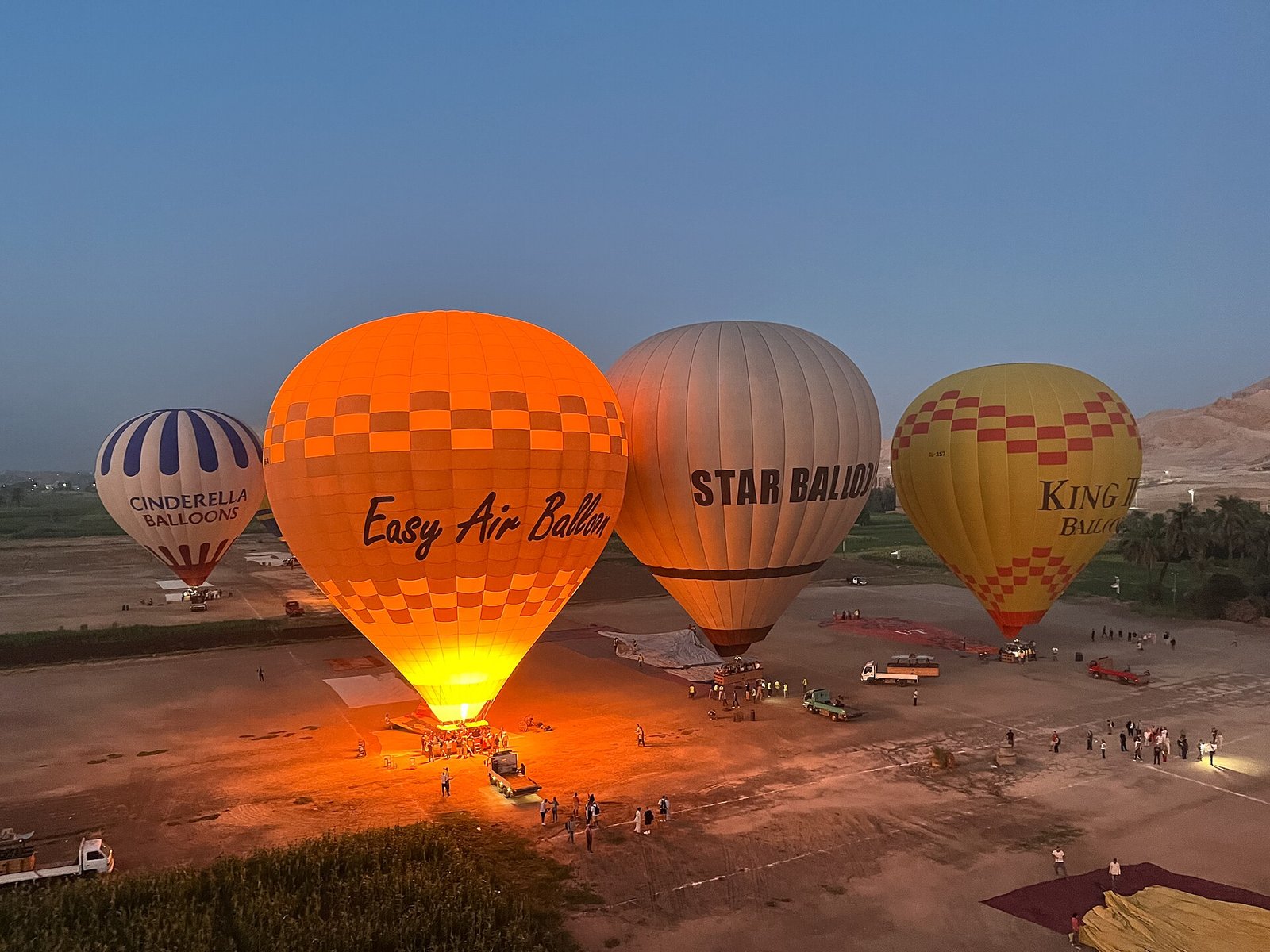
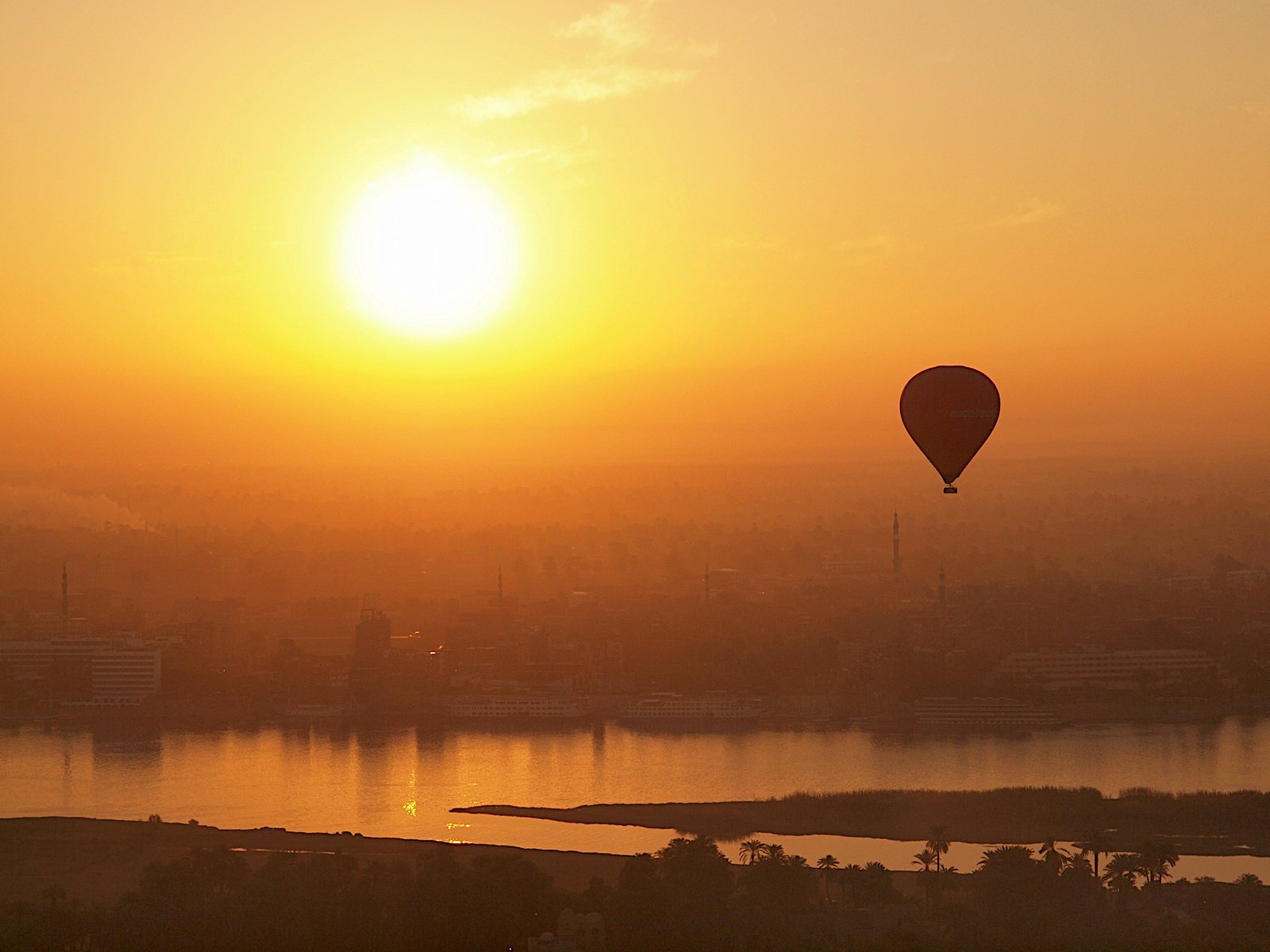
The balloon is the gentlest adventure on the list and the one people talk about afterward. You leave the hotel in the dark, cross the Nile by launch and watch the crews inflate the envelopes. Lift-off is at first light. Within minutes you are above the Colossi of Memnon, the Ramesseum and the hillside that hides the Valley of the Kings, green fields on one side, desert on the other.
The flight lasts around forty-five minutes and you are back for a late breakfast with the day at the tombs intact.
Honesty on risk: balloons fly only when the wind allows, and the aviation authority grounds every company on the mornings it does not. That is why we put the flight on your first Luxor morning, never the last, so there is another dawn to try. Clothing and timing are in our hot-air balloon over Luxor guide.
Diving and liveaboards on the Red Sea
The Red Sea is the reason serious divers put Egypt on the list. The reef begins within yards of the shore, the water is clear most of the year and the sites run from a beginner shore dive at Dahab to the offshore walls of the Brothers and Daedalus. Three ways in:
- Discover Scuba, no certification. A shallow, short dive with an instructor beside you. Hurghada, El Gouna, Sharm el Sheikh and Dahab run it daily.
- Day boats, certified divers. Two dives a day: Giftun and Abu Ramada from Hurghada, Ras Mohammed and the Tiran straits from Sharm, Elphinstone from Marsa Alam. You sleep in a hotel.
- Liveaboards. A week aboard doing three or four dives a day. The northern route covers the Thistlegorm wreck, Ras Mohammed and the Gubal wrecks; the southern route covers the Brothers, Daedalus and St John's, with oceanic whitetips and hammerheads in season and an advanced card usually required.
Two rules to know before the briefing: no flying for at least eighteen hours after your last dive, which decides where the diving sits, and never touch or stand on coral. Our Red Sea diving guide goes site by site.
Kitesurfing at El Gouna and Dahab
Egypt has two of the most forgiving kite spots anywhere, for opposite people. El Gouna, north of Hurghada, has a wide shallow lagoon where you stand waist deep for the whole learning phase, steady side-onshore wind and schools with rescue boats. Beginners learn fastest here, and the town keeps a non-kiting partner happy.
Dahab, on the Sinai side, has the lagoon at the south end of town for lessons and the Blue Lagoon at Ras Abu Galum for riders who already know what they are doing. The wind is stronger in summer and the vibe is dusty and relaxed. Read our Dahab guide before choosing it; it is not a resort.
A first course is three sessions on consecutive days. Bring reef shoes, a rash guard and patience for day one with a trainer kite on the beach.
The Mount Sinai climb and Sinai trekking
The night climb of Mount Sinai is the most physical thing most visitors do in Egypt. You start from Saint Catherine's Monastery around 2 am with a Bedouin guide and a headlamp, climb the camel path for two to three hours, then finish on 750 rough stone steps to the summit at 7,497 feet (2,285 m). You wait in the cold under a rented blanket, the sun comes up over the granite peaks, and you walk down in daylight, by the same path or the 3,750 Steps of Repentance.
Anyone who walks regularly can do it. Anyone who does not will still probably do it, slowly, and feel it for two days. A camel can carry you up the path but never the final steps. Layers, timing and the monastery visit are in the Mount Sinai sunrise climb guide.
If the mountain leaves you wanting more, the high Sinai is trekking country. The Bedouin-run Sinai Trail crosses the peninsula in stages walked over days or weeks, with camels carrying the loads and nights in wadis under a dark sky. A two to four day loop from Saint Catherine is the realistic add-on.
Desert 4x4, sandboarding and the White Desert camp
The classic Western Desert safari is two days from Cairo. You drive to Bahariya Oasis, switch to a Land Cruiser and head south through the Black Desert, past Crystal Mountain and Agabat, onto the white chalk plain as the light goes gold. The camp is a windbreak of blankets, a fire, a Bedouin dinner and a mattress under the stars, with fennec foxes at the edge of the firelight. It is the best night of most people's trip, and the route is in our White Desert guide.
Sandboarding happens wherever there is a big dune and a driver willing to wax a board. Around Bahariya and in the Great Sand Sea beyond Siwa the dunes are hundreds of feet high, and there is no lift.
The 4x4 part is not a theme park. Drivers deflate tires, cross soft sand at speed and drop over dune crests. It is safe with the right driver and genuinely dangerous with the wrong one, which is why we send you with Bedouin drivers we have used for years.
Felucca sailing and snorkeling with dolphins
Not every adventure needs adrenaline. A felucca is the lateen-rigged sailboat that has worked the Nile for centuries, and an afternoon under sail around the islands at Aswan is pure wind and water. The longer version is an overnight felucca from Aswan toward Kom Ombo, sleeping on deck while a Nubian crew cooks on a gas ring. Basic, slow and one of the most peaceful nights in Egypt. Details in our felucca guide.
Snorkeling with dolphins happens at two reefs where spinner dolphins rest by day: Shaab El Erg north of Hurghada and Sataya, known as Dolphin House, off Marsa Alam. The crew watches for the pod, you slip into the water and the boat stays back. The rules are non-negotiable: no chasing, no touching, no swimming into the pod, and you leave when they move off. Some days they are not there, and we say so. How the good boats behave is on our Dolphin House page.
Rock climbing, cycling the west bank and camel treks
Rock climbing at Dahab. The granite wadis behind the town, Wadi Gnai above all, have bolted sport routes among red rock and acacia trees, twenty minutes from the sea. Guides rent gear and lead beginners on easy slabs. Mornings only in summer, because the rock bakes by 11 am.
Cycling the Luxor west bank. Rent a bike on the far side of the ferry and you have a flat web of lanes between the Colossi of Memnon, Medinet Habu, the Ramesseum and Deir el Medina. Ten to fifteen miles covers it, with the climb to the Valley of the Kings as the only hill. Start early and carry water.
Camel treks. The twenty-minute photo ride at the pyramids is not a trek. A real one is a two-hour loop through the dunes behind Giza at sunset, a day along the Sinai coast to the Blue Lagoon, or several days with a Bedouin caravan out of Bahariya. Camels are uncomfortable for the first half hour and then fine.
Fitness and safety, activity by activity
Real effort, real risk, and what removes most of it.
| Activity | Fitness needed | Main risk | What keeps it safe |
|---|---|---|---|
| Balloon | None | Wind on landing | Flying only when cleared, first-morning booking |
| Diving | Medical form, comfort in water | Decompression, currents | Reputable center, no flight for eighteen hours after |
| Kitesurfing | Average, can swim | Being dragged, offshore wind | Lagoon school with rescue boat |
| Mount Sinai and treks | Walks regularly | Cold, ankles, dehydration | Slow pace, layers, Bedouin guide |
| 4x4 safari and sandboarding | Tolerates hours of bumps | Rollover, breakdown far from help | Experienced driver, convoy, satellite phone |
| Felucca and dolphins | Basic swimming | Sun, cold deck nights, crowding the pod | Licensed boat, life jackets, a crew that follows the code |
| Rock climbing | Beginner slab or real upper body | Falls, loose rock, heat | Guided routes, checked bolts, mornings |
| Cycling and camels | Average | Heat, traffic, the camel standing up | Back lanes, early start, calm animals |
Two general rules. Carry travel insurance that names the activity, because standard policies often exclude diving, climbing and motorized off-road travel. And mention any back, heart or breathing condition when you book, not at the trailhead.
An 11-day Egypt adventure itinerary that also sees the temples
The route we build most often for active travelers who still want the pyramids and the tombs. A temple day rests you between the hard ones.
- Day 1, Cairo. Giza pyramids and the Sphinx, camel trek through the dunes behind the plateau at sunset.
- Day 2, Western Desert. Drive to Bahariya, switch to 4x4, Black Desert, Crystal Mountain, Agabat, camp in the White Desert.
- Day 3, dunes. Sunrise among the chalk, sandboarding on the way out, Cairo by evening.
- Day 4, Luxor. Morning domestic flight, Karnak in the afternoon, Luxor Temple after dark.
- Day 5, Luxor. Balloon at dawn, bikes to Medinet Habu, Valley of the Kings, felucca at sunset.
- Day 6, Red Sea. Road to El Gouna, about four hours, first kite lesson or Discover Scuba.
- Day 7, dolphins and reef. Shaab El Erg for the spinners, two reef stops, a dive or a second kite session.
- Day 8, Sinai. Transfer to Sharm el Sheikh, by domestic flight when it operates or by road, then Dahab.
- Day 9, Dahab. Climbing in Wadi Gnai or a shore dive at the Blue Hole and the Canyon.
- Day 10, Mount Sinai. Leave Dahab at midnight, summit for sunrise, Saint Catherine's Monastery, back to Dahab.
- Day 11, out. A last morning on the water, transfer to Sharm el Sheikh or Cairo.
Common swaps: days 8 to 11 on a northern liveaboard instead of the Sinai, or days 6 to 8 in Siwa instead of the Red Sea. Tell us which and we send you the quote.
Seasons for each adventure, in Fahrenheit and Celsius
The desert and the sea peak at opposite ends of the year, and a good itinerary uses that.
| Months | Desert daytime | Red Sea water | Best for | Careful with |
|---|---|---|---|---|
| November to February | 66 to 75 F (19 to 24 C), nights near freezing | 72 to 75 F (22 to 24 C) | Desert camps, Sinai, cycling, climbing | Cold nights, wetsuit for diving |
| March to April | 77 to 90 F (25 to 32 C) | 73 to 77 F (23 to 25 C) | Everything; kite wind builds | Khamsin dust grounds balloons |
| May to June | 95 to 104 F (35 to 40 C) | 77 to 81 F (25 to 27 C) | Diving, liveaboards, kites, dolphins | Multi-day desert, daytime treks |
| July to September | 100 to 110 F (38 to 43 C) | 82 to 84 F (28 to 29 C) | Red Sea in every form, Sinai by night | White Desert, cycling except at dawn |
| October | 84 to 93 F (29 to 34 C) | 79 to 81 F (26 to 27 C) | Second sweet spot; southern liveaboards for sharks | Midday in Luxor |
The balloon flies year-round and depends on wind rather than heat; winter is the prettiest flight and the coldest basket. El Gouna has wind most of the year, steadiest from spring to early fall; Dahab is best from April to October.
How Explora Egipto builds an adventure trip
We are a local agency in Egypt with our own guides and vehicles, and adventure is where that matters most, because a good desert night comes down to the driver and a good dive week comes down to the boat. For an active itinerary we:
- Fix the activities that need their own days first, then fit balloon, bike, felucca and lessons into the temple days.
- Book the balloon on your first Luxor morning and keep the next one free.
- Place any diving at least eighteen hours before a domestic flight.
- Send you with Bedouin drivers and Sinai guides we have worked with for years.
- Match the dive center, kite school and dolphin boat to your level, and flag every weather-dependent day.
- Stay on WhatsApp for the whole trip, so a grounded balloon or a windless day is rearranged within the hour.
Every combination is different, so tell us your dates and your fitness and we send you the quote.
Frequently asked questions
Is Egypt good for adventure travel?
Yes, and it is underrated for it. The Red Sea is one of the best dive and kite destinations anywhere, the Western Desert gives you a real overnight expedition two days from Cairo, and the Sinai has a proper mountain climb and multi-day trekking. All of it sits within hours of the pyramids and the Nile temples, so one trip covers both.
How fit do I need to be for an Egypt adventure tour?
It depends on the menu. Balloon, felucca, camel and dolphin snorkeling need almost nothing. Cycling Luxor, kite lessons and the 4x4 safari need average fitness and a tolerance for heat and bumps. The Mount Sinai climb and any Sinai trek want someone who walks regularly, and diving needs a medical questionnaire. Be honest with us and the trip will fit.
Is adventure travel in Egypt safe?
The activities are as safe as the operator running them. Balloons fly only when cleared, dive centers follow international training standards, and Bedouin drivers and mountain guides have done these routes for generations. The risk comes from cheap walk-in operators with tired vehicles or no rescue boat. A local agency that knows the crews, plus insurance that names the activity, removes most of it.
When is the best time for an adventure trip to Egypt?
October and March to April are when everything works at once: the desert is bearable, the sea is warm, the wind is up and the mountain is not freezing. Winter is best for the desert and Sinai but needs a wetsuit in the water. Summer belongs to the Red Sea and pushes desert and cycling to dawn. The balloon flies whenever the wind allows.
Can I combine diving and Mount Sinai on the same trip?
Yes, and Dahab is the place to do it, with the Blue Hole and the Canyon as shore dives and the mountain two hours away. Do the climb before the diving if you can, or leave a comfortable gap after your last dive before going up to 7,497 feet (2,285 m), and eighteen hours before any flight. We sequence it for you.
Do I need to book adventure activities in advance?
Some, yes. The balloon, certified diving, liveaboards and any multi-day desert or Sinai route have limited places, permits and gear, and they shape the whole itinerary, so they are fixed before you travel. A camel ride, a half-day snorkel trip, a single kite lesson or a Luxor bike can be arranged on the day.
Bring the boots, the mask and the fleece, we bring the rest
Tell us your dates, how fit you are and which activities you cannot leave Egypt without, and we come back with a day-by-day plan that puts the balloon on the right morning, the desert camp on the right night and the diving safely away from the flights. Just a quote in your inbox.