Minya and Middle Egypt is the stretch of the Nile almost nobody visits, and this is how to do it properly
Minya and Middle Egypt is the stretch of the Nile almost nobody visits, and this is how to do it properly
Middle Egypt is the run of the Nile between Cairo and Luxor that every standard itinerary jumps over by plane or night train. Minya, about four hours south of Cairo by road, is the base. Within an hour of the city are the painted tombs of Beni Hasan with their wrestling scenes, Tell el Amarna, the desert city Akhenaten and Nefertiti built and abandoned, the animal catacombs and the tomb of Petosiris at Tuna el Gebel, and the baboon colossi of Hermopolis. You see it all with a private car, a driver and an Egyptologist guide, usually with nobody else there. It suits a second visit or a serious Amarna interest, and it slots between Cairo and Luxor with one or two nights in Minya.
Where Middle Egypt is, and why the tour buses skip it
Look at the gap on the map. Cairo sits at the top of the valley, Luxor and Aswan at the bottom, and the tour industry treats the river between them as travel time. That gap is Middle Egypt, essentially the governorates of Minya and Asyut. Minya is the only sensible base: a quiet provincial city on the west bank with a long Nile corniche and faded cotton-boom villas. Egyptians call it the Bride of Upper Egypt.
Why does nobody go? Three reasons, none of them that the sites are second rate. History: for a long stretch from the 1990s the region was closed or discouraged for foreign visitors, and operators never put it back. Logistics: the sites are scattered along both banks over about 50 miles (80 km), several reached by dirt track, with no useful public transport. Infrastructure: few hotels, all built for domestic travelers, and little English outside your guide.
None of that makes it hard once a local agency arranges it. It makes it a trip you plan rather than improvise, which is why the sites are empty. If you have ticked off the classics in our guide to what to see in Egypt, this is the next chapter.
Beni Hasan, the tombs with the wrestlers
Beni Hasan is the site that converts skeptics. About 12 miles (20 km) south of Minya on the east bank, 39 rock-cut tombs sit in a limestone cliff with a wide view over the palms and the river. They belong to the provincial governors of the Eleventh and Twelfth Dynasties, roughly four thousand years ago. What you get is Middle Kingdom daily life, painted rather than carved, in colors that survived because so few people ever came.
Four tombs are normally open, though restoration work changes the set:
- Baqet III and Khety, father and son, each with a wall of wrestlers, more than two hundred pairs in Baqet's tomb alone, drawn in sequence like a training manual. Below them, soldiers scale a fortress wall with a wheeled siege tower.
- Amenemhat, with a portico of fluted columns that look Greek and are centuries older than anything Greek.
- Khnumhotep II, the famous one. A caravan of traders from Canaan in striped robes arrives with ibex and a lyre, led by a chief named Abisha. Above it the owner nets birds painted so precisely that ornithologists can name the species.
Plan ninety minutes plus a steady climb. Just south is Speos Artemidos, a small rock temple of Hatshepsut. Ask for it, because drivers skip it unless told.
Tell el Amarna, the city Akhenaten built and Egypt erased
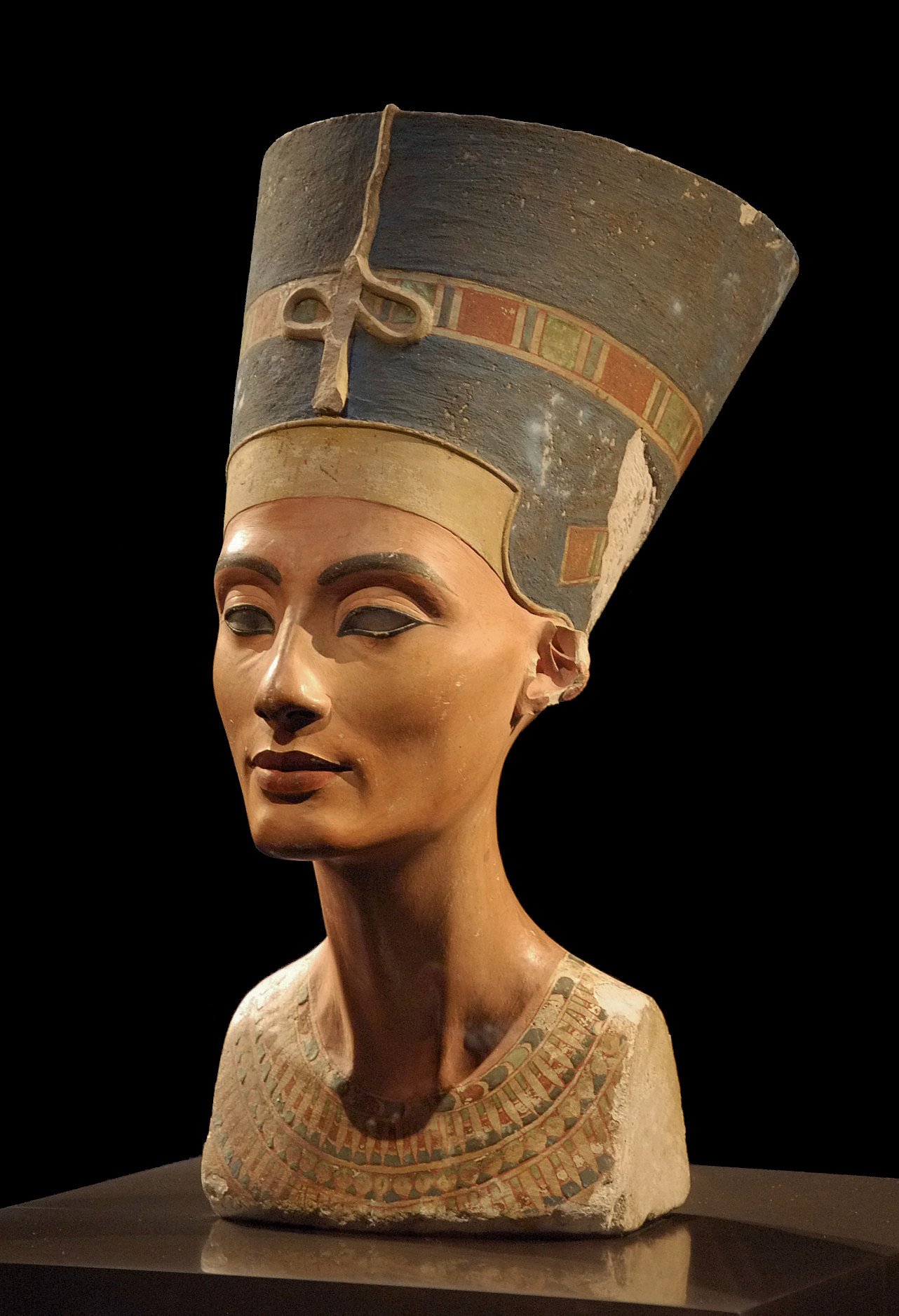
About 35 miles (55 km) south of Minya the eastern cliffs pull back into a desert bay roughly 8 miles (13 km) long. This is Akhetaten, the capital Akhenaten founded around 1346 BC on ground that belonged to no other god. Within about fifteen years of his death the court had returned to Thebes and the temples were pulled down for fill. What remains is a city plan in mud brick, a ring of tombs in the cliffs and the stelae that marked its edges.
The boundary stelae
Akhenaten fixed the city limits with at least sixteen stelae cut into the cliffs, each carrying a long text in which the Aten himself chooses the spot. Stela U, at the north end of the bay, is the easiest to reach and still shows the royal family under the sun disc, its rays ending in small hands. Read it with your guide first.
The city and the tombs
The visitor center near El Till has a good scale model, which matters because on the ground Amarna is knee-high walls and sand. With the model in your head, the Great Aten Temple makes sense: open courts stacked with offering tables, no dark sanctuary, everything lit by the sun.
The northern nobles' tombs include Huya, steward of Queen Tiye, and Meryre, high priest of the Aten, whose walls carry the most detailed picture of the city ever made. The southern group includes Ay, later pharaoh himself, with the fullest text of the Great Hymn to the Aten.
The Royal Tomb is what Amarna devotees come for. It lies about 4 miles (6 km) up the Royal Wadi, along a track your driver takes slowly. A side suite was cut for the princess Meketaten, whose death is shown in relief with the king and Nefertiti weeping over her. The decoration is battered, but standing in the valley chosen so the sun would rise over the city from this notch is as close as anyone gets to him.
Give Amarna a full day with the Royal Tomb, or a long half day without it. Water, a hat, closed shoes. There is no shade anywhere.
Tuna el Gebel, Petosiris and the animal catacombs
Back on the west bank, about 4 miles (7 km) into the desert from Mallawi, Tuna el Gebel was the cemetery of Hermopolis through the Persian, Ptolemaic and Roman periods.
The tomb of Petosiris is the reason to come. He was high priest of Thoth in the late fourth century BC, alive when Alexander's generals were dividing the empire, and his family tomb is built like a small temple. Inside, the reliefs are pharaonic in subject and Greek in style: harvesters, metalworkers and perfume makers with modeled muscles and folded cloth, arranged in Egyptian registers with hieroglyphic captions. Two art traditions met in one room.
A short walk away you go down a stair into the catacombs. Thoth had two sacred animals, the ibis and the baboon, and for centuries pilgrims paid to have one mummified and buried here. The galleries run for hundreds of yards under the desert, lined with niches for stacked ibis jars and, in the older sections, baboons in wooden shrines. Only a fraction is open, but it is enough.
Also here: the Roman tomb of Isadora, a young woman who drowned in the Nile and whose father wrote Greek verses on the walls, and on the desert edge Boundary Stela A, one of Akhenaten's western markers.
Hermopolis and the Thoth baboons
Between Mallawi and Tuna el Gebel, at the village of El Ashmunein, lie the remains of Hermopolis Magna, city of Thoth, god of writing and wisdom. In Egyptian it was Khmun, the City of Eight, after the eight primeval gods who created the world here.
The site is a large mound of mud brick with a few things that stop you. Two colossal quartzite baboons, seated, paws on knees, more than 13 feet (4 m) tall even without their lost crowns, were set up by Amenhotep III and are the largest images of the god ever found. Nearby stands a fifth century Christian basilica built with granite columns from a Ptolemaic temple, and a temple of Ramesses II built with thousands of small blocks robbed from Akhenaten's city across the river. Allow an hour.
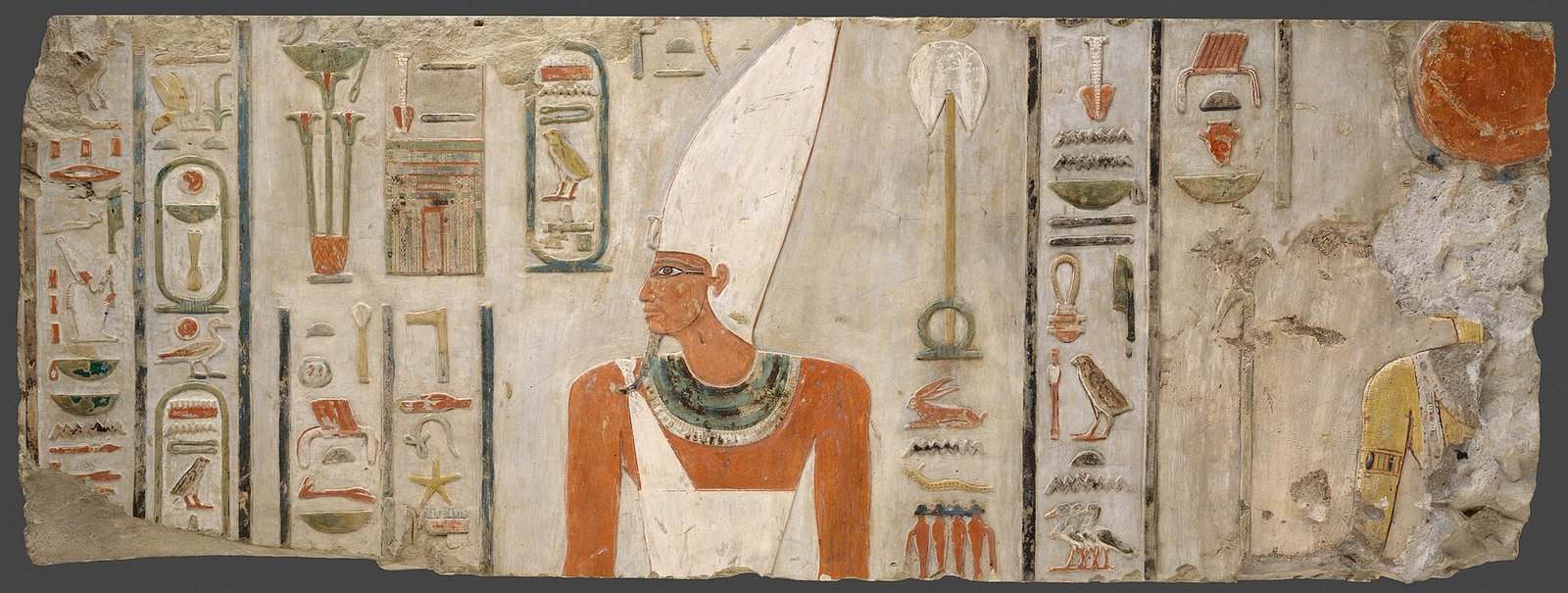
Minya itself: the corniche, the Fraser tombs and the smaller sites
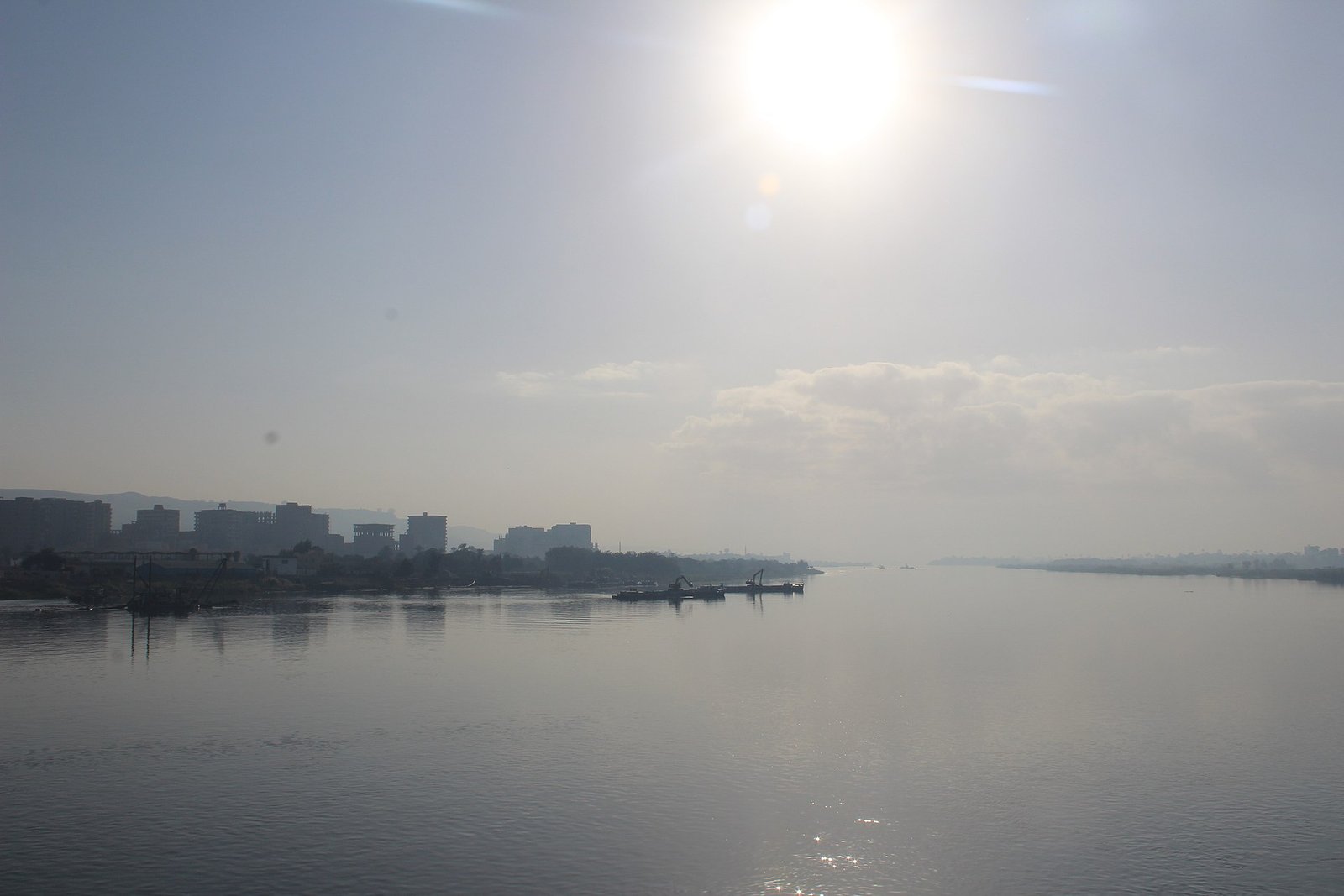
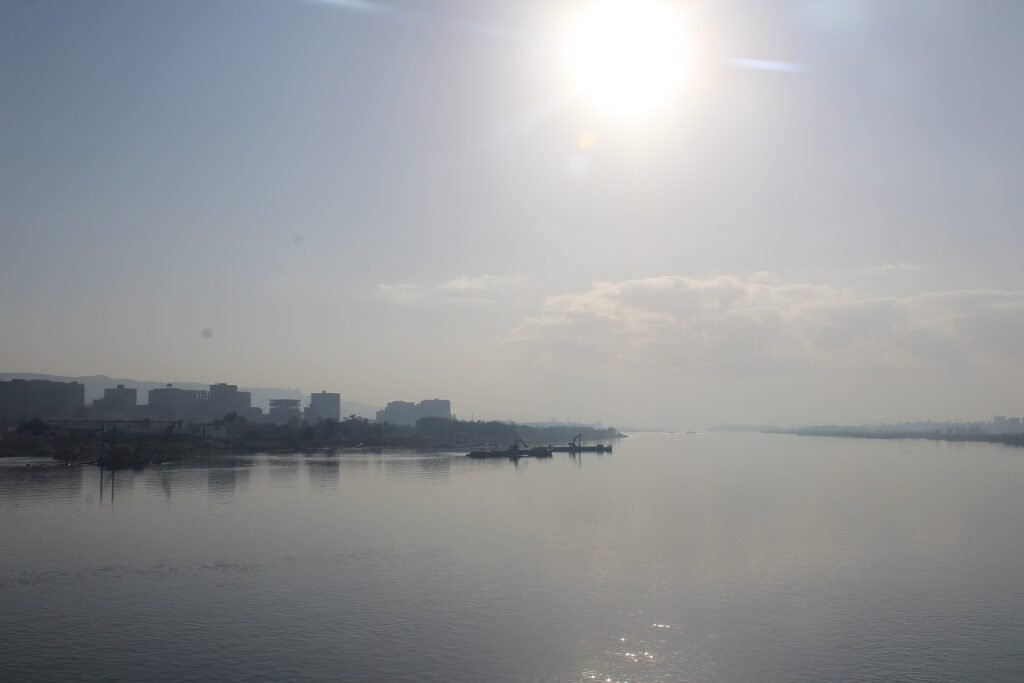
You will sleep in Minya, so give the city an evening. The corniche runs for a couple of miles along the west bank, and at sunset it fills with families, students and boys selling roasted corn. There is nothing to buy and nothing to do, which is the point, with the eastern cliffs turning pink across the water.
North of the city on the east bank, near Tihna el Gebel, are the Fraser tombs, sometimes spelled Frazer, a small group of Old Kingdom rock tombs named for the British engineer who recorded them in the 1890s. They are the oldest decorated tombs in the region, with statues of the owners cut straight from the rock. Few guides bother with them, which is exactly why you should ask.
South of the city you pass Zawyet el Maiyitin, miles of domed mud brick tombs with an Old Kingdom step pyramid behind them. Further on, Deir el Bersha holds the tomb of Djehutihotep, with its famous relief of 172 men hauling a colossal statue on a sledge; access depends on the excavation season. Across from Mallawi, the flattened Roman city of Antinoopolis is a short stop on the way to Amarna.
The practicalities nobody writes down
The road from Cairo
Minya is about 150 miles (245 km) south of Cairo, roughly four hours by private car on the desert highway with one stop. Trains also run from Cairo in three to four hours, with your car and guide waiting at the station.
The escort question
For years foreign visitors in Middle Egypt were accompanied by police vehicles, and older guidebooks describe it. That has relaxed a great deal, but checkpoints remain on the main roads and at the turnoffs to the sites, and on some days a local officer still rides along. For you it means carrying your actual passport, not a copy, and accepting that a stop may add fifteen minutes. It is routine and courteous, not a sign of trouble.
Sleeping in Minya
Hotel choice is limited: a couple of larger hotels near the Nile and a handful of simpler places in town. Rooms are clean, staff are kind, English is thin. One night covers Beni Hasan and Tuna el Gebel; two nights lets you do Amarna properly.
Small things that matter
- Carry cash. ATMs exist in Minya and Mallawi, not at the sites, and cards are rarely accepted.
- Restaurants are local and good, with menus in Arabic. Your guide orders.
- Hat, sunscreen, sturdy shoes. Beni Hasan is a climb and Amarna is loose sand.
When to go
Middle Egypt is inland with none of the coast's moderation. Summer regularly passes 104 F (40 C) with no shade at the sites, so we do not run it from June through August. From November to March daytime highs sit around 68 to 77 F (20 to 25 C) and the low light flatters the reliefs at Beni Hasan. October and April are workable. The wider picture is in our guide to the best time to visit Egypt.
Who this trip suits, and who should skip it
Skip it if this is your first time in Egypt and you have a week or less; dropping Karnak to see Hermopolis would be a mistake. Skip it too if you need four-star comfort every night or if bumpy tracks and checkpoints will spoil your mood.
Come if any of these describe you:
- You are on a second trip to Egypt and want new ground rather than a repeat of the cruise.
- You read about Akhenaten and Nefertiti as a teenager and never let it go. Amarna is the pilgrimage.
- You care more about paintings and reliefs than about scale, and you want them without a crowd.
- You have three weeks and want to travel the whole valley by land. Our three week Egypt itinerary shows where it fits.
- You are a photographer. Empty sites, low winter light and guards who open shutters for you.
Expect a slower, quieter Egypt with a few rough edges. For the right person it is the best two days of the whole trip.
How to slot Middle Egypt between Cairo and Luxor
There are two sensible ways to build it.
| Option | Shape | Best for | Trade-off |
|---|---|---|---|
| Out and back from Cairo | Cairo to Minya, 1 or 2 nights, all four main sites, back to Cairo, then a domestic flight to Luxor or Aswan | Travelers who want Middle Egypt without a long southern drive | You return north before flying south, so it costs an extra day |
| Overland Cairo to Luxor | Cairo to Minya (1 night), Amarna and Tuna el Gebel on the way south, then a night in Sohag or a long day via Abydos and Dendera into Luxor | People with time who want the whole valley and Abydos | Two long driving days; Minya to Luxor is about 280 miles (450 km) |
We recommend the overland option when the calendar allows, because the road south delivers Abydos and Dendera on the way in. Otherwise the out-and-back with a domestic flight from Cairo to Luxor keeps the rest of the itinerary intact.
The natural rhythm is Beni Hasan on the afternoon you arrive, a full day at Amarna, and Tuna el Gebel with Hermopolis on the morning you leave. Two days means dropping either the Royal Tomb or Hermopolis. We would rather add a night than rush Amarna.
How Explora Egipto runs Middle Egypt
We are a local agency in Egypt with our own vehicles and Egyptologist guides, and we run Middle Egypt for individuals and small private groups, never in a bus.
- A private air-conditioned car with a driver who knows the Minya checkpoints and the Amarna tracks.
- An Egyptologist guide with a real interest in the Middle Kingdom and Amarna, because a Luxor-only guide will not do these sites justice.
- A hotel in Minya chosen for cleanliness, a Nile location and reliable hot water.
- Site access checked that week, with the days reordered so you never lose a site to a closed gate.
- Combined with the classics if you want them: Cairo and Giza before, a Nile cruise or Luxor and Aswan after, one plan and one contact on WhatsApp.
There is no fixed package for this region because every route differs: one night or two, out-and-back or overland, Abydos or not. Tell us your dates and what you have seen, and we send you a day-by-day plan and the quote. Our custom Egypt tour page explains how we build a trip from scratch.
Frequently asked questions
Is Minya worth visiting?
For a second trip, or for anyone with a real interest in Egyptology, yes without hesitation. Beni Hasan, Amarna and Tuna el Gebel are first-rank sites and you will have them almost to yourself. For a first visit with a week or less, no: spend the time in Cairo, Luxor and Aswan and come back for Minya later.
How far is Minya from Cairo and how do you get there?
About 150 miles (245 km), roughly four hours by private car on the desert highway or three to four hours by train. We normally drive, because the car then continues to the sites, but the train works if you prefer, with your driver and guide meeting you at Minya station. Minya to Luxor overland is about 280 miles (450 km).
Is Middle Egypt safe for tourists?
It is quiet and welcoming, and the old restrictions on foreign visitors have eased a great deal. Police checkpoints remain on the roads and an officer occasionally accompanies vehicles near the sites. Our drivers handle this daily. Carry your passport, follow your guide's lead on photographs at checkpoints, and you will find Minya one of the friendliest places on the Nile.
Can you see Tell el Amarna in one day?
The visitor center, the northern tombs, one boundary stela and the North Palace fit in a long half day. Add the Royal Tomb, a slow drive up the Royal Wadi, and the southern tombs, and it becomes a full day. If Akhenaten and Nefertiti are the reason you came, give it the full day and sleep two nights in Minya.
What is special about the Beni Hasan tombs?
They are painted rather than carved, they are Middle Kingdom, which is rare, and they show daily life instead of the afterlife: wrestling, weaving, hunting, dancing and a caravan of traders arriving from Canaan. The wrestling walls in the tombs of Baqet III and Khety, with hundreds of paired figures, are unique in Egyptian art.
Can Middle Egypt be combined with a Nile cruise?
Yes, and it is the combination we recommend most. Do Cairo first, then Middle Egypt with one or two nights in Minya, then continue to Luxor by road or by a domestic flight from Cairo, and board the cruise there for Aswan. You arrive in Luxor understanding the Amarna period that Karnak tried to erase.
See the Egypt that the itineraries fly over
Tell us your dates, what you have already seen and whether you want to return to Cairo or continue south to Luxor. We come back with a day-by-day Middle Egypt plan, the hotel in Minya, the guide who knows Amarna, and the quote, all on WhatsApp.