What to see in Egypt on a first trip comes down to one line along the Nile and two detours. The line is Cairo and Giza in the north, Luxor in the middle, and Aswan with Abu Simbel in the south, joined by a cruise that stops at Esna, Edfu and Kom Ombo. The detours are Alexandria on the Mediterranean and the Red Sea at Hurghada or in Sinai. Everything else, the White Desert, Siwa, Minya and the Fayoum, is a reward for a third week or a second trip. Ten to twelve days covers the line with one detour. Below is every region, the days it takes, which trip length includes it, and what to skip the first time.
Egypt is not a country you visit city by city. It is a river with a desert on either side, and almost everything worth seeing sits within a few miles of the water. The ancient sites line up like beads: Giza and Saqqara at the top, Minya and Amarna in the middle, Luxor further south, then Edfu, Kom Ombo, Aswan and finally Abu Simbel near the Sudanese border.
The coasts are separate worlds. Alexandria faces the Mediterranean and belongs to a Greek, Roman and modern Egypt. The Red Sea and Sinai are about reefs and warm water, not pharaohs. The Western Desert oases are a third Egypt, remote and slow.
The most common first-trip mistake is spending the whole time in Cairo. The pyramids are there, but the temples and painted tombs that make people fall in love with the country are in Luxor and Aswan. So this guide moves down the river first, then out to the coasts, then to the places that only make sense once you have done the classics.
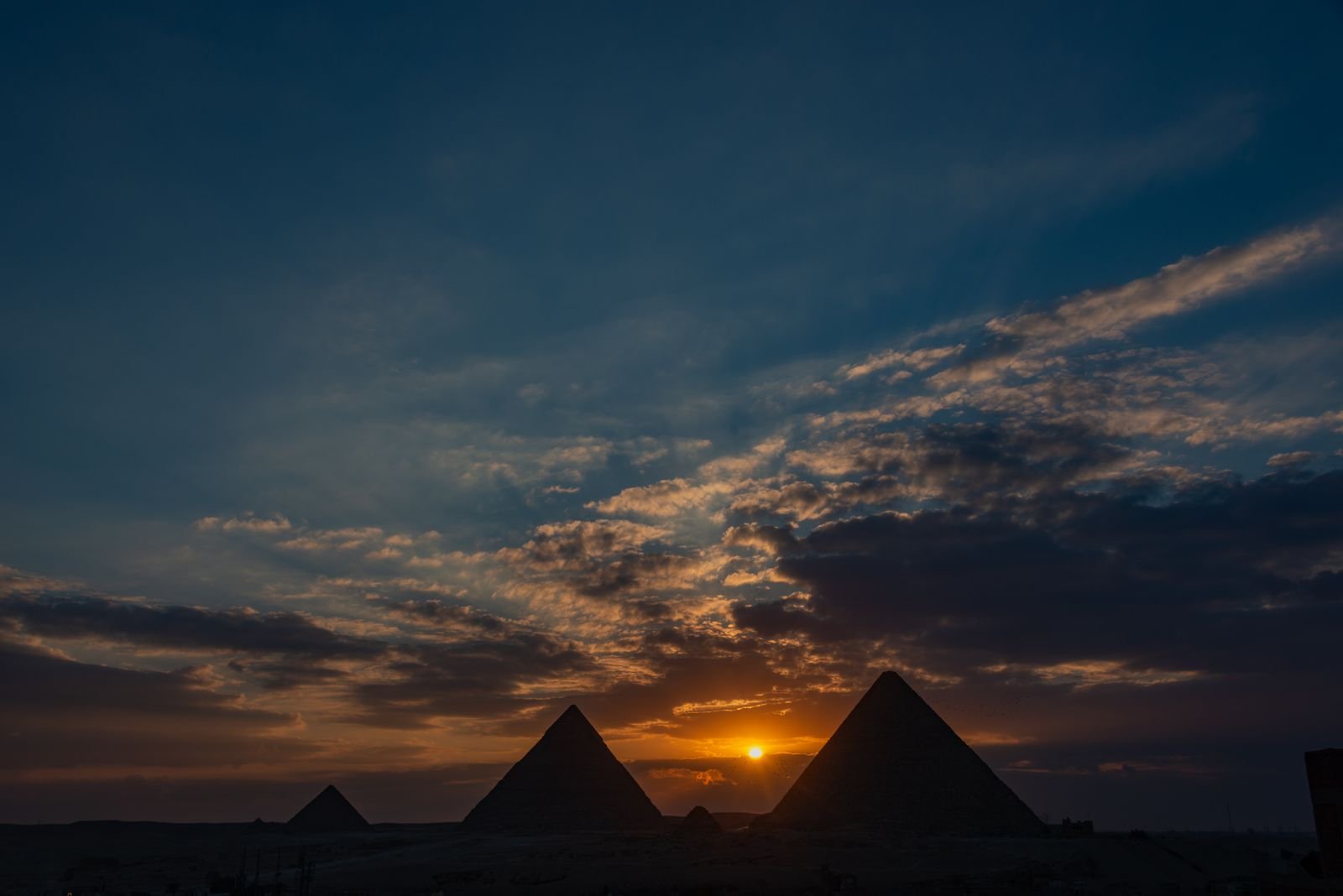
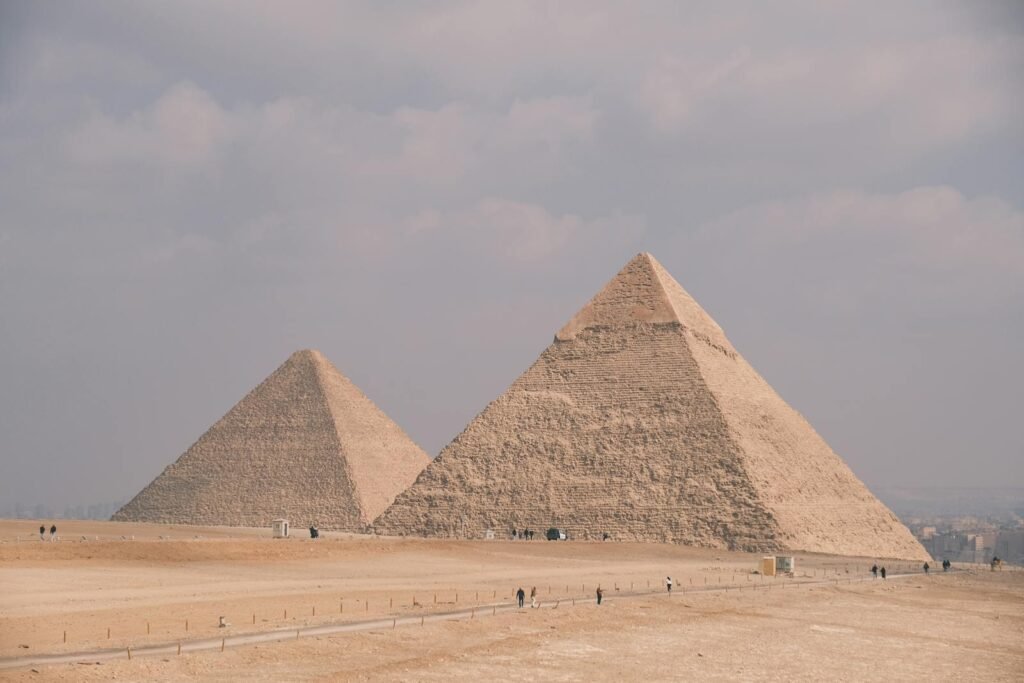
Every trip starts here and two full days is the right amount. Day one is the Giza plateau: the three pyramids of Khufu, Khafre and Menkaure, the Sphinx, and the Grand Egyptian Museum next door, where the complete Tutankhamun collection is displayed together for the first time. Go to the plateau at opening time, before the buses and the heat arrive.
Day two is the city itself. The Egyptian Museum on Tahrir Square still holds thousands of pieces, the Citadel of Saladin gives you the skyline and the alabaster mosque, Coptic Cairo is the quiet Christian quarter with the Hanging Church, and Khan el Khalili is the bazaar where you finish with mint tea at El Fishawy. Our full breakdown is in what to see in Cairo.
With a third morning, drive south to Saqqara and Dahshur. Saqqara is the Step Pyramid of Djoser, the oldest large stone building on earth, plus tombs with reliefs so fresh they look painted last year. Dahshur has the Bent Pyramid and the Red Pyramid, which you can enter with almost nobody around. Most first-timers skip this pair and regret it; it is the best half-day in the north.
Alexandria is a day trip from Cairo, about three hours each way by road, and it is a change of air more than a set of monuments. The catacombs of Kom el Shoqafa mix Egyptian and Roman styles underground, Pompey's Pillar stands over the ruins of the Serapeum, the Qaitbay fort sits where the ancient lighthouse stood, and the Bibliotheca Alexandrina is worth an hour for the reading room alone. Then you eat fish on the Corniche and drive back.
Is it worth a day of a short trip? On a week, no; the same day buys you Saqqara and Dahshur or a second day in Luxor, both better. On ten days or more, yes, especially if you like cities with a European feel. Our detailed guide to Alexandria covers the order to see things in and where to eat.
Luxor is ancient Thebes and it holds more standing temples and painted tombs than anywhere else in the country. The river divides it into two days that do not overlap.
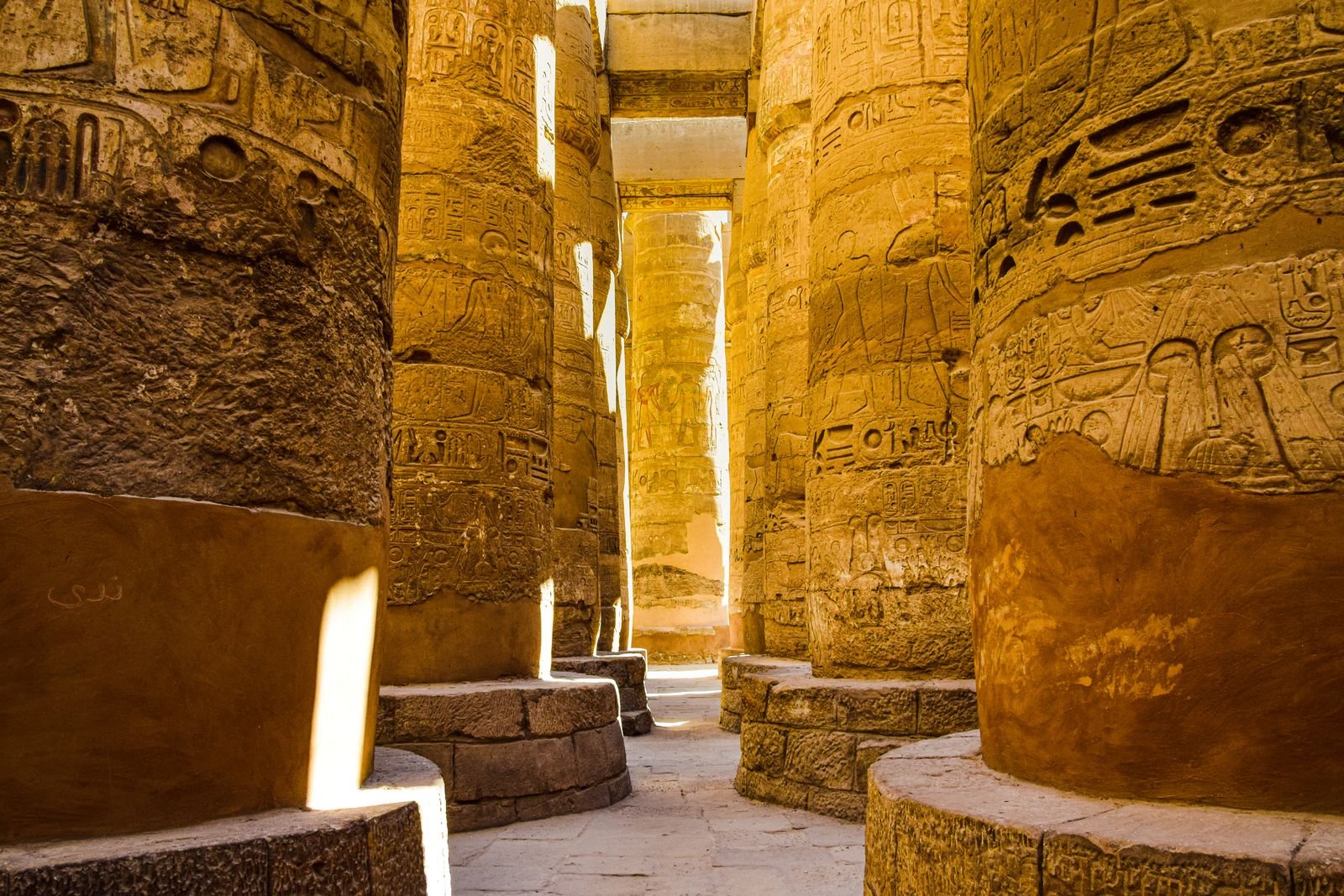
The east bank is the city of the living. Karnak is the largest religious complex ever built, a mile of pylons, obelisks and the Great Hypostyle Hall with its 134 columns, added to by pharaohs for about fifteen centuries. Luxor Temple is in the middle of town and is at its best after dark, when the columns are lit and the restored Avenue of Sphinxes runs toward Karnak. Karnak in the morning, Luxor Temple at night, is the right order.
The west bank is the city of the dead. The Valley of the Kings holds the New Kingdom pharaohs, and the colors inside the tombs of Ramesses VI or Seti I are as bright as the day they were painted. Hatshepsut's terraced temple sits below the cliffs, the Colossi of Memnon stand alone in a field, and Medinet Habu is the temple most visitors miss and most guides love.
Give Luxor two full days, and a hot air balloon at dawn if you can face the alarm. Everything, with the tomb choices explained, is in what to see in Luxor.
Between Luxor and Aswan the river passes three temples that are awkward by road and effortless by boat. This is why the cruise exists. You sleep on the water and wake up tied to a quay with the temple a short walk away.
Esna is the lock and the small temple of Khnum, sunk below street level in the town, with a ceiling recently cleaned back to its original colors. Edfu is the temple of Horus, the best preserved in Egypt because sand buried it for centuries; you walk in under a complete pylon into halls with the roof still on. Kom Ombo is the double temple, half for Sobek the crocodile god and half for Horus, with a small museum of mummified crocodiles beside it, usually reached in late afternoon light.
A standard cruise takes four nights from Luxor to Aswan or three the other way, and the direction matters less than people think. A dahabiya, the sailing boat with a handful of cabins, does the same stretch more slowly. Either way, the cruise is the part of the trip people remember most, and the one we would never cut.
Aswan is where the Nile is widest and bluest, and it is the most relaxed city in Egypt. The sights are spread over water: Philae, the temple of Isis, moved stone by stone to Agilkia island and reached by motorboat; the High Dam, which explains why Philae and Abu Simbel had to move; the Unfinished Obelisk, still lying in its granite quarry. A felucca sail at sunset and a Nubian village with painted houses are the evening.
Abu Simbel is a separate day and the reason many people come to Egypt at all. The four seated colossi of Ramesses II, each about 65 feet tall, were cut out of the cliff and reassembled on higher ground when Lake Nasser rose. Beside it is the smaller temple of Nefertari. It is about three hours by road from Aswan on an early convoy, or a short domestic flight; both are covered in our guide to visiting Abu Simbel.
Two days in Aswan is right, one for the city and one for Abu Simbel. The full list is in what to see in Aswan.
After a week of temples, most travelers want the sea, and the Red Sea coast is a few hours from Luxor. The water is warm year round and the reefs start a few yards from shore.
Hurghada is the practical choice: an airport with domestic connections, dozens of hotels, day boats to Giftun Island and Orange Bay, and a road link to Luxor, so you can go from the Valley of the Kings to the beach in an afternoon. It is the one we build into most itineraries; see what to see in Hurghada for the snorkeling spots and boat trips worth taking.
El Gouna, twenty minutes north, is a planned lagoon town with canals and a marina, quieter and more polished, good for couples. Marsa Alam, three hours south, is where the reefs are wildest: dugongs at Abu Dabbab, spinner dolphins at Samadai, the Elphinstone wall for experienced divers. It is remote and that is the point; our Marsa Alam guide explains who it suits.
Summer highs here pass 40C (104F), but the sea makes it far more bearable than Luxor in the same months.
Sinai is the other Red Sea, across the gulf from Hurghada and different in character. Sharm el Sheikh is the big resort, with Ras Mohammed national park at its tip, the Straits of Tiran offshore and the Thistlegorm wreck for divers. Dahab, an hour north, is the opposite: a low-rise town of beach cafes, a Bedouin feel, and shore diving straight from the promenade at the Blue Hole. It is the right choice if resorts bore you.
Inland, St Catherine's Monastery sits at the foot of Mount Sinai, a working Orthodox monastery since the sixth century. Most visitors climb the mountain in the dark for sunrise from the summit, then visit the monastery when it opens. It is a long night and a strong memory.
The trade-off with Sinai is connections. It pairs easily with Cairo and awkwardly with Luxor, so on a first trip we usually put the beach days in Hurghada and save Sinai for a return visit.
West of the Nile is the Sahara, and two trips into it are worth planning around. The first is the White Desert, reached through the Bahariya oasis about five hours from Cairo. You drive out in a 4x4, pass the Black Desert and the Crystal Mountain, and camp under chalk formations shaped like mushrooms and icebergs, glowing at sunset and again under the moon. Two days and one night is the minimum and it is one of the best nights in the country.
The second is Siwa, near the Libyan border, a Berber oasis with its own language, the mud-brick fortress of Shali, the Oracle temple where Alexander the Great was declared a son of Amun, and salt lakes you float in. It is roughly nine hours by road from Cairo, so you need three or four days for it to make sense.
Neither belongs on a first trip of under two weeks; both belong on a third week or a second visit. Desert nights drop to around 5C (41F) even in spring, so pack a proper layer.
Between Cairo and Luxor the river passes a stretch that tourism forgot. Minya is the base for Beni Hasan, Middle Kingdom tombs cut into a cliff with wrestling scenes on the walls, and for Tell el Amarna, the short-lived capital Akhenaten built for his one god. Tuna el Gebel nearby has catacombs of mummified ibises. The sites are extraordinary and you will have them almost to yourself. Allow two days with a private driver.
The Fayoum is closer, about two hours from Cairo, and works as a day trip. Wadi el Rayan has waterfalls in the desert, the pottery village of Tunis is the crafts stop, and Wadi el Hitan, Whale Valley, is a World Heritage site where forty-million-year-old whale skeletons lie in the sand. It is a fine way to use a spare Cairo day once you have seen Saqqara.
This is the table we use when someone tells us how many days they have, counting days on the ground only.
| Region | Days needed | Included from | First trip? |
|---|---|---|---|
| Cairo and Giza | 2 | 5 days | Always |
| Saqqara and Dahshur | Half day | 7 days | Yes, if you can |
| Luxor, both banks | 2 | 5 days | Always |
| Nile cruise stops | 3 to 4 nights | 7 days | Always |
| Aswan and Philae | 1 | 7 days | Always |
| Abu Simbel | 1 | 8 days | Yes |
| Alexandria | 1 | 10 days | Optional |
| Red Sea, Hurghada or El Gouna | 3 to 4 | 10 days | Optional |
| Marsa Alam | 4 to 5 | 14 days | Second trip |
| Sinai, Sharm and Dahab | 4 to 5 | 14 days | Second trip |
| St Catherine and Mount Sinai | 1 night | 14 days | Second trip |
| White Desert via Bahariya | 2 | 15 days | Third week |
| Siwa | 3 to 4 | 21 days | Third week |
| Minya and Amarna | 2 | 21 days | Third week |
| The Fayoum | 1 | 12 days | Optional |
Read it from the top. Five days gives you Cairo and Luxor. Seven adds the cruise and Aswan. Eight to ten adds Abu Simbel and a beach or Alexandria. Two weeks fits Sinai or Marsa Alam properly. Three weeks is when the desert and Middle Egypt come in, and our Egypt in 3 weeks itinerary shows how they fit around the classics.
The route that works, in this order, is Cairo, a domestic flight to Luxor, the cruise south to Aswan, Abu Simbel, then a flight back to Cairo or a road transfer to Hurghada for the beach. It flows one way, you never unpack twice for the same city, and the temples get bigger as you go. Ten to twelve days does it comfortably.
What to skip the first time:
What not to skip, even on five days: Giza, Karnak, the Valley of the Kings. On seven, the cruise and Abu Simbel, because those are the two things people who cut them go back for.
We are a local agency in Egypt with our own guides and vehicles, and every trip on this page is built the same way. You tell us your dates, your days on the ground, and which regions from the table you want. We come back with a day-by-day plan: which day is Giza, which flight takes you to Luxor, which boat you are on, and where the beach days fall.
An Egyptologist guide is with you at every site along the Nile, transfers are private, and the cruise, hotels and domestic flights are matched so nothing overlaps. Nothing on this page carries a price; the quote depends on the season, the boat and the hotel category, so ask us for the quote and we send it back with the itinerary attached.
The Giza pyramids and the Grand Egyptian Museum, Karnak and the Valley of the Kings in Luxor, the cruise temples of Edfu and Kom Ombo, Philae in Aswan, and Abu Simbel. Those seven make the classic route and fit into eight to ten days. Add Saqqara with a spare Cairo morning and Hurghada if you want a beach at the end.
Seven days covers Cairo, Luxor, the cruise and Aswan without rushing. Ten days adds Abu Simbel and either Alexandria or three beach days. Fourteen lets you do Sinai or Marsa Alam properly. Three weeks brings in the White Desert, Siwa and Middle Egypt. Under five days, stay with Cairo and Luxor.
You can drive Luxor to Aswan in a day and stop at Edfu and Kom Ombo, but you lose the part that makes the trip: waking up on the river, slow afternoons on deck, arriving at each temple rested. The cruise also replaces two hotel changes and every road transfer between them. For almost everyone it is the best nights of the trip.
Hurghada if you are coming from Luxor, because it is a few hours by road and the beach follows the temples without a flight. Sinai if the trip is Cairo plus beach, if you are a diver who wants Ras Mohammed and the Thistlegorm, or if Dahab appeals more than a resort. On a first trip that includes the Nile, Hurghada wins on logistics.
On a trip of ten days or more, yes. The catacombs, the Qaitbay fort, the library and a fish lunch on the Corniche make a good long day and a real change of atmosphere. On a week or less, no; the same day is better spent at Saqqara and Dahshur or as a second day in Luxor, both closer to why you came.
October to April for the Nile sites, when Luxor and Aswan are warm rather than punishing. December and January are the busiest weeks; November and February are the sweet spot. The Red Sea works year round. The White Desert and Siwa are best from November to March, and the Mount Sinai summit is cold in any month, so pack a jacket.
Send us your dates, your days on the ground and which parts of this page caught your eye, and we come back with a day-by-day itinerary that follows the river in the right order, with the cruise, the guides and the domestic flights already matched. Ask us for the quote and it is in your inbox the same day.