The Tombs of the Nobles in Luxor are the quieter, more human half of the west bank
The Tombs of the Nobles in Luxor are the quieter, more human half of the west bank
The Tombs of the Nobles in Luxor are the private tombs of the officials who ran Thebes: viziers, mayors, scribes, priests and overseers, cut into the hillside at Sheikh Abd el Qurna and the slopes around it, a few minutes by car from the Valley of the Kings. Where the royal tombs show the sun god's journey through the underworld, these show life as it was lived: harvests, banquets, fishing trips, a barber at work. Only a handful are open at any one time, tickets are sold by small cluster, and the best of them, Rekhmire, Sennefer, Ramose, Nakht and Menna, take about two hours with a guide. Do them early, before the Valley of the Kings if you can, and never after eleven in summer.
What the Tombs of the Nobles are, and how they differ from the Valley of the Kings
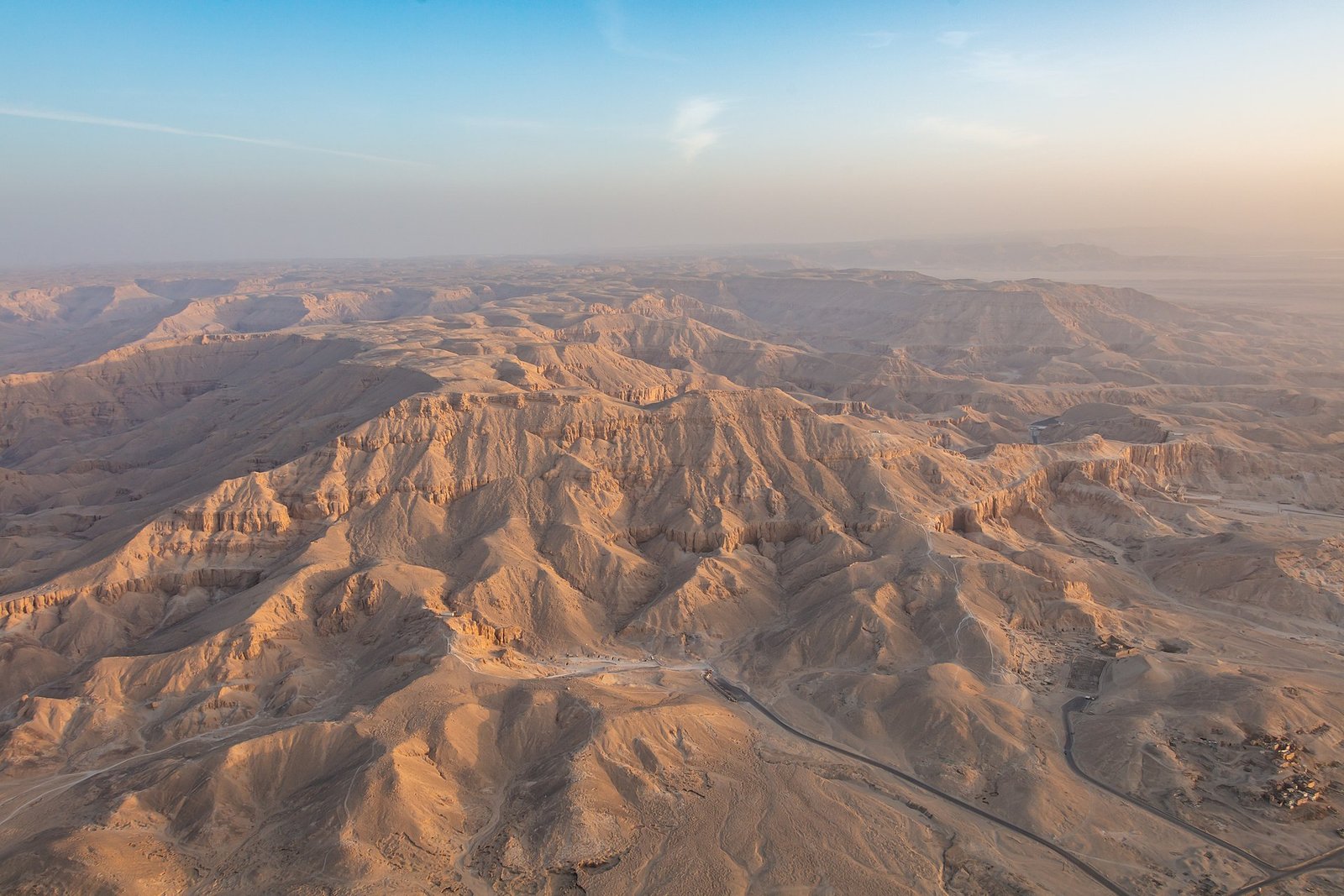
The Valley of the Kings holds the pharaohs of the New Kingdom in a hidden desert wadi behind the cliffs. The Tombs of the Nobles are what the same society built for everyone just below the king: the vizier who ran the country day to day, the mayor of Thebes, the scribe who measured the fields, the priest who carried the god's boat in procession. There are hundreds of them, numbered TT for Theban Tomb, spread over the low hills between the Ramesseum and Deir el Bahari, with Sheikh Abd el Qurna the biggest and best known cluster.
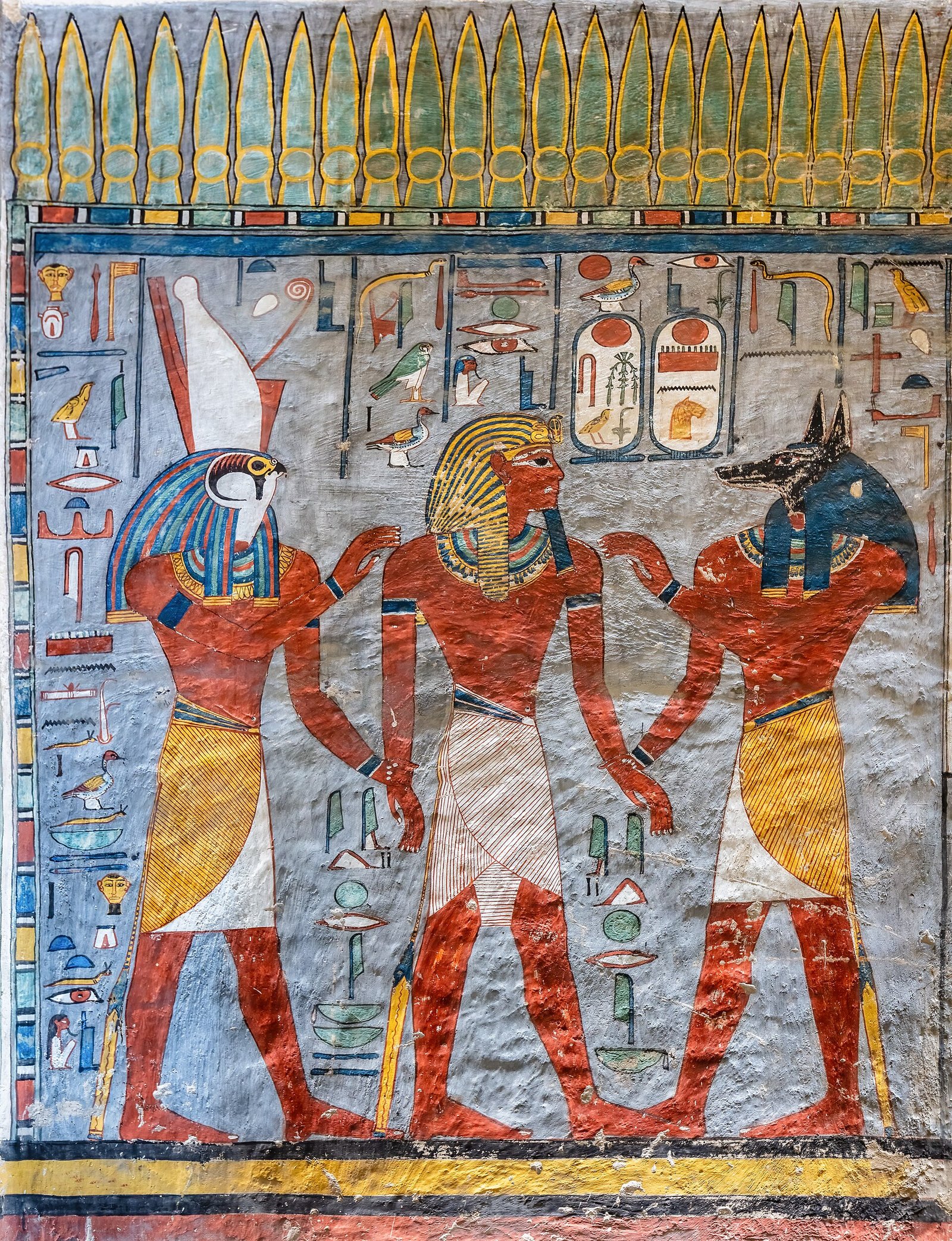
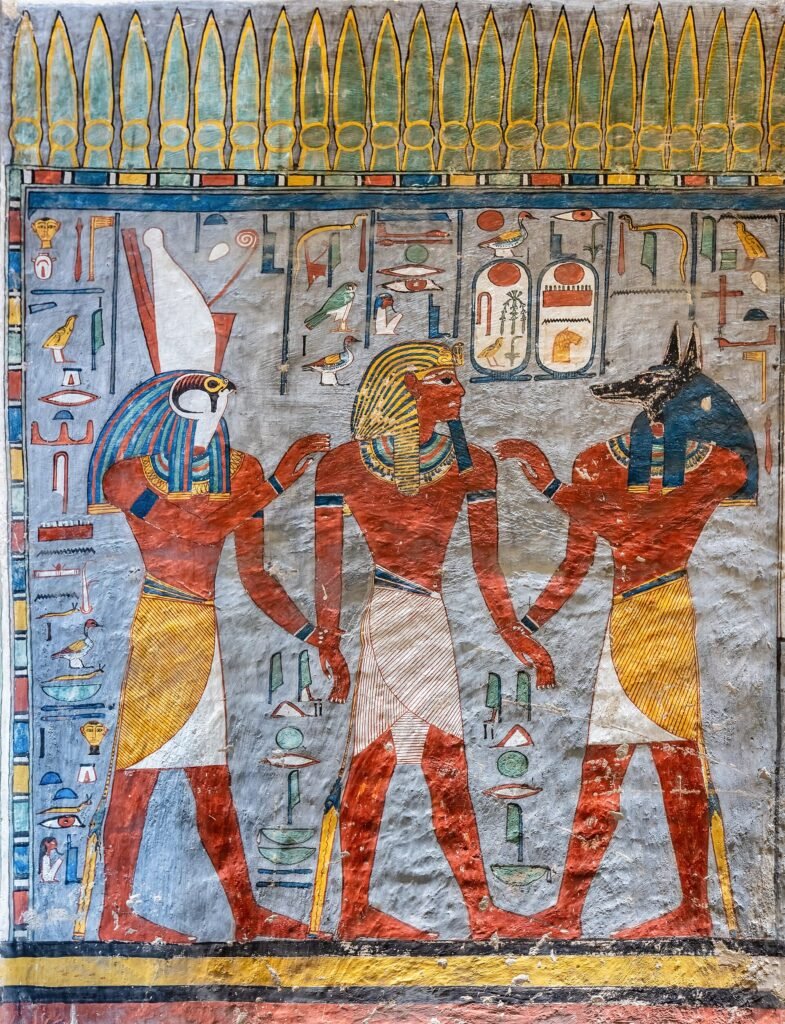
The difference is not only who was buried. A royal tomb is a corridor into the underworld, painted with the Amduat, the Book of Gates and the hours of the night, gods and serpents and the solar boat. It is spectacular and it is not about a person. A noble's tomb is a T-shaped chapel with a courtyard, a wide front hall and a long inner room, and its walls were painted for the family who came back to visit at festivals. So you get the owner inspecting cattle, his wife at a banquet, his sons hunting birds in the marshes, the grape harvest, a girl playing a lute.
For the kings' side of the story, read our guide to the Valley of the Kings tickets and tombs first, then come here. Most of the tombs you will visit date from the Eighteenth Dynasty, the age of Hatshepsut, Thutmose III and Amenhotep III, when Egypt's painters were at their best, and the pigment on these walls is original.
The tombs worth asking for
Which tombs are open changes. Conservation closes some, others reopen after restoration, and the guards do not always follow the list posted the week before. Your guide checks at the ticket office on the morning itself. This is the shortlist we ask for first.
Rekhmire and Sennefer are the pair to insist on. Rekhmire was vizier under Thutmose III and Amenhotep II, and his long inner room, with a ceiling that climbs as you walk in, shows foreign delegations bringing tribute and every craft workshop in Thebes. Sennefer, mayor of the city, lies down a steep stair under a ceiling painted as a vine heavy with grapes, which is why it is called the Tomb of the Vines. Ramose is the unfinished vizier's tomb caught between two art styles; Nakht and Menna are the small scribes' chapels with the harvest and banquet scenes everyone photographs; Userhat, Khonsu and Benia are the quieter extras if the clusters line up.
| Tomb | What to see | Why it is worth it |
|---|---|---|
| Rekhmire | Tribute processions, craft workshops, the rising ceiling | The grandest of the private tombs and the best picture of how the state actually worked |
| Sennefer | The vine ceiling, the couple seated together | The most intimate room on the west bank; you feel like a guest |
| Ramose | Carved relief, the mourners, the Amarna wall | Two art styles in one room, frozen at the moment Egypt changed |
| Nakht | The three musicians, the marsh hunt, the harvest | Small enough to see every brush stroke, famous for good reason |
| Menna | Field surveying, the granary, fishing and fowling | Daily rural life with the detail of a documentary |
| Userhat | The barber, the desert chariot hunt | Movement and humor you do not find in royal tombs |
| Khonsu | Sacred boats of the festival procession | A later, brighter style and a glimpse of Theban religion in action |
| Benia | Rock-cut statues, well preserved offering scenes | Quiet, complete, and usually empty |
Why they are emptier and often more beautiful than the royal tombs
The Valley of the Kings gets every cruise boat and every day tour, because it is the name people know. The Tombs of the Nobles sit on a hillside without a visitor center or a shuttle train, spread along paths that need a guide who knows which door is which. So on most mornings you have a tomb to yourself, with the guard and your guide and nobody else, while in the royal tombs you shuffle forward in a line.
Beauty is a matter of taste, but here is the case. The royal painters worked to a program fixed by theology; the scenes had to be there and had to be in order. The painters of the nobles' chapels were telling the story of a household and had room to play: a cat under a chair stealing a fish, a guest who has had too much wine, a girl fixing another's earring. The scale is human, the walls are close enough to see brush strokes, and the colors survived because the chapels were dry and sealed.
They are also small, which is the other reason people skip them and the reason you should not. Fifteen minutes inside Nakht shows more of everyday Egyptian life than an hour in the Valley.
How tickets work, in general terms
You do not buy a ticket at the tomb door. West bank tickets for the Nobles are sold at the ticket office, and they are sold by cluster: one ticket covers two or three neighboring tombs, so Rekhmire and Sennefer are one ticket, Ramose, Userhat and a neighbor another, Nakht and Menna a third, and so on. Which tombs sit in which cluster changes as tombs open and close, which is another reason the guide buys them and not you.
Decide the clusters in the car before you reach the office; there is no point walking back down the hill for a second ticket. Two clusters make a comfortable morning, three a full one. For how tickets and passes work across the country, see our guide to Egypt monument entrance fees. We never print amounts in a guide because they change without notice; we send the current figures with your quote.
Keep the ticket in your hand; each tomb has its own guard who checks it, even when the doors are a minute apart.
Fitting them into a west bank morning
The classic west bank day is the Valley of the Kings, Hatshepsut's temple, the Colossi of Memnon and, if the group has energy left, Medinet Habu. The Nobles are usually an add-on, which is how they end up cut. Our order for a client who wants them:
- Cross to the west bank at first light, or land from a hot air balloon over Luxor and start from there; the landing fields are about ten minutes from the tombs.
- Nobles first, two clusters, about two hours including the walk. The hillside faces east and the courtyards are in sun early, but the chapels stay cool.
- Valley of the Kings mid-morning, three tombs plus whatever extra ticket you have chosen.
- Hatshepsut's temple, then Medinet Habu, which is shaded on its south side and is the best late-morning temple on the west bank.
- Lunch on the west bank, or back on the boat.
If you only have half a day, Nobles plus Medinet Habu is a better pairing than Nobles plus Hatshepsut; the two share a mood. Our Luxor excursions page lists the day formats, and any of them can be rebuilt around the tombs.
Cruise passengers, one warning: the boat's included west bank tour almost never visits the Nobles. Ask us for a private car and guide for that morning and rejoin the group at lunch. It is one of the most common requests we get from people on a Nile cruise.
Light, the walk between clusters, and photography
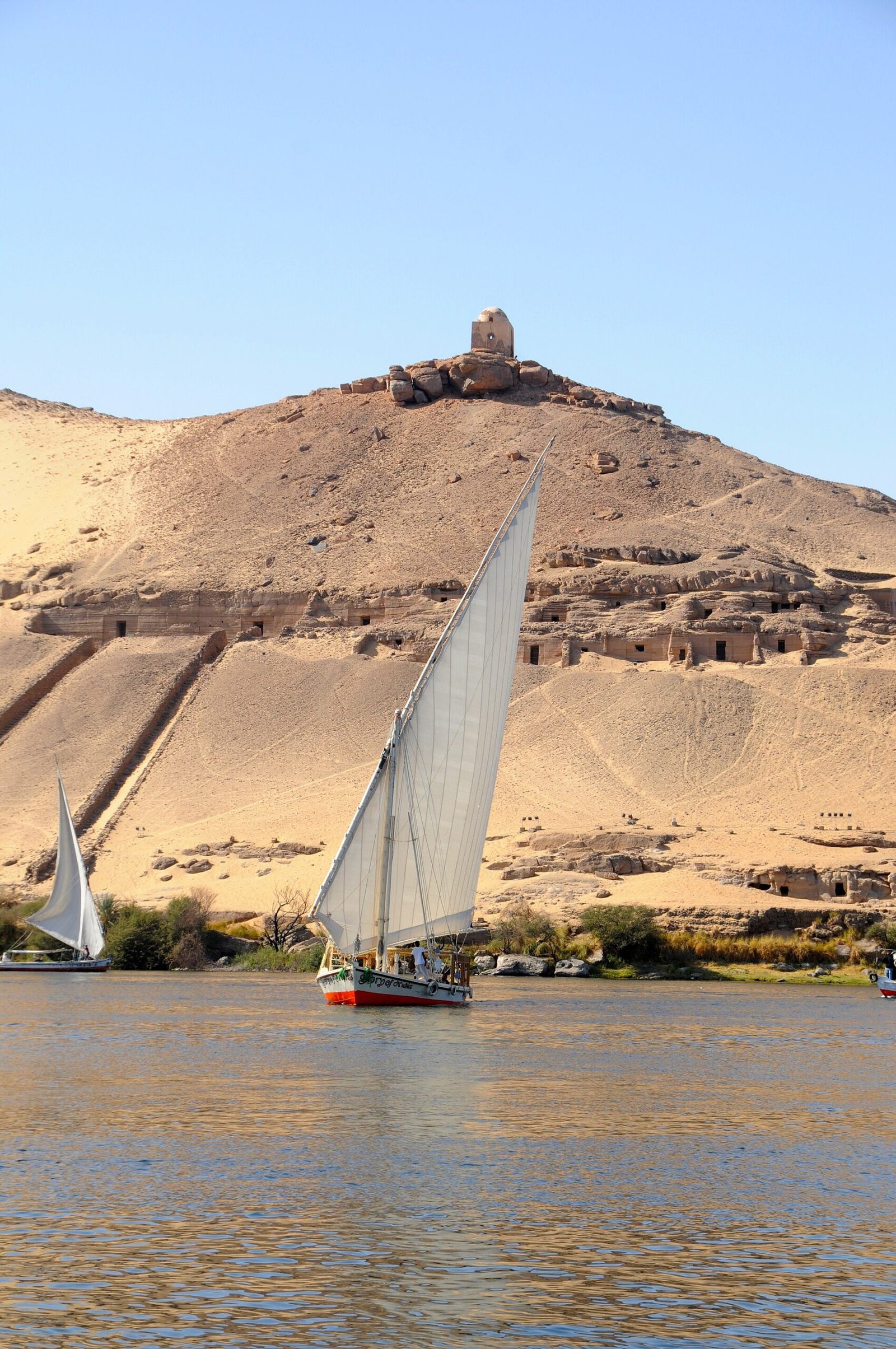
The tombs are entered from courtyards cut into the slope, and the paths between them are packed earth and rough steps. Rekhmire and Sennefer sit low on the hill; Ramose is a short walk across; Nakht and Menna are higher and a little further, perhaps ten minutes at an easy pace with a stop to look back over the plain toward the Ramesseum. Wear shoes with grip.
Inside, the light comes from small fixed lamps and sometimes a mirror that a guard tilts to bounce daylight onto a wall. Bring a small flashlight or hold your phone's light close to the wall at an angle; raking light brings out the brushwork, and the carved relief in Ramose, as the overhead lamps never do.
Photography rules change and are enforced tomb by tomb. The general pattern on the west bank is that flash is never allowed, phones are usually fine, and a camera or a tripod may need a separate photo ticket. Ask before you raise anything, and if a guard waves a hand, put it down. Our photography tips and camera rules guide covers what to expect across Egypt's sites.
Heat and timing, in numbers
Luxor is one of the hottest inhabited places in Egypt. From May through September the west bank reaches 100 F (38 C) by late morning and 104 to 110 F (40 to 43 C) in the afternoon, with almost no shade on the Qurna hillside. Tomb interiors stay cooler, but the walk between clusters is in full sun and the courtyards are stone. In those months the tombs are a dawn visit: on the hill by seven, done by half past nine, and off the west bank by eleven.
October and April are the sweet spots, with mornings in the 60s F (around 18 C) and afternoons in the 80s F (27 to 30 C). December through February mornings can be genuinely cool, close to 50 F (10 C) at sunrise, and you will want a light jacket on the hill and none inside. Winter is also high season, when the Valley is at its most crowded and the Nobles make the best escape.
Whatever the month, carry water, a hat and sunglasses, and leave the bottle outside the chapel door; the guards will watch it.
What a guide adds: reading the scenes
A noble's tomb without a guide is a room of pretty pictures. With one, it is a documentary. The walls follow a logic: the front hall shows the owner's public life, his office and the king he served; the inner room shows the funeral procession and the feast in the afterlife; the far wall or niche holds the statues who receive the offerings. A guide walks you through in that order and stops at the scenes that matter.
Three scenes to ask about:
- The harvest, in Menna and Nakht: plowing with oxen, cutting barley with sickles, a girl pulling a thorn from another girl's foot, surveyors measuring a field with a knotted rope, the scribe recording the yield. It is the Egyptian tax system on a single wall.
- The banquet, in Nakht and Rekhmire: guests in white linen with cones of scented fat on their wigs, a blind harpist, and the three musicians whose lute player turns to glance at the flutist. The guide reads you the song written above them.
- Fishing and fowling, in Menna and Nakht: the owner in a papyrus skiff with a throwing stick, a cat retrieving birds, his wife and daughter along for the day. It is about pleasure, and also about order over chaos.
The hieroglyphs above each figure are captions: names, titles, the words being spoken. A guide who reads them turns a scene into a conversation. If you want to try a few yourself, start with our guide to hieroglyphs and how to read them before you fly down, and read up on the kings these men served in pharaohs, the god kings of the Nile.
Deir el Medina, next door
Behind the Qurnet Murai hill, a few minutes by car from the Nobles, is Deir el Medina, the walled village where the men who cut and painted the royal tombs lived with their families. You can walk the streets between their house foundations, then go into the tombs they built for themselves, the most vivid small tombs in Egypt. Sennedjem's, with its yellow-ground chamber showing the couple farming in the fields of the afterlife, is the one everybody remembers. Inherkhau and Pashedu are the others usually open.
There is also a small Ptolemaic temple to Hathor at the top of the village, quiet and complete. Deir el Medina is its own ticket and its own forty-five minutes, and it pairs naturally with the Nobles as the other half of the same story: the officials on one hill, the craftsmen on the next.
If you have to choose between Deir el Medina and a third cluster of Nobles, choose Deir el Medina; the village has no equivalent anywhere else in Egypt.
The mistakes we see most often
- Arriving after eleven in summer. The hillside is an oven, the guards are dozing, and you will see two tombs at speed and remember neither.
- Doing them after the Valley of the Kings. After three royal tombs you are tired of painted corridors, and the Nobles, which need fresh eyes, get twenty minutes. Reverse the order.
- Skipping the guide to save time. The tombs are unlabeled inside; without someone to read the walls you are standing in a beautiful room with no story.
- Assuming a tomb you read about is open. Sennefer and Ramose have both closed for months of conservation in the past. Ask on the day.
- Missing the view. Turn around in the courtyard of Nakht. The fields, the Ramesseum and the river are exactly what the owner chose to face for eternity.
Tell us your Luxor dates and we will build the morning around the tombs that are open that week.
Frequently asked questions
Are the Tombs of the Nobles included in a normal Luxor west bank tour?
Usually not. The standard west bank day is the Valley of the Kings, Hatshepsut's temple and the Colossi of Memnon, and cruise boat tours follow the same pattern. The Nobles are an add-on you have to ask for, and they need a guide who knows the hillside. Any of our Luxor day formats can be rebuilt around them, and for cruise passengers we arrange a private car and guide for that morning.
How long do the Tombs of the Nobles take?
Two clusters, four or five tombs, take about two hours including the walk between them and a stop for the view. Each tomb is small; fifteen to twenty minutes inside is plenty. Three clusters plus Deir el Medina is a full morning of nearly four hours, fine in winter and too much in summer unless you start at dawn.
If I can only do one, should I choose the Valley of the Kings or the Tombs of the Nobles?
For a first visit to Egypt, the Valley of the Kings; it is the place you came to see and the scale is something you have to experience once. If you have already been, or if you care more about painting and people than about royal theology, the Nobles will give you a better morning, with no crowds and no line. Most of our clients do both, Nobles first, and the contrast is the point.
Can I take photos inside the Tombs of the Nobles?
Rules change and are enforced tomb by tomb, so ask the guard before you lift anything. The usual pattern on the west bank is that flash is never allowed, phones are generally tolerated, and a proper camera or a tripod may require a separate photography ticket bought with the entry. If a guard says no, it is no.
Are the tombs manageable for children or someone with limited mobility?
Partly. Rekhmire and Ramose have level courtyards and short, gentle entries, and both work well for children because the scenes are big and full of animals. Sennefer is reached by a steep, narrow stairway and is not for anyone unsteady on their feet. Nakht and Menna are higher up a rough path. Tell us in advance and we will choose clusters that fit.
Do I need a separate ticket for Deir el Medina?
Yes. Deir el Medina is its own site with its own ticket, bought at the same west bank office, and it covers the village, the workers' tombs that are open that day and the small Ptolemaic temple of Hathor. It is a short drive from the Nobles and the two combine well in a single morning. We send the current figures with your quote.
See the walls the officials of Thebes painted for themselves
Write to us with your Luxor dates and we will tell you which noble tombs are open that week, build the morning so you reach the hill before the heat, and pair it with the Valley of the Kings or Deir el Medina. A guide who reads the scenes, a car at the bottom of the path, and the quote the same day.