
A honeymoon Nile cruise is decided by the ship, the cabin and the month, not by the itinerary
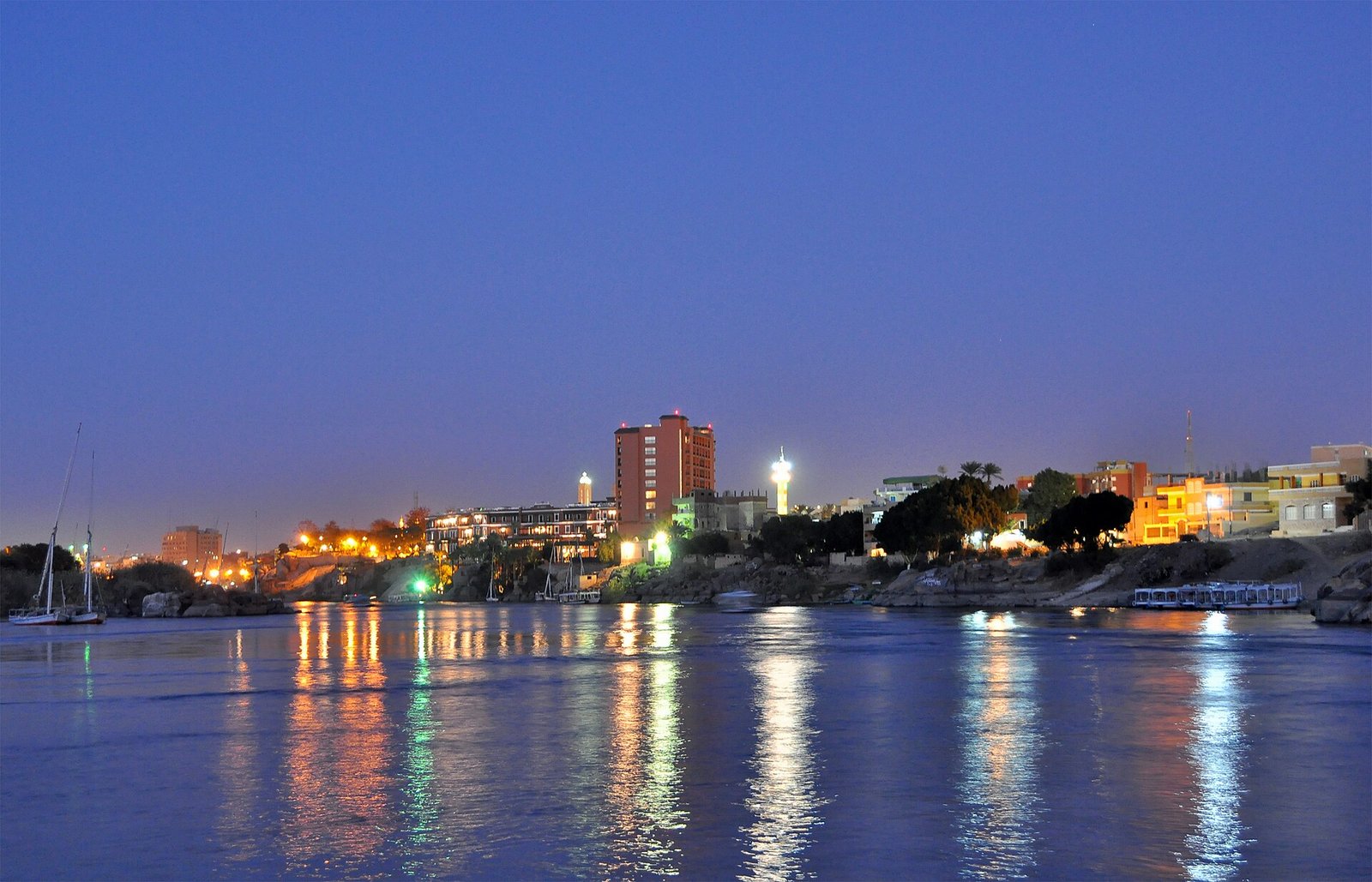
A honeymoon Nile cruise is decided by the ship, the cabin and the month, not by the itinerary
For a honeymoon Nile cruise the decision that matters is the ship. A dahabiya gives you silence, a dozen guests, sail power and private stops the big ships cannot reach. A 5 star ship gives you a pool, a spa, a big top deck and a schedule written for groups. Most couples we book are happier on a dahabiya or a small boutique ship, in an upper deck cabin away from the engine, for seven nights rather than three, with a private Egyptologist instead of a shared bus, sailing between late October and early April. Below: the ship comparison, the cabins to request, the touches ships really deliver, and the mistakes that turn a honeymoon into a timetable.
Dahabiya or 5 star ship: what each one gives a couple
A honeymoon on the river is not about seeing every temple; you will see the main ones on any ship. It is about the hours in between, on deck with nobody talking, watching the bank slide past. The ship that protects those hours best is the right ship for the two of you.
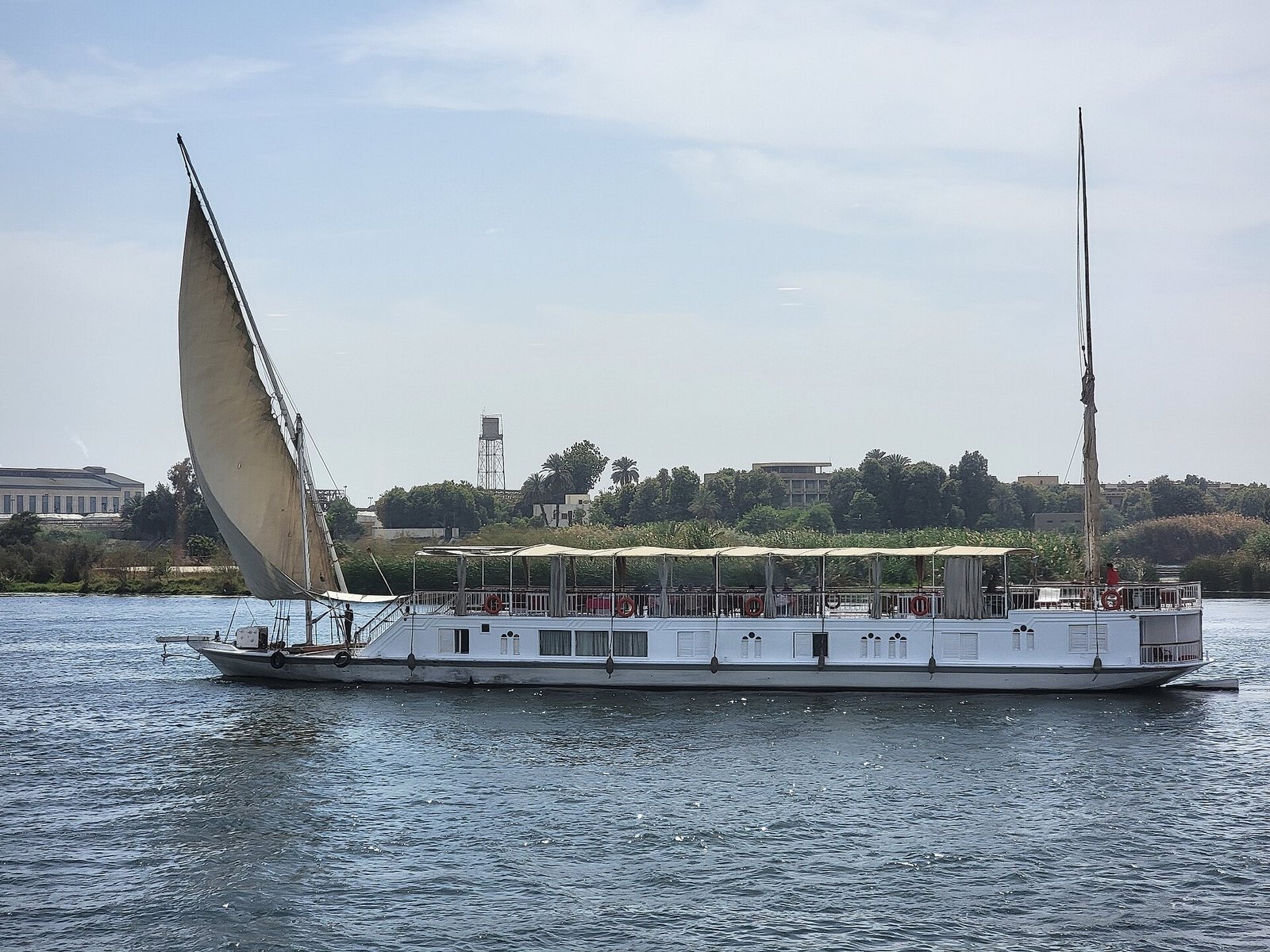
A dahabiya is a two masted sailing houseboat with six to twelve cabins, towed by a small tug when the wind drops. There is no engine under your pillow, no piped music, no evening show. It moors at islands and sandbanks, at the sandstone quarries of Gebel el-Silsila and at villages where the only sound is a water pump. Dinner is on deck. You share the boat with, at most, ten other people.
A 5 star ship is a floating hotel of fifty to seventy cabins with a pool on the top deck, a spa, a bar and a fixed program: temple in the morning, sailing at lunch, galabeya party at night. It gives you space, strong air conditioning, a proper massage and a big sundeck. What it does not give you is quiet. Announcements come over the speakers, the pool deck fills after lunch, and in Luxor and Aswan the ship moors three or four abreast, so your window can look straight into someone else's cabin.
The boutique ship sits between the two: twenty to forty cabins, motor powered so it keeps the standard route, a smaller pool, better food and no forced entertainment. It is the answer for couples who want a pool and a spa but not well over a hundred fellow passengers. Our guide to the types of Nile cruise boats covers the categories in detail; the table below is the honeymoon version.
| What matters on a honeymoon | Dahabiya | 5 star ship | Boutique ship |
|---|---|---|---|
| Guests on board | Six to twelve cabins | Fifty to seventy cabins, full in season | Twenty to forty cabins |
| Noise and privacy | Sail power, no engine hum, no announcements | Engine, generators, speakers, evening shows | Engine, but no shows on most |
| Where it stops | Islands, sandbanks, villages, Gebel el-Silsila, plus the main temples | The main temples only, in ports shared with every other ship | The main temples, sometimes one quieter mooring |
| Pool, spa, top deck | Shaded deck with cushions, a plunge pool on a few | Pool, spa, gym, large sundeck | Small pool, sometimes a spa |
| Meals | Cooked for a dozen people, served on deck, easy to make private | Buffet with set seating times | Restaurant service, flexible tables |
| Guiding | One Egyptologist for the whole boat, effectively semi private | Groups of twenty to thirty unless you add a private guide | Small groups, private guide easy to add |
| Best for | The river itself, silence and slow days | A resort feel, a pool at noon and a spa at night | Comfort without the crowd |
The cabins that matter, and the ones to avoid
On a 5 star or boutique ship the cabin is the second decision after the ship. Deck plans vary, but the same rules hold on almost every hull on the river.
- Ask for the upper deck. Cabins one deck below the sundeck are the quietest and brightest, with the most distance from the engine room. The lower deck sits at the waterline: smaller windows, stuffier air, and engine vibration through the floor.
- Avoid the stern on the lower deck. That is where the engine and generators live. The generator runs all night in port to keep the air conditioning on, and the cabin above it is the one guests ask to leave.
- A suite with a balcony is worth it. Most newer ships have a few suites at the bow or stern of the upper deck with a private balcony, or at least a French balcony you can lean out of. On a honeymoon this is the upgrade we suggest first. While sailing it is the best seat on the ship; in Luxor and Aswan, where ships moor side by side, it may face the next hull for two nights, so spend those evenings on the top deck or on shore.
- On a dahabiya, ask for the stern suite. Most dahabiyas keep their largest cabin at the back, with windows on three sides and a private corner of the deck. The forward cabins are smaller and closer to the crew.
Cabin categories are named differently on every ship, so we send the deck plan with the cabins we mean marked on it. The ships we use most for couples are in our page on the luxury Nile cruise.
Honeymoon touches ships offer, and what to request
Every ship on the river will do something for a honeymoon if it knows about it. The difference between a nice gesture and a memorable one is whether somebody asked in advance, and asked for the right thing.
What most ships offer as standard
- Room decoration on arrival: petals on the bed, towel swans, sometimes fruit and a small cake.
- A table for two set apart from the group tables. On the big ships the default is a shared table of eight.
- A couples treatment in the spa on the 5 star and boutique ships. Book it for a sailing afternoon, not a port day.
What to request specifically
- A private dinner on the top deck. Most ships will lay one table on the sundeck for the two of you on a sailing evening, with a waiter who leaves you alone. On a dahabiya this can be on a sandbank with lanterns.
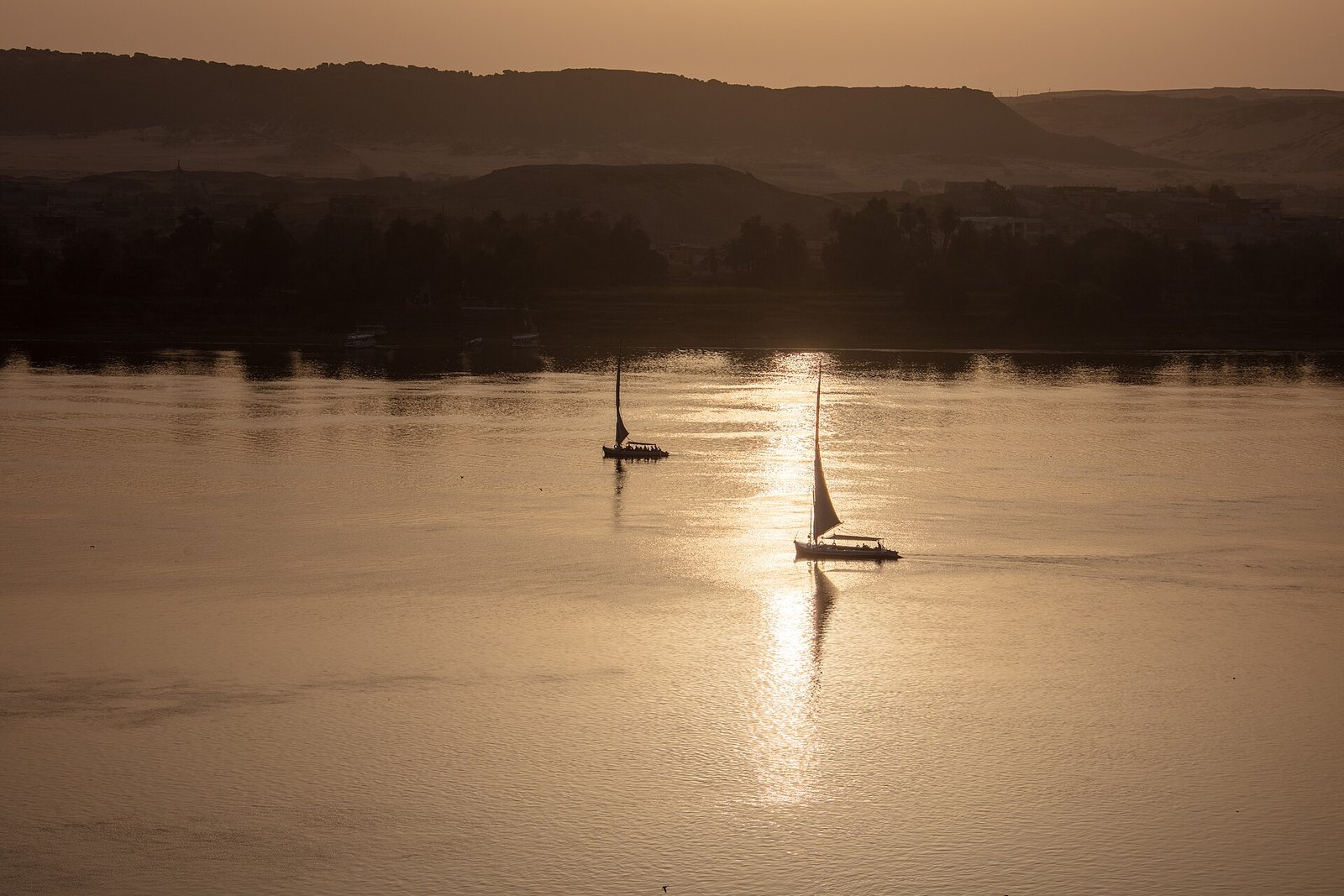
- A felucca at sunset in Aswan. Group programs put twenty people on one felucca for an hour around Elephantine Island. Ask for a private one, two of you and a boatman, sailing late enough to watch the sun drop behind the dunes. It is the hour most couples remember.
- Your cabin number in writing, not a category, confirmed before you travel.
The best months for a couple on the river
The cruising season runs from October to April. Inside it, the right month for a couple is the one where the top deck is usable all day and the temples are not shoulder to shoulder. The full picture is in our guide to the best time to visit Egypt; this is the honeymoon reading of it.
- Late October and November. Our first choice. Afternoons around 80 to 88F (27 to 31C), evenings warm enough to eat on deck in a shirt, crowds lighter than winter. Late November is the sweet spot.
- December and January. The busiest months on the big ships. Days are pleasant at 68 to 75F (20 to 24C), but nights drop to about 48 to 55F (9 to 13C), so the deck after dark needs a jacket and the pool goes unused. Avoid Christmas week and New Year on a group ship.
- February and March. The other sweet spot. Days climb from 75F (24C) to the mid 80s (about 29C), nights soften, and February is quieter than the holidays. Early March can bring a day or two of wind and dust.
- April. Warm for the first half, 88 to 95F (31 to 35C), then hot. Easter week fills the ships again.
- May to September. Highs above 100F (38C), the top deck is empty at noon and temples happen at dawn. A dahabiya in July is a mistake; a 5 star ship with a pool in September works for couples who accept early starts and long siestas.
A 7 night skeleton with slow mornings
On a standard ship, seven nights is the round trip from Luxor to Aswan and back, which sounds repetitive and is actually the point: the return leg has no new temples, so the mornings are yours. On a dahabiya the same week is usually Esna to Aswan one way, with more stops. Our 7 day Nile cruise page has the standard version; this is the honeymoon shape of it.
- Night 1, Luxor. Board in the afternoon, dinner on board, nothing else. Do not let anyone schedule Karnak for your arrival day.
- Night 2, Luxor. The one early start worth making: the Valley of the Kings at opening, before the coaches. Back for a long lunch, then the ship sails south past sugar cane and the Esna lock while you doze on deck.
- Night 3, Edfu. Slow morning, breakfast on deck, Edfu temple in the late morning when the light is in the courtyard. Sail through the afternoon.
- Night 4, Kom Ombo or Gebel el-Silsila. On a dahabiya this is the day you stop where the big ships cannot: the quarry chapels at Silsila and a swim from the sandbank. On a ship it is Kom Ombo at dusk, when the temple is lit and the day trippers have gone.
- Night 5, Aswan. Philae in the morning by boat, siesta, then the private felucca at sunset. Dinner at the deck table.
- Night 6, Aswan. Either the pre dawn run to Abu Simbel, long but worth it once in a lifetime, or a lazy day: the botanical island, a Nubian village for lunch, the spa. Couples split evenly on this and both are right.
- Night 7, sailing north. A full sailing day with no program at all. On a dahabiya, a last mooring at an island and dinner under lanterns.
- Morning 8. Disembark after breakfast. Hatshepsut and the Colossi on the west bank fit here if you skipped them on day two.
Private guide or shared group, and why it matters more on a honeymoon
On a group ship the shore program is a wake up call, a bus, an Egyptologist with a raised umbrella and twenty to thirty people who move at the speed of the slowest and stop at the shops the guide has an arrangement with. It is efficient, and it is why most people come home saying the cruise was "a bit rushed."
A private guide changes the clock, and on a honeymoon the clock is everything. You reach the Valley of the Kings at opening and are back before the group has finished breakfast. You skip the papyrus shop. You spend forty minutes in one tomb because your guide knows which three are worth it, and you leave when you are ready rather than when the umbrella moves.
On a dahabiya the guide is shared with the ten other guests, which in practice feels private. On a 5 star or boutique ship the private guide is an add on, and it is the one we place ahead of the suite if the budget allows only one. Our own guides and vehicles cover Luxor and Aswan. The general questions are in how to choose a Nile cruise; for a honeymoon the short answer is private, always.
Adding the Red Sea or a night in the desert
The Red Sea after the cruise
Hurghada is about four hours by road from Luxor across the Eastern Desert, which makes it the natural end of a Luxor disembarkation. For a couple the choice is not Hurghada town but the resorts either side of it: El Gouna for a small town with lagoons, restaurants and a marina, or Sahl Hasheesh for a quiet bay with adults only hotels and a house reef. Sharm el Sheikh has better diving and is a domestic flight away rather than a drive; our comparison of Hurghada or Sharm el Sheikh weighs it in full. Four nights is enough.
A night in the desert
The desert night that fits a honeymoon is the one that does not cost two travel days. From Aswan, a night in a Nubian guesthouse on the west bank, with dinner on a roof facing the dunes, is the easy version. The White Desert beyond Cairo's oases is the spectacular version, a camp under chalk formations with a sky you will not forget, but it needs two full days from Cairo and a tolerance for a tent. We suggest it for couples who put the desert above the sea.
The mistakes that spoil a honeymoon cruise
- A 3 night cruise with three transfer days. The most common one. A short cruise squeezed between Cairo and the Red Sea means a flight day, a disembarkation day and a drive day around two full days on the water. The transfers outnumber the sailing. Take seven nights, or take four and drop something else.
- A group ship in high season. Christmas week, New Year and Easter on a seventy cabin ship is the least romantic week on the river: full dining room, shared tables, no free lounger, and every temple visited alongside four other coaches. If those are your only dates, that is the moment for a dahabiya.
- Booking on the star rating. "5 star" on the Nile is self declared. A tired ship and a new one carry the same label. Ask for the date of the last refit and photographs of the actual cabin category, not the suite in the brochure.
- Filling every morning. The program will happily give you a temple before breakfast every day. Decline at least two. The river is the honeymoon.
- A dahabiya in summer. No pool and no escape from the heat at noon. If you must sail between May and September, take a ship with a pool.
Avoid those five and the rest, the direction, the operator, the exact ship, is detail we handle. The wider picture is on our Nile cruise page.
Frequently asked questions
Is a dahabiya or a 5 star ship better for a honeymoon?
For most couples, the dahabiya. It is quieter, it carries a dozen people instead of well over a hundred, it moors at sandbanks and islands, and dinner on deck is the default rather than a special request. Choose the 5 star ship if a pool at noon and a spa in the evening matter more than silence, and if so, book the upper deck and a private guide to soften the group program.
Which cabin should we ask for on a Nile cruise ship?
An upper deck cabin, as far from the stern as the deck plan allows, because the engine and generators sit at the back on the lowest deck. If the ship has suites with a real balcony, take one; it is the best seat while sailing. Ask for the cabin number to be confirmed in writing, not just the category, and remember that in port the view may be another ship for a night or two.
What honeymoon extras can a Nile cruise ship arrange?
Room decoration with flowers and a cake on arrival, a table for two instead of a shared table, a couples treatment in the spa on the larger ships, and, if requested ahead, a private dinner on the top deck on a sailing night. Off the ship, the extra that matters most is a private felucca at sunset in Aswan rather than the shared one on the group program. We request all of these when we book.
What is the best month for a honeymoon Nile cruise?
Late October to November and February to March. Both give warm days around 75 to 88F (24 to 31C), evenings you can spend on deck without a coat, and lighter crowds than the December holidays. December and January are pleasant by day but cool at night and the busiest weeks on the big ships. April is hot but workable; May to September is very hot and best avoided on a dahabiya.
How many nights should a honeymoon Nile cruise be?
Seven if the calendar allows, four as the minimum. Seven nights on a standard ship is the round trip Luxor to Aswan and back, which leaves the return leg free of new temples and gives you slow mornings. On a dahabiya seven nights is usually Esna to Aswan one way with more private stops. Three nights is two days on the water surrounded by travel days.
Can we combine the Nile cruise with the Red Sea on a honeymoon?
Yes, and it is the most natural combination. Disembark in Luxor and drive about four hours to the coast, then stay in El Gouna or Sahl Hasheesh rather than Hurghada town for a quieter, more couple friendly stretch of beach. Four nights by the sea is enough. Put the beach last, after Cairo and the cruise, because nothing feels relaxed after it.
Tell us the month and we will tell you the ship
Write to us with your dates and whether you lean towards silence or a pool. We reply with a ship, a marked deck plan, a seven night shape with slow mornings and the felucca already in it, and a quote. We are a local agency in Egypt with our own guides and vehicles, so the cabin request comes from the same people who will meet you on the dock.