Abu Simbel: Tickets, Timing and Getting There
The part that sounds invented
The temples are not where they were built. In the 1960s the Aswan High Dam was going to put this
entire site under the reservoir now called Lake Nasser. So between 1964 and 1968, an international
effort cut both temples into more than a thousand blocks, some weighing over twenty tons, lifted
them roughly sixty meters higher and around two hundred meters back, and reassembled them inside an
artificial mountain built to look like the original cliff.
You can find the joins if you look for them. Most people walk past without noticing, which is the
measure of how well it was done. It remains one of the largest archaeological rescues ever
attempted, and knowing it happened changes how the place feels when you are standing in front of
it.
The sun festival, on two fixed dates
Twice a year, on February 22 and October 22, sunlight travels the full length of
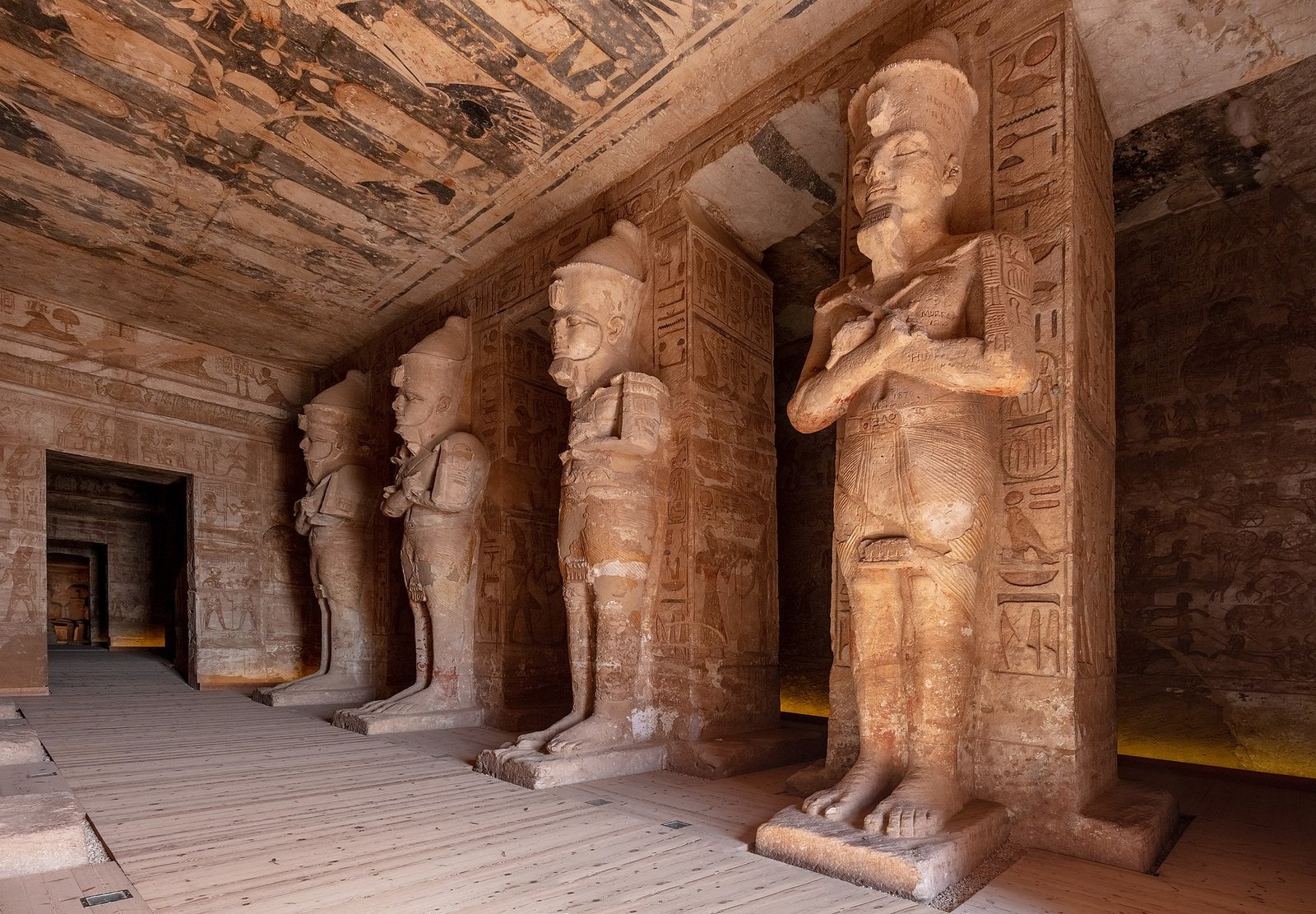
the main temple and lights the statues in the inner sanctuary. Three of the four figures there are
illuminated; the fourth is Ptah, associated with the underworld, who stays in shadow.
These two dates do not move, and they draw a crowd that is large by Abu Simbel standards. If you
want to be there for it, say so early, because it is the one thing on the Egyptian calendar that
genuinely cannot flex. If you do not, those two mornings are the busiest of the year at the
site.
Abu Simbel tickets
As of August 2026, the adult foreign visitor ticket is 822 EGP,
roughly 16 USD. Source: egymonuments.com, the official ticketing platform of
the Egyptian Ministry of Tourism and Antiquities. The pound figure is the real one; the dollar
approximation is at about 50.88EGP to the dollar, and the rate has been moving.
We print this because almost nobody else does. Search what Abu Simbel costs and you get round
numbers with nothing behind them, usually out of date. Our full sourced table for every site on a
normal itinerary is on
Egypt monument entrance fees.
On our itineraries this entry is prepaid and included, so it is a number you can check rather
than one you pay at the gate.
Getting there, which is the real decision
By road from Aswan
organized groups, and departures are early, often before dawn. That sounds punishing and it is
actually the good option: you arrive in the soft early light, before the heat and before the buses
from the later departure.
It makes for a long day. Out very early, a couple of hours at the site, three hours back, and you
are in Aswan by mid afternoon.
By air
day into a few hours instead of most of one, at more cost. Our Abu Simbel itineraries do not
include flights, domestic or international, so if you would rather fly than drive, that
sector is arranged separately and we will tell you honestly which we would choose.
Staying the night
Staying means you see the temples in the late afternoon after the day trippers have left, and again
early the next morning before the convoy arrives. The site is quiet twice instead of crowded once,
and the light at both ends of the day is far better than at midday.
See the day trip from Aswan and the
two-day version with a hotel night.
Weather, and why it decides your timing
Abu Simbel is the hottest part of a normal Egypt itinerary. It sits deep in the south, there is
no shade on the approach, and summer highs regularly clear 105 F (40 C). Between October and April
it is comfortable. In summer it is manageable only very early.
Whatever the month, go in the morning. This is not a site to visit at noon.
How long you need there
Two hours is enough to see both temples properly, including the interiors, without rushing.
People who allow four find it a long wait in the heat. The time cost of Abu Simbel is the travel,
not the visit.
Is it worth it
Honestly, yes, with one condition: give it the time it needs. Squeezed into a schedule that
cannot hold it, the drive turns the best day of the trip into the worst one. That is the most common
planning mistake we see on Egypt itineraries, and it is why we would rather add a day than compress
it. The reasoning is in
how many days you need in Egypt.
Common questions
Can you go inside the temples at Abu Simbel?
carved battle scenes on the walls are among the best preserved anywhere in Egypt.
Can you take photos?
Your guide will tell you what applies on the day.
How far is Abu Simbel from Aswan?
Is Abu Simbel included in a Nile cruise?
normally a separate excursion added at the Aswan end. Check any cruise itinerary rather than
assuming.
Which temple is the smaller one?
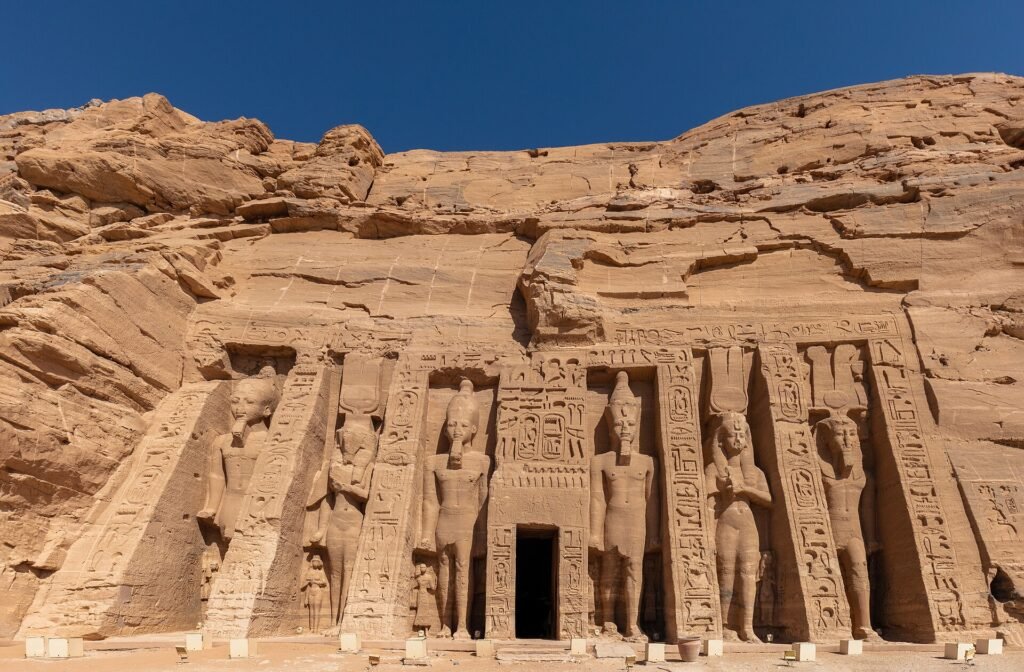
facade are carved the same height as those of the king, which was not the convention.
Where is Abu Simbel located?
Abu Simbel is in the far south of Egypt, in ancient Nubia, on the west bank of Lake Nasser and close to the border with Sudan. It lies about 280 km south of Aswan by road, roughly three and a half hours by car, which is why almost every visit starts in Aswan before dawn or on a short domestic flight.
How tall are the statues at Abu Simbel?
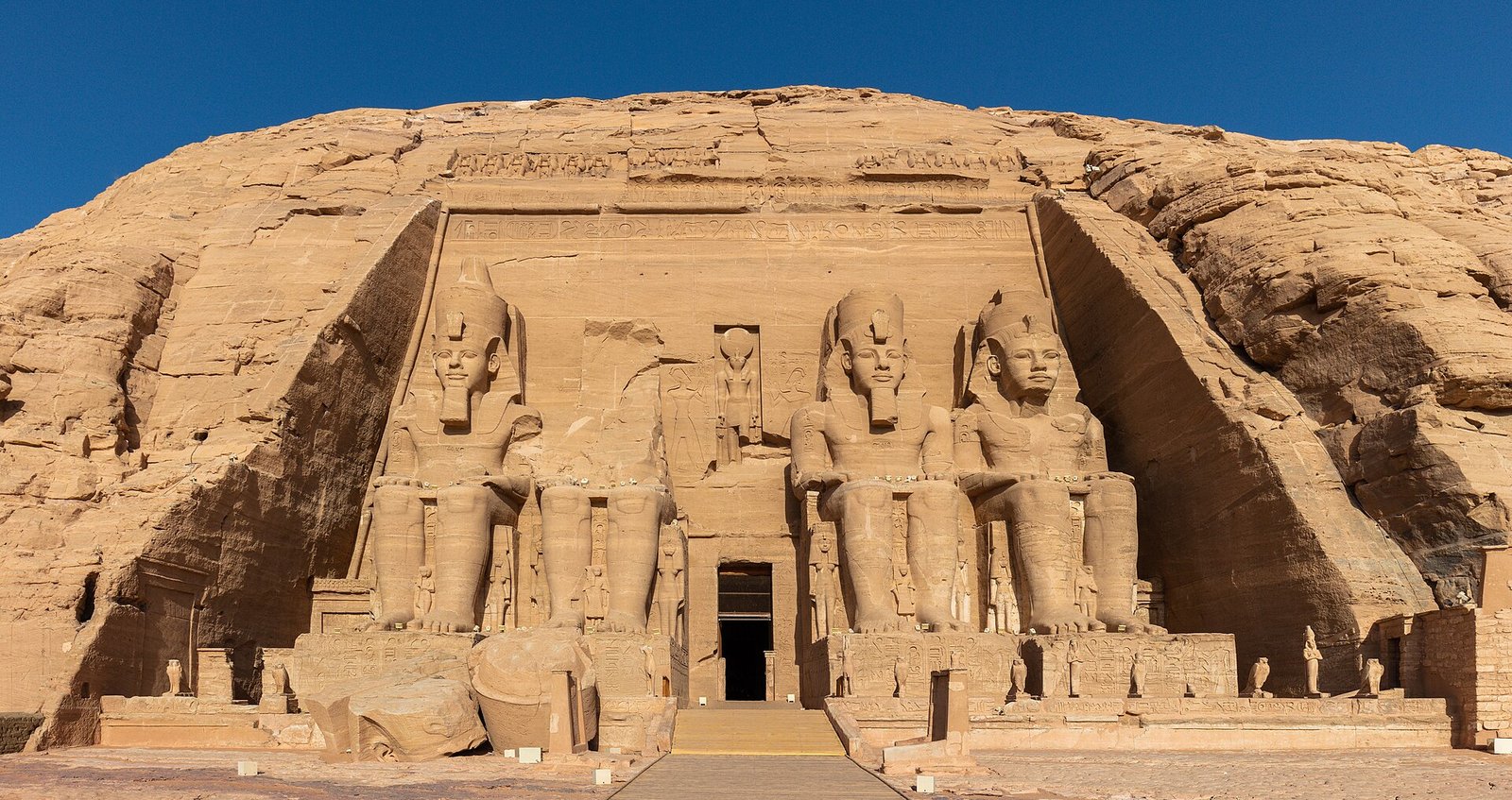
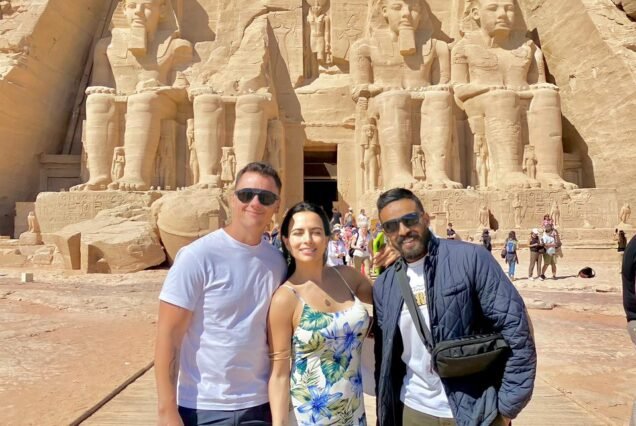
The four seated colossi of Ramesses II on the facade of the Great Temple are about 66 feet (20 m) tall each. On the smaller temple next door, six standing statues about 33 feet (10 m) high show Ramesses and his queen Nefertari, who is carved at the same scale as the king, which was very unusual in Egyptian art.
When was Abu Simbel built?
Ramesses II had both temples cut into the sandstone cliff during his long reign in the 13th century BC; the work took around twenty years and was finished around 1244 BC. The temples were rediscovered by Europeans in 1813, half buried in sand, and moved to their present site between 1964 and 1968.
Plan it properly
Tell us your dates and whether Abu Simbel matters to you, and we will tell you whether your
itinerary can hold it and which way of getting there fits.
Message us on WhatsApp.
Related reading: Aswan excursions,
Egypt monument entrance fees,
the best time to visit Egypt, and
Egypt tour packages.
Keep exploring
To finish planning your trip to Egypt
- ▸White Desert Egypt: Chalk Formations, 4x4 and Camping Guide
- ▸Memphis and Saqqara Day Trip from Cairo: What to See
- ▸What to See in Aswan: Philae, High Dam, Nubia and Abu Simbel
- ▸Hurghada or Sharm El Sheikh, which Red Sea resort should you choose
- ▸Temple of Hatshepsut, Deir el Bahari: Visit Guide and Tips
- ▸Valley of the Kings: Tickets, Tombs and How to Visit in 2026
- ▸Solar Eclipse Egypt 2027: Luxor, the Path and How to See It
- ▸See all our Egypt tours