Coptic Christmas in Egypt falls on January 7, and this is how the country lives it
Coptic Christmas in Egypt falls on January 7, and this is how the country lives it
Coptic Christmas in Egypt is celebrated on January 7, not December 25, because the Coptic Orthodox Church keeps the Julian calendar for its feasts, and that calendar currently runs 13 days behind the one on your phone. The date is a national public holiday for every Egyptian. It closes a 43-day fast with no meat, eggs or dairy, peaks with a long liturgy on the night of January 6 that ends around midnight, and breaks the next morning with fatta and trays of kahk cookies. A visitor can attend a parish liturgy, dressed modestly and standing at the back, and it is one of the most moving nights Egypt offers in winter.
Why Egypt celebrates Christmas on January 7
Roughly one in ten Egyptians is Christian, and nearly all of them belong to the Coptic Orthodox Church, which traces itself to Saint Mark preaching in Alexandria in the first century. The church never adopted the Gregorian reform of 1582. It fixes the Nativity on the 29th of its month of Koiak, and through the Julian reckoning that date lands on January 7 for the rest of us.
The gap is not permanent. The Julian year is slightly too long and drifts against the sun by about one day every 128 years. Today the offset is 13 days. After the year 2100 it becomes 14, and Coptic Christmas will slide to January 8. The same arithmetic puts Russian, Serbian and Ethiopian Christmas on the same night.
There is an older layer underneath. The Coptic calendar is the pharaonic civil calendar with new names, twelve months of thirty days plus a short thirteenth, as our guide to the pharaonic calendar and the origin of the 365-day year explains.
The practical takeaway: December 25 is a normal working day in Egypt, celebrated inside hotels and by the small Catholic and Protestant communities. January 7 is the real one.
The 43-day fast that comes before it
Coptic Christmas does not start on January 6. It starts 43 days earlier, in late November, with the Nativity fast. For those six weeks, practicing Copts eat no meat, no poultry, no eggs and no dairy. Fish is allowed on most days of this particular fast, which makes it gentler than Lent, though the final days before the feast are kept strictly.
In practice it is a plant-based diet held for six weeks, and Egyptian cooking suits it well. Ful medames, koshari, taameya, lentil soup, vine leaves in oil, okra in tomato: the everyday menu is already mostly beans, grains and vegetables. Restaurants in Coptic districts such as Shubra and Heliopolis print a fasting menu, marked siyami, for the season. For vegan travelers it is the easiest time of year to eat well in Egypt, and our guide to what to eat in Egypt covers the dishes.
The fast ends when the liturgy ends, in the small hours of January 7. That is why the meal that follows carries so much weight. It is the first meat in six weeks.
The night of January 6: the midnight liturgy
The heart of the feast is the Nativity liturgy on the evening of January 6, the day Copts call Paramoun, the eve. Churches begin filling in the late afternoon, the liturgy builds over three to four hours, and the consecration and communion arrive close to midnight. Families spill onto the church steps well after that, exchanging the greeting you will hear all night: kol sana wenta tayeb, every year and you are well.
What you notice first is the sound. Coptic chant is ancient, sung without instruments except cymbals and the triangle, in a mix of Coptic, the last descendant of the pharaonic language, and Arabic. Incense is constant, the sanctuary behind the carved wooden screen opens and closes through the service, and the congregation stands for most of it. Children fall asleep on the pews and nobody minds.
At the end the priest passes through the church with the cross, and people press forward to kiss it and take home the blessed bread called orban. It is long, crowded and completely unhurried. If you go, stay for at least the last two hours; arriving at eleven and leaving at half past is the one way to get nothing from it.
Where to go: the two cathedrals versus a parish church
Two services get the cameras. Neither is where a visitor ends up.
| Service | What it is | Can a visitor attend? |
|---|---|---|
| Cathedral of the Nativity, New Administrative Capital | The papal liturgy with state officials, televised | Invitation only. Watch it on a screen. |
| St. Mark's Cathedral, Abbassia | The historic cathedral's own Nativity liturgy | Pass required, very crowded, heavy security |
| A parish church in Old Cairo, Shubra, Heliopolis or Maadi | The neighborhood liturgy, three to four hours, families | Yes, with a guide who knows the priest and the etiquette |
| A Coptic church in Luxor or Aswan | Smaller, warmer, Upper Egyptian chant and dress | Yes, and often the most welcoming of all |
The real experience is a parish church, and this is where a local guide earns their keep. A church of three hundred people, where the priest has baptized half the congregation and the grandmothers hand you kahk on the steps afterward, is worth ten cathedral broadcasts.
Every Coptic church has a police post, a metal detector and a bag check on feast nights, and the biggest ones close the surrounding streets. This is normal, and it is why we send you with someone who knows the routine.
How to attend respectfully, and what to wear
Copts are used to visitors and glad of them. An American at the back of the church on Christmas Eve is a small vote of solidarity, and it is received that way.
- Go with someone. A guide or a Coptic friend introduces you at the door, tells you where to stand, and gets you through the checkpoint.
- Bring your passport. Security asks for identification on feast nights. A photo on your phone is usually not enough.
- Dress modestly. Shoulders and knees covered. Women do not need to cover their hair, unlike in a mosque, and shoes stay on. A sweater and long trousers solve everything.
- Stand where you are put. Many parishes seat men on one side and women on the other. Keep out of the central aisle, which the deacons and the procession use.
- Do not take communion. It is for baptized Orthodox members. Stay in your place; nobody will think it odd.
- Camera down during the consecration. A discreet photo from the back is fine in most churches if you ask first. A raised phone at the altar is not.
- Accept what you are offered. Blessed bread, a piece of kahk, tea in the courtyard. Say kol sana wenta tayeb back, and you have done it right.
If four hours in a packed church is not for you, the hour before the liturgy is a gentler way in: the streets of Shubra fill with families in their best clothes under string lights, and a cafe table takes it all in.
The feast: fatta, kahk and the morning of January 7
After midnight the fast breaks, and Egyptian Christmas is decided at the table. The dish is fatta: a layer of rice, a layer of toasted flatbread, broth poured over both, a garlic and vinegar sauce fried until it hisses, and chunks of boiled beef or lamb on top. It is heavy on purpose. It is the same dish Muslim families make for Eid al-Adha, which tells you how much the two communities share in the kitchen. Around it come roast chicken, stuffed pigeon, kofta, macarona bechamel, cheese, eggs, and butter on everything.
The sweet is kahk, round butter cookies rolled in powdered sugar, plain or filled with agameya, a honey and nut paste, or with dates or walnuts. Households bake them by the hundred in the last week of the fast, and boxes stack up in bakery windows from mid-December. Kahk is offered to anyone who walks through the door on January 7. If you are invited to a home, which happens more often than you would expect, bring a box of sweets. It is the correct gift.
The day itself is visits. Families move between apartments, children get new clothes and a little money in an envelope, and Muslim neighbors, taxi drivers and hotel staff say the same kol sana wenta tayeb all day. Egyptians of both faiths use it on every feast.
January 7 as a public holiday: what closes and what stays open
Since 2003, January 7 has been an official national holiday for everyone in Egypt, unusual for a Christian feast in a majority-Muslim country.
- Closed: banks, government offices, most corporate offices and schools.
- Open as usual: the Pyramids, the Grand Egyptian Museum, the Egyptian Museum in Tahrir, the Luxor and Aswan sites, Nile cruises, hotels, restaurants, most shops, airports and domestic flights.
- Reduced: some ticket offices and small businesses run shorter days, and Coptic-owned shops in Shubra or Old Cairo may simply not open.
- Busier: roads in and out of Cairo on the morning of the 7th and again in the evening, as families travel between cities.
If a bank matters, use it on the 6th. Otherwise treat the day like a Sunday at home and keep sightseeing. The full calendar of dates that change the rhythm of a trip is in our guide to Egypt's festivals and public holidays.
Coptic Cairo, the district where Egyptian Christianity began
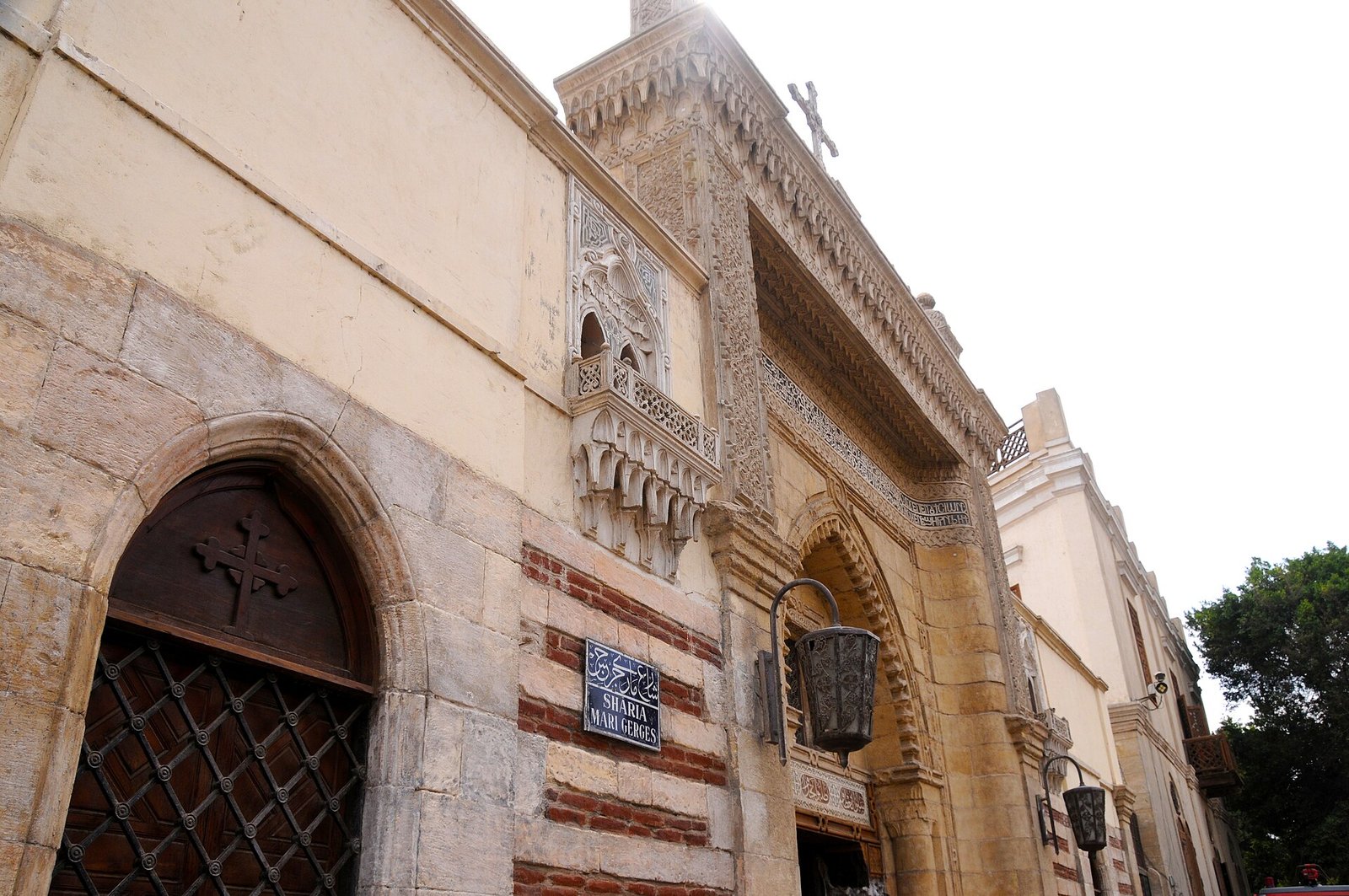
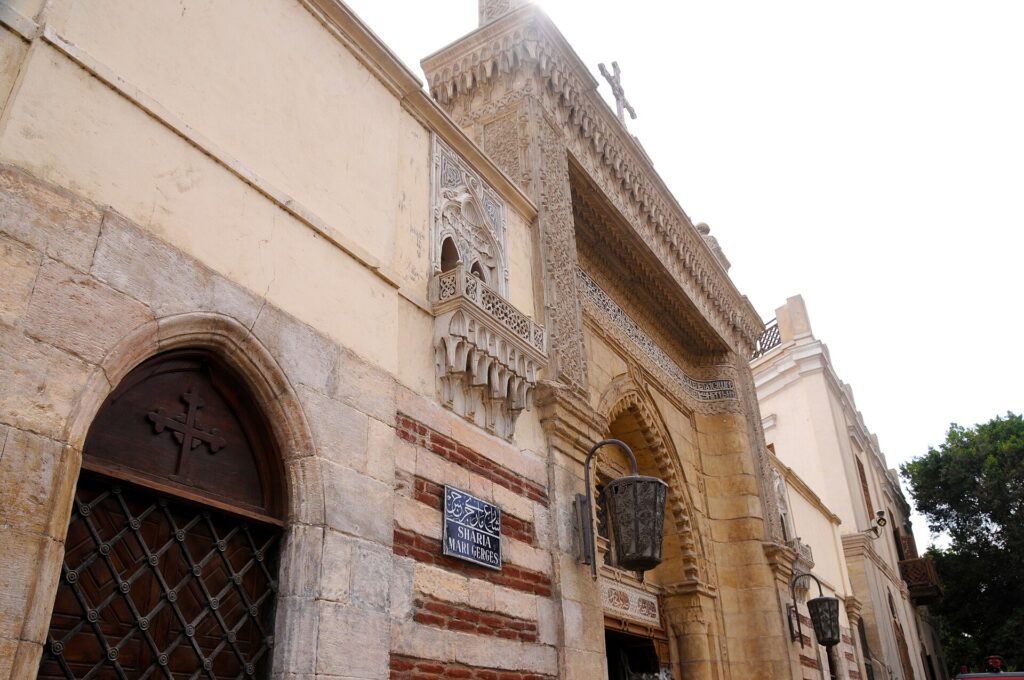
Whether or not you are in Egypt on the 7th, the place to understand what you are celebrating is the walled quarter of Old Cairo built inside the Roman fortress of Babylon. It is compact, walkable in three hours, and open year round.
The Hanging Church
Al Muallaqa is built across two towers of the Roman gate, so the nave floats over a void, visible through a glass panel in the floor. Inside are a marble pulpit on thirteen pillars and an ebony and ivory screen. It has been the postcard of Coptic Egypt for a thousand years.
Abu Serga and the crypt
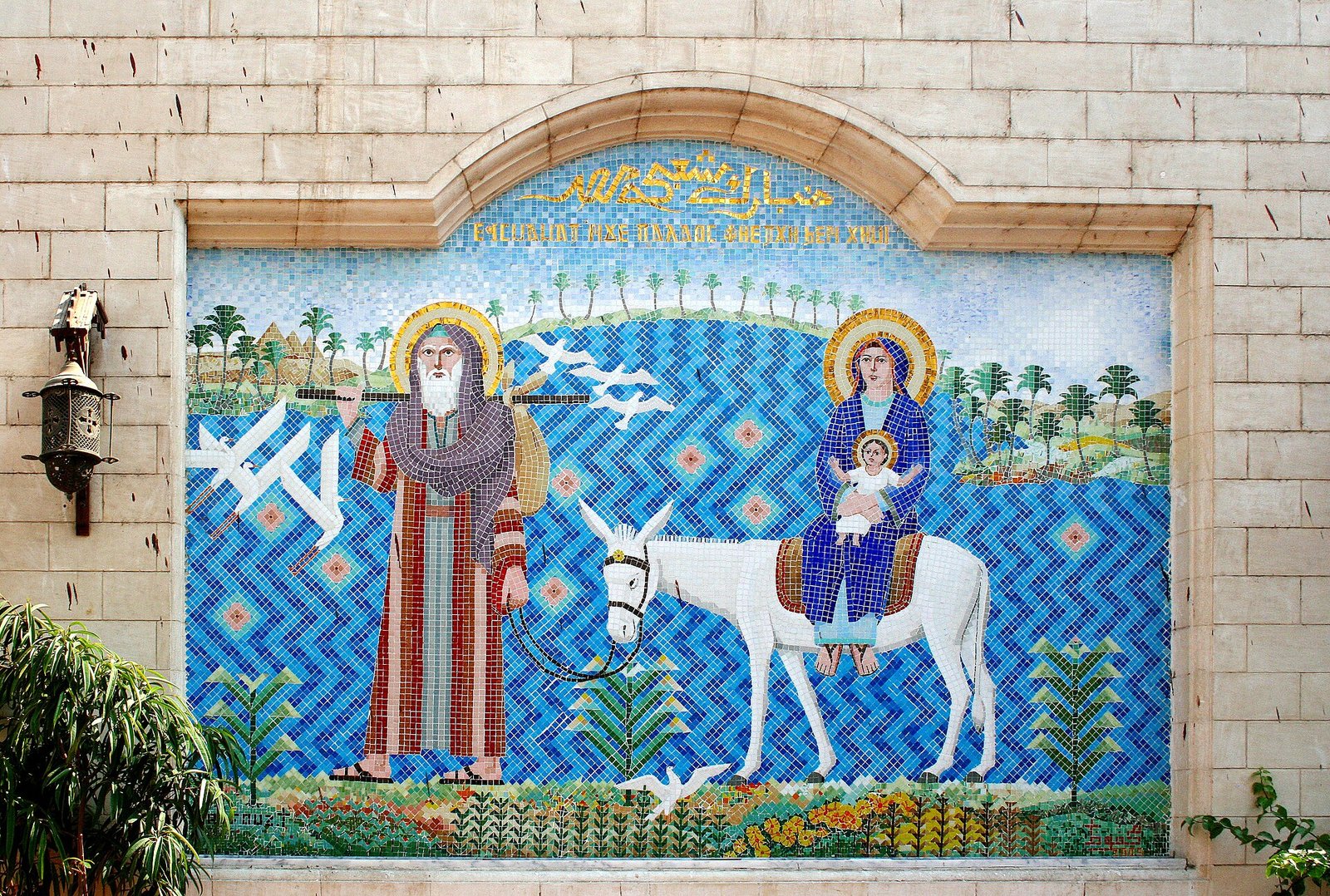
The church of Saints Sergius and Bacchus is older and plainer, and beneath it is the crypt where, by Coptic tradition, the Holy Family sheltered on their flight into Egypt. When the water table allows, you go down into a low stone chamber that has drawn pilgrims since late antiquity.
The rest of the quarter
Add the church of Saint Barbara, Ben Ezra synagogue and the Coptic Museum, with the finest collection of early Christian art anywhere. Around January 7 the churches here are dressed with lights and the courtyards are full. The detailed walk is in our guide to Coptic Cairo.
The Holy Family trail beyond the walls
The church holds that the Holy Family spent about three and a half years in Egypt, and it maps that journey over some two dozen sites. Three are worth a traveler's time: the Tree of the Virgin at Matariya in north Cairo, the four working desert monasteries of Wadi El Natrun, where monks have lived since the fourth century, and the cliff church of Gabal El Teir above the Nile, covered in our guide to Minya and Middle Egypt. Wadi El Natrun is a day from Cairo; Minya suits a second trip.
How Coptic Christmas fits a January trip
The first two weeks of January are among the best days of the year to be in Egypt. Cairo sits around 66 to 68F (19 to 20C) in the afternoon and near 50F (10C) at night, Luxor and Aswan run warmer, and the sky is clear. It is high season, so the good Nile boats book out weeks ahead. Our guide to visiting Egypt in January has the month in detail.
What makes the first week special is that you can get two Christmases in one trip. Arrive before December 25 and you have the hotel and cruise-ship version, with a decorated lobby, a gala dinner and a New Year's Eve party on the Nile, which we describe in Christmas in Egypt. Stay through January 7 and you have the real one.
| December 25 in Egypt | January 7, Coptic Christmas | |
|---|---|---|
| Who celebrates | Hotels, cruise ships, Catholics and Protestants | The Coptic Orthodox majority of Egyptian Christians |
| Public holiday | No, a normal working day | Yes, nationwide |
| What it looks like | Trees in lobbies, gala dinners, Santa on the sundeck | Church lights, a midnight liturgy, family feasts |
| Best place to be | A Nile cruise or a Red Sea resort | Cairo, or Luxor and Aswan for the smaller churches |
| Fits a tour? | Easily, nothing changes on the ground | Yes, with a free evening on the 6th and a late start on the 7th |
If you would rather be on the water for the feast, a boat docked in Luxor puts you a short walk from the town's Coptic churches; the Christmas Nile cruise guide explains how the boats handle the season.
How Explora Egipto arranges it
We are a local agency in Egypt with our own guides and vehicles, and several of our Cairo guides are Copts who go to these liturgies with their own families. That is the whole trick. There is no ticket for a parish Christmas Eve, only a call to the right priest a week ahead, a driver who knows which streets will close, and a guide beside you who can whisper what is happening at the altar.
- Coptic Cairo with a guide in the afternoon of January 6, when the quarter is at its most festive.
- An early, light dinner, then the liturgy at a parish church matched to your comfort level.
- Your driver waiting outside through the service, so you can leave at midnight or at one.
- A late start on the 7th, kahk with breakfast, and either a quiet Cairo day or the flight south.
- A domestic flight to Luxor or Aswan on the 7th or 8th to start the Nile.
Wadi El Natrun and the Middle Egypt sites slot in on request. Tell us your dates and how much church you want, from an hour on the steps to the full four, and we send you the quote.
Frequently asked questions
When is Coptic Christmas in Egypt?
January 7 every year, with the main liturgy on the night of January 6. The Coptic Orthodox Church calculates the Nativity on the Julian calendar, which currently runs 13 days behind the Gregorian one, so December 25 in the old reckoning is January 7 in ours. After 2100 the feast moves to January 8.
Can tourists attend a Coptic Christmas service?
Yes, at a parish church, and you will be welcomed. The papal liturgy at the Cathedral of the Nativity is by invitation only and St. Mark's in Abbassia needs a pass, so aim for a neighborhood church. Go with a guide, carry your passport for the security check, cover shoulders and knees, and skip communion, which is for baptized Orthodox members.
Is everything closed on January 7 in Egypt?
No. It is a national public holiday, so banks, government offices and schools close, but the Pyramids, the museums, the Luxor and Aswan sites, hotels, restaurants, cruises and domestic flights all run normally. Some small shops keep shorter hours and roads are busier. Do any banking on the 6th and keep your sightseeing plans.
What do Copts eat at Christmas?
The fast breaks after the midnight liturgy, and the feast on January 7 centers on fatta, layered rice and toasted bread under a garlic and vinegar broth with boiled beef or lamb. Roast chicken and stuffed pigeon fill the rest of the table, and the sweet is kahk, butter cookies in powdered sugar filled with honey and nuts or dates. If you are invited to a home, bring sweets.
Do I have to fast if I visit during the Nativity fast?
No, and nobody expects a visitor to. The 43-day fast before Coptic Christmas is a personal religious practice, and restaurants serve everything as usual. The only visible sign is a fasting menu in Coptic districts, a plant-based menu of beans, lentils, vegetables and sometimes fish. For vegan travelers it is the easiest time of year to eat in Egypt.
Is Coptic Christmas the same as Christmas on a Nile cruise?
No. Christmas on a Nile cruise happens on December 24 and 25, is organized by the boat for its international guests, and looks like a hotel Christmas anywhere. Coptic Christmas on January 7 is the country's own feast, lived in churches and homes. You can have both by arriving before the 25th and staying through the 7th.
Spend Christmas Eve in a Cairo church, then go find the pharaohs
Tell us your dates, whether you want an hour on the church steps or the full liturgy, and how the rest of the trip should look, from Coptic Cairo to a Nile cruise. We come back with a plan built around January 6 and 7, a guide who lives this night, and the quote in your inbox.