Islamic Cairo is a walk through a thousand years of the city, and this is how to see it without wasting a day
Islamic Cairo is a walk through a thousand years of the city, and this is how to see it without wasting a day
Islamic Cairo is the medieval walled city between downtown and the Citadel, a dense mile of mosques, madrasas, gates and markets built by the Fatimids, Ayyubids, Mamluks and Ottomans. The things to see fall into two halves. The first is the walk along Al Muizz street from Bab al Futuh to Bab Zuweila, past the Qalawun complex, Al Aqmar and the Sultan al Ghuri buildings, ending at Al Azhar mosque, Al Hussein and Khan el Khalili. The second is the Citadel with Sultan Hassan and Al Rifai, then Ibn Tulun and the Gayer Anderson house. Give it two half days, go early or at dusk, and take a guide who reads the stone for you.
What Islamic Cairo actually is
When the Fatimids arrived from North Africa in the tenth century they laid out a new walled capital, gave it the name that became Cairo, and ran one main street through it from the northern gates to the southern one. Every dynasty since built along that street.
The Ayyubids, the line of Saladin, added the Citadel on the ridge in the twelfth century. The Mamluks, the soldier sultans of the thirteenth to early sixteenth centuries, gave Cairo its most spectacular stone: the towering portals, the striped masonry, the carved minarets. The Ottomans then ruled for three more centuries and left the slim pencil minarets, the sabils and the wooden merchant houses.
So Islamic Cairo is an area, not a religion, and almost all of it is still lived in, which is why it feels nothing like a museum. For the wider plan see how to spend three days in Cairo, and our Cairo excursions lists the guided versions.
The walk down Al Muizz street, gate to gate
Al Muizz street is the spine of the Fatimid city. Walk it north to south so the buildings get grander as you go and you finish in the bazaar. Start at Bab al Futuh, the Gate of Conquests.
From Bab al Futuh to the Qalawun complex
Just inside the gate, the Al Hakim mosque is a vast Fatimid courtyard whose scale tells you how big this city already was a thousand years ago. Where the street forks stands the sabil kuttab of Abdel Rahman Katkhuda. A sabil kuttab is an Ottoman idea: a public drinking fountain at street level with a Quran school on the loggia above.
Down a side lane, Bayt al Suhaymi shows how a rich Ottoman merchant lived. Back on the street, Al Aqmar mosque is small and easy to miss, but it was the first mosque in Cairo built with its facade following the line of the street rather than the direction of prayer.
Bayn al Qasrayn and the Mamluk masterpieces
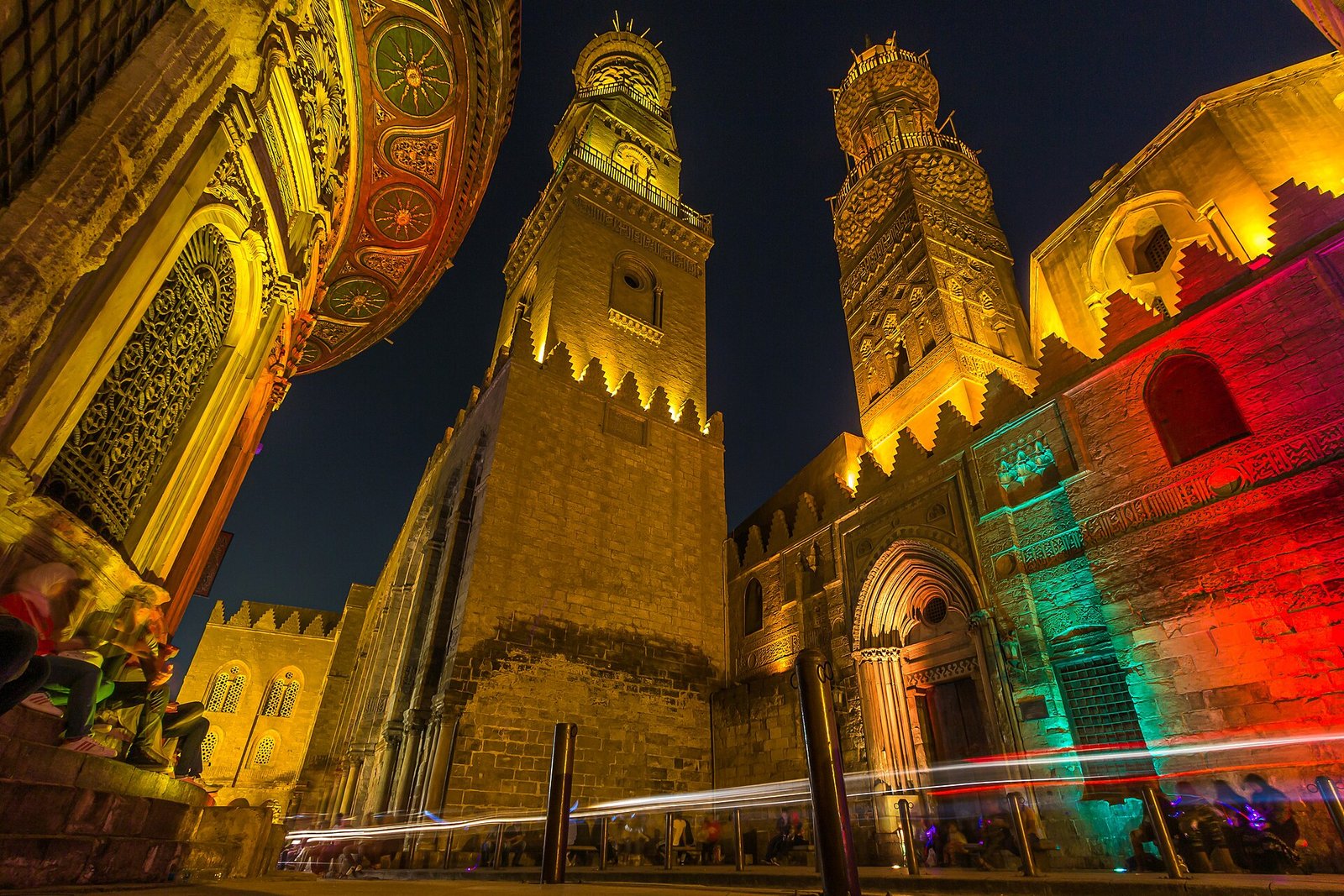
Then the street widens into Bayn al Qasrayn, between the two palaces, where the Fatimid palaces once faced each other. In their place the Mamluks built a wall of masterpieces. The Qalawun complex is a mausoleum, a madrasa and a hospital in one, and the mausoleum interior, marble and mother of pearl under a painted ceiling, is the finest room on the street.
Across Al Azhar road to Bab Zuweila
Cross the modern Al Azhar road by the underpass and you face the Sultan al Ghuri complex, a mosque madrasa on one side and a domed mausoleum on the other. From here the street narrows through spice and cloth shops to Bab Zuweila, the southern gate, with the twin minarets of the Al Muayyad mosque planted on top. Climb it. The view back up the street, a forest of minarets to the horizon, is the photograph everyone takes.
Al Azhar, Al Hussein and Khan el Khalili: where the walk ends
Double back to the Al Azhar road and cross to the mosque. Al Azhar was founded by the Fatimids in the tenth century and has taught almost ever since, which makes it one of the oldest universities anywhere. The marble courtyard dazzles at midday and calms in the late afternoon.
Across the square, Al Hussein is a nineteenth century mosque over a much older shrine and the most important place of pilgrimage in Cairo. The interior is generally reserved for worshippers, so treat the square in front as the show.
Behind it begins Khan el Khalili, trading since Mamluk times. The main alleys sell to tourists, and the copper lamps and inlaid boxes are real crafts even when the prices open high. Read our guide to haggling in Egypt before you buy, because the first number is never the number.
The Citadel, Sultan Hassan and Al Rifai: the second half day
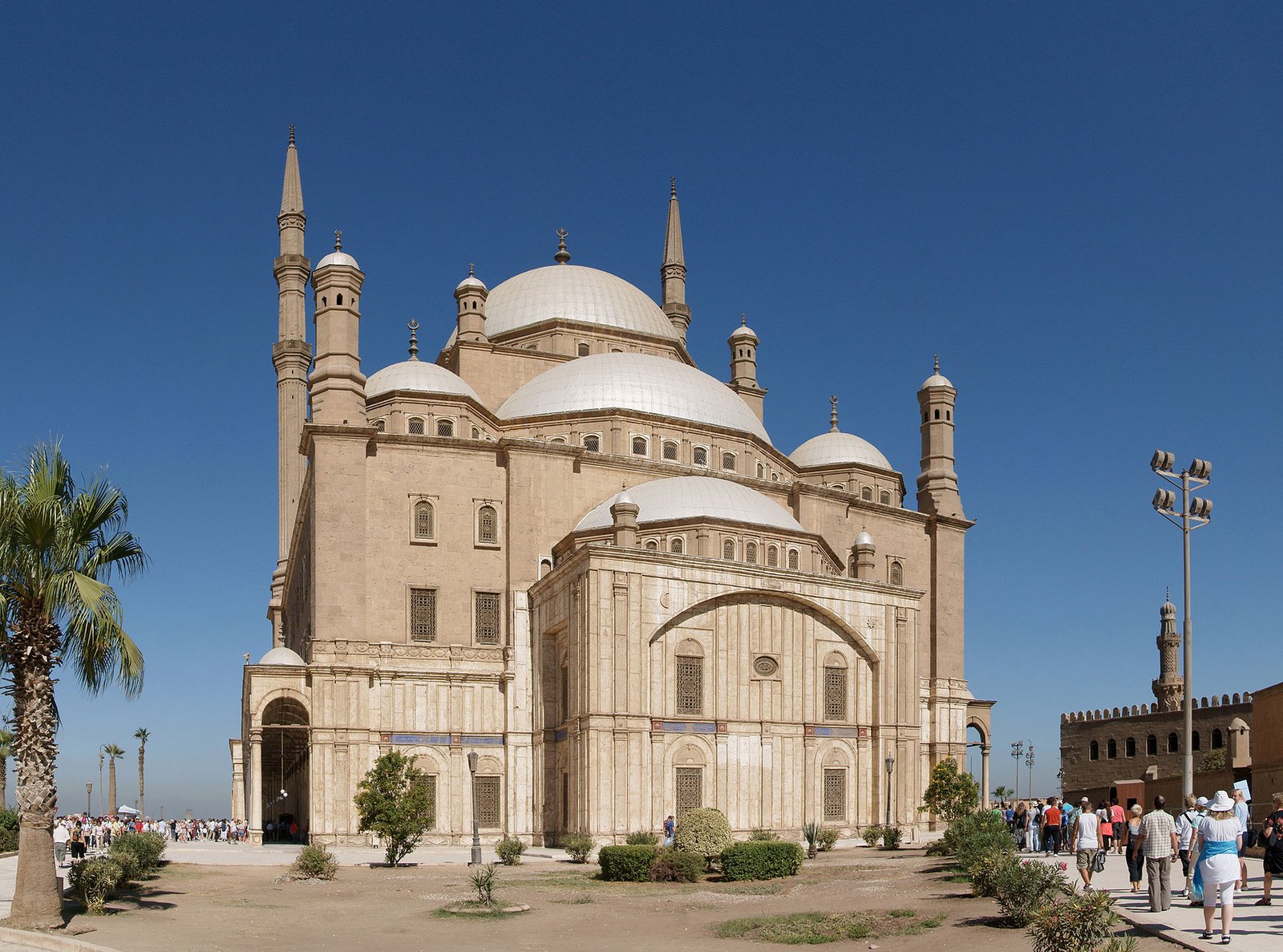
Save the Citadel for a separate morning or late afternoon. It sits on a spur of the Muqattam hills, a fortress begun by Saladin in the twelfth century. Everyone comes for the Muhammad Ali mosque, the Ottoman style dome with the alabaster courtyard that defines the skyline. Go in, then walk to the western terrace, where on a clear winter day you can see the Pyramids.
Directly below, two enormous mosques face each other across the square. Sultan Hassan, built in the fourteenth century, is the masterpiece of Mamluk architecture: a portal taller than most buildings and four vaulted halls on a scale that makes you whisper. Al Rifai opposite is five hundred years younger, built to match, and holds the tombs of the last Egyptian royal family and of the last Shah of Iran. This pairing is a full half day on its own.
Ibn Tulun and the Gayer Anderson house
A short drive west of the Citadel, Ibn Tulun is the oldest mosque in Cairo still standing close to its original form, built in the ninth century, before the Fatimid city existed. There is nothing else like it: a courtyard the size of a parade ground, arcades of pointed brick arches, and a spiral minaret with an outside staircase you can climb. Standing alone in that court is the moment many of our guests name as their favorite in Cairo.
Against the outer wall, two Ottoman period houses were joined and furnished by a British major who collected obsessively. The Gayer Anderson museum is the result: carved wooden screens, Persian carpets, a hidden gallery where the women of the house watched the men below, and a roof terrace wrapped in mashrabiya. It closes earlier than the mosque, so do the house first.
The Museum of Islamic Art
Few visitors know it, but the Museum of Islamic Art at Bab al Khalq holds one of the finest collections of its kind anywhere. Where the mosques show you architecture, the museum shows you what went inside it: carved minbars, enameled mosque lamps, inlaid metalwork, ceramics, illuminated Qurans and astrolabes, arranged by era so an hour here teaches you to tell Fatimid from Mamluk from Ottoman on the street.
It is a ten minute walk from Bab Zuweila, so put it at the end of the Al Muizz walk or first on the Citadel half day, and check the current opening days. If you are weighing it against the pharaonic collections, our page on the Egyptian Museum on Tahrir Square helps you plan a museum morning.
Mosque etiquette: shoes, shoulders, prayer times and photos
Every mosque on this page welcomes non Muslim visitors outside prayer times, with the partial exception of Al Hussein.
- Shoes come off at the edge of the carpet. Some mosques hand out overshoes, others have a shoe keeper who expects a small tip, and at the rest you carry your shoes. Bring a bag.
- Shoulders and knees covered, for everyone. Women need a scarf for the hair at Al Azhar and the shrines. Al Azhar lends a hooded gown if you arrive in shorts. The full dress code is in our guide to what to wear in Egypt.
- Prayer times pause visits five times a day for twenty to thirty minutes. On Fridays the midday prayer and sermon close the big mosques to tourists for well over an hour.
- Photography of the architecture is fine almost everywhere. Do not photograph people at prayer, ask before photographing anyone up close, and keep your voice down.
How much time you need and how to split it
The honest answer is two half days, and the mistake people make is compressing them into one.
Half day one: the Fatimid city on foot
- Bab al Futuh, Bab al Nasr and the Al Hakim mosque.
- Sabil kuttab of Katkhuda and Bayt al Suhaymi.
- Al Aqmar, then the Qalawun, Al Nasir Muhammad and Barquq complexes.
- Cross Al Azhar road to the Sultan al Ghuri buildings.
- Bab Zuweila, climb the gate, glance at the Tentmakers.
- Back to Al Azhar mosque, Al Hussein square, Khan el Khalili and tea at Fishawi.
With a guide this takes four to five hours including the bazaar. Start around nine, or mid afternoon to finish under the lights.
Half day two: the Citadel and the south
- Museum of Islamic Art, if you want the context first.
- Sultan Hassan and Al Rifai, side by side.
- The Citadel: Muhammad Ali mosque, Al Nasir Muhammad mosque, the terraces.
- Ibn Tulun and the Gayer Anderson house.
- Optional: sunset from Al Azhar Park.
Four hours is comfortable, five with the museum and the park.
The best hours: early or at dusk
Islamic Cairo has two good moods and one bad one. Early morning, before the shops open, the street is swept, the light is low on the limestone, the mosques are almost empty and the guards are relaxed.
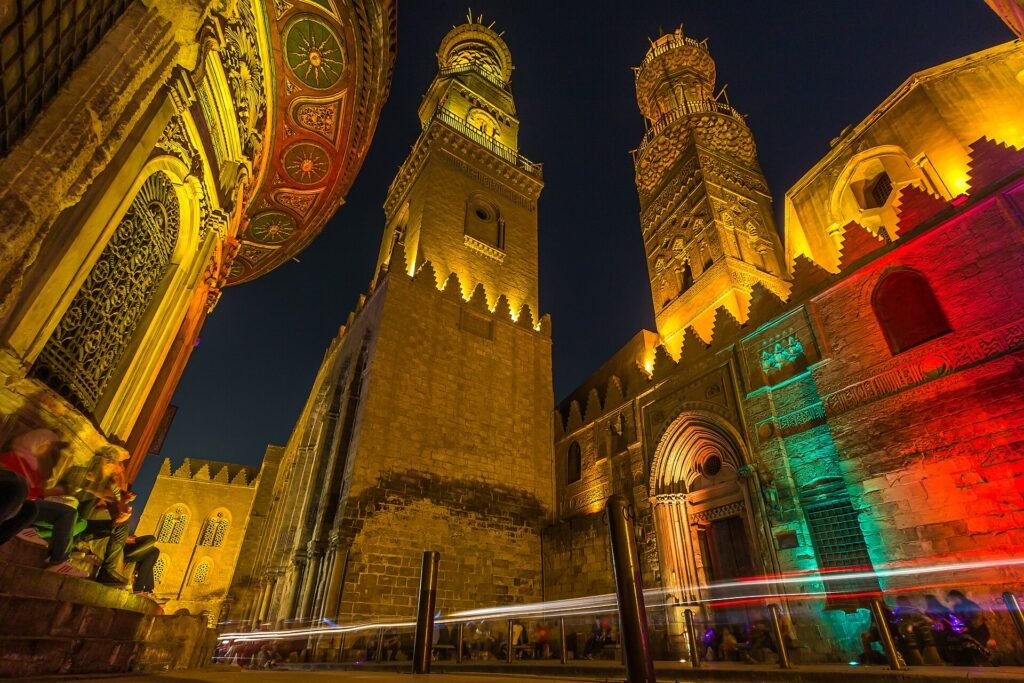
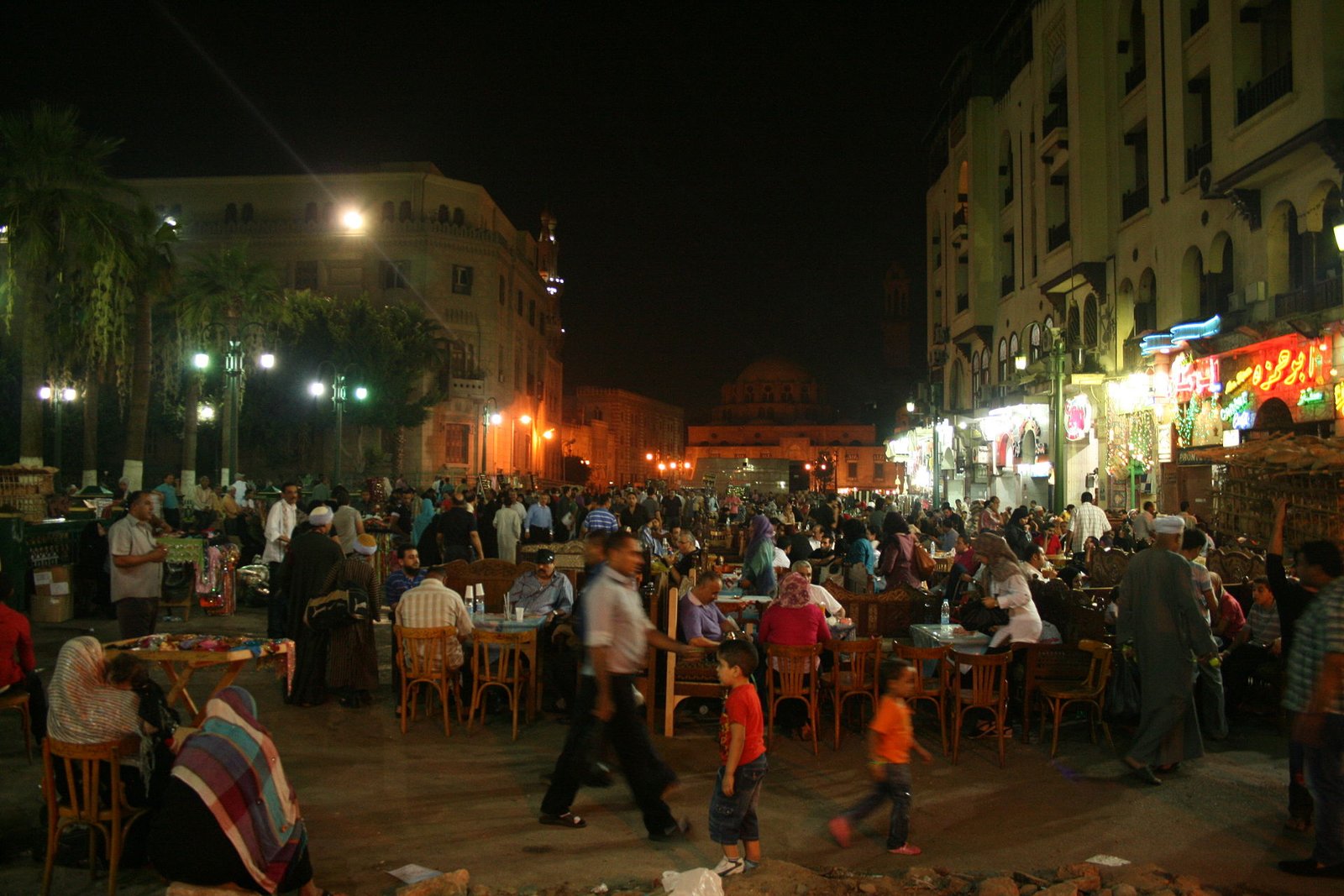
Late afternoon into dusk is the other. Al Muizz is lit from below after sunset, the cafes fill with Cairenes and the street becomes a promenade. We cover the night version in our guide to Cairo at night.
The bad mood is a summer midday, when the stone radiates heat and the lanes offer no shade. From late May to September walk early or at dusk, and put the Citadel, with its breezes and terraces, in the late afternoon. In winter the whole day works.
Safety and getting around Islamic Cairo
The old city is safe by any big city standard: crowded, watched by tourist police at every monument, and full of shopkeepers who would rather sell you tea than let anything happen to you. The real risks are pickpockets in the bazaar crush and a fall on uneven stone. Women alone get comments and invitations to shops, rarely more. Our honest take on whether Cairo is safe goes through all of it.
The main nuisance is the friendly stranger who insists the mosque is closed and offers a better one, which ends in his cousin's perfume shop. Smile, say no thank you, keep walking.
No taxi can drive down Al Muizz itself. Ask to be dropped at Bab al Futuh to walk south, or at Al Azhar mosque to start from the middle. Ride hailing apps work well for the drop off and for getting out when your feet are done, and our guide to Uber and Careem in Cairo explains how to set the pin at the Al Azhar underpass. The Citadel and Ibn Tulun are car stops, so use a private car with a driver who waits.
What a guide adds, and what a bad one costs
You can walk Al Muizz alone with a map and enjoy it. What you will not get is the difference between a Fatimid and a Mamluk minaret, what a madrasa was for, or which door in a blank wall leads to a courtyard that is on no sign.
A good guide also handles the practical layer: which mosques are between prayers right now, where the shoe bags are. In the bazaar, a guide at your side resets the opening price before you speak.
What a bad one costs is the day. The men who attach themselves to you at the gate are not guides, and their tour ends in a shop. Book a licensed guide in advance, meet at a fixed point, agree the route.
The main stops at a glance
Times are for a visitor who goes inside and looks, not a drive by.
| Stop | Area | What to see | Time |
|---|---|---|---|
| Bab al Futuh and Bab al Nasr | Northern gates | Fatimid gates and wall, start of Al Muizz | 20 minutes |
| Al Hakim mosque | Northern Al Muizz | Vast Fatimid courtyard mosque | 30 minutes |
| Bayt al Suhaymi | Darb al Asfar lane | Ottoman merchant house, mashrabiya | 40 minutes |
| Al Aqmar mosque | Central Al Muizz | Small Fatimid mosque, street facing facade | 15 minutes |
| Qalawun complex | Bayn al Qasrayn | Mamluk mausoleum, madrasa and hospital | 45 minutes |
| Sultan al Ghuri complex | South of Al Azhar road | Paired mosque madrasa and mausoleum | 30 minutes |
| Bab Zuweila | Southern gate | Climb the gate, Tentmakers | 40 minutes |
| Al Azhar mosque | Al Azhar square | Tenth century mosque and university | 40 minutes |
| Al Hussein and Khan el Khalili | Al Hussein square | Shrine square, bazaar, Fishawi cafe | 1 to 2 hours |
| Sultan Hassan and Al Rifai | Citadel square | Giant Mamluk madrasa, royal tombs | 1 hour |
| The Citadel | Muqattam ridge | Muhammad Ali mosque, Al Nasir mosque, terraces | 1.5 to 2 hours |
| Ibn Tulun and Gayer Anderson | Sayyida Zeinab | Ninth century courtyard, spiral minaret, house museum | 1.5 hours |
| Museum of Islamic Art | Bab al Khalq | Lamps, minbars, ceramics, Qurans | 1 hour |
Mistakes that ruin the day
- The Citadel and Al Muizz in one afternoon. The most common plan and the worst. You reach the street tired, in flat light, and see neither properly.
- Friday midday. The big mosques close to visitors for the sermon and the streets around Al Azhar jam solid. Do the Citadel or the museum on Friday morning and come back to Al Muizz after the afternoon prayer.
- Walking south to north. You end at a gate with nothing around it instead of in the bazaar with a tea.
- Following the helpful stranger. The mosque is not closed. The cousin's shop is open.
- Skipping Ibn Tulun because it is out of the way. It is twenty minutes from the Citadel and it is the building people remember.
If you want us to build the two half days around your dates and the prayer times that week, write to us. We reply with a route, a start point and a quote.
Frequently asked questions
Is Islamic Cairo worth visiting if I only have one day in the city?
Yes, but pick one half. With a single afternoon, walk Al Muizz from Bab al Futuh to Bab Zuweila and finish in Khan el Khalili at dusk. It is the most concentrated dose of the medieval city and it ends somewhere lively. The Citadel looks better from a distance than the street does, but on foot the street wins.
Can non Muslims go inside the mosques in Islamic Cairo?
Yes, at every mosque on this page outside prayer times, except the Al Hussein shrine, whose interior is generally reserved for worshippers. Shoes come off at the carpet, shoulders and knees stay covered, and women should carry a scarf for the hair. Avoid Friday midday, when the large mosques close to tourists for over an hour.
How long does the Al Muizz street walk take?
The street is about a mile, so twenty minutes end to end without stopping. With a guide and visits inside four or five buildings, including climbing Bab Zuweila, allow three to four hours, then another hour or more for Al Azhar, Al Hussein square and the bazaar. Wear closed shoes, because the paving is uneven and you take them off often.
Is Islamic Cairo safe to walk around alone?
Yes. The area is busy, policed at every monument, and full of people going about ordinary business. The real risks are pickpockets in the bazaar crush and the touts who claim a mosque is closed. Keep valuables in a front pocket, say no thank you and keep walking. After dark the main street and the bazaar are lit and crowded, which is safer than empty.
Should I take a guide or is a map enough?
A map gets you from gate to gate. A guide gets you inside the courtyards you would walk past, explains which dynasty built what, handles prayer times and shoe minders, and stands next to you in the bazaar so the opening prices drop. For a first visit we recommend a licensed guide for the Al Muizz half at least.
What should I wear for a day in Islamic Cairo?
Long trousers or a long skirt, a top that covers the shoulders, and closed shoes with grip that slip off easily, because you will remove them several times. Women should carry a light scarf for the hair inside mosques. Add a small bag for your shoes and a bottle of water. Leave the shorts and tank tops for the Red Sea.
Let us walk you through a thousand years of Cairo
Tell us your dates and whether you want both half days or just the Al Muizz walk at dusk. We are a local agency in Cairo with our own licensed guides and cars, and we send you the quote and the route.