How to Choose an Egypt Tour Operator: 8 Checks Before You Pay
How to Choose an Egypt Tour Operator: 8 Checks Before You Pay
The operator worth booking is the one that will answer eight concrete questions before you pay, in writing. A company that answers all eight has told you how it works. A company that will not answer several of them has told you that too.
What changes your trip is which link of the supply chain you are buying from, and what that link will put in writing before you pay.
Who you are actually talking to
A company selling an Egypt tour in English is not necessarily in Egypt. It can take your booking, keep a margin, and contract an Egyptian operator to do the work: the guide, the hotels, the drivers, the boat, the person who rearranges your day when a tomb closes for conservation. You may never learn that operator's name.
That arrangement is not a scam and it is not automatically worse. It carries real advantages. What it does carry is distance. Every question you ask while planning, and every problem on the ground, travels through an extra office before it reaches somebody who can act on it.
So the useful question is not which company is best. It is whether the company taking your money is the company doing the work, and if it is not, whether you are getting something worth the gap. Both answers can be right for you. What is never right is not knowing which one you bought.
The size of the resale margin is not published, and it moves per company and per season. What you can establish in an afternoon is which side of the line you are standing on.
The eight checks
Run these in order. Each one can be settled before you pay anything.
1. The company you pay and the company that runs the trip
Ask it flatly: are you the operator in Egypt, or do you contract an Egyptian operator? A direct operator answers in one sentence and names the city. A reseller either explains the model honestly, which is a good sign about everything else, or talks about partnerships and local expertise without naming anyone. Then ask the question that settles it: what company name will appear on my card statement, and where is that company registered? Vagueness here is itself the answer.
2. The Egyptian license, and the name it is issued to
Companies running tours inside Egypt are licensed by the Egyptian tourism authorities. Ask for the license number and the registered company name it belongs to, then check that the registered name connects to the entity that will receive your payment. Trading names and registered names diverge for ordinary reasons, but the two should be connectable on request, and a company that will not connect them has told you something. If you are booking outside Egypt, ask instead which Egyptian license holder will operate the ground portion.
3. A licensed Egyptologist, and the language they guide in
Guiding at Egyptian monuments requires a license, and it is checked at the gates. That license is the line between someone who reads the walls at Karnak and someone who holds your tickets and waits by the vehicle. Ask whether your guide is licensed, and ask separately which language they guide in, because those are two different guarantees. The wording you want in your itinerary is a licensed Egyptologist guiding in English, not English-speaking staff subject to availability.
One thing that is normal rather than a downgrade: a long program often uses a Cairo Egyptologist and a second one in Upper Egypt, because working knowledge of the ground is regional. The license and the language are what should stay constant.
4. What the word private is covering
Private covers at least three different arrangements. It can mean your party alone with your own guide and vehicle. It can mean a private transfer to a site where you then join a group of eighteen. It can mean a private vehicle that collects four other parties from four other hotels first. Ask three specific questions: how many people are in the vehicle, is the guide with our party only, and does the vehicle stay with us through the day or leave and come back.
Then ask whether the itinerary contains any stop at a papyrus institute, perfume workshop, alabaster factory or carpet school. Those stops exist to pay commission, they consume the hours you came for, and an operator that includes them without saying so has shown you how the day is going to be paid for.
5. Prepaid monument tickets, or paying at every turnstile
This is where two quotes that look identical stop being identical. Gate tickets in Egypt are a real line of money, and an operator either buys them before you land or leaves them on your side of the ledger. Giza is 700 EGP, about US$14. Abu Simbel is 822 EGP for both temples, about US$16. Going inside the Great Pyramid is a separate 1,500 EGP ticket, about US$30, bought at Giza on the day and normally excluded.
Ask for the gates on your itinerary listed one by one, marked prepaid or not prepaid. A program that quotes a few hundred dollars less per person and then has you pay seven or eight gates yourself has not saved you anything. It has moved the money and added a queue. The itemized version of that arithmetic is set out in what an Egypt tour includes and excludes.
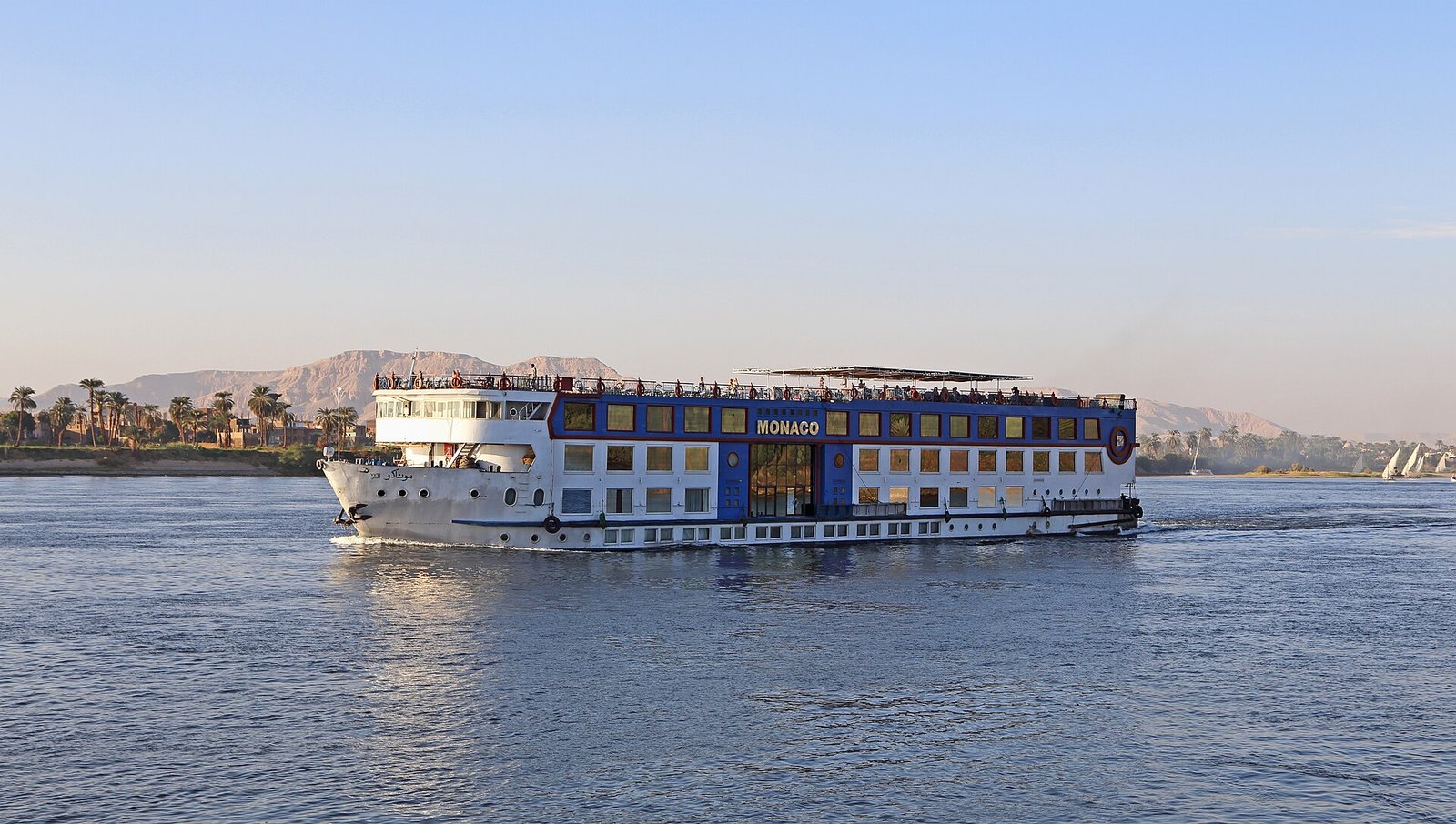
6. The boat, by category and by name
If your trip has a river section, this is the check to run first. Egyptian river operators move passengers between vessels of the same category to keep sailings full, so what you are guaranteed months ahead is the category and the itinerary, and the specific vessel is confirmed close to departure. That is standard practice rather than a switch pulled on you.
What separates a straight operator from a careless one is whether they say so upfront. Ask whether a named boat is guaranteed or only a category, and if a specific vessel matters to you, say so at the enquiry stage so it can be priced as a named request instead of assumed. What differs between boats, and what does not, is covered in choosing a Nile cruise boat.
7. How you pay, and what that payment leaves you
Ask what is due when, in writing, before you commit to anything. Ask what happens if you cancel, and what happens if the operator cancels. Ask which payment methods are accepted and, specifically, whether payment goes to a company account or to an individual's personal account. A transfer to a named individual leaves you with no route back.
Paying by card generally preserves a dispute route that a bank transfer does not. Whether you have anything stronger depends on where you live and where the company is registered, so it is worth ten minutes of your own reading: the protections are not the same in any two countries.
8. Reviews, and where they came from
A testimonial with nothing attached to it gives you nothing to weigh. Ask where each review came from and on which platform it was left, because a review you can set beside a named source counts for more than a line of praise that appears nowhere else. Ours are collected in reviews from travelers who went with us, each one labeled with the platform it arrived on.
Booking direct and booking at home: the honest trade
Both routes are legitimate. Here is what each one buys you.
| What changes | Direct with an Egyptian operator | Through a company in your own country |
| Who runs your trip | The company you paid | An Egyptian operator you do not choose and may never be told about |
| Cost structure | One margin | Two margins, size not published |
| Contact when something breaks | The team standing in the country, usually on WhatsApp | Messages relayed between two offices in two timezones |
| Support hours | Cairo hours, which may fall in your night or your working day | Your own timezone |
| Consumer law | Depends on where you live; your card scheme is the practical recourse | Your own consumer law, and in some countries financial protection if the seller fails |
| Changing the itinerary | Decided by the people who will execute it | Usually a fixed package, changes go back up the chain |
If financial protection and contracting under your own law matter more to you than cost and speed, book at home, and simply ask which Egyptian operator will run the ground portion. If you would rather keep one short thread with the people doing the work, book direct. What you should not do is buy at a resold price while believing you bought the first column.
A published price list, so you have something to measure against
A quote you cannot compare is not a quote. These are our published starting prices, per person, based on two people sharing a room or cabin. Use them as a ruler against anything else you are shown.
| Program | Length | From, per person | Domestic flights |
| Abu Simbel day trip from Aswan | 1 day | US$120 | Not included |
| Abu Simbel with a hotel night | 2 days | US$239 | Not included |
| Luxor, east and west banks | 2 days | US$288 | Not included |
| Aswan and Luxor overland | 5 days | US$520 | Not included |
| Nile cruise, either direction | 5 days | US$755 | Not included |
| Egypt classic | 7 days | US$1,348 | Included, sectors named |
| Egypt classic with Abu Simbel | 8 days | US$1,451 | Included, sectors named |
| Cairo, Luxor and Aswan | 10 days | US$1,897 | Included, sectors named |
| Grand tour with Hurghada | 12 days | US$2,196 | Included, sectors named |
Two things to hold steady when you compare. Domestic Egyptian flights inside a long itinerary are included on the multi-day programs and the sectors are named, because internal flights included, with no sectors written down, is not a commitment. Your international flight to Egypt is not included in any of these and we do not sell it; you arrange that yourself. If a competing quote looks dramatically lower, check the gates, the guide and the vehicle before you conclude anything, and read it against how much a trip to Egypt costs.
Planning this trip yourself takes hours. We build it for you, and we answer every question before you commit to anything.
What you pay directly, whoever you book with
Some costs never sit inside a tour price, and an operator that implies otherwise is worth a second look. Budget for these separately.
- The visa. Applied for by you on the official Egyptian government portal, at US$30 for a single entry. No operator should charge you a handling fee for it. What applies to your own passport is set out in the Egypt visa requirements.
- Tips. Voluntary and customary. Your guide and driver are tipped at the end rather than daily, and normally per party rather than per person. Bring small notes, because getting change in a tipping situation is awkward. Ask us what is currently normal for the trip you have booked, and the conventions are unpacked in tipping in Egypt and who to tip.
- Travel insurance. Bought from your own provider, in the week you commit to dates rather than the week you fly.
- Optional interiors and extras. The Great Pyramid interior at 1,500 EGP, about US$30, is the common one, alongside a balloon flight over Luxor or an hour on a felucca.
- Drinks, and meals not listed as included. The line that catches people out is bar prices on a boat and in five-star hotels, which are set at international levels.
The signals that end a conversation
- No answer about where the office is or which license the company holds.
- An English-speaking guide promised, but a licensed Egyptologist refused in writing.
- One headline number, with no itemization of hotels, gates, meals and transport.
- Testimonials with no source attached to any of them.
- Payment requested to an individual's personal account.
- No written cancellation terms at all, in either direction.
- Commission stops at papyrus or perfume shops that only surface once you are in the vehicle.
Running the checks in one afternoon
- Send the same three questions to every company on your list: are you the operator in Egypt, what license do you hold, and which company name appears on my card statement.
- Time the replies. How fast and how specifically they answer now is what you get later.
- Ask for the itinerary in writing, with hotels named, gates listed one by one as prepaid or not, and the guide's license and language stated.
- Check where each company's reviews came from, and whether every one of them names its source.
- Read the payment and cancellation terms in full, and refuse any personal-account transfer outright.
- Propose one change, such as an extra day at Abu Simbel or a slower pace for older or younger travelers. How that request is handled tells you more than the brochure.
Fitting the checks to your actual trip is easier once its shape is settled, which is what how many days you need in Egypt is for, and the programs these questions apply to are laid out in the Egypt tour packages and the Nile cruise between Luxor and Aswan.
Ask us the eight questions
We are an Egyptian company based in Cairo, running our own trips with our own licensed Egyptologists, and you can put every question on this page to us before you commit to anything. If an answer of ours is not what you were hoping for, we would rather you had it now than after you paid. Message the team on WhatsApp at +20 103 229 5513, or read who is behind the trips on our Cairo-based Egypt tour operator page.
Common questions about choosing an Egypt tour operator
How do you know if an Egypt tour operator is trustworthy?
Should you book directly with a local agency or through an operator at home?
Who am I actually talking to when I book a trip to Egypt?
Should an operator publish its prices?
What do you pay for directly in Egypt, whoever you book with?
What are the warning signs that should end a conversation?
Let us put the trip together
We are a local agency in Egypt. Tell us your dates and what you want to see, and we will come back with a plan, the practical details sorted and someone to ask when you are here.
Keep exploring
To finish planning your trip to Egypt
- ▸The myths about traveling to Egypt, and what is actually true once you land
- ▸Halal Travel Egypt: Muslim Friendly Tours, Prayer and Hotels
- ▸How to plan a trip to Egypt, in the order the decisions actually need to be made
- ▸Egypt in October: Weather, Abu Simbel Sun Day and Crowds
- ▸Egypt in July: Heat Rules, Short Cruises and the Red Sea
- ▸Egypt in 6 Days: Cairo, Nile Cruise and Luxor, Day by Day
- ▸Solar Eclipse Egypt 2027: Luxor, the Path and How to See It
- ▸See all our Egypt tours