From Philae to the Valley of the Kings, overland through Upper Egypt
This trip is right for you if you want Upper Egypt without a cruise ship. Five days, four nights, a private car, a licensed English-speaking Egyptologist, and a start date on any day of the year rather than whenever a boat sails.
You sleep in hotels rather than a cabin and travel the valley by road, the option most travelers never hear about. The route covers the same temples a five-day cruise covers, Philae, Kom Ombo, Edfu, Karnak, Luxor Temple, the Valley of the Kings and Hatshepsut, and adds the full Abu Simbel excursion, which most cruises sell as a separate extra.
The real advantage is timing. A cruise is locked to a sailing date. This is locked to nothing, so it bends around your international flight instead of the reverse. Land in Cairo at 3 p.m. and want to be in Aswan that evening? Fine. Flight home leaves late? Day 5 stays open.
| Length | 5 days, 4 nights |
|---|---|
| Route | Aswan (2 nights), overland via Kom Ombo and Edfu, Luxor (2 nights) |
| Starts and ends | Aswan to Luxor, any day of the year |
| Style | Private. Your own guide, driver and vehicle. No group departures |
| Hotels | 4-star or 5-star, your choice of category |
| Sites | 10 temples and monuments, each one listed in the inclusions below |
| Longest drive | Day 2, Aswan to Abu Simbel and back, about 175 miles or 280 km each way |
| Flights | None included, international or domestic. See exclusions |
Departure dates and crowds. Cruise cabins run on a weekly rotation, so a five-day sailing from Aswan leaves on the two or three days the boats go. A land itinerary has no window. The boats also moor at Kom Ombo and Edfu at roughly the same hours because they share a lock schedule, so those temples fill and empty in waves. By car you are not tied to that, and your guide picks the gap.
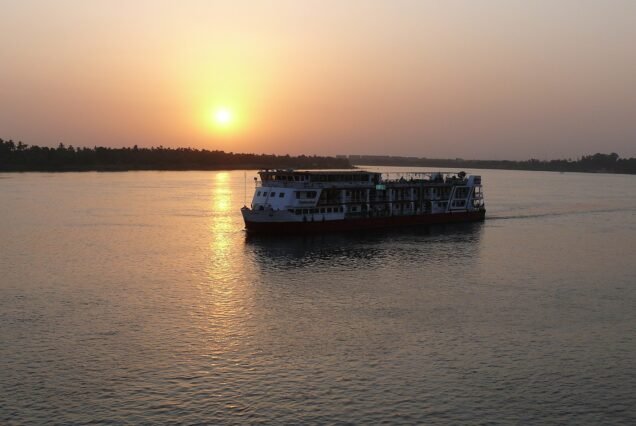
The bed. A cabin is small and the boat moves at night. After a long flight across time zones, a full-size room helps. What you give up is real too: no Nile past the window at breakfast. If that is the part you came for, take the Aswan to Luxor Nile cruise instead.
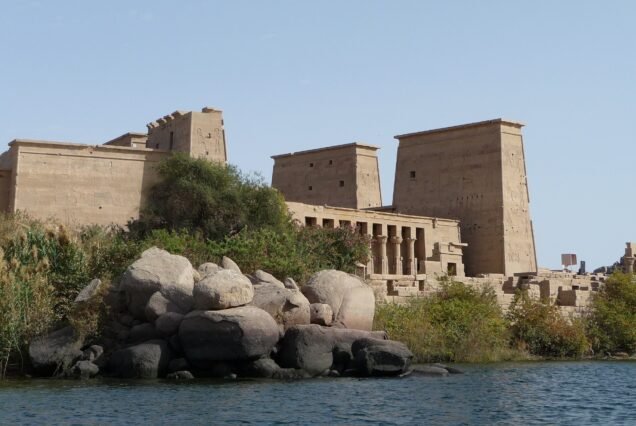
We meet you at Aswan airport, drop your bags at the hotel, then head out to Philae, the temple of Isis, which is not where the ancient Egyptians put it. When the High Dam raised Lake Nasser the original island went under, so the temple was cut into blocks, numbered and rebuilt on Agilkia Island next door. You reach it by motorboat, a fair introduction to a city where the river is the main road.
The afternoon finishes at the High Dam itself, the 1960s project that created the lake and forced the rescue of Philae and Abu Simbel in the first place. Short and flat. Arriving in Egypt the same day after a long-haul flight? Tell us at booking and we move Philae to the next morning.
Meals: none on arrival day. Night: Aswan.
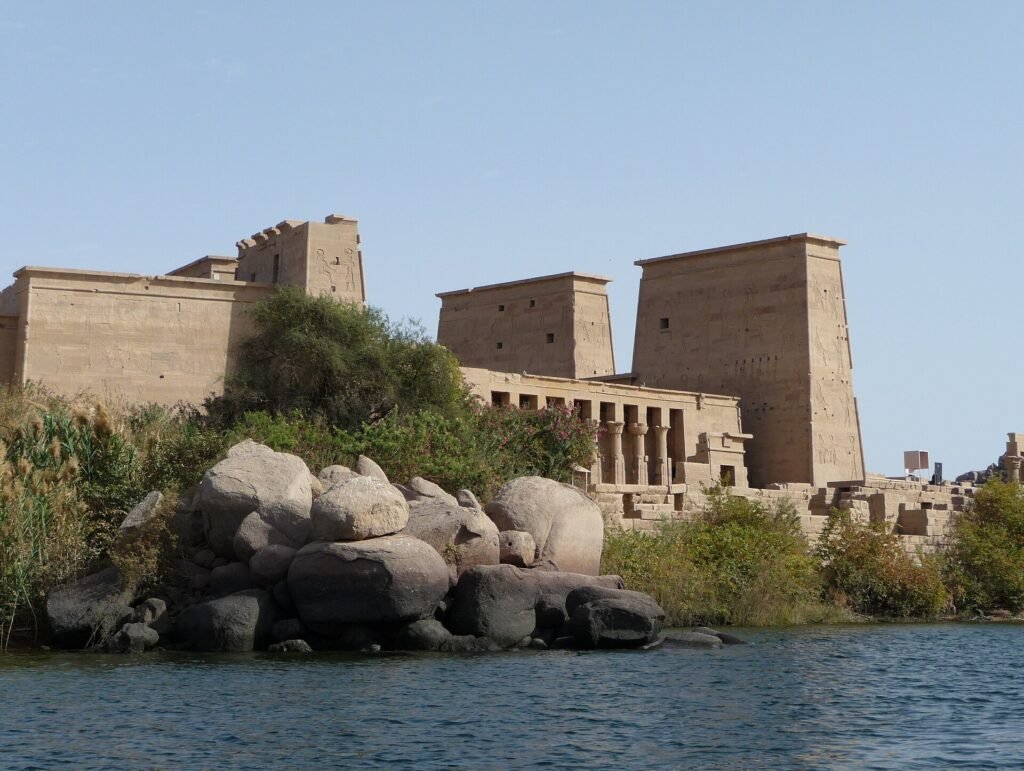
An early start, and the one morning where the alarm is genuinely unkind. The drive runs about 175 miles, some 280 km, south across the desert to Abu Simbel, near the Sudanese border.
What you get for it is the most theatrical thing Ramesses II ever built: four seated colossi of himself, over 60 feet or 18 meters high, cut into the sandstone cliff, with a smaller temple beside it for Nefertari. Like Philae, it is not standing where it was carved. In the 1960s the facade and the halls behind it were sawn into more than a thousand blocks and reassembled 200 feet, about 60 meters, higher, inside an artificial mountain built to hold them. Your guide will show you the joins. Then back to the same hotel in Aswan, so nothing needs repacking.
Meals: breakfast. Night: Aswan.
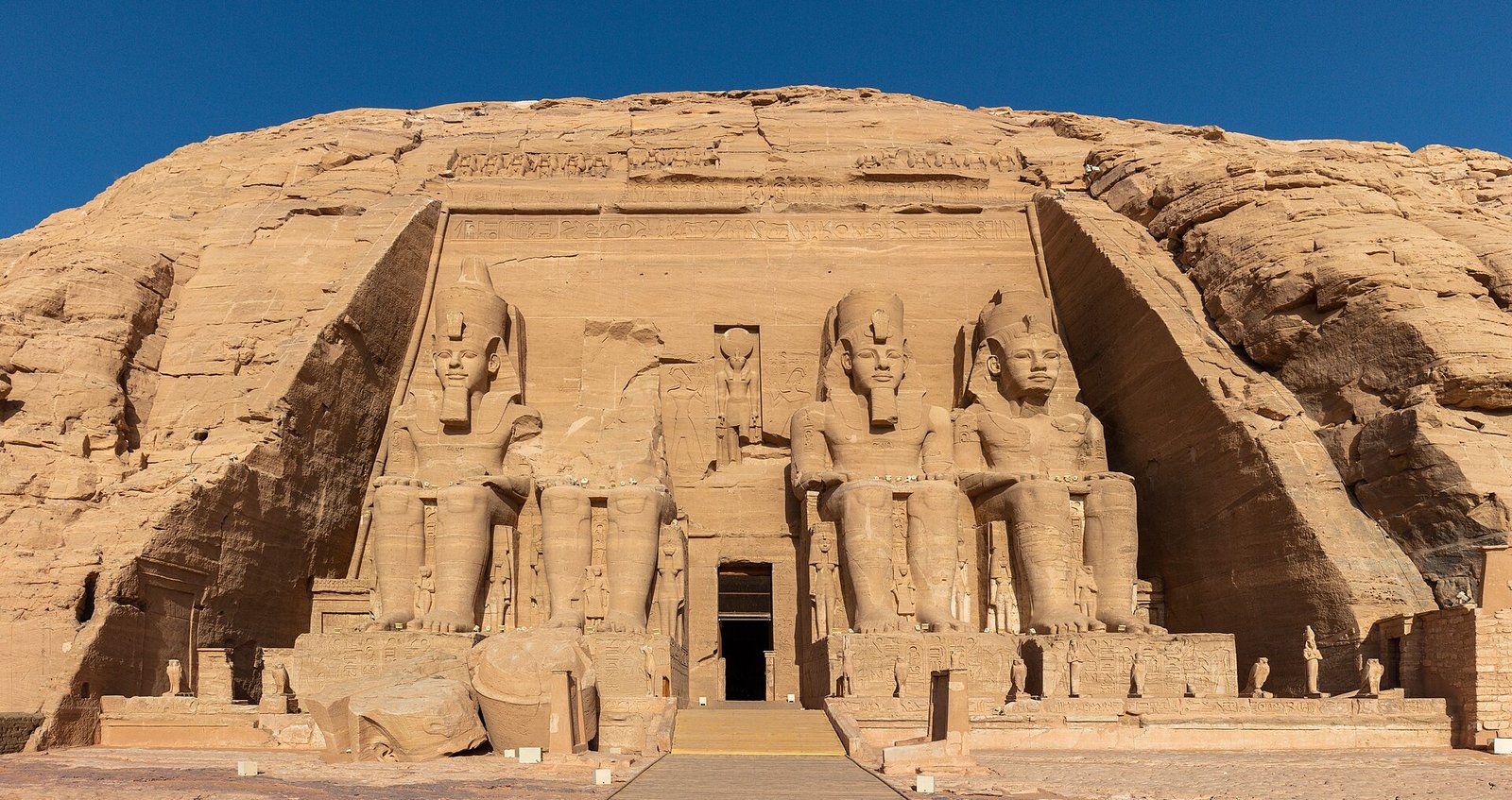
Check out and head north up the valley. First stop is Kom Ombo, two temples in one building: the southern half belongs to Sobek the crocodile god, the northern half to Horus the Elder, and the whole thing is split down the middle, two entrances and two sanctuaries. The museum next door holds mummified crocodiles from the local cemetery, which children and adults find equally hard to walk past.
Then Edfu, the one that surprises people. Buried under sand and village housing for centuries, the Temple of Horus came out of the ground more intact than any other in Egypt. The roof is on, the pylon is at full height, and the Horus myth is still legible where it was carved. You reach Luxor in the afternoon and the evening is yours.
Meals: breakfast. Night: Luxor.
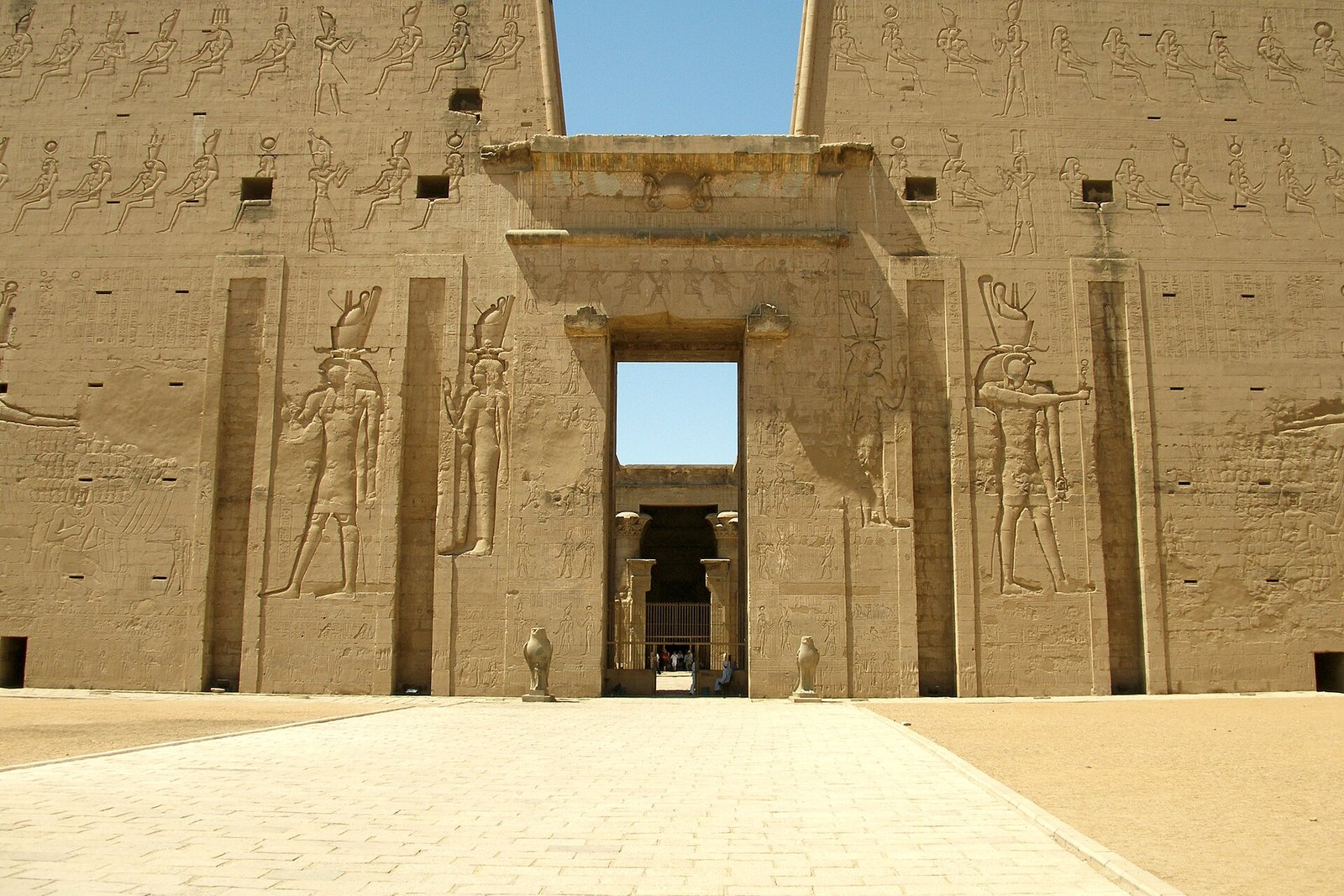
The biggest day of the trip, and the reason both Luxor nights are in the same hotel. Morning on the east bank starts at Karnak, less a temple than a construction site that stayed open for roughly 2,000 years as pharaoh after pharaoh added to it. The hypostyle hall alone holds 134 columns, the tallest around 70 feet, about 21 meters, and standing in it is the moment most people remember from Egypt. Then Luxor Temple, smaller, built on a scale you can take in.
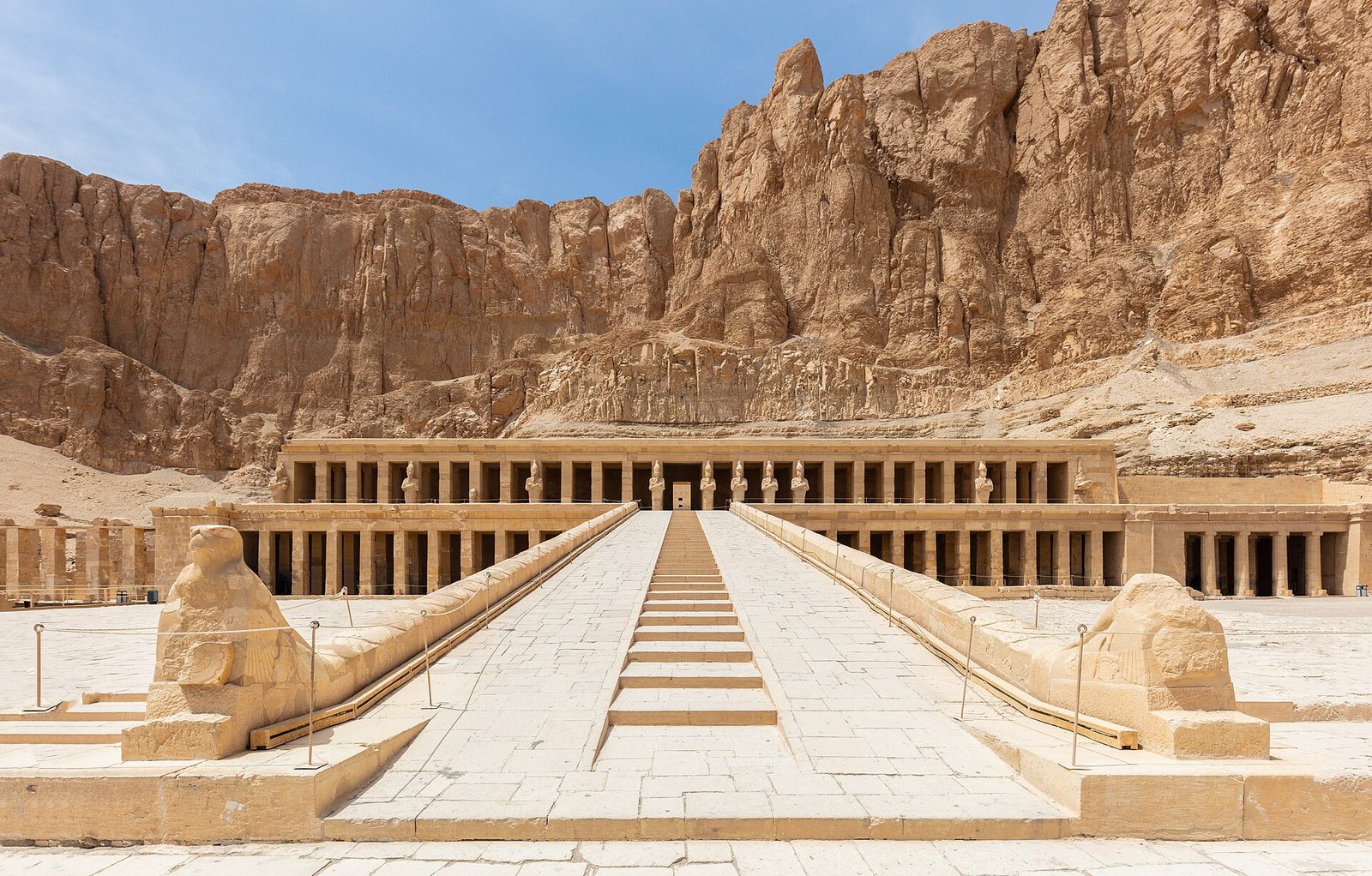
After lunch you cross to the west bank, the side of the dead. The Valley of the Kings is a dry gorge holding more than 60 royal tombs, and your ticket covers three, chosen on the day by your guide based on which are open and quietest. Then Hatshepsut's terraced temple at Deir el-Bahari, cut into the cliff in three tiers, and the Colossi of Memnon, left from a mortuary temple once bigger than Karnak.
Meals: breakfast. Night: Luxor.
Breakfast, then a free morning shaped around your flight. Some people use it for a sunrise balloon over the west bank, booked in advance. Some walk the souk for alabaster and spices. Some sit on the corniche with a tea, which after Day 4 is defensible. We drive you to Luxor airport with margin, and if your flight out is late, say so when you book and we restructure the morning.
This is also the natural point to extend. Cairo, Giza and the Red Sea bolt onto either end. Our Egypt tour packages show how the pieces fit together.
Meals: breakfast. Night: not included, this is your departure day.
Want it in writing?
Day by day, hotels, what is included and the price for your dates. We send it on WhatsApp in a few minutes.
If something is not on either list, it is included. There is no fine print and nothing gets added at the hotel desk.
Every gate below is paid before you arrive. You do not queue for tickets and you hand over no money at these entrances. Here is what the entries cost at official 2026 rates, per person.
| Site | Official 2026 fee | Approx. USD |
|---|---|---|
| Philae Temple, Aswan | 550 EGP | 11 |
| Abu Simbel, both temples | 822 EGP | 17 |
| Kom Ombo Temple | 450 EGP | 9 |
| Temple of Horus, Edfu | 550 EGP | 11 |
| Karnak Temple complex | 600 EGP | 12 |
| Luxor Temple | 500 EGP | 10 |
| Valley of the Kings, 3 tombs | 750 EGP | 15 |
| Temple of Hatshepsut | 440 EGP | 9 |
| Colossi of Memnon | No gate fee | 0 |
| Total already paid for you | 4,662 EGP | about 94 |
Fees are published by the Egyptian Ministry of Tourism and Antiquities and set in Egyptian pounds. The dollar column is approximate, converted at 1 USD = 49.79 EGP on 6 August 2026, and the rate moves, so treat the pound figures as the real number. Aswan High Dam entry is included and unlisted because it is not on that schedule. Hold this total against any tour that excludes entrance fees, because that is usually where a low headline price comes from.
From US$520 per person, double occupancy
That is the starting figure for 4-star hotels in Aswan and Luxor with everything on the inclusions list, including all the temple entries above. It is per person, never per group, and a starting price.
All entries paidEnglish-speaking EgyptologistNothing to pay today, quotes are free
We quote in US dollars. A deposit confirms your dates and the balance is settled in Egypt, so you are not sending the full amount overseas before you arrive.
Tell us when you want to travel, how many of you there are, and which hotel category. We reply the same day with a firm number.
Check the source, not an operator's marketing. Read your own government's current travel advisory for Egypt, because advisories are worded differently from one country to the next and they change, and we will not quote one as permanent.
What we can say flatly is geography. This itinerary never goes near Sinai. Aswan, Abu Simbel, Kom Ombo, Edfu and Luxor are all in the Nile Valley in the far south, roughly 700 miles, or 1,100 km, from the peninsula. You are also never alone: a driver and guide are with you at every transfer and site.
No. We are an Egypt-based operator and we do not sell, book, quote or coordinate international air. You buy your own ticket into Egypt and out of it. The domestic sectors are different: Cairo to Aswan and Luxor to Cairo are not included either, but we can book and quote them separately once you know your international times.
30 dollars single entry, 65 dollars multiple entry, per person. You will see 25 dollars on plenty of operator pages and travel articles and it is out of date. You will also see higher figures quoted by Egyptian consular services abroad, a different product with a service charge on top, not the e-Visa.
The official channel is visa2egypt.gov.eg. Apply before you fly, print the approval, and skip the bank window queue at Cairo. Your passport needs six months of validity from your entry date.
Some, yes, and it catches people out, because few of us carry much cash at home any more. If you buy the visa on arrival rather than online, it must be paid in US dollars cash. Bring crisp, unmarked, recent bills: banks and airport desks refuse notes that are torn, written on, or from an older pre-2009 series.
Small dollar bills are handy for tips, but pounds are better value for everyday spending. ATMs are reliable in Aswan and Luxor city centers and unreliable the moment you leave them, so draw cash in town and carry a backup card on a different network.
It does not have to. Depending on how many time zones you cross, you can land with your body clock in the middle of the night, and a routing with a connection adds hours on top of that.
Day 1 is deliberately light: one temple reached by boat, and a dam stop you barely leave the vehicle for. If you arrive the same calendar day, say so at booking and we move Philae to the next morning. We can offer that because nothing here is tied to a sailing schedule.
The question in Egypt is not whether but how often. The answer is more often than you are probably used to, in smaller amounts.
| Who | Customary | When |
|---|---|---|
| Egyptologist guide | 150 to 250 EGP per day | End of the trip, or per city |
| Driver | 100 to 150 EGP per day | End of each leg |
| Hotel housekeeping | 50 EGP | Per night, left in the room |
| Bellhop, boat crew, felucca captain | 20 to 50 EGP | On the spot |
| Restroom attendant at temples | 10 EGP | On the spot, and bring your own tissue |
These are customs, not charges, and nothing here is added to your bill. Below the guide and driver level, small Egyptian notes work better than dollars, because a one dollar bill has to reach a bank before it is useful to a housekeeper.
Do not drink the tap water and do not brush your teeth with it. Bottled water is included in the vehicle and cheap everywhere else. Ask for drinks without ice unless you are in a 4-star or 5-star hotel, where the ice is filtered.
On food, the pattern that keeps people well is cooked and hot, or peeled by you. Grilled meat, tagines, koshari, fresh bread and hot mezze are fine. Raw salad rinsed in tap water and pre-cut fruit are what to skip outside your hotel. Carry hand sanitizer and your own tissues, because restrooms at Karnak and the Valley of the Kings are frequently unstocked. Pack an anti-diarrheal and rehydration sachets.
Egypt is conservative and Upper Egypt more so than Cairo, but the temples are tourist sites and nobody expects you covered head to toe. The practical answer for women is loose, lightweight clothing covering the shoulders and reaching at least the knee. Linen trousers or a long skirt with a light long-sleeved top is the standard, and it doubles as sun protection, which matters more than modesty at Abu Simbel in July. You do not need to cover your hair anywhere on this route. The only exception is a mosque, and there are none on the itinerary.
Shorts are tolerated at Luxor's temples and you will see them, but they draw more attention. Closed shoes with grip matter more than you would think: the Valley of the Kings is loose rock and tomb ramps. For men, the same rules, and skip the tank top.
We do not sell it and it is not included, so this is advice, not a sales pitch. Take a policy. Domestic health cover, whether it is a private plan or a national health system, usually stops at the border, so a hospital in Aswan is a cash transaction until your insurer reimburses you. Look for emergency medical treatment, evacuation and repatriation, which is the expensive part and the real reason to buy, plus trip cancellation. Buy when you book, not the week before you fly. Our page on travel insurance goes through what to look for.
Because you want to leave on your own date, sleep in a full-size room, and see Kom Ombo and Edfu without three boats worth of people arriving at once. Same temples either way. The difference is the bed and the schedule. Take the cruise if the river is the reason you are coming. Put the Luxor to Aswan Nile cruise beside this page and compare night by night.
Yes, and a private itinerary suits solo travel better than a group departure. What there is, unavoidably, is a single occupancy supplement, since hotels charge for the room and not the head. Solo women travel this route regularly, and a licensed guide plus a private driver at every transfer removes most of the friction in solo travel reports from Egypt, which is usually street hassle rather than safety at the sites.
Yes, and most travelers do. Giza, Saqqara, the Egyptian Museum in Tahrir and the Grand Egyptian Museum sit on either end of this route, joined by the domestic flight. That usually takes the trip to seven or eight days, which is where our 8 day Egypt itinerary lands, and our Egypt tour packages show the combinations.
Being based in Egypt is not automatically a virtue. Here is what it changes.
The guide is ours. Book an agency outside Egypt and the itinerary is usually resold to a local operator, who resells the guiding. Every layer takes a margin and none of them is standing next to you at Edfu. We are the local operator, which is why this price includes every gate fee and still starts where it does. It is also why changes happen the same day: if your flight into Cairo slips, that is a message to the people who own the vehicle, not a ticket routed to a call center in another time zone.
We hold no national travel bonding. Those are national financial protection schemes for businesses established in the country that runs them, and an Egyptian company cannot hold them. Any Egypt-based operator claiming them is telling you something untrue. Our protection is structural: a deposit confirms and the balance is settled in Egypt, so the sum sitting overseas before you arrive stays small.
There is no star rating on this page. We have 12 reviews, rated 5.0, and every one is about the agency and our guiding rather than this specific itinerary. They were left by travelers on our Spanish-language departures. Attaching a per-tour rating we have not earned would mean inventing one, and plenty of operators in this market do exactly that. Read what we have on our reviews page and weigh it for what it is.
Still deciding? Compare the 2 day Luxor tour if Aswan is not essential, the Abu Simbel day trip on its own, or our guides to Aswan and Luxor.
Tell us your dates and how many are traveling. You get the full plan and a firm price the same day, and the quote costs nothing.
Tell us the essentials in 30 seconds. When you send it, WhatsApp opens with your message already written and someone from our team takes it from there.
A real person from our team replies, not a bot, almost always the same day. A quote is free and commits you to nothing.
We use your details only to prepare your quote. We do not share your information or send you advertising.