
El Alamein sits on Egypt's Mediterranean coast, roughly 100 km (about 60 miles) west of Alexandria, and people come for two very different reasons. One is history: the Second World War battlefields, cemeteries and memorials where the North African campaign turned. The other is the sea: New Alamein, a young coastal city of towers, lagoons and white sand beaches. Most travelers see it as a full day out of Alexandria, and Explora Egipto can fold it into any custom trip.
Say "El Alamein" to a history reader in the United States and they picture tanks in the desert. Say it to someone from Cairo and they picture a summer apartment by the beach. Both are right.
The old name belongs to a small railway halt on the coast road west of Alexandria. In the middle of the last century this empty strip between the sea and the Qattara Depression to the south became one of the most fought-over pieces of ground in the war. Today the battlefield is marked by cemeteries and national memorials along the highway, quiet places where families and travelers come to pay their respects.
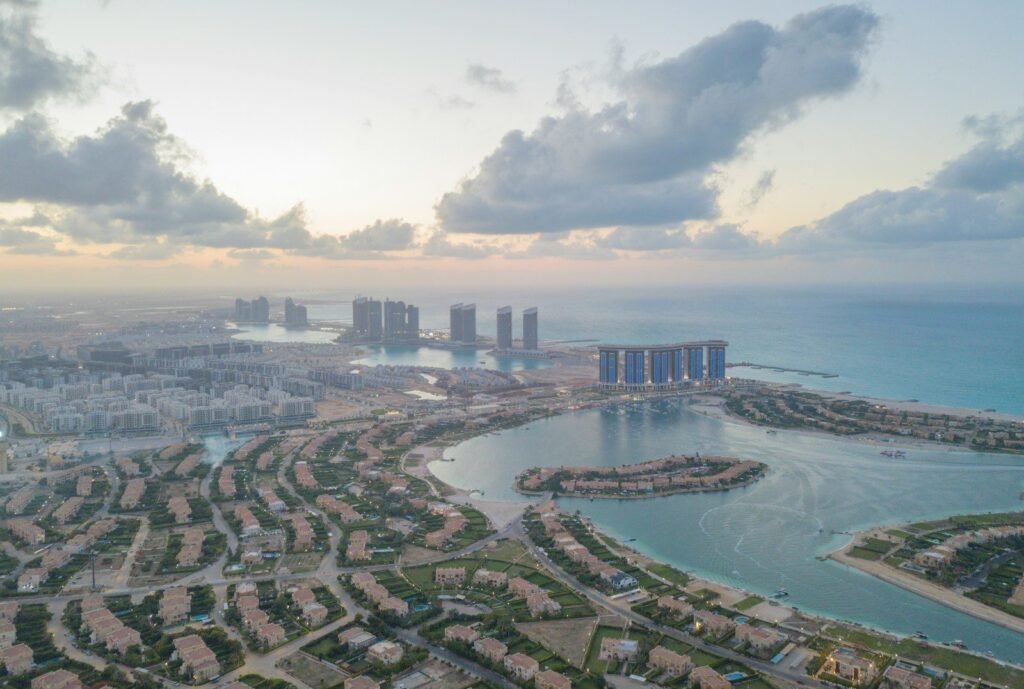
Just along the same coast, the landscape changes completely. New Alamein, officially Al Alamein City, has risen from the sand with tall residential towers, a marina, artificial lagoons and a string of resorts. It sits in the heart of what Egyptians call "el Sahel," the North Coast, which fills up every summer with families escaping the heat of Cairo.
El Alamein is not on the Nile route, so it works best as an extension of a stay in Alexandria rather than as a stop between temples.
In 1942 the German and Italian forces under Erwin Rommel pushed east across Libya into Egypt, aiming for Alexandria, the Suez Canal and the oil beyond it. The Allied line held at El Alamein, a position chosen because the sea on one side and the soft ground of the Qattara Depression on the other made it hard to go around.
The First Battle of El Alamein, fought in July 1942, stopped the Axis advance toward Alexandria. It did not end the campaign, but it bought time. Over the following months the British Eighth Army, now under Bernard Montgomery, was reinforced and reorganized.
The Second Battle of El Alamein began on October 23, 1942 and lasted until November 11, 1942. The Eighth Army, which included soldiers from across the Commonwealth, faced Rommel's German and Italian divisions in a long and costly fight through minefields and open desert. When it ended, the Axis forces were in retreat, and the battle is widely seen as a turning point of the North African campaign.
Behind those dates are many thousands of young men from Britain, Australia, New Zealand, South Africa, India, Germany, Italy and elsewhere who never went home. That is the heart of a visit here. The memorials are not built to celebrate victory. They are places of mourning, and the most moving thing about them is how many nations share the same stretch of sand.
The main sites are spread along several kilometers of the coast road, so you need a car and driver to move between them. A calm, unhurried visit to all four takes most of a morning. Dress as you would for any cemetery, keep voices low, and ask before photographing other visitors, who may be there for a family member.
| Memorial | What you see | Time to allow |
|---|---|---|
| Commonwealth War Cemetery | Rows of pale headstones in a walled garden, kept by the Commonwealth War Graves Commission, with a memorial listing the missing | About 45 minutes to an hour |
| German memorial | A fortress-like stone monument on a rise above the sea, with a quiet inner courtyard | About 30 minutes |
| Italian memorial (Sacrario) | A white tower and memorial hall looking out over the Mediterranean | About 30 minutes |
| El Alamein War Museum | Tanks, artillery and other vehicles outside, with maps, uniforms and exhibits inside | About an hour |
This is the site most English-speaking visitors come for. Thousands of headstones stand in neat rows on a gentle slope, each with a name, a regiment and often a short line chosen by the family. Many of the men buried here were in their late teens or early twenties. The silence, broken only by wind, stays with people long after they leave.
Farther west, the German memorial looks like a desert fortress, heavy and closed, built around an inner court. The Italian memorial, known as the Sacrario, is lighter in feeling, a white tower and hall above the water. Seeing them after the Commonwealth cemetery is a reminder that the grief was shared on every side of the line.
The museum helps make sense of what you have just seen. Outside, heavy vehicles and guns stand in the sun. Inside, maps and displays explain how the front moved and what daily life was like for the soldiers. It is a good first stop if you want context before the cemeteries.
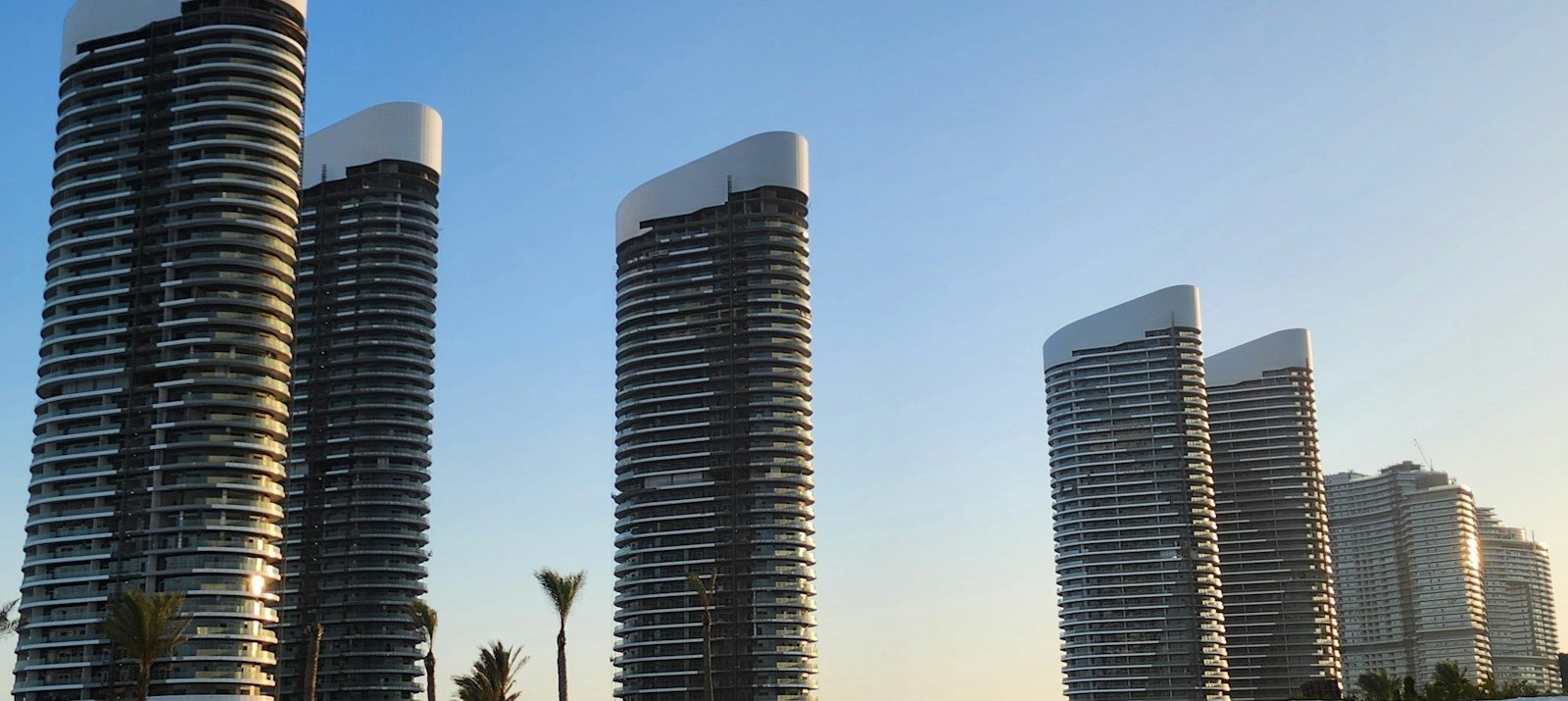
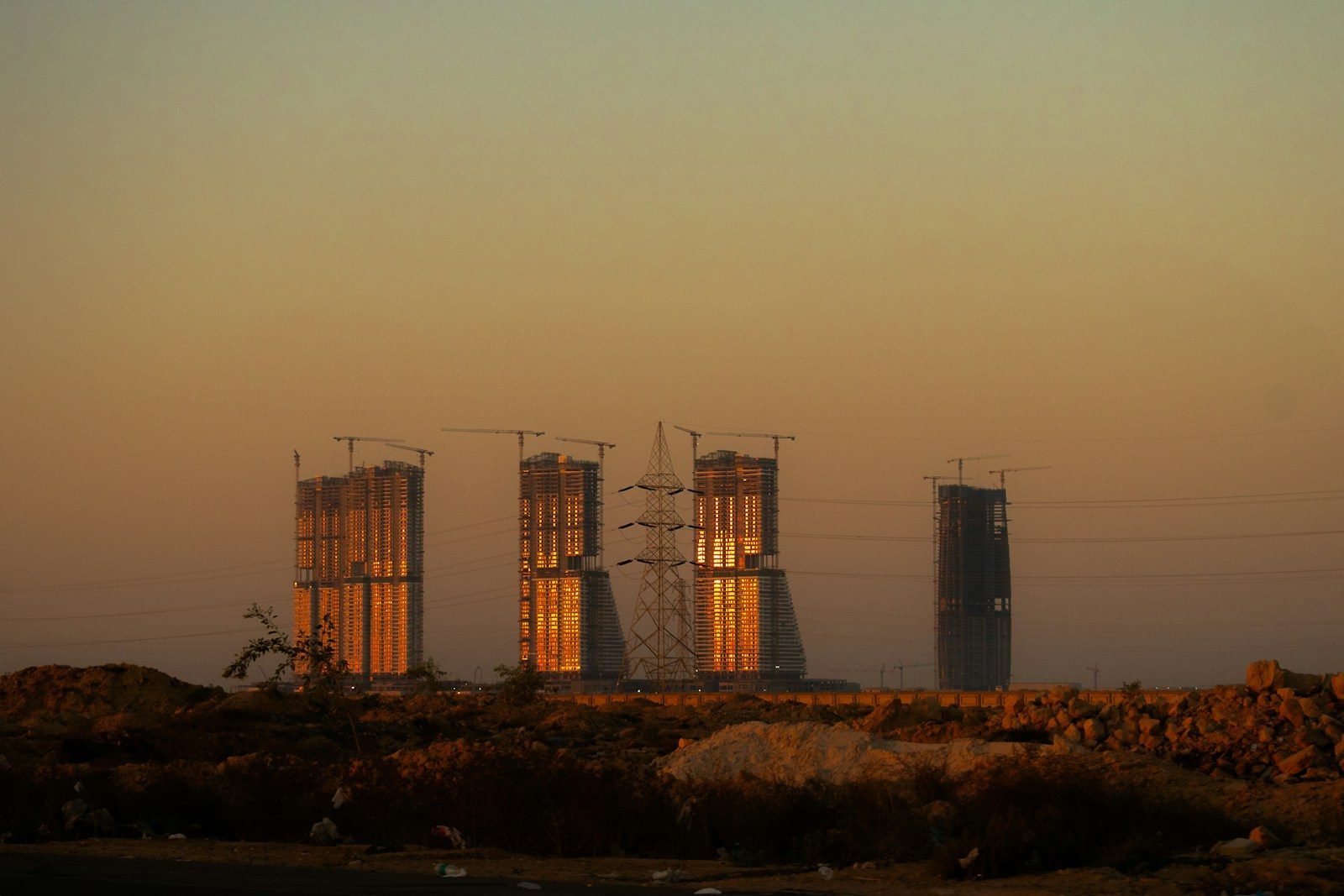
New Alamein is one of Egypt's new planned cities, and it looks it. Glass towers rise out of the coastal plain, a marina holds yachts, and blue lagoons run between hotels and apartment blocks.
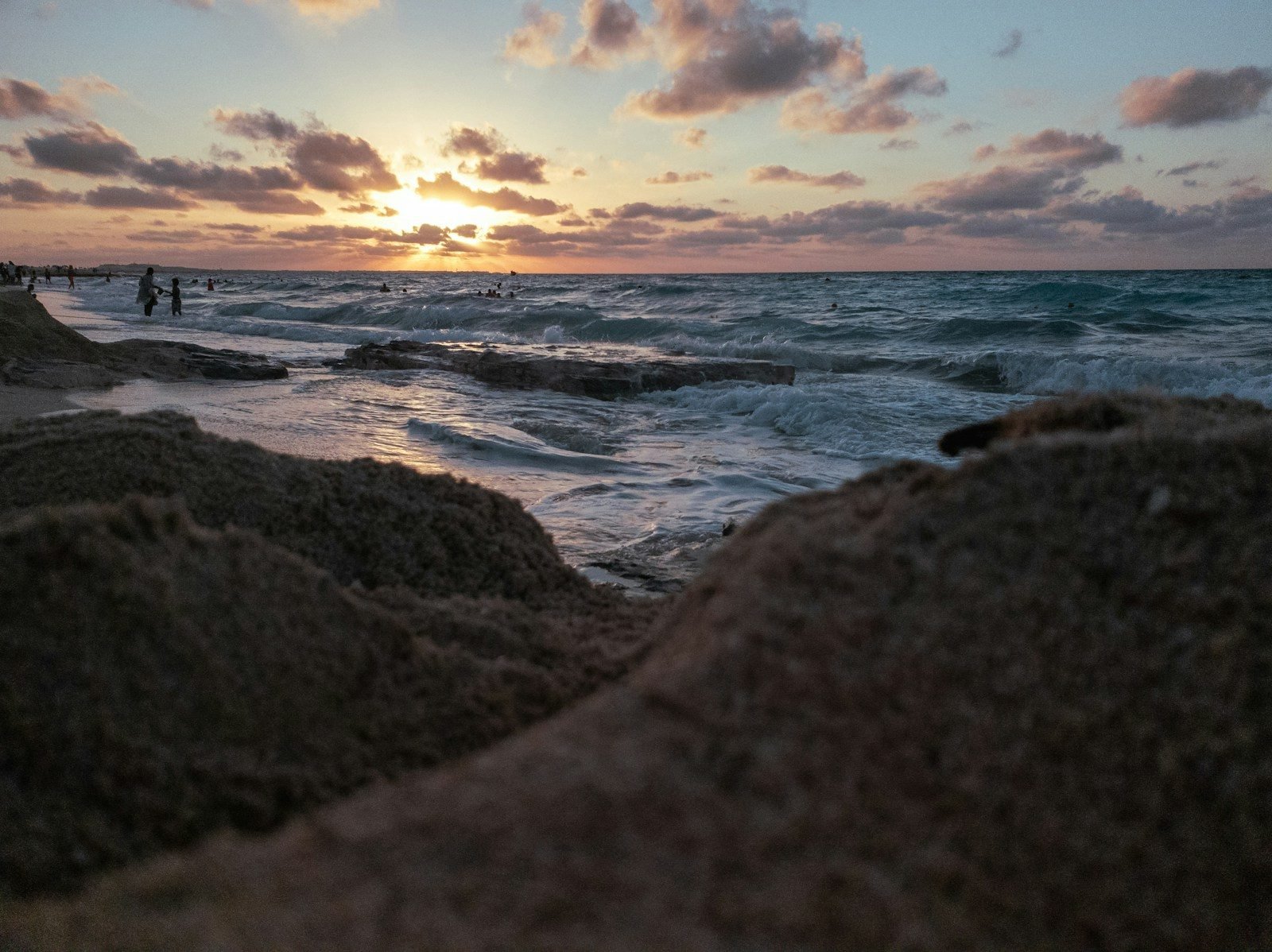
The beaches are the real draw. The sand along this coast is white and fine, and on a calm day the water shifts from pale turquoise near the shore to deep blue farther out. Sidi Abd el Rahman, a little farther west along the coast from the memorials, is one of the best known stretches, and the sunsets over the Mediterranean here are beautiful.
It helps to know how Egyptians use this coast. The North Coast is above all a summer destination for Egyptian families, busiest in July and August, when resorts fill and the evenings are lively. Outside those months it is much quieter, and some places close or run at a slower pace.
If you are choosing between Egypt's two coasts, think of them as different trips. The Mediterranean here is cooler, wilder and more seasonal, with long sandy beaches. The Red Sea is warm most of the year and is where you go for coral reefs and snorkeling.
About two more hours west along the coast road lies Marsa Matruh, the best known beach town on Egypt's Mediterranean after Alexandria. Its very clear bays, such as Agiba Beach and the rock pool known as Cleopatra's Bath, are famous across the country, and a cave nearby holds the small Rommel Museum, tied to the same El Alamein campaign. Marsa Matruh is also where the road turns south into the Western Desert toward the Siwa Oasis, so it fits a longer coast and oasis route better than a day trip from Alexandria.
Alexandria is the natural base. El Alamein lies about 100 km to the west along the coast road, which usually means about an hour and a half to two hours by road, depending on traffic leaving the city and how many stops you make. This is the easiest way to see the memorials and still be back in Alexandria for dinner.
From Cairo, the desert road takes you there in some three and a half hours each way. A same-day round trip is possible but long, and you spend most of it in the car. If you are starting in Cairo, we usually suggest traveling to Alexandria first, seeing the city, and doing El Alamein from there, or stopping at El Alamein on the way and spending the night by the sea.
You need a vehicle to link the memorials, the museum and the beaches. A private car with a driver, ideally with a guide who knows the history, is the most comfortable option.
El Alamein makes the most sense as part of a Mediterranean chapter in your trip. A typical pattern is two or three nights in Alexandria, Egypt's Mediterranean city, with one full day given to El Alamein.
In Alexandria itself, you might spend a day between the modern Bibliotheca Alexandrina, the catacombs and the seafront, and end at the Qaitbay Citadel, built where the ancient lighthouse once stood. The next day you head west along the coast to El Alamein, visit the memorials in the cooler morning hours and, if the season is right, finish on a beach before driving back.
Many travelers begin or end in Cairo with the pyramids, the Egyptian museums and the old city. Our guide to what to see in Cairo can help you plan those days. Because El Alamein is far from Luxor and Aswan, it fits best at the start or end of an itinerary rather than in the middle of a Nile cruise.
For the memorials, spring and fall are the most comfortable, with milder temperatures for walking between headstones and monuments. Winters on this coast are mild by American standards but often windy and cool, which is fine for sightseeing if you bring a jacket.
For the beach, the Mediterranean is swimmable roughly from June to September. July and August are the warmest months and also the busiest, since that is when Egyptian families flock to the North Coast. Early summer and September tend to offer warm water with fewer crowds.
For month-by-month conditions across the country, see our page on Egypt temperature by month.
It is a strong fit if you have a family connection to the Desert War, if you read military history, or if you simply want to understand a chapter of the twentieth century that shaped the world your parents or grandparents grew up in. For families visiting a specific grave, the day can carry a weight that no temple visit matches.
It also suits travelers who want a beach break on a Mediterranean coast that few foreign visitors know, or who are curious about how modern Egypt is building its new cities.
It is less of a fit if you have only a week in Egypt and want to focus on Pharaonic sites. In that case, time spent on the Nile or in Cairo will likely give you more. If you are unsure, our ready-made Egypt tour packages show what a classic first trip covers, and you can then decide whether a Mediterranean extension belongs in yours.
Explora Egipto does not sell a fixed El Alamein tour. Instead, we add it where it makes sense for you, usually as a full day from Alexandria or as a stop on the way along the coast, inside a custom Egypt tour built around your dates and interests.
We shape the day to your reasons for coming: more time at the Commonwealth cemetery if you are visiting a relative's grave, an English-speaking guide to walk you through the battles if you read history, or the memorials in the morning and the sea in the afternoon if you want the beach.
Many of our guests from the United States combine El Alamein and Alexandria with Cairo and a Nile cruise. Our page on Egypt tours from the USA explains how we plan for American travelers. We arrange everything on the ground in Egypt; international flights are booked separately by you.
El Alamein is on Egypt's Mediterranean north coast, roughly 100 km (about 60 miles) west of Alexandria. It lies on the coast road that runs from Alexandria toward the Libyan border, with the sea to the north and desert to the south.
It is worth it if the Second World War matters to you, if you have a family link to the Desert War, or if you want a quiet Mediterranean beach day in season. If your time is short and your priority is ancient Egypt, you may prefer to spend the day in Cairo or on the Nile.
Yes, and it is the easiest way to see it. The drive is about an hour and a half to two hours each way, which leaves time for the memorials, the museum and, in summer, a swim before returning to Alexandria in the evening.
It is possible but tiring, since the desert road takes some three and a half hours each way. A better plan is to go to Alexandria first and visit El Alamein from there, or to stay a night on the North Coast.
There were two main battles. The first, in July 1942, stopped the German and Italian advance toward Alexandria. The second, from October 23 to November 11, 1942, saw the British Eighth Army under Montgomery push back Rommel's forces, a turning point of the North African campaign.
Many visitors come for exactly that reason. The Commonwealth War Graves Commission keeps searchable records online, so it helps to look up the name and grave reference before you travel. Share the details with us and we will plan enough time at the cemetery.
New Alamein, officially Al Alamein City, is a new planned city on the coast near the old battlefield, with tall residential towers, a marina, lagoons and resorts. It is part of the North Coast, known in Egypt as el Sahel, a summer beach destination for Egyptians.
Most people find the sea too cool in winter. Winters here are mild but windy, which suits sightseeing better than swimming. The Mediterranean is swimmable roughly from June to September, with July and August the warmest and busiest months.
Marsa Matruh is further west on the same coast road, roughly two hours by car from El Alamein depending on traffic and stops. It is a beach destination in its own right and the gateway to the Siwa Oasis, so it usually fits a multi day route rather than a return day trip.
Tell us why El Alamein matters to you, whether it is a grave to visit, a battle to understand or a beach to enjoy, and we will fit it into a private itinerary with Alexandria, Cairo and anything else you want to see.
Keep exploring