The unique things to do in Egypt that turn a checklist trip into the one you talk about for years
The unique things to do in Egypt that turn a checklist trip into the one you talk about for years
The unique things to do in Egypt are the ones you cannot copy anywhere else: a hot-air balloon over the Valley of the Kings at dawn, a night under the stars in the White Desert, four days on a sailing dahabiya, sunrise on the facade of Abu Simbel before the day trippers arrive, Sufi whirling inside a Mamluk caravanserai, dinner cooked by a Nubian family, floating in the salt lakes of Siwa, the camel market at Birqash, dawn on Mount Sinai, whale skeletons in Wadi el Hitan and, yes, crawling into the heart of a pyramid. Pick two or three, build the trip around them and leave the rest for a second visit. Below, what each one is, who it suits and how we fit it in.
Thirteen experiences at a glance, and how to choose between them
| Experience | Base | Time it takes |
|---|---|---|
| Hot-air balloon at dawn | Luxor west bank | One early morning |
| A night in the White Desert | Bahariya, from Cairo | Two full days |
| Dahabiya sail | Esna to Aswan | Four to five nights |
| Dolphins, reefs or a liveaboard | Hurghada or Marsa Alam | One day, or a week afloat |
| Sufi whirling at Wekalet el Ghouri | Islamic Cairo | One evening |
| Cairo food walk | Downtown and Sayeda Zeinab | Three hours |
| Nubian village dinner | Aswan west bank | One evening |
| Siwa salt lakes | Siwa Oasis, far west | Three nights minimum |
| Camel market | Birqash near Cairo, Daraw near Aswan | One morning |
| Sunrise at Abu Simbel | Abu Simbel village, overnight | One night |
| Mount Sinai at dawn | Saint Catherine | One night and a hike |
| Inside a pyramid | Giza or Dahshur | Under an hour |
| Fayoum and Wadi el Hitan | Day trip from Cairo | One long day or an overnight |
The rule that works: choose the experiences that only exist here. A balloon flies in many countries, but not over the Valley of the Kings. Two or three anchors per trip is the sweet spot.
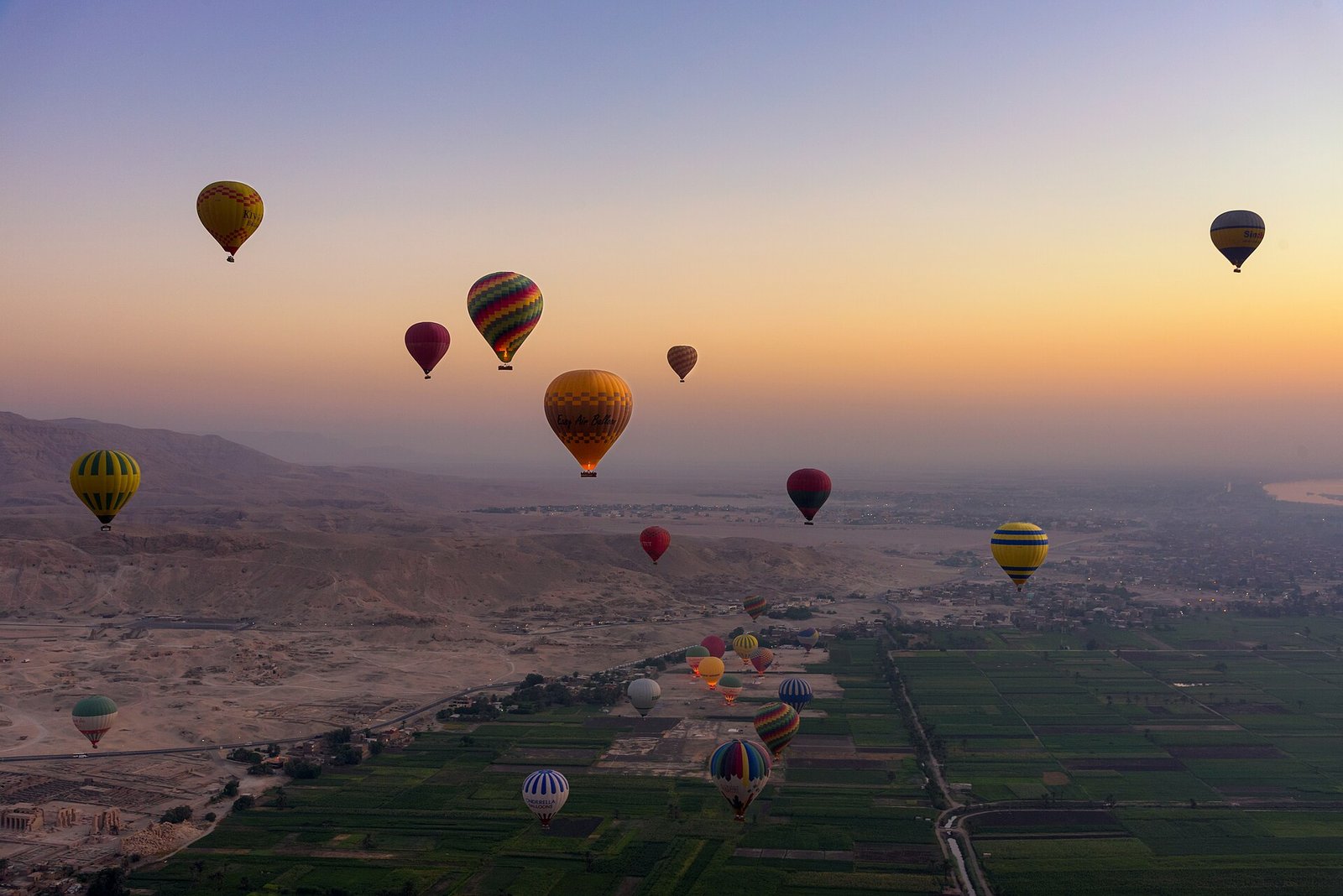
A hot-air balloon over Luxor at dawn
You are collected in the dark, cross the Nile by motorboat, drink tea in a field on the west bank and climb into the basket while the burners roar. Lift-off comes as the first light hits the Theban hills. For forty minutes or so you drift over the Colossi of Memnon, the temple of Hatshepsut against its cliff, sugarcane fields and, if the wind agrees, the rim of the Valley of the Kings.
Who it suits. Almost everybody. The baskets are large and stable and you stand throughout, so the only real limits are pregnancy, a bad back or a fear of heights that will not be talked down.
How it fits. It takes the first two hours of a Luxor west bank day, or the morning your cruise boat is docked at Luxor. Wind grounds flights on some mornings, so we book your first possible morning and keep a second one as a fallback.
How we arrange it. One licensed operator, pickup confirmed the night before, fallback slot held. Full details in our guide to the hot-air balloon over Luxor.
A night in the White Desert
Four to five hours west of Cairo lies Bahariya Oasis, and beyond it the road drops through the Black Desert, past Crystal Mountain, into a plain of chalk sculptures carved by wind over millions of years. Your driver leaves the asphalt in a 4x4, picks a spot among the formations, lights a fire and cooks dinner while the sky fills with more stars than most Americans have seen outside a planetarium. You sleep on a mattress under the open sky and wake to the chalk turning pink.
Who it suits. Couples, friends, families with teenagers, anyone who wants one night of total silence. Not for travelers who need a real bathroom, and not for small children. Winter nights fall close to 32 F (0 C), so this is a proper sleeping bag and a hat. We do not sell it in July or August.
How it fits. Two full days out of Cairo: drive out, desert afternoon, camp, sunrise, drive back. The cleanest placement is between your Cairo days and your Luxor flight.
How we arrange it. Our vehicle from Cairo, a Bedouin guide from Bahariya, camping gear included and a hotel shower waiting when you return.
Four days on a sailing dahabiya
A dahabiya is the boat nineteenth century travelers used on the Nile: a two-masted wooden sailboat with six to ten cabins and a shaded upper deck. It moves at the speed of the wind, moors against islands where the big ships cannot stop, and visits Gebel el Silsila and El Kab, which the standard cruise skips.
Who it suits. Honeymooners, couples celebrating something, groups of friends who can fill the boat, and anyone whose idea of the Nile is quiet rather than a pool deck with two hundred people.
How it fits. Dahabiyas sail between Esna and Aswan over four or five nights, in either direction. You still see Edfu and Kom Ombo, so it replaces the standard cruise rather than adding to it.
How we arrange it. We match you to a boat by cabin count, departure day and style. Compare it to a motor cruise in our guide to a dahabiya Nile cruise.
Dolphins, reefs and a Red Sea liveaboard
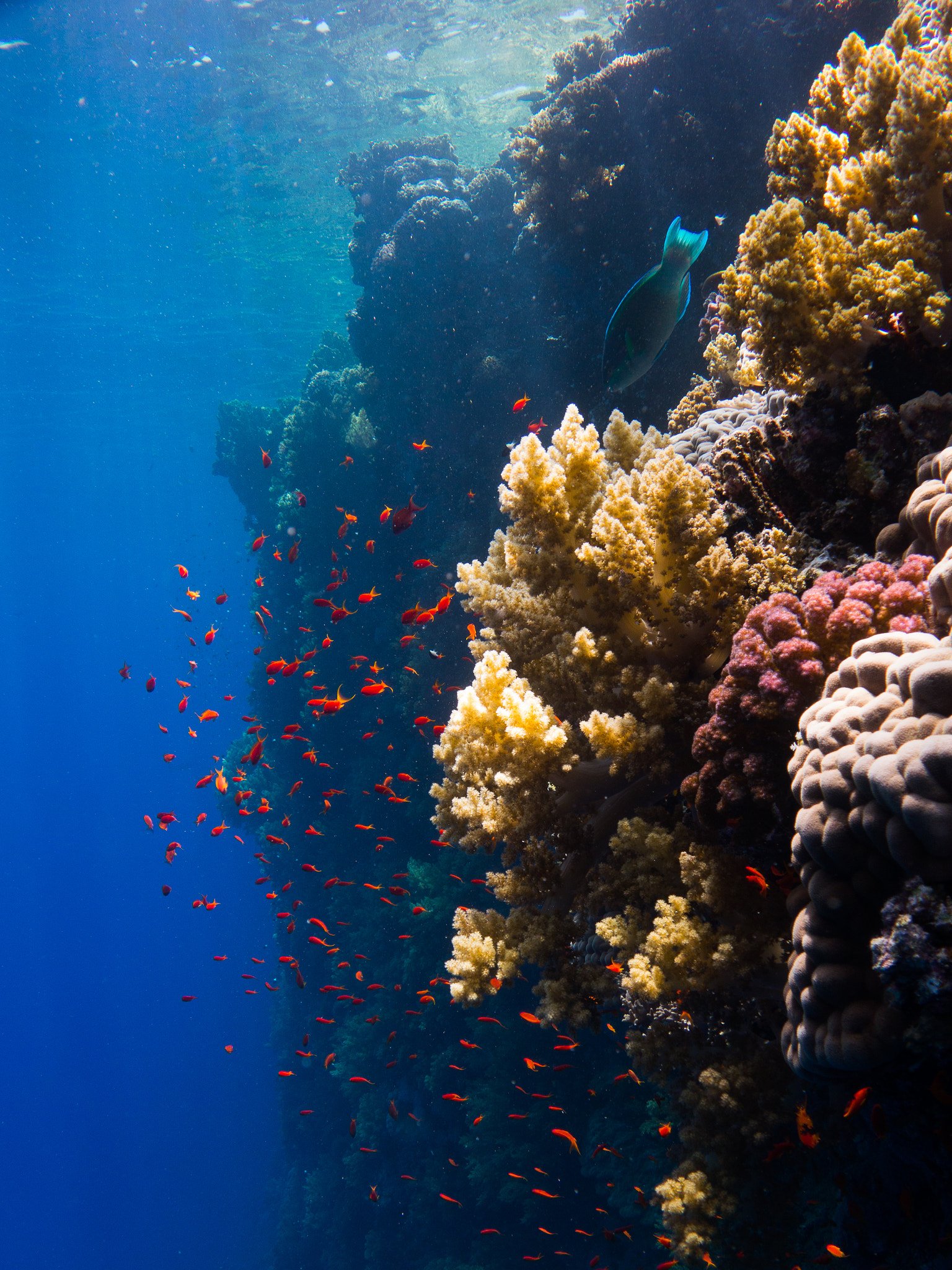
The most memorable thing on the Red Sea is swimming with wild spinner dolphins. Two reefs do it reliably: Sha'ab Samadai, known as Dolphin House, off Marsa Alam, and Sataya further south. The boat anchors inside the lagoon early and you snorkel out to where the pod rests. The rules are no touching, no chasing, no diving down on them.
For certified divers there is the liveaboard: a week aboard a dive boat out of Hurghada or Port Ghalib, three or four dives a day on the Brothers, Daedalus or the northern wrecks, and never a hotel lobby.
Who it suits and how it fits. Dolphin snorkeling suits any confident swimmer, children included; it is a day trip from Marsa Alam and a long one from Hurghada. Liveaboards need an advanced certification and are their own week.
How we arrange it. A dolphin boat with an operator that respects the reef rules, and for liveaboards a route matched to your certification. Day options are on our excursions from Hurghada page.
Sufi whirling at Wekalet el Ghouri and a Cairo food walk
Wekalet el Ghouri is a Mamluk caravanserai from the early sixteenth century on Al Azhar street. Now it hosts the Al Tannoura troupe, and their show is the most hypnotic ninety minutes in Cairo. Drummers build a rhythm, then one dancer, then three, spin in layered colored skirts until the skirts lift and separate into rings. Seats go early, so it is not an on-the-night decision.
The food walk is the daytime companion: three hours on foot through Downtown and Sayeda Zeinab with someone who eats there. Koshari at a counter, ful and taameya from a cart, hawawshi straight from the oven, feteer stretched by hand, sugarcane juice pressed while you watch.
Who it suits, how it fits, how we arrange it. Both are for everyone; the whirling is the best family evening in Cairo, and we adjust the walk for vegetarians. The show takes an evening, the walk a lunchtime. We reserve seats the moment your dates are fixed, and one of our own Cairo guides leads the walk.
A Nubian village dinner and the camel markets
Nubians were moved north when Lake Nasser rose behind the High Dam, and the villages on the west bank of Aswan, Gharb Soheil above all, are where their language, color and music survive. The tourist version is a boat ride, blue and ochre houses, hibiscus and a photo with a caged crocodile. The version worth having is dinner at a family home: bread from a clay oven, okra stew, a river fish, dates, and a conversation on the roof while the kids practice their English on you.
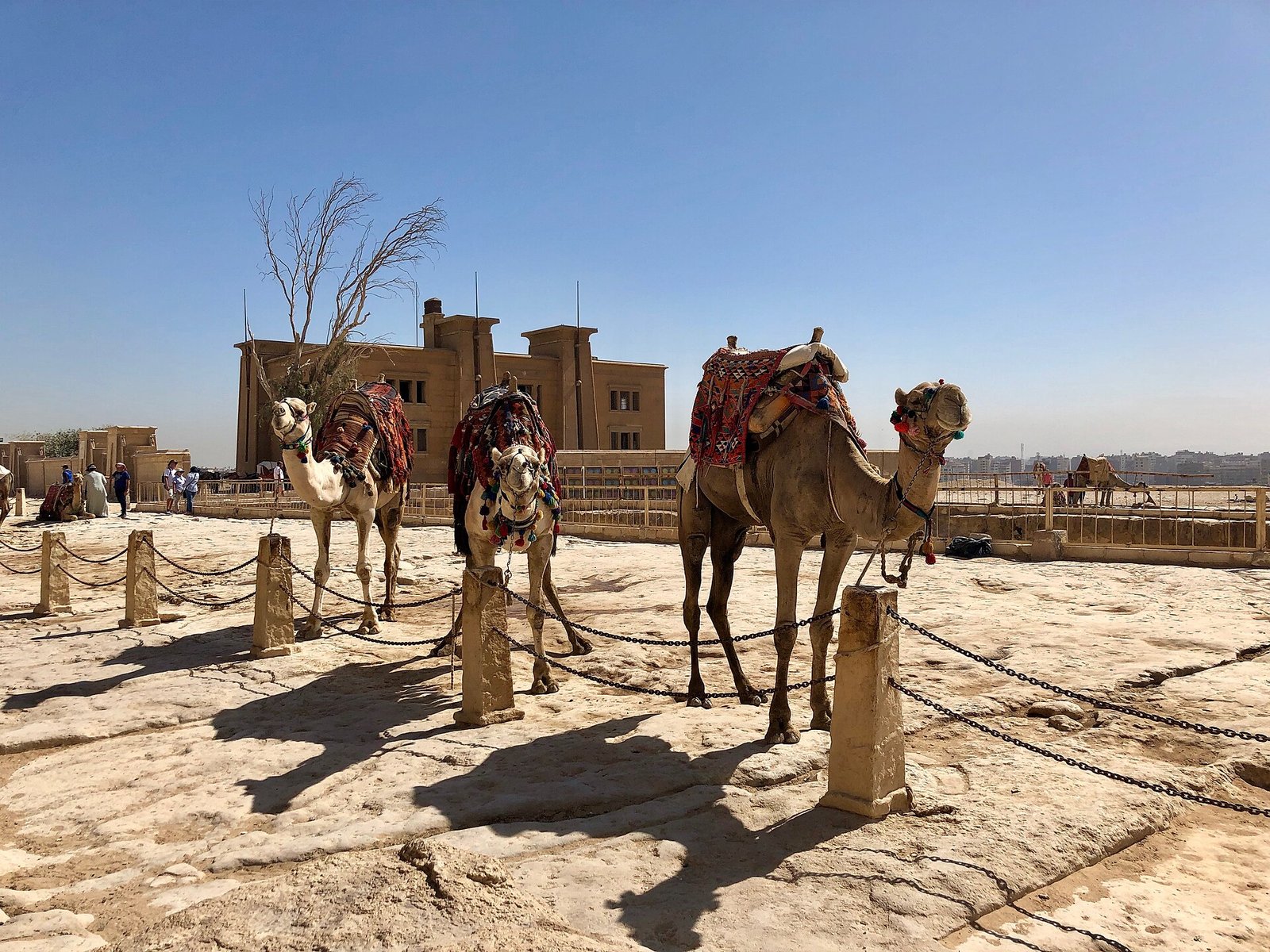
The camel markets are the opposite kind of experience, loud and raw. Camels driven up from Sudan pass through Daraw, near Kom Ombo, and end at Birqash northwest of Cairo, traded on set market mornings. Hundreds of animals, herders in white galabeyas, deals sealed with a shout. Expect handling that is rough by American standards.
Who it suits and how it fits. The dinner suits everyone, families especially, and replaces a hotel dinner on your Aswan night. The market suits early risers with a strong stomach and a camera, not children. Birqash is a very early start from Cairo; Daraw sits between Aswan and Kom Ombo on a land day.
How we arrange it. We have dined with the same family for years, and we skip the crocodile. For the markets we confirm the day, because they are weekly. More in our Nubian village in Aswan guide.
Sunrise at Abu Simbel and dawn on Mount Sinai
Almost everyone sees Abu Simbel as a day trip from Aswan: three hours down the desert road, two hours at the temples with several hundred people, three hours back. The alternative is to sleep in Abu Simbel village and be at the gate as it opens. For the first hour the facade of Ramses II catches the low sun off Lake Nasser and you share it with a handful of people and the birds. On the two sun alignment days it is the only sane way to see the temple.
Mount Sinai is the other great dawn. You leave Saint Catherine in the small hours, walk the camel path for two to three hours by headlamp with a Bedouin guide, climb the final stone steps and wait, wrapped in a rented blanket, for the sun to rise over a sea of granite. Even in summer the summit can sit near 40 F (5 C) before dawn. You descend and visit the monastery before it fills.
Who it suits and how it fits. Abu Simbel at sunrise suits anyone who dislikes crowds and can handle one simple hotel night; it adds one night to the Aswan end. Sinai suits reasonably fit walkers of any age, camels available, and is two nights from Cairo or Sharm el Sheikh.
How we arrange it. Driver, overnight, guide and tickets, with timings tuned to the month. Details in how to visit Abu Simbel and the Mount Sinai sunrise climb.
Floating in the salt lakes of Siwa
Siwa is the far one. An oasis near the Libyan border, eight to ten hours by road from Cairo through Marsa Matruh, where people speak a Berber language, houses were built from salt and mud, and Alexander the Great came to consult the oracle of Amun. The salt lakes east of town are so saturated you cannot sink; you lie back and the water holds you like a hammock. Around them are date groves, the ruined fortress of Shali and the edge of the Great Sand Sea, where a 4x4 takes you to a hot spring at sunset.
Who it suits and how it fits. Travelers on a second visit, or on three weeks, who have seen the Nile and want the Egypt the Nile never shows. Three nights minimum, with a long road day at each end, so it does not combine with a short trip.
How we arrange it. A private vehicle from Cairo, an ecolodge or a traditional guesthouse, and a Siwan guide for the lakes and the sand sea, built as a chapter of a longer custom Egypt tour.
Inside a pyramid, then the Fayoum and Wadi el Hitan
Standing in front of the Great Pyramid is on every list. Going inside is the unique part. You duck into a passage barely a yard high, climb bent double, then straighten into the Grand Gallery, a corbelled corridor rising into the dark, and step into the King's Chamber with its empty granite sarcophagus. If the line is long, the Red Pyramid at Dahshur has almost nobody inside. Not for claustrophobia, bad knees or a heart condition; children love it. The interior ticket is separate from the plateau ticket.
Dahshur points you toward the Fayoum, a lake basin ninety minutes from Cairo that feels a century away: the Wadi el Rayan waterfalls, the pottery village of Tunis, Lake Qarun at sunset, and then the desert track to Wadi el Hitan, Whale Valley. Laid out on the sand are skeletons of Basilosaurus and Dorudon, whales from around forty million years ago that still had hind legs.
How it fits and how we arrange it. The interior is half an hour inside your Giza morning; the Fayoum is one long day or an overnight at a lodge on the lake. We buy the interior ticket with the plateau ticket, and for the Fayoum we send our own driver, a guide who knows the fossil site, and a picnic. More in our guide to Wadi el Hitan, Whale Valley.
How to fit these into an itinerary without breaking it
Trying to do everything produces a trip that is all transfers. Here is how the anchors sit inside the trips people actually take.
- Seven or eight days, Cairo plus a cruise. The balloon on the Luxor morning, the Nubian dinner in Aswan and the Sufi night in Cairo. Three anchors, zero extra days.
- Ten days. The above, plus the dahabiya in place of the motor cruise, or the Abu Simbel overnight.
- Twelve to fourteen days. Add the White Desert or the Fayoum overnight, and finish with the dolphins from Marsa Alam.
- Three weeks or a second visit. Siwa, Sinai or a liveaboard, one of them alongside the classic route.
Three things before you fix dates. The balloon and the White Desert are weather dependent, so build in a spare morning. The Abu Simbel alignment and the camel markets are calendar dependent, so tell us early if either matters.
A word on animals. A camel or horse in good hands has a clean coat, no sores and no load when it rests. If it limps or the handler hits it, do not ride and say so.
Frequently asked questions
What is the single most unique thing to do in Egypt?
If we had to pick one, the hot-air balloon over the Luxor west bank at dawn, because nowhere else do you float over a royal necropolis, a mortuary temple and the Nile in one flight. A close second is a night in the White Desert. Both depend on the weather, which is why we book your first possible morning and keep a fallback.
How many of these experiences can I fit into a ten day trip?
Three comfortably, four if one is a swap rather than an addition. A dahabiya replaces the motor cruise, so it costs no days, and the balloon, the Sufi night and the Nubian dinner cost none either. The White Desert, the Abu Simbel overnight and Sinai each add one or two nights, so on ten days you choose one of those.
Are these experiences suitable for children?
The Sufi whirling, the Nubian dinner, the food walk, the pyramid interior, the Fayoum and the balloon all work well with kids, and the whirling is the best family evening in Cairo. The White Desert suits children from about eight who can handle a cold night and no bathroom. The camel markets, the liveaboard and the Sinai climb are for older teens and adults.
Do I need to be a diver to enjoy the Red Sea?
No. Snorkeling with wild dolphins at Dolphin House and drifting over the reefs at Sataya or Abu Dabbab require only that you swim with confidence, and life vests are on board. The liveaboard is the exception: a week of serious diving that needs an advanced certification and real logged dives. Everyone else sees the same reefs from the surface.
What is the best season for the desert and mountain experiences?
October to April for the White Desert, Siwa and Mount Sinai, with December and January bringing nights close to freezing, so pack warm layers. The balloon flies year round but is grounded more often in windy winter weeks. The Red Sea is good in every month, and summer is when the water is warmest.
Can Explora Egipto arrange all of this, or do I book pieces separately?
We arrange all of it as one itinerary, with our own guides and vehicles in Cairo, Luxor and Aswan and vetted local partners for the balloon, the desert camps, the boats and the mountain. You get one plan, one contact on WhatsApp and one quote. Tell us which two or three matter most and we build the rest around them.
Choose your two or three, and we will build the trip around them
Tell us your dates, how long you have and who is traveling, and we come back with a day-by-day plan that places the balloon, the desert, the sail or the sunrise exactly where they fit, with the fallback mornings already marked. No prices on this page, just a quote in your inbox.