Is Egypt Expensive? The Honest Answer
Is Egypt Expensive? The Honest Answer
No, Egypt is not an expensive country to travel in, and the reason is worth understanding before you plan anything. Once you have landed, the everyday cost of being there is among the lowest you will find anywhere: a plate of food, a taxi across Cairo, a scarf from a market stall. What weighs on the total is the organized part of the trip, above all the standard of boat you choose on the Nile. Those are decisions rather than fixed prices, which is why the same route, the same days and the same monuments can add up to a modest trip or a genuinely costly one.
Where the money actually sits
It helps to stop thinking about one number and start thinking about three layers, because they behave very differently.
The first is the international flight, which you book yourself, direct with the airline. It sits outside what Explora builds: we arrange everything that happens after you land in Egypt, including domestic sectors such as Cairo to Luxor.
The second layer is the ground program. Hotels of tourist standard, guiding by a qualified Egyptologist, private transfers, domestic flights and, if you include one, the Nile boat. This is where the bulk of a planned trip sits, and it is almost entirely under your control because every item in it has a range.
The third is your daily spending, and it is small. Meals outside your plan, drinks, tips, entrance tickets you decide on at the gate, whatever you buy in a market. In many destinations this layer quietly doubles a budget. In Egypt it rarely does.
| Part of the trip | Who arranges it | What moves the price |
|---|---|---|
| International flight | You, direct with the airline | Outside our scope, arranged by you |
| Hotels, guiding, transfers, domestic flights | A local operator, or you piece by piece | Hotel category, private or shared, number of days |
| Nile cruise | Booked inside the ground program | Category of boat, cabin, length of the sailing |
| Entrance tickets | Included in a package, or paid at the gate | Which sites, and which optional interiors |
| Everyday spending | You, as you go | Meals outside the plan, drinks, tips, shopping |
For orientation rather than as a quote: a full day excursion with guide, transport and entries starts around US$120, a Nile cruise starts around US$755, a classic seven to ten day tour starts around US$1,348 and a twelve day program runs to about US$2,196. Treat every figure you read online, including those, as an order of magnitude. Most numbers circulating about the cost of Egypt come from one specific trip, taken on specific dates, in one particular style, and they do not transfer to yours.
A cheap country is not automatically a cheap trip
Two people can travel the same country in the same month and give you opposite answers to this question. Both are telling the truth, because Egypt runs on two economies and you decide how much of your time you spend in each.
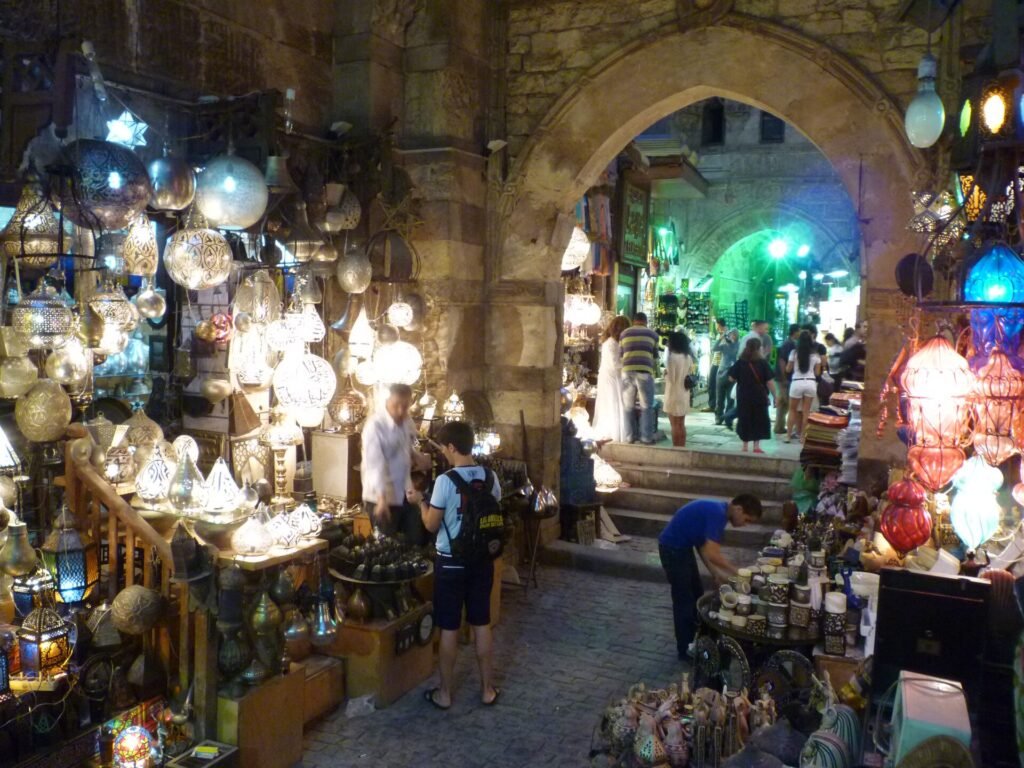
What is genuinely cheap is everything consumed locally: eating, moving around a city, tea, handicrafts, a taxi. A traveler who moves independently, takes trains, eats where Egyptians eat and books simple hotels leans almost entirely on that economy, and comes home saying Egypt cost them very little.
What is not cheap is the organized half: tourist-category accommodation, the Nile boat, guiding, private transfers, and site entrance fees, which carry a separate tariff for foreign visitors at every major monument. A traveler who books a cruise, a private Egyptologist and upscale hotels leans on that second economy, and the fact that lunch costs almost nothing does not offset it. Neither trip is wrong. They are different products, and the mistake is measuring one person's total against the other's.
What actually moves your total
When you go
Season is the biggest single lever you hold, and it moves the number more than a week of careful eating ever will. Summer and the shoulder months bring boats and hotels down sharply against the winter peak, Christmas and Easter. Be honest with yourself about why they are cheaper. Luxor and Aswan in July and August regularly pass 40C (104F), and sightseeing means starting before dawn and hiding indoors through the middle of the day. Plenty of travelers make that trade knowingly and get near-empty temples for it. Others would be miserable. Work out where you sit before you let the season you pick be decided by price alone.
The standard you choose
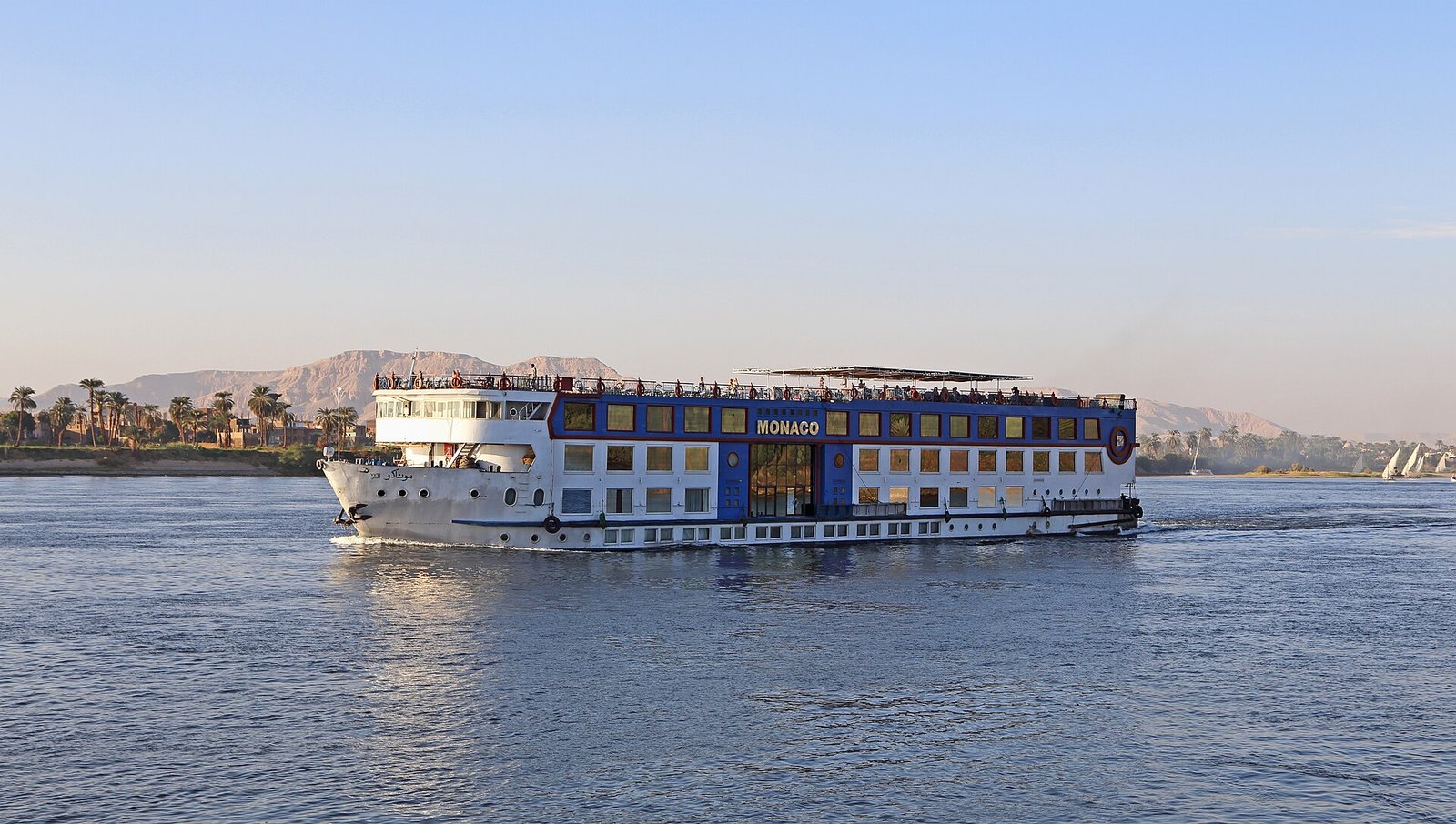
The same itinerary exists at three broad levels: simple, comfortable and genuinely luxurious. The temples do not change. What changes is the hotel, the cabin, whether transport is private or shared, and how much attention is on you. Nowhere does this matter more than on the river, where the gap between a modest boat and a top one is the widest single decision in the whole budget. Read properly on choosing a Nile boat before you sort the Nile cruise options by price, because the differences are real and not all of them show up in photographs.
How early you book
Booking with time in hand is almost always cheaper than deciding late, and that applies hardest to the thing with fixed capacity: your cabin. Good boats in high season sell out by category, so booking late rarely produces a discount. It usually means paying more for something you wanted less.
Spending well rather than spending least
The goal is not to spend as little as possible. It is to spend where it shows and squeeze where it does not.
Squeeze in the shoulder months rather than the peak. Book early. Eat where local families eat, which is cheaper and better at the same time. Choose a boat on value rather than reaching for the most expensive one on the list, because the middle of that market is where the quality-to-price ratio is strongest.
Then protect three things. A qualified Egyptologist guide, since in Egypt the difference between looking at a wall and understanding it is the entire trip. Transfers that actually work, because the hours you lose at stations and airports are hours you already paid for. And travel insurance, which costs a rounding error against everything else and is the only line that protects you from a genuinely bad outcome.
The efficient way to buy all of that is usually a tailor made package from an operator based in Egypt, which puts domestic flights, transfers, cruise and guiding under one operator on the ground, so the gaps between them are somebody's responsibility rather than yours.
Planning this trip yourself takes hours. We build it for you, and we answer every question before you commit to anything.
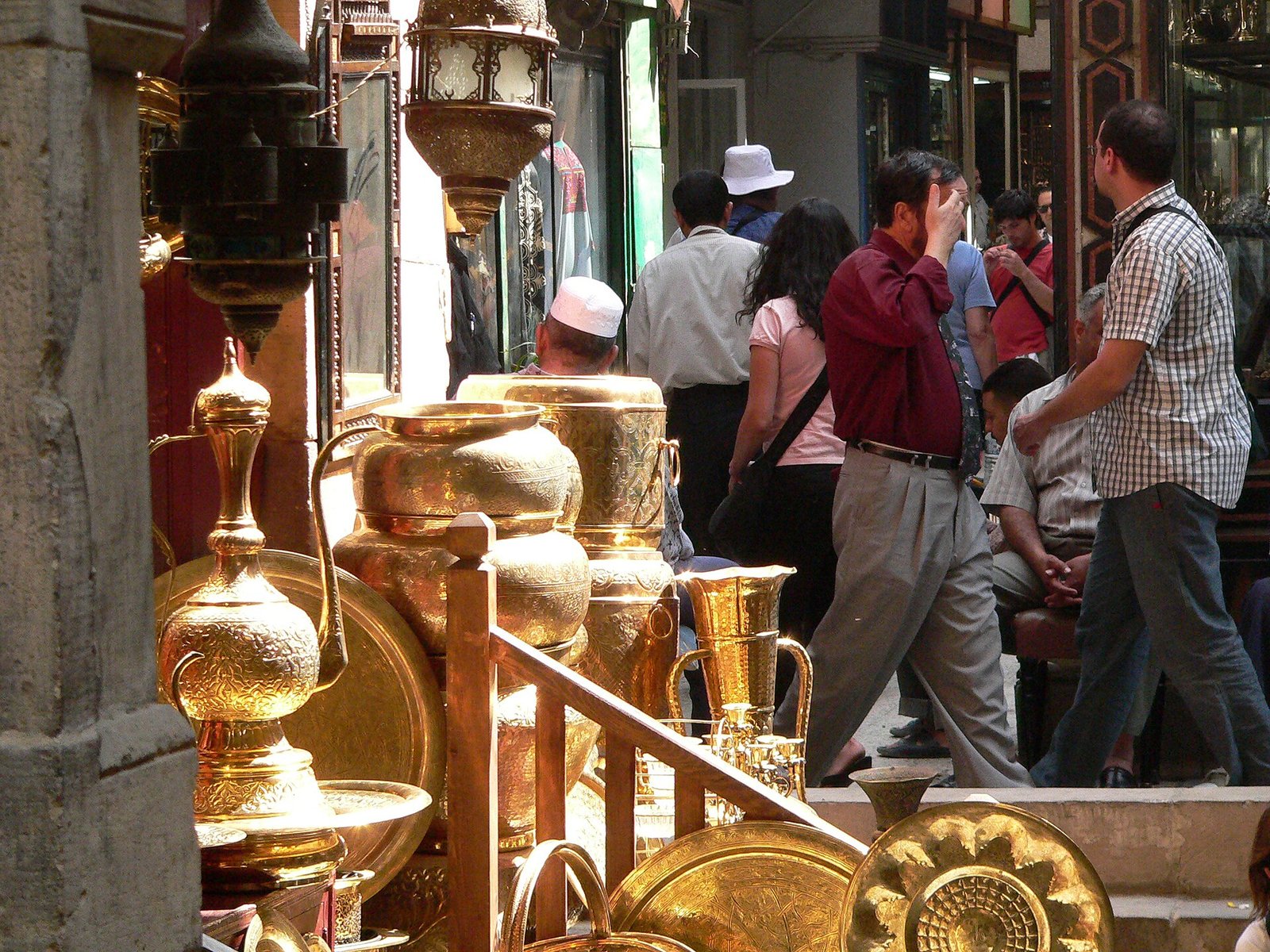
How Egypt compares
Against a cultural trip in Western Europe, the difference shows up in everything you consume on the ground. Food, transport and services weigh far less in the final bill, which means your money buys days rather than disappearing into lunches and taxis.
Against other heritage destinations, the argument is density. The amount of first-rank archaeology you can reach in a single week, from Giza to Luxor to Abu Simbel, is hard to match anywhere, and that matters more than any daily rate. A short, dense trip can deliver more than a long one somewhere thinner, which is why how many days you have changes the value calculation as much as the standard you book.
Where Egypt does not particularly compete is as a pure beach holiday. The Red Sea coast is good and priced sensibly, but it is not the reason to come. A trip built around it alone leaves the archaeology that makes Egypt worth the journey untouched.
The four costs nobody budgets for
The feeling that a trip came out expensive almost never comes from the big items. Those were planned. It comes from these four, and none of them appear on anybody's spreadsheet beforehand.
- Tips. This is the one that surprises people most. Tipping is not token in Egypt, it recurs throughout the day, and across a week it adds up to considerably more than most travelers assume. Read how tipping works before you arrive and keep small notes in Egyptian pounds from day one, because being caught without change is what makes it awkward and expensive.
- Optional interiors. Several specific tombs and chambers are ticketed separately from the general site ticket, and you decide on them standing at the entrance with a queue behind you. Each one is small. Together, across Giza, Luxor and the Valley of the Kings, they are not.
- Drinks. Rarely included, even under board arrangements that look complete. Bottled water on its own is a real daily line in a hot country where you should be drinking far more than you do at home.
- Excursions bought on the spot. Anything decided in a hurry, on the ground, under mild pressure, comes out worse than the same thing planned in advance. The balloon flight over Luxor is the classic case, and it is a better experience booked calmly than negotiated over breakfast.
None of the four is fully avoidable. All four are predictable, which means they belong in your budget instead of in your surprise.
The better question
Asking whether Egypt is expensive is asking the wrong thing. The useful question is what the trip you actually want costs, because the range between the plainest and the most elaborate version of one identical itinerary is enormous, and four decisions set it: the time of year, the category of hotel and boat, group or private, and how much you delegate against how much you run yourself.
That is also why comparing two quotes on headline price tells you very little. Two itineraries that look the same on paper routinely include different things: entries or not, guiding every day or on some of them, meals, domestic flights, transfers at both ends. Match the inclusions line by line and the cheaper one often stops being cheaper. Do that, decide your four variables honestly, and Egypt turns out to be what it has always been: one of the few places where a serious trip is still within reach of an ordinary budget.
For a straight answer on your own dates and standard, send the team a message on WhatsApp at +201032295513 with your travel window and the kind of trip you have in mind, and you will get a real plan rather than a range.
Common questions about the cost of Egypt
Is Egypt expensive to travel in?
What is the most expensive part of a trip to Egypt?
Is Egypt cheaper than other destinations?
How much does eating and getting around cost in Egypt?
What makes a trip to Egypt expensive?
How do you make a trip to Egypt more affordable?
Let us put the trip together
We are a local agency in Egypt. Tell us your dates and what you want to see, and we will come back with a plan, the practical details sorted and someone to ask when you are here.
Keep exploring
To finish planning your trip to Egypt
- ▸Cairo and Nile Cruise Package: How to Plan the Classic Trip
- ▸Egypt in 3 Weeks: The Full Country Itinerary, Week by Week
- ▸Luxury Egypt Tour: Private Guide, Dahabiya, Historic Hotels
- ▸Egypt Itinerary 12 Days: Cairo, Nile Cruise and Red Sea Plan
- ▸Egypt Family Vacation: Multi-Generation Trip Plan and Guide
- ▸Egypt Trip Reviews: What Travelers Praise and Complain About
- ▸Real vs Fake Papyrus: How to Tell Real Papyrus in Egypt
- ▸See all our Egypt tours