A felucca ride on the Nile is the quietest hour of your Egypt trip, and Aswan at sunset is where to take it
A felucca ride on the Nile is the quietest hour of your Egypt trip, and Aswan at sunset is where to take it
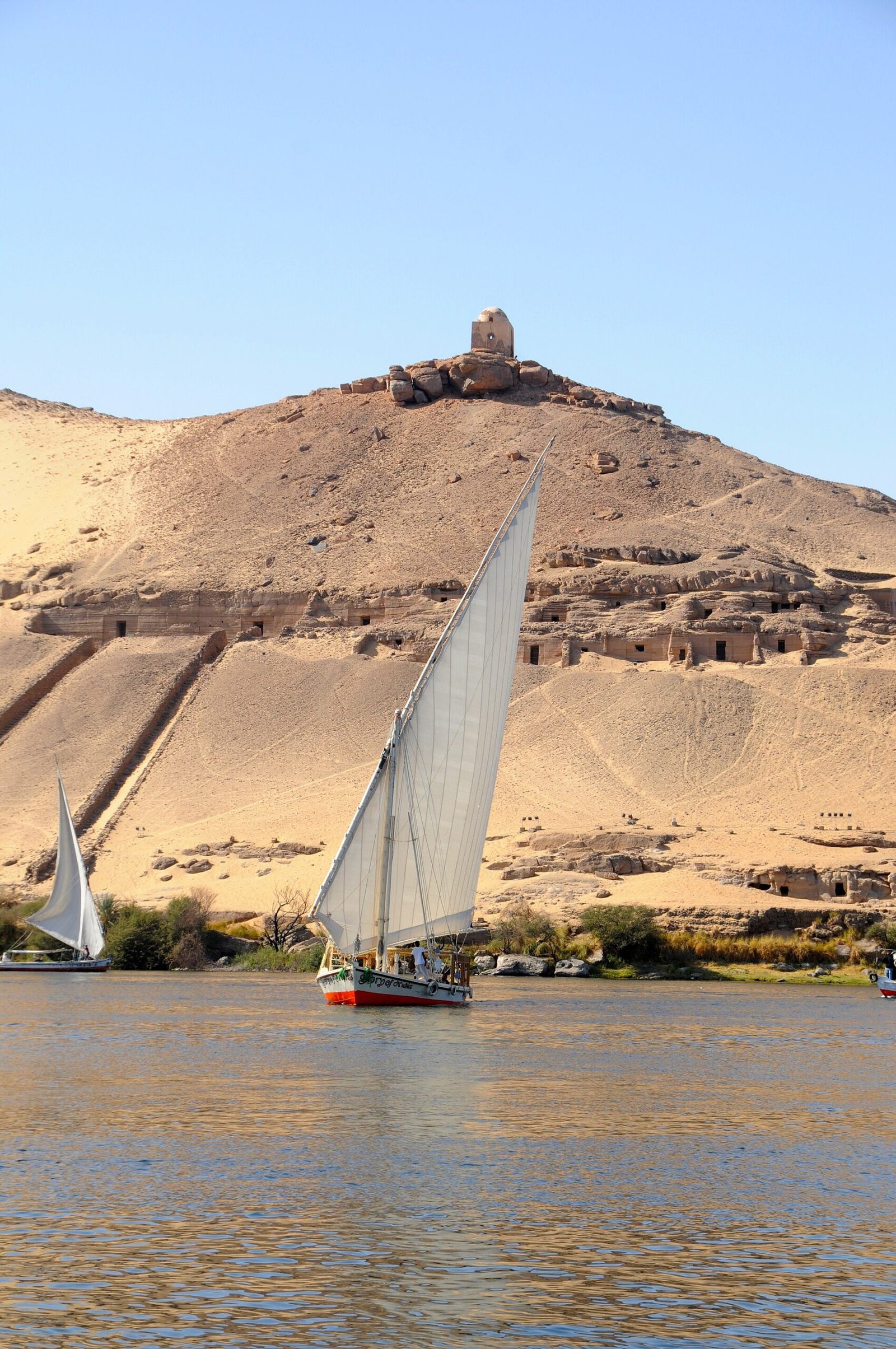
A felucca is the wooden sailboat that has worked the Nile for centuries: one tall lateen sail, no motor, no noise. You can hire one in Cairo, Luxor or Aswan, but Aswan is the place: the river splits around granite islands, the west bank is pure dune, and the afternoon wind is steady enough to actually sail. Book the last 90 minutes before sunset. You pass Elephantine Island, Kitchener's Island and the Aga Khan mausoleum, the light turns gold and then orange, and the boatman brings you home on the current as the call to prayer rolls across the water. It is fine for kids and grandparents, private if you hire the whole boat, and the one thing on a Nile itinerary nobody regrets.
What a felucca is, and how a boat with no engine gets you home
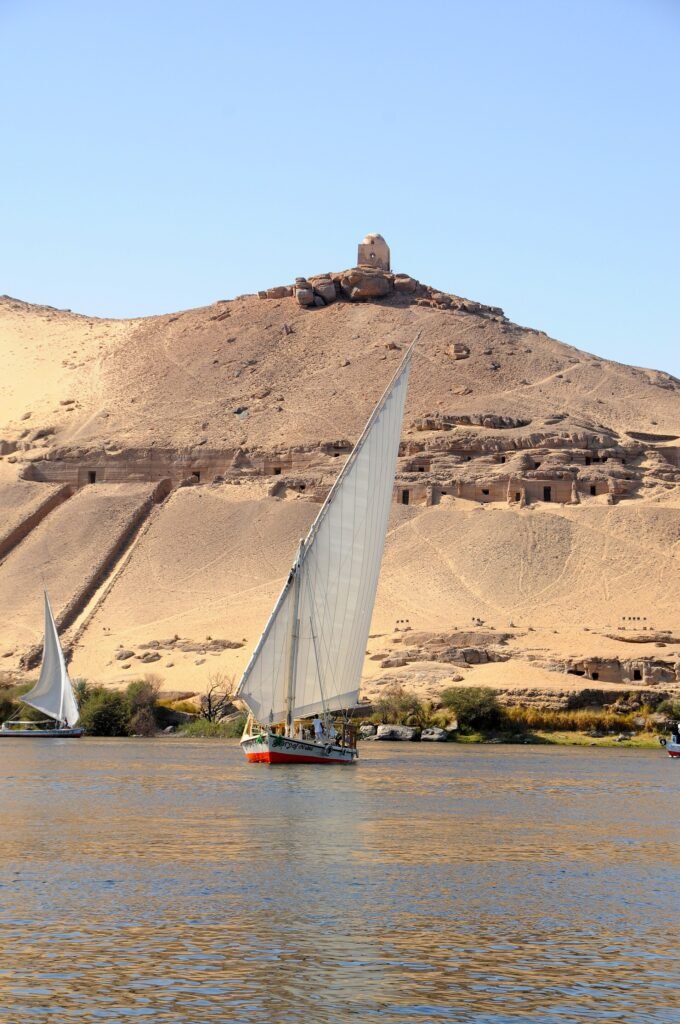
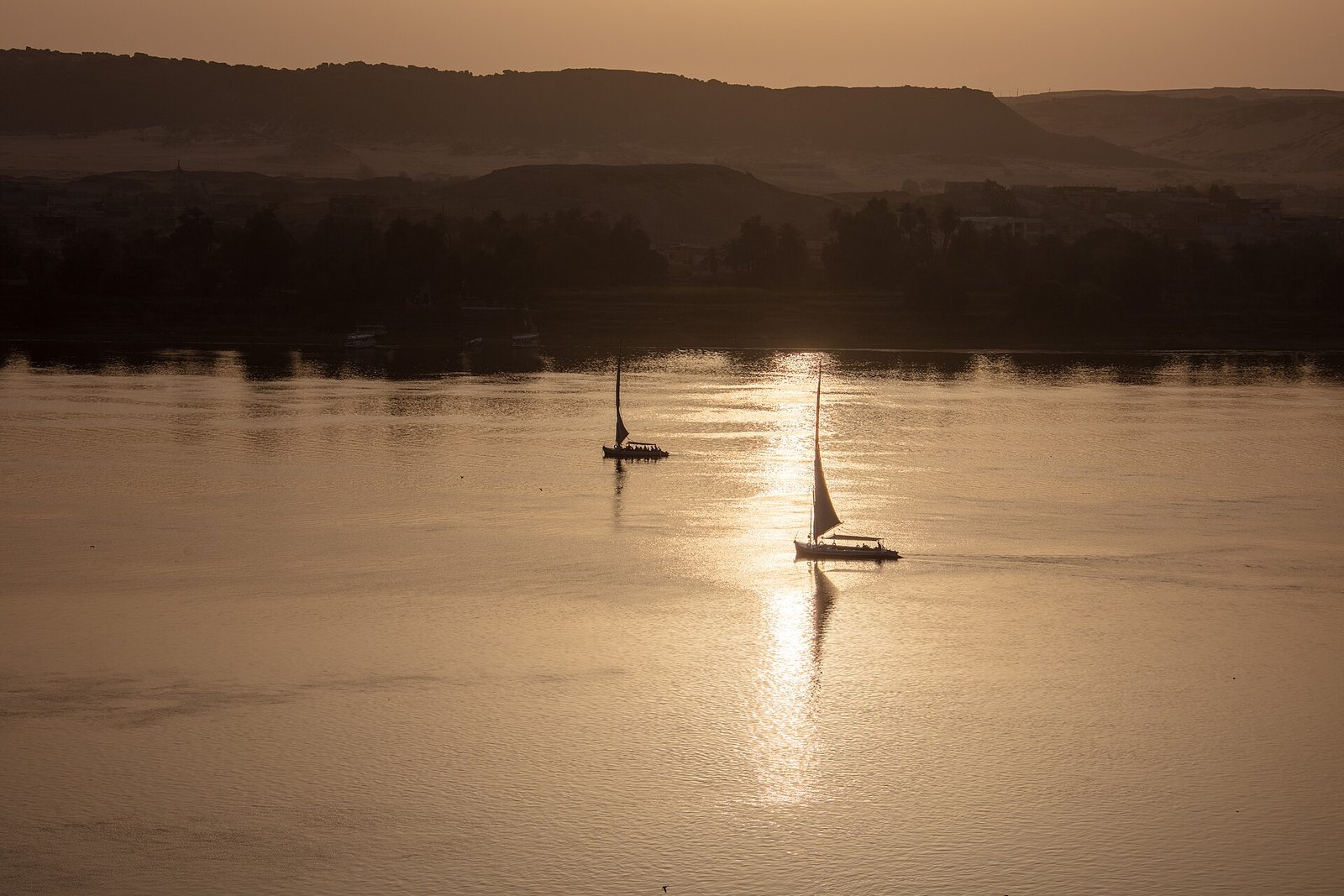
A felucca is a shallow wooden hull, usually 25 to 35 feet long, with a single mast raked forward and a lateen sail, the tall white triangle in every photograph of Aswan. There is no engine. Most carry a long tiller, a pair of oars, cushions along the gunwales and a canvas awning for shade. One boatman, called the reis, handles sail and tiller alone, sometimes with a boy to help.
The trick that makes the Nile sailable in both directions is simple. The prevailing wind blows from the north almost all year. The current runs south to north. So a felucca sails upstream on the wind and drifts downstream on the current. On a sunset ride the boatman uses both: out on the wind, home on the current.
Seating is low cushioned benches facing the water, 6 to 10 people, no bathroom. The good ones carry a gas ring and brew tea on the way back.
Aswan, Luxor or Cairo: where the ride is worth taking
You can hire a felucca in all three cities. They are not the same experience, and if you only do it once, the city matters more than the boat.
| City | The river | The wind | The view | Verdict |
|---|---|---|---|---|
| Aswan | Narrow, split by granite islands, the First Cataract just upstream | Steady northerly most afternoons | Dunes falling straight into the water, Elephantine, the Aga Khan mausoleum, Nubian villages | The one to book. |
| Luxor | Wide and slow, farmland on both banks | Lighter and less reliable | The Theban hills across the water, Luxor Temple from the river, Banana Island | Pleasant with a spare hour. A drift more than a sail. |
| Cairo | Wide, urban, busy with motor launches | Weak, broken up by the buildings | Bridges, tower blocks, the city lights after dark | A picnic on the water. Many boats here carry an outboard. |
In Aswan the river narrows as it leaves the cataract, so the wind funnels between the islands and the boat heels and moves. Luxor is pretty but flat. Cairo is fun for an evening with friends, and you hear the traffic the whole time.
If your itinerary includes Aswan, that is where we put the felucca. If you only have Cairo, take the evening sail as a break from the city, not as the Nile experience.
The sunset hour, and why the timing is the whole point
Ask for the last 90 minutes before sunset, not "the afternoon". In Aswan the sun goes down around 5 pm in December and closer to 7 pm in June. In that last hour the wind is still up, the heat has broken, and the west bank dunes turn from beige to gold to a deep rust.
The order of a good ride: cast off with the sun still warm on your face. Sail south toward the cataract with Elephantine sliding past on one side. Turn as the sun touches the ridge above the Aga Khan mausoleum. Drift back on the current in the afterglow, dozens of white sails around you and the muezzins on both banks overlapping, while the boatman puts the kettle on.
Midday in summer is the fastest way to hate it. Aswan runs past 104 F (40 C) at 2 pm in July, the water reflects the glare, and the wind is often dead flat. Morning rides work in winter when the light is soft, but the wind is lighter, so expect more drifting than sailing.
What you see from the water: Elephantine, Kitchener's Island and the Aga Khan mausoleum
Most of what makes Aswan special only makes sense from the water.
- Elephantine Island. The big island opposite the corniche. Its southern tip holds the ruins of the temple of Khnum and the Nilometer stairway where the flood was read. Two Nubian villages, Siou and Koti, sit in the middle, painted in blues and ochres.
- Kitchener's Island. Just west of Elephantine, small and entirely garden. Lord Kitchener planted it with trees from India and East Africa, and today it is the Aswan Botanical Garden, a wall of royal palms with a bird in every one.
- The Aga Khan mausoleum. The pink granite domed tomb on the west bank hillside, built for Aga Khan III after his death in 1957. It is closed to visitors, so the river is the only place to see it properly.
- The dunes. The west bank at Aswan has no fields. Sand runs straight into the Nile, and this is the view that defines the city.
Ask the boatman to take the channel between Elephantine and Kitchener's Island and then out past the southern tip toward Sehel. Many boats add a stop at a Nubian house for tea and hibiscus. Our guide to the Nubian village in Aswan explains what that stop involves and how to do it well.
Wind and calm days: the honest part
A felucca is a sailboat. On a calm day it does not go. This is the most common complaint from people who hired one on their own, and it is not the boatman's fault.
What happens on a flat day: the reis poles off the bank, the sail hangs, the boat turns slowly on the current, and after a while he rows, rafts up to another felucca, or waves down a motor launch for a tow. You still get the sunset and the view, just from a slowly rotating platform.
In practice the Aswan afternoon wind is reliable most of the year, especially from October through April. The dead days come in high summer and when the wind swings south for a day or two. Morning is calmer than late afternoon in every season, one more reason the sunset slot wins.
If your day is flat and you need to move, a motor launch does the same loop in half the time, but the silence is gone, and the silence is the reason you came. Keep the felucca and enjoy the drift.
How long a felucca ride takes and where it fits in your day
The standard sunset ride is 60 to 90 minutes on the water. With a stop on Elephantine or Sehel for tea it becomes two to two and a half hours. Anything under an hour feels rushed; the boat barely clears the islands before it has to turn.
In a typical Aswan day it comes after the morning at Philae, the High Dam and the Unfinished Obelisk, or after the Abu Simbel day trip, which is back in Aswan by early afternoon. Rest through the heat, then the felucca from the corniche or from your ship's mooring, timed to finish at dusk, then the souk or dinner.
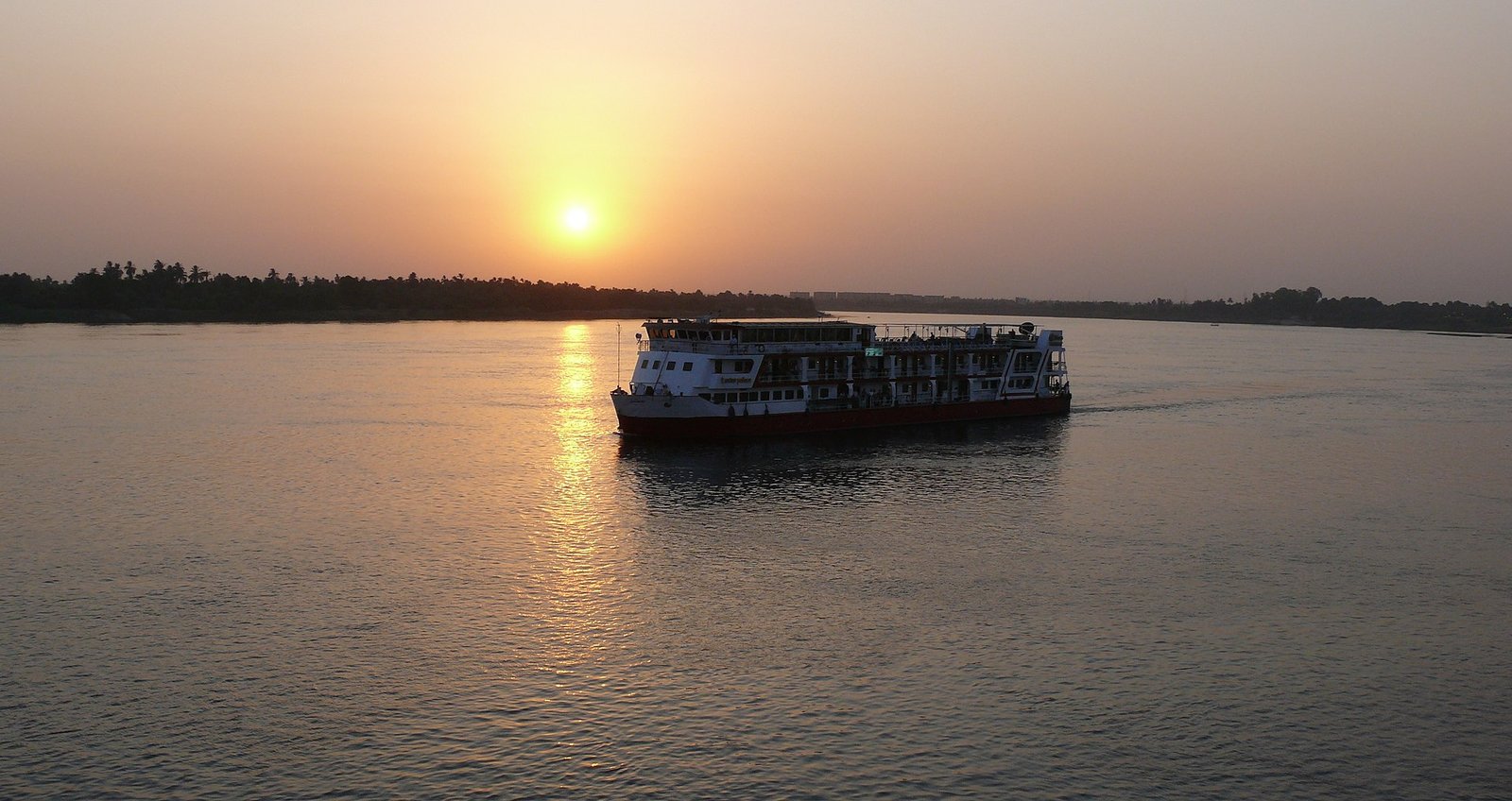
If you are on a Nile cruise, the ships moor at Aswan on either the first or the last night depending on direction, and the felucca slots between the afternoon visit and dinner. Either way it is part of our Aswan excursions when you ask for it, and it fits inside every Nile cruise we arrange.
Safety, life jackets, kids and older travelers
The Aswan stretch is calm, but it is a big river with a current, and the boats are open. Our rules:
- Life jackets on board for everyone, checked before you step on. Good boats keep them under the benches. Ask to see them, and have children wear them.
- Board from a proper landing with steps, not by climbing across three other boats.
- Sit down while the boat tacks. The boom is low and swings across the deck when the reis changes direction. He will tell you to duck, and he means it.
- Toddlers stay in a lap or in the middle of the deck. The gunwales are knee height.
With kids
Children love it, often more than the temples. There is nothing to be quiet for, and the Nubian stop with tea and henna is the part they talk about afterward. The one thing to manage is the hour: a child who is done at 4 pm will not enjoy a 6.30 pm return, so keep the morning light. Our family travel guide to Egypt covers pacing the whole trip.
Older travelers and limited mobility
Boarding is the only hard part: a step down of a foot or two from the landing, then a low bench. The boatman and your guide hand you down. Once seated the boat is steady and the heel is gentle. There is no toilet aboard, so plan for that at the hotel. If steps are a real problem, tell us and we pick a boat that ties up at a flat landing. More in our guide to accessible Egypt.
The multi-day felucca trip, described honestly, and how it compares with a dahabiya
Beyond the sunset ride there is the overnight version: one or two nights sailing downstream from Aswan toward Kom Ombo or Edfu, sleeping on deck. It is a memorable night on the Nile, and also the trip most often booked by people who should have booked something else.
What it actually involves:
- You sleep on deck on thin mattresses under a canvas awning, side by side with the group, usually 6 to 10 people.
- There is no bathroom on most boats. You go ashore, behind a dune or in a village. Some operators send a support boat with a toilet; ask before you commit.
- The crew cooks on a gas ring: rice, vegetables, bread, sometimes chicken. Good, simple, and much the same at every meal.
- Progress depends on wind, and you moor on sandbanks with nothing but a fire and the stars. Bring a charged power bank; there is no electricity.
It suits anyone who camps happily and small groups of friends. It does not suit anyone who needs privacy, a real bed or a toilet at night, and it is a poor choice from December through February, when nights on the river drop to around 50 F (10 C). March, April, October and November are the comfortable months.
| Felucca overnight | Dahabiya | Cruise ship | |
|---|---|---|---|
| Where you sleep | On deck, shared, under an awning | Private cabin with bathroom | Private cabin with bathroom and air conditioning |
| How it moves | Sail only, towed when calm | Sail, with a tug on calm stretches | Engine |
| Nights | 1 or 2 | 3 to 7 | 3, 4 or 7 |
| Who it fits | Campers and groups of friends | Couples, families with older kids, anyone who wants quiet with comfort | First-timers, families with young children |
If what you want is the sailing and the silence but with a bed and a shower at the end of it, the answer is a dahabiya. Same wind, same banks, and a cabin. Read our dahabiya Nile cruise guide before you decide. If you want the sunset without the camping, take the 90 minute ride and sleep in a hotel.
Tipping the boatman, and what to bring
Tipping is part of the deal. The reis works for a fixed hire and expects something at the end, the same way you would tip a guide or a driver. Hand it over in cash as you step off, one amount for the boat rather than per person, a little more if there was a helper or an extra stop. Keep small bills ready; there is nowhere to break a large one on the water. Our guide to tipping in Egypt covers the habits for the rest of the trip.
What to bring for a sunset ride:
- Sunscreen and a hat. The awning covers the middle of the boat, and the light comes up off the water.
- A light layer. Even in April the river cools fast once the sun is down, and in winter you want a real jacket.
- Your camera on a strap. Phones go overboard every season.
- Water, a small bag that closes, and cash for the tip and for tea at the Nubian house.
Wear shoes you can slip off, since many boatmen keep the cushioned deck shoe-free, and leave behind anything you would mind getting splashed.
How Explora Egipto books a private felucca
Hiring on the corniche works, and it also produces most of the bad stories: the ride cut short, the rate that turned out to be per person, the boat with no jackets, the "Nubian village" that was a souvenir stall. We take that off your plate.
- The boat is yours. We hire per felucca, not per seat, so it is your party only, whether that is two of you or a family of eight.
- The boatman is one we use every week, with jackets on board and a deck we have sat on ourselves.
- The duration is written into your itinerary: 90 minutes, or longer with the island stop.
- The Nubian stop, if you want it, is a real household with tea, not a shop.
- The timing is set to sunset for your dates, and your guide walks you to the landing and back.
- It sits inside your Aswan day or your cruise, so nothing else gets squeezed.
Tell us your dates and who is traveling, and we send the quote with the felucca written in.
Frequently asked questions
What is a felucca ride on the Nile?
A felucca is the traditional wooden sailboat of the Nile, with one tall lateen sail and no engine. A felucca ride is a hire of the whole boat, usually 60 to 90 minutes in the late afternoon, sailing out on the north wind and drifting back on the current while the sun sets. In Aswan it passes Elephantine Island, Kitchener's Island and the Aga Khan mausoleum.
Where is the best place for a felucca ride, Aswan, Luxor or Cairo?
Aswan, without much of a contest. The river there is narrow and split by granite islands, the afternoon wind is steady enough to sail properly, and the west bank is pure dune that turns gold at sunset. Luxor is a wider, slower drift with the Theban hills behind. Cairo is an evening between bridges, fun with friends but not the Nile experience.
How long does a felucca ride take?
Plan on 60 to 90 minutes on the water for the sunset ride, and two to two and a half hours if you add a stop on Elephantine or Sehel for tea in a Nubian house. Shorter than an hour feels rushed because the boat barely clears the islands before turning. The overnight version runs one or two nights downstream, sleeping on deck.
Is a felucca ride safe for children and older people?
Yes, with a few rules. Check the boat has life jackets before you board and put them on the children. Board from a proper landing with steps, sit down when the boat tacks because the boom swings low, and keep toddlers in a lap. For older travelers the only hard part is the step down into the boat. Once seated the felucca is steady.
What happens if there is no wind?
The boat drifts. The boatman poles off, lets the current turn the felucca, and if needed rows, rafts up with another boat or takes a tow from a motor launch. You still get the light and the islands, just from a slowly turning deck. Calm days are most common in high summer and in the morning; late afternoon from October through April is the most reliable wind.
Felucca or dahabiya, which should I choose?
For a sunset sail of an hour or two, a felucca, and there is nothing to decide. For several nights on the river under sail, a dahabiya, with private cabins, bathrooms, a chef and a tug for calm stretches, so you get the same silence with a bed at the end. The overnight felucca is camping on a deck; choose it only if that sounds like fun rather than a compromise.
Sail the Nile the way it has been sailed for centuries
Tell us your dates, who is traveling and whether you want the Nubian stop, and we come back with a private felucca at sunset in Aswan written into your itinerary, the boatman chosen, the jackets checked, and the rest of the trip built around it. No prices on this page, just the quote in your inbox.