
Season by season

The Best Time to Visit Egypt

October through April is the comfortable window for Cairo and the Nile valley. Inside that window, late December and Easter are the crowded peaks, and the quietest weeks with the same good weather are the first half of December and the second half of January.
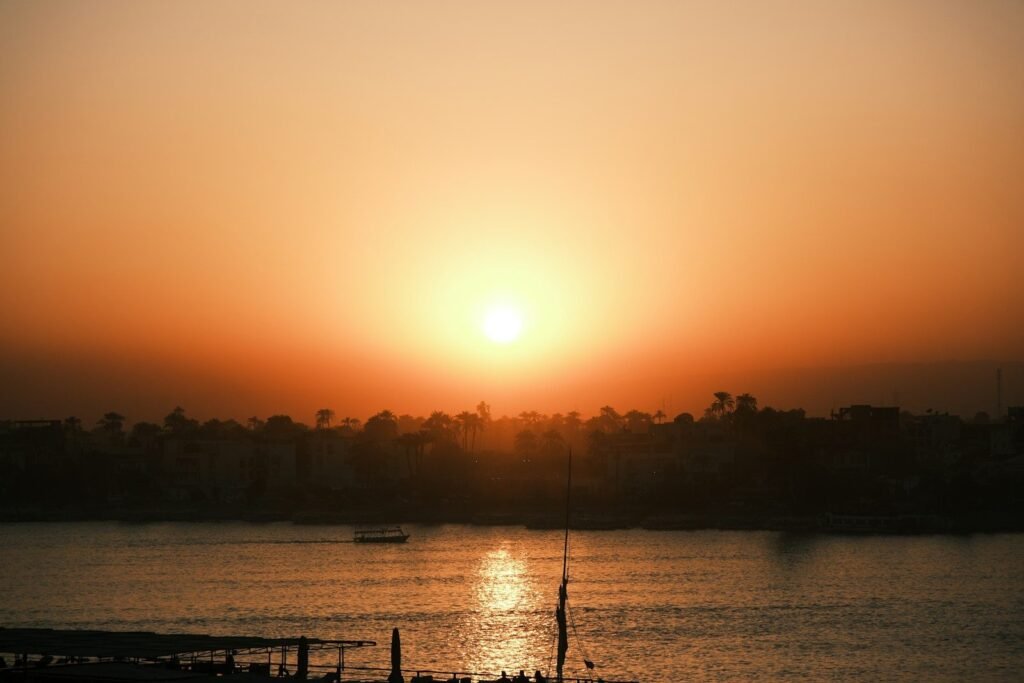
The sun setting over the Nile at Luxor, palms on the bank and a golden reflection on the water

That is the short answer and it is what most sites tell you. What follows is the part that
actually changes a trip: what each season does to the way you spend the day, and the two things
about spring and summer that catch most visitors out.

What the seasons actually feel like

October to April, the main season
Daytime highs in Luxor and Aswan sit in the upper 70s to upper 80s F (25 to 31 C) for most of
this stretch, dropping into the 60s F (around 18 C) at the December and January low. Cairo runs a
few degrees cooler than the south throughout.

The thing nobody warns you about is the night. Desert nights drop hard, and January in Aswan can
fall to the low 50s F (around 11 C) after dark. On a Nile cruise you will be on an open deck in the
evening, and a fleece or a light jacket is not optional in midwinter even though you spent the
afternoon in a t-shirt.

May to September, the hot season?
Summer in the Nile valley is genuinely hot. Luxor and Aswan regularly clear 105 F (40 C) and can
push higher in July and August. Cairo is cooler than the south, and the Mediterranean coast and the
Red Sea are cooler still, with sea breeze doing most of the work.

Summer is not a write-off, and the people who enjoy it are the ones who invert the day: out at
opening time, back indoors or onto the water through the middle hours, out again late afternoon.
Sites are emptier, and the light on the west bank at dawn is the best of the year. What you cannot
do is walk an unshaded site at noon and expect to enjoy it.
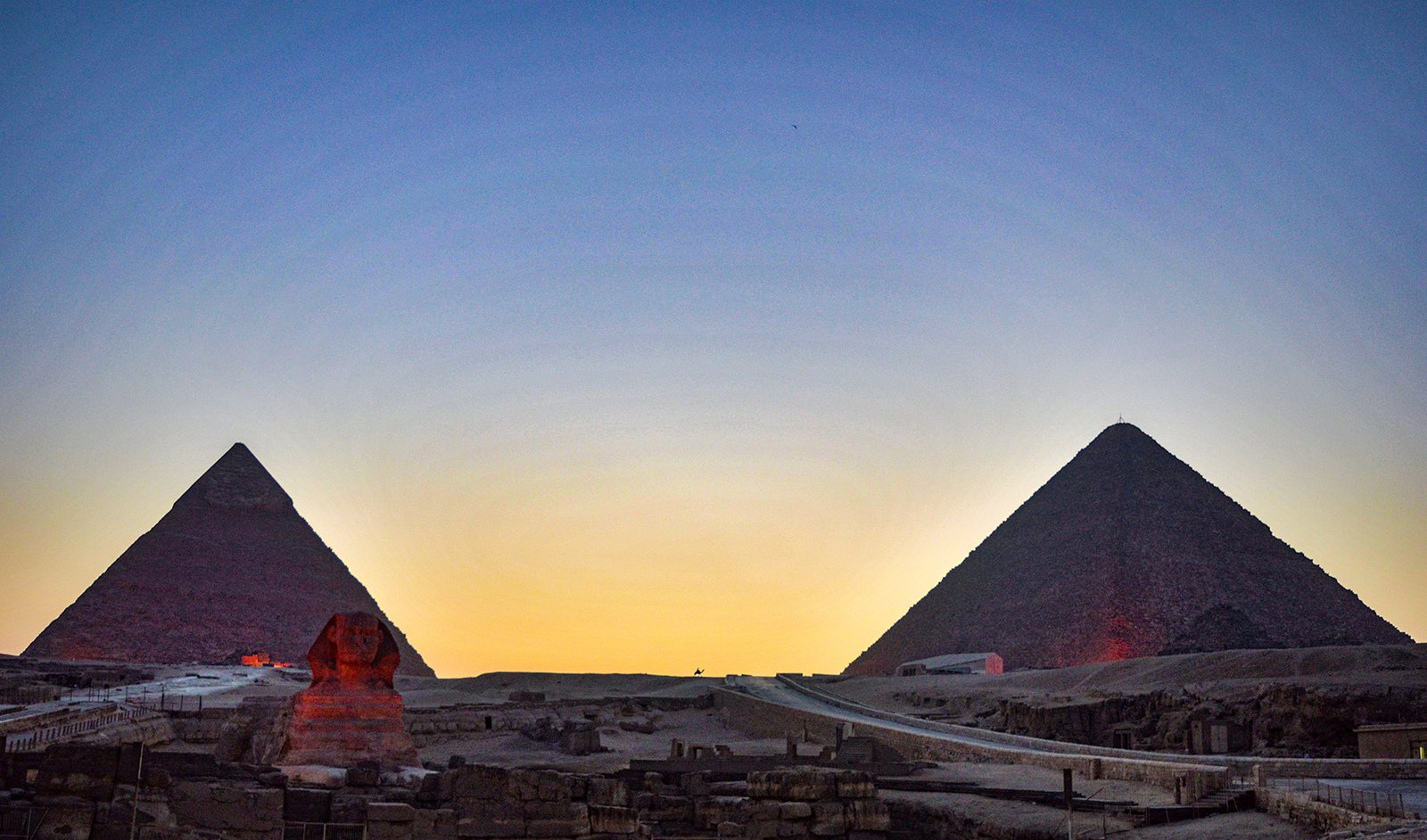
The Giza plateau at dusk with the pyramids of Khafre and Khufu in silhouette either side of a yellow afterglow, and the Sphinx lit red by the sound and light show below

The khamsin, which almost nobody mentions

Roughly March through May, Egypt gets the khamsin: a hot, dry wind off the desert that carries
sand and dust. A khamsin day is hazy, the air is gritty, temperatures spike, and visibility drops.
It does not last, and it does not happen every day of the season, but it can flatten the light for
photography and it is unpleasant if you wear contact lenses or have a respiratory condition.

It is worth knowing about because spring otherwise looks like the obvious answer on paper: warm,
between the peaks, cheaper than Christmas. It is a good season. It just is not the guaranteed one
that a temperature chart implies, and the dust is the reason.

The Egypt tourism statistics show how the busy seasons stack up year by year.

Ramadan and how it affects a trip

Ramadan is a month of daytime fasting observed across Egypt. It moves about eleven days earlier
each year against the Western calendar, so check where it falls for your dates rather than trusting
a fixed month you read somewhere.

What changes for a visitor: monuments and museums stay open, sometimes on adjusted hours; many
local restaurants close during daylight and open after sunset; the pace of the day shifts later; and
traffic just before the evening meal is at its worst of the year. What does not change: your guide,
your transport and your itinerary run normally, and tourist hotels serve food all day.

Some travelers deliberately choose it. The evenings are festive in a way the rest of the year is
not. Others find the rhythm inconvenient. Neither reaction is wrong, but it should be a decision
rather than a surprise.
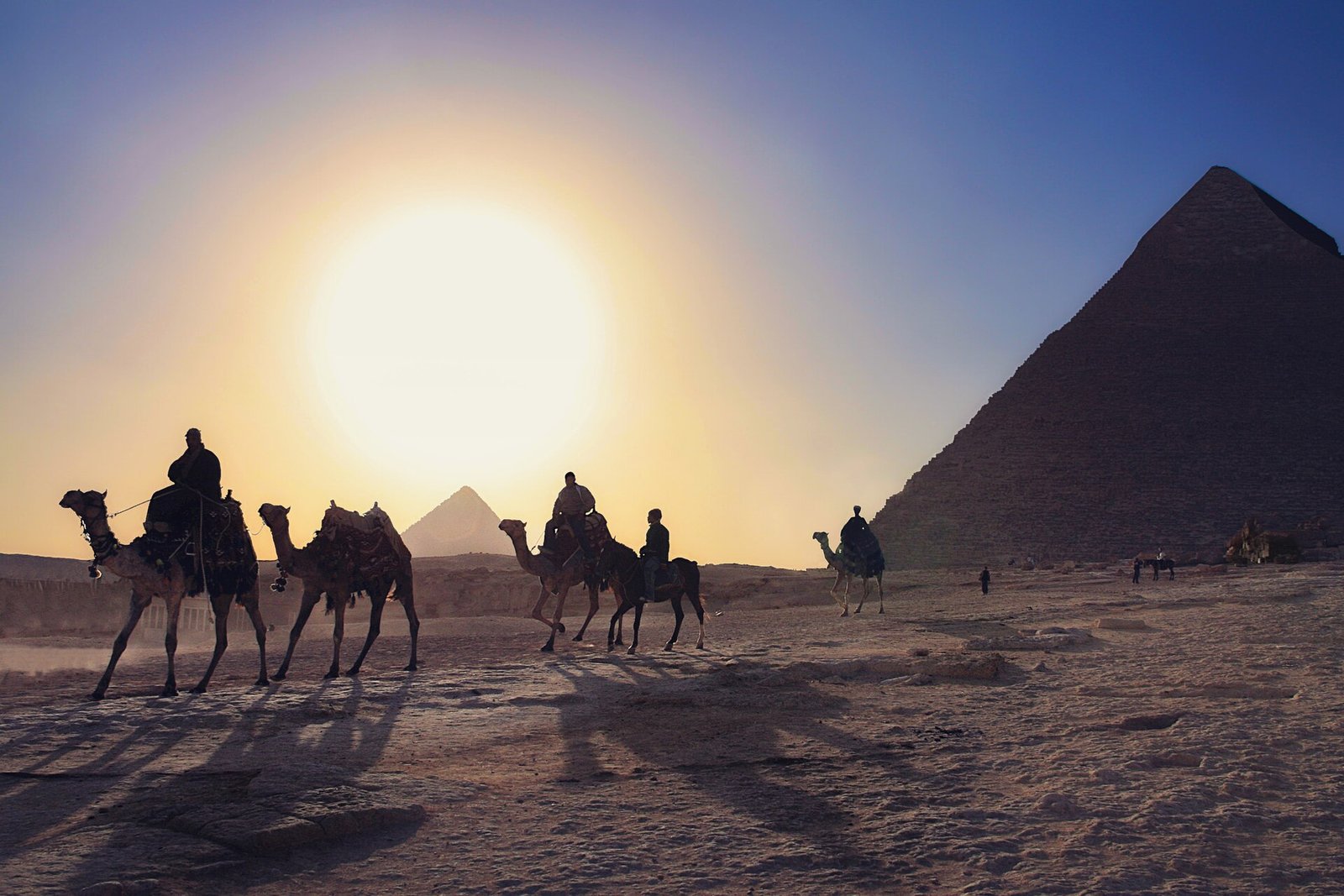
A line of camels and riders crossing the Giza plateau in silhouette against a low sun, the pyramid of Khafre on the right

The Abu Simbel sun festival

Twice a year, on February 22 and October 22, sunlight reaches down the full length of the temple
at Abu Simbel and lights the statues in the inner sanctuary. These two dates are fixed and they draw
a crowd that is large by Abu Simbel standards.

If you want to see it, say so early, because it is the one thing on the Egyptian calendar where
the date genuinely cannot flex. If you do not, it is worth knowing those two mornings are the
busiest of the year at that site.
Choosing by what you care about

  • Comfortable walking weather: November, and the second half of February through
    March.
  • Fewest people at the same good weather: the first half of December, before the
    Christmas and New Year wave, and the second half of January after it clears.
  • Quietest sites overall: the summer months, if you will restructure the day
    around the heat.
  • Red Sea diving and beach time: works nearly year round, with spring and fall
    the most comfortable on land.
  • Best light for photography: the winter months, when the sun sits lower and the
    haze is at its least.
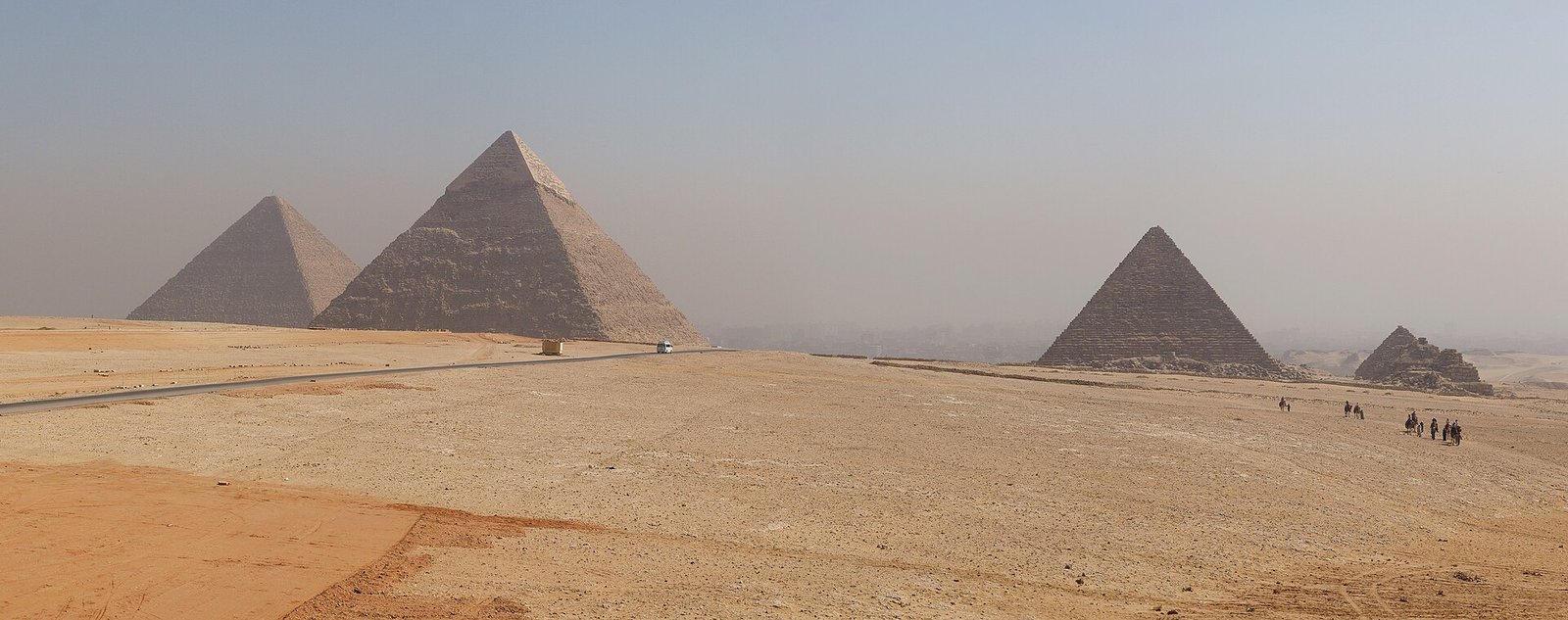
A wide hazy panorama of the Giza plateau with all three pyramids and the queens' pyramids strung across the frame, a camel train small on the right

Common questions

What is the cheapest time to visit Egypt?
The hot months are the low season, so summer is when demand is softest. The tradeoff is real
heat, and the saving matters less than whether you are willing to change how you use the day.
How do I avoid the crowds?
Avoid late December, Easter week and the two sun festival dates. Beyond the calendar, the bigger
lever is the clock: being at Giza or Karnak at opening time changes the experience more than the
month does.
Is the weather the same across the whole country?
No. The south is consistently hotter than Cairo, the Mediterranean coast is cooler and wetter,
and the Red Sea is moderated by the sea. A single national forecast is not much use for planning a
route that covers several of those.
When is the water warm enough for the Red Sea?
The Red Sea is swimmable all year for most people, with the coolest water in the winter months.
Divers who feel the cold use a thicker suit in midwinter.
Does it rain in Egypt?
Very little in the Nile valley and the south. The Mediterranean coast, Alexandria included, gets
a real if modest winter rainy season, and a heavy Cairo downpour, while rare, causes disruption out
of proportion to the rainfall because the drainage is not built for it.

Related reading: the Egypt visa requirements,
is Egypt safe to visit,
Egypt tour packages, and
Nile cruises.

Your trip starts with a message

Working out your own dates

The month matters less than what you want out of the trip and how you are willing to structure the day around the weather. Tell us when you can travel and what you most want to see, and we will tell you honestly what that season gives you and what it costs you. Message us on WhatsApp.

Message us on WhatsApp


Keep exploring

To finish planning your trip to Egypt

Browse the Blog by Category
Not sure what you want yet? We will build your Egypt trip around you. Tell us if this is your first trip with us.