Luxor east bank and west bank: what is on each side and how to see both
Luxor east bank and west bank: what is on each side and how to see both
Luxor sits on both sides of the Nile, and the two banks do different jobs. The east bank is the living city: Karnak, Luxor Temple, the Luxor Museum, the hotels and the corniche. The west bank is the desert edge where the New Kingdom buried its kings: the Valley of the Kings, Hatshepsut's terraced temple, the Colossi of Memnon, Medinet Habu, the Tombs of the Nobles and Deir el Medina. The ancients put the living toward the sunrise and the dead toward the sunset, and the layout still follows that rule. You cross by bridge, ferry or motorboat in minutes. Give the west bank a full morning and the east bank an afternoon into the evening, and both sides make sense.
Why Luxor has two banks with two different jobs
The split is a religious decision, not a geographic accident, and it was applied for about three thousand years. The sun is born in the east and dies in the west. So the east is the side of daily life, where the ancient Egyptians built their city, their palaces and the temples where the gods lived. The west is the side of sunset and rebirth, where the tombs and the memorial temples went.
At Thebes, the ancient name for Luxor, the rule works almost perfectly: a wide floodplain on the east for a capital, and a strip of fields backed by a limestone cliff on the west for a necropolis.
That cliff adds one more piece. Above the Valley of the Kings rises a natural peak called el Qurn, and from the valley floor it looks like a pyramid. The Egyptians saw it as the home of a cobra goddess who guarded the dead, and that shape is probably why the New Kingdom pharaohs cut their tombs into the rock beneath it instead of building pyramids.
Visiting one bank is reading half the book.
The east bank: Karnak, Luxor Temple, the museum and the corniche
The east bank is compact and urban. Everything sits within a few miles along the river, and it is where you sleep, eat and shop.
Karnak
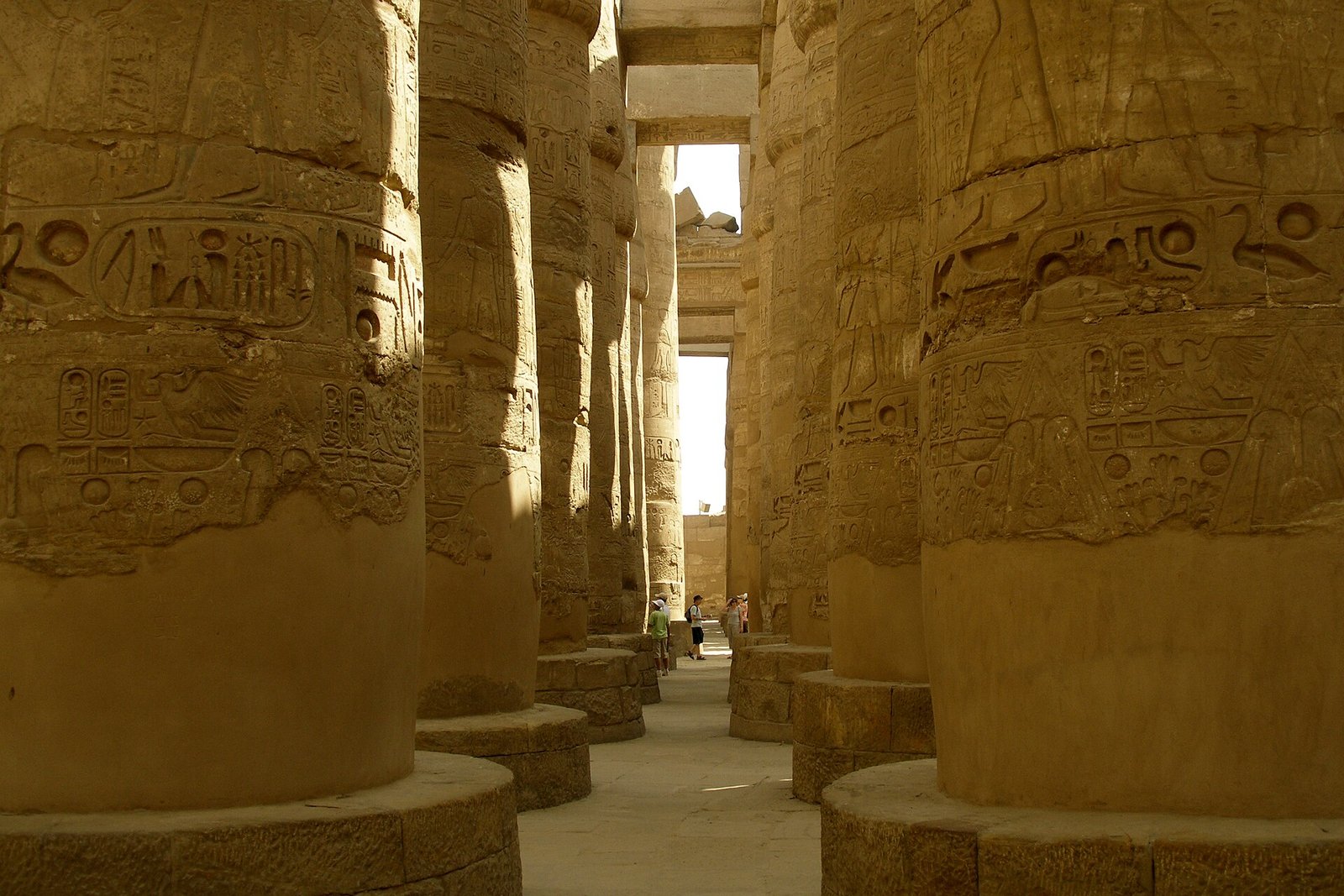
Karnak is the largest religious complex in ancient Egypt. It grew for about two thousand years as pharaoh after pharaoh added a pylon, a court, an obelisk or a chapel. The Great Hypostyle Hall is the moment everyone remembers: 134 columns packed so tightly that the light comes down in shafts. Beyond it are the obelisks of Hatshepsut and Thutmose III and the sacred lake. Plan two to three hours.
Luxor Temple
Luxor Temple stands in the middle of town, smaller than Karnak and easier to take in as one building. Amenhotep III built the colonnade, Ramesses II added the first pylon and the colossi, and a mosque still sits on one corner. It is at its best after dark, when the floodlights come on. Save it for the end of the day.
The Avenue of Sphinxes, the museum and the corniche
The two temples were once linked by a processional road lined with sphinxes, close to two miles long, and you can now walk much of it. The Luxor Museum on the corniche is small, quiet and beautifully lit, with the statues found buried under Luxor Temple and two royal mummies. The corniche itself is the evening walk, with the west bank cliff turning pink and the souk a block inland. Day plans for all of it are in our page on Luxor excursions.
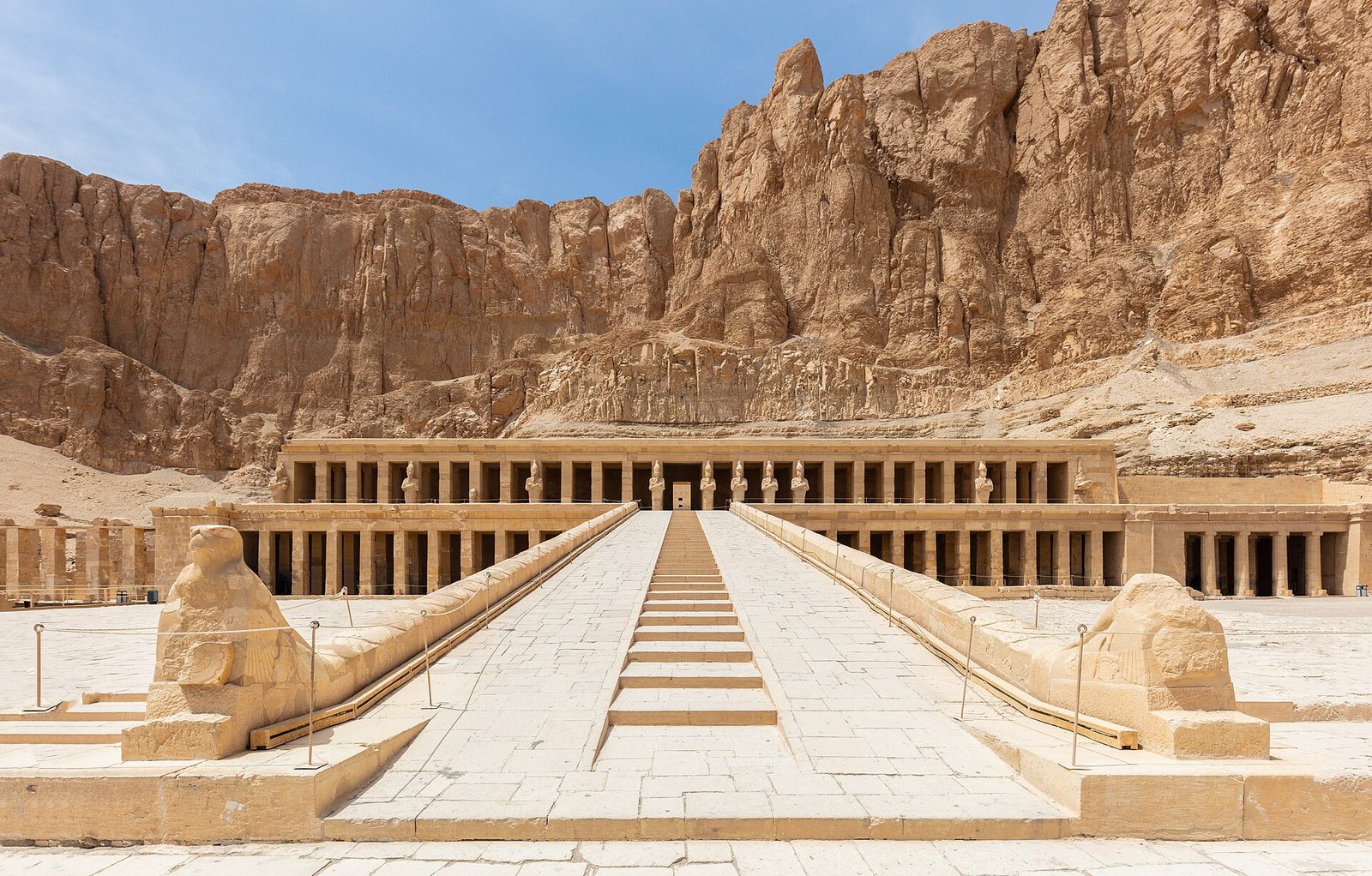
The west bank: the Valley of the Kings, Hatshepsut and the necropolis
Cross the river and the mood changes. The west bank is rural and spread out: sugar cane, donkeys, a few villages, and the sites strung along several miles of desert edge with no shade between them. There is no public transport between sites, so this side is done with a vehicle and a decision made in advance about what to see.
Valley of the Kings
The royal cemetery of the New Kingdom, a dry canyon behind the cliff with more than sixty tombs, including Tutankhamun's. A standard ticket covers a rotating selection, and a few of the finest are sold separately. Which tombs are open changes with conservation work. We break down the choice in Valley of the Kings tickets and tombs.
Temple of Hatshepsut
The memorial temple of the queen who ruled as pharaoh, three terraces of colonnades set into the base of the cliff at Deir el Bahari. Go early: the terraces face east and catch full sun by mid morning.
Colossi of Memnon
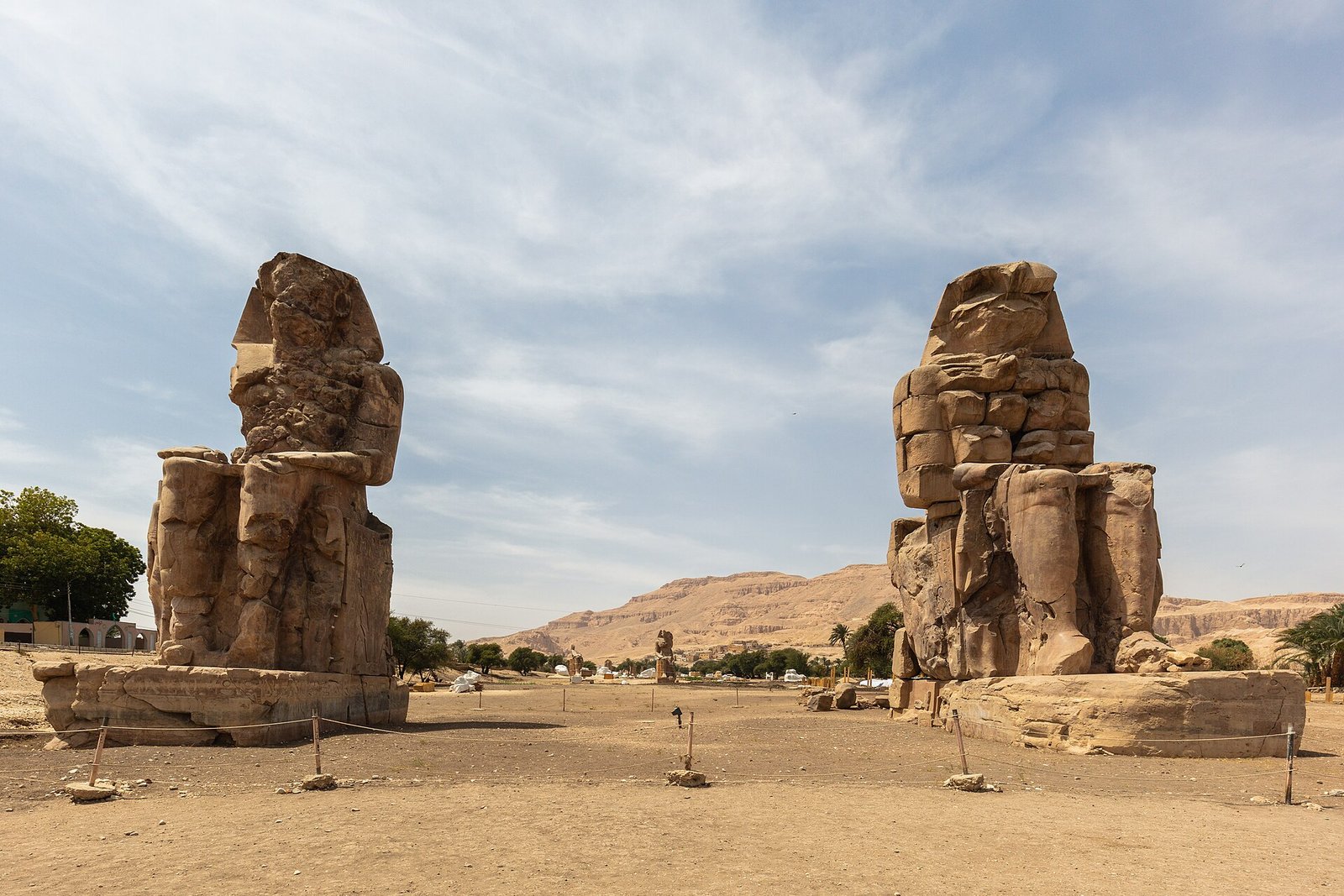
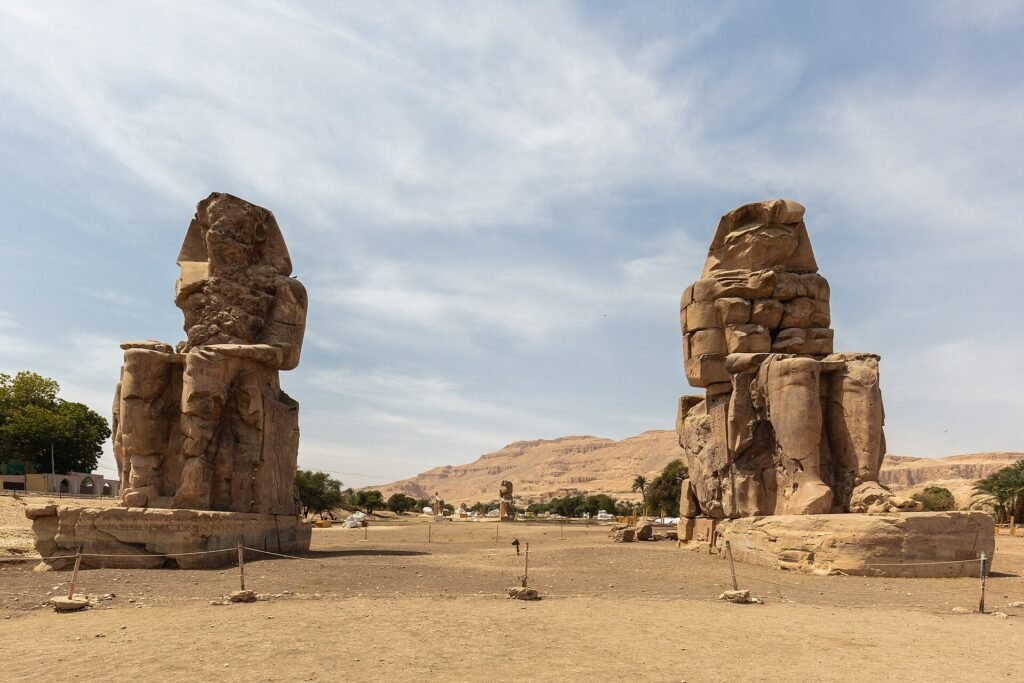
Two seated statues of Amenhotep III, each about 60 feet tall, all that survives above ground of the largest temple on the west bank. A ten minute stop.
Medinet Habu
The memorial temple of Ramesses III, the site first-time visitors skip and later regret. The walls keep more original paint than anywhere else in Luxor and it is rarely crowded.
Tombs of the Nobles and Deir el Medina
The tombs of officials at Sheikh Abd el Qurna show daily life instead of the underworld: harvests, banquets, musicians. The painting in tombs like Sennefer and Rekhmire is some of the best in Egypt, and there is a full guide in Tombs of the Nobles in Luxor. Deir el Medina was the village of the craftsmen who painted the royal tombs, and their own small tombs are jewel boxes of color. The Valley of the Queens, next door, holds the tomb of Nefertari on a separate ticket.
How to cross the river: bridge, public ferry or motorboat
Crossing takes minutes. There are three ways, and a good day uses two of them.
| Option | How it works | Best for |
|---|---|---|
| Luxor Bridge | A road bridge several miles south of town. Hotel to the Valley of the Kings by car is roughly 30 to 40 minutes. | Guided days with a private vehicle, since the driver stays with you site to site. |
| Public ferry | Leaves from the corniche near Luxor Temple and crosses in a few minutes, all day, no timetable to speak of. | Independent travelers, and the river experience on the way back. |
| Private motorboat | Small launches wait along the corniche and take you across on demand. Agree the fare before you step in. | Sunset crossings, small groups, or when the ferry is packed. |
On a guided day the vehicle goes over the bridge in the morning and carries you between the west bank sites. Coming back, many of our guests take the boat across from the west bank landing, with the car meeting them at the corniche. That crossing, with the cliff behind you, is the best photo of the day.
Independently, take the ferry and hire a driver on the far side. Do not plan to walk between west bank sites; the distances are brutal in the sun.
How to split two days between the two banks
Two days is the right amount of time for Luxor. This is the order we use.
| Day | Morning | Afternoon and evening |
|---|---|---|
| Day 1 | Cross early to the west bank. Colossi of Memnon, Valley of the Kings while the tombs are cool and quiet, then Hatshepsut. Back across by lunch. | Rest through the hottest hours. Karnak from mid afternoon, then Luxor Temple as the lights come on, dinner on the corniche. |
| Day 2 | Optional sunrise balloon over the west bank. Then Medinet Habu, Deir el Medina and two or three Tombs of the Nobles, or the Valley of the Queens if Nefertari is open. | Luxor Museum in the cool, the Avenue of Sphinxes, the souk, a felucca at sunset, or an early flight onward. |
The balloon is the one thing we would not leave out on the second morning. It goes up at first light, shows you necropolis, fields, river and city in one view, and lands before the tombs open. Details are in our page on the hot air balloon over Luxor.
With one day only, do the Day 1 column. The full two-day version, with guide, vehicle and tickets handled, is our Luxor 2 day tour.
The cruise passenger version
Most Americans see Luxor from a Nile cruise ship. The standard stop covers Karnak and Luxor Temple on the east bank, and the Valley of the Kings, Hatshepsut and the Colossi on the west. A good core, but the same five sites every ship does, at ship pace.
Which bank comes first depends on direction. Sailing Luxor to Aswan, you usually board in the afternoon, do the east bank that evening or the next morning, and the west bank before the ship sails south. Sailing Aswan to Luxor, the west bank lands on the last morning before disembarkation, which means an early start and a rushed feel. We compare the two in Nile cruise Luxor to Aswan or Aswan to Luxor.
The fix is one extra night on land at either end of the sailing. That night buys you Medinet Habu, the Tombs of the Nobles, Deir el Medina and the balloon, none of which the ship includes, and Luxor Temple after dark instead of at noon. Our Nile cruise itineraries are built with that night where the calendar allows.
Heat, light and timing: the rule that decides the order
The order of the two banks is decided by the sun, the same way the ancients decided it. The west bank has no shade. The Valley of the Kings is a bare rock canyon that becomes an oven by late morning, and the walks between tombs are on open gravel. From April to October, daytime highs in Luxor run from the mid 90s to over 105 F (35 to 42 C), and even a winter noon reaches the high 70s F (around 25 C) under a strong sun.
So the west bank goes first, at opening time, and you are back across the river by 12 or 1. The east bank temples have columns that throw shade, and Karnak is far more pleasant at 4 in the afternoon than at 11.
- Winter, November to February: the easiest months and the busiest. Be in the Valley of the Kings when it opens, before the coaches.
- Spring and fall: hot but workable with the morning and evening split. Carry more water than you think you need.
- Summer, June to August: the west bank only in the first two or three hours after opening. Everything else moves to after 5 pm.
The festival that joined the two banks once a year
Once a year, in the Beautiful Festival of the Valley, the sacred boat of Amun left Karnak, crossed the river and visited the memorial temples of the kings on the west bank. It was the only time the god entered the land of the dead.
Families walked to the tombs of their relatives, ate and drank there and slept the night in the tomb chapel. It was a funeral rite and a party at once, and several Tombs of the Nobles show that scene: musicians, wine jars, guests in white linen.
The memorial temples of Hatshepsut, Ramesses II and Ramesses III stand in a line at the edge of the fields with monumental fronts facing the river. They were built to be seen from the water during the procession. A second festival, the Opet, ran along the east bank from Karnak to Luxor Temple down the Avenue of Sphinxes, and its reliefs cover the colonnade walls.
What a guide adds on each bank
On the east bank a guide is helpful. On the west bank a guide is the difference between a great morning and a confusing one.
East bank
- Karnak is a maze of two thousand years of additions. A guide gives you the order: who built what and why. Without one it is impressive but shapeless.
- Luxor Temple reads as one building, and a good guide turns the Opet reliefs and the Roman and Islamic layers into an hour-long story. The museum you can do alone.
West bank
- Tomb choice. Guides know which tombs are open this month, which are crowded at which hour, and which are worth the separate ticket for your interests.
- Logistics. Ticket office, vehicle, order of sites and the water in the cooler are handled. You never stand in the sun working out what is next.
- Reading the walls. Once someone shows you how the sun god's night journey is laid out, every tomb after that makes sense.
- Guides do not speak inside the tombs; that rule protects the paint. The explanation happens at the entrance and the tomb is yours, in silence.
Our Luxor guides are licensed Egyptologists on our own team, and the vehicles are ours too.
How Explora Egipto orders the days
We are a local agency based in Egypt, and this is the Luxor order we run most often.
- Arrival day: whether you come by domestic flight from Cairo, by train or by ship, we keep it light. Luxor Temple after dark and the corniche are the whole program.
- Full day, west bank first: pick-up before the heat, bridge crossing, Colossi, Valley of the Kings with the tombs chosen the night before, Hatshepsut, a village lunch. Karnak in the afternoon, boat crossing at sunset.
- Second day, the quiet west bank: balloon at dawn for those who want it, then Medinet Habu, Deir el Medina and the Tombs of the Nobles, back across for the museum and free time.
- Onward: a Nile cruise boarding on the corniche, the afternoon flight back to Cairo, or the road to the Red Sea.
Tickets are bought for you. We do not list ticket prices here because they change; the current structure is in our page on Egypt monument entrance fees. For the tour itself, ask us for the quote: tell us how many days you have and whether a cruise is involved, and we send back the day-by-day order.
Frequently asked questions
What is the difference between the east bank and the west bank of Luxor?
The east bank is the city of the living: Karnak, Luxor Temple, the Luxor Museum, the hotels and the corniche. The west bank is the necropolis of ancient Thebes: the Valley of the Kings, Hatshepsut, the Colossi of Memnon, Medinet Habu, the Tombs of the Nobles and Deir el Medina. Life faced the sunrise, burial the sunset.
Which bank of Luxor should you visit first?
The west bank, early in the morning. Its tombs and temples sit in open desert with no shade, so be at the Valley of the Kings when it opens and back across the river by early afternoon. The east bank temples have shade from their columns and are better from mid afternoon, finishing at Luxor Temple after dark.
How do you cross the Nile in Luxor?
Three ways. A road bridge south of the city, which a private vehicle uses on a guided day. A public ferry from the corniche near Luxor Temple that crosses in minutes and runs all day. And private motorboats along the same stretch, on demand. Many of our guests drive over in the morning and boat back for the view.
Can you see both banks of Luxor in one day?
Yes, if you are organized. West bank at opening with the Colossi, the Valley of the Kings and Hatshepsut, lunch, then Karnak and Luxor Temple in the afternoon and evening. It is a long day and it leaves out Medinet Habu, the Tombs of the Nobles and Deir el Medina. Two days is what we recommend.
Is it worth staying on the west bank of Luxor?
For a second visit or a stay of several days, yes. The west bank has family-run guesthouses among the cane fields with terraces facing the cliff. You wake minutes from the tombs, eat in a village, and watch the balloons rise from your breakfast table. The trade-off is fewer restaurants and a ferry or car ride to the city at night. For a short first visit the east bank is more practical.
Does a Nile cruise cover both banks of Luxor?
The standard cruise program covers the core of both: Karnak and Luxor Temple on the east, and the Valley of the Kings, Hatshepsut and the Colossi on the west. It does not include Medinet Habu, the Tombs of the Nobles, Deir el Medina or the balloon. An extra night on land before or after the sailing is how you add them, and we build that in on request.
See the city of the living and the city of the dead in the right order
Tell us your dates, how many nights you have in Luxor and whether a cruise is part of the trip. We come back with the two banks arranged around the heat and the light, an Egyptologist guide and our own vehicle on both sides, and the tickets handled. No prices on this page, just the quote in your inbox.